
Filters
Level
Grade
Subject
Subject Area
Subject Topic
Standard(s)
Audience
Keyword
DurationMinutes
Elementary School Lesson Plans

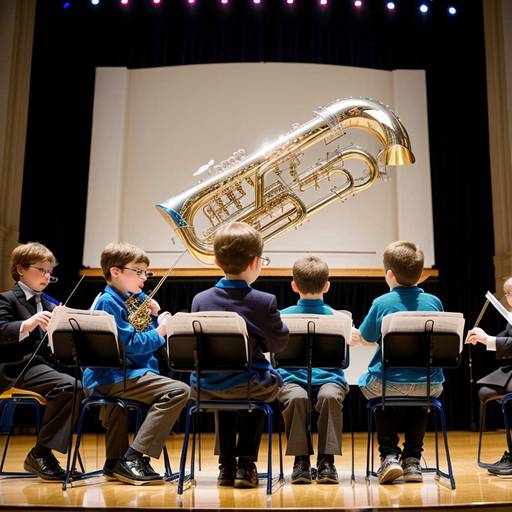
In this 60-minute music lesson for 4th graders, students will explore wind instruments, learning to identify and categorize them into woodwind and brass categories. The lesson begins with engaging video clips and discussions to stimulate prior knowledge and curiosity about the instruments. Students will then delve into the mechanics of sound production, participating in hands-on activities that emphasize how air and varying techniques create sound.
After understanding the concepts, students will collaborate in small groups to practice playing their assigned wind instruments, creating simple melodies or rhythms. Each group will perform their piece for the class, allowing them to demonstrate teamwork and creativity. The lesson concludes with a reflective discussion, where students share their experiences and insights gained throughout the session. Assessment will be based on participation, group performances, and worksheet comprehension. Extensions may include a field trip to a live music performance featuring wind instruments and an introduction to famous composers who utilized them in their works.
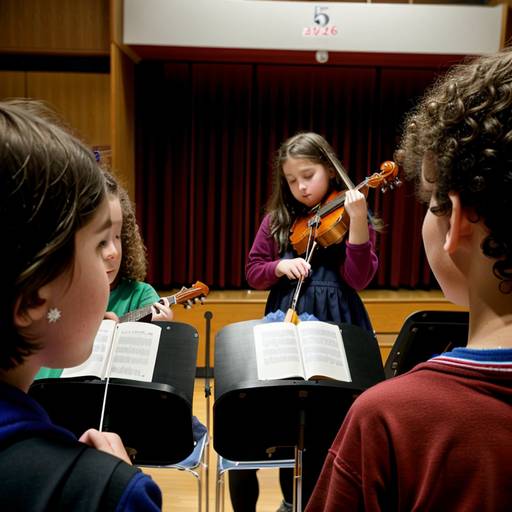
In this 5th-grade music theory lesson, students will explore the fundamental concepts of musical notes and their placements on the staff. The lesson begins with an engaging discussion about music and its relationship to everyday sounds, followed by introducing the musical staff, including the notes found on the lines and in the spaces, through acronyms to aid memorization. Students will also learn about different note values, including whole, half, quarter, and eighth notes.
During guided practice, students will work in small groups with flashcards to name notes and place them onto an illustrated staff on the board. They will also have a hands-on opportunity to play these notes on a keyboard or xylophone. For independent practice, students will create their own melodies on a blank staff worksheet, applying what they’ve learned.
The lesson concludes with a recap and a discussion about how notes create melodies, with opportunities for students to share their work. Assessment will include observation of participation and review of worksheet completion. Additional extensions are available for advanced learners, while support is offered to those who need it, ensuring an inclusive learning environment that fosters collaboration and creativity.

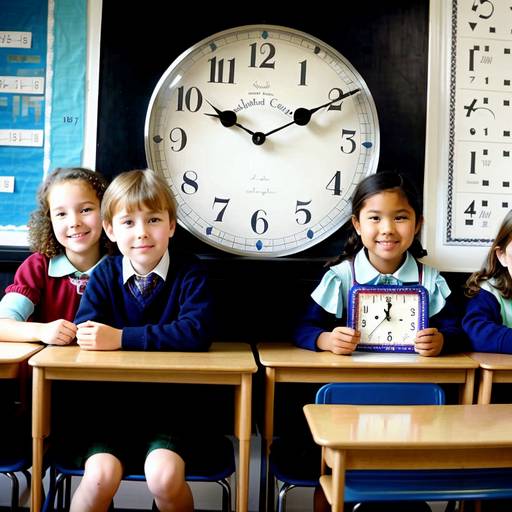
In this 1st-grade math lesson, students will explore the concept of time and recognize time patterns using analog clocks. The lesson begins with an introduction to the parts of a clock and the basics of telling time on the hour and half-hour. Through direct instruction, students will learn to identify and describe time patterns by analyzing sequences of times. They will engage in guided practice by completing worksheets that focus on filling in blanks in hourly patterns. For independent activity, students will create their own time patterns with colored pencils. The lesson concludes with a review of what they learned, allowing students to share their patterns with the class. Extension activities such as making paper clocks may be offered for further learning opportunities. Assessment will be carried out through observation and worksheet completion to evaluate students’ understanding of telling time and recognizing patterns. Differentiation strategies are also included to support diverse learners. This interactive approach aims to make learning about time enjoyable and engaging for young students.
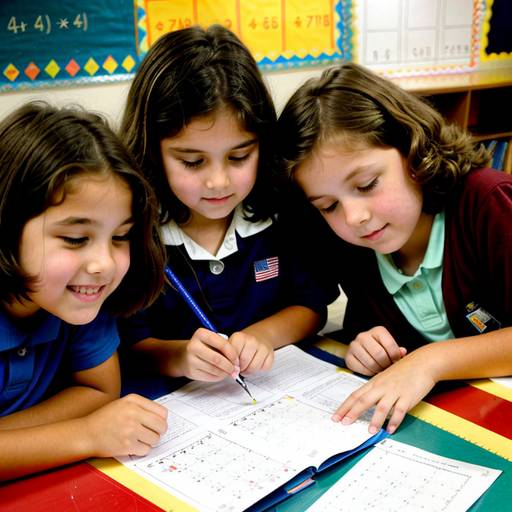
In this 4th-grade math lesson, students will explore the concepts of measurement and time through engaging activities. The lesson begins with a discussion on the importance of measurement and time in everyday life, followed by a hands-on measurement activity where students work in groups to measure various classroom items using rulers and measuring tapes. They will record their findings in both inches and centimeters and present their results to the class.
After the measurement activity, students transition to learning about time. They will practice telling time using a movable clock and engage in a worksheet exercise that includes questions about time-telling and calculating durations. The lesson concludes with a brief review and an opportunity for students to ask questions.
Assessment will be conducted through the completion of worksheets, group presentations, and observation during activities. Extensions for quicker learners include a "Measurement and Time Scavenger Hunt." For homework, students will create a "Measurement Diary" to record items measured and times checked during their day. Overall, this lesson aims to enhance students' practical skills in measurement and time while making learning interactive and relatable.

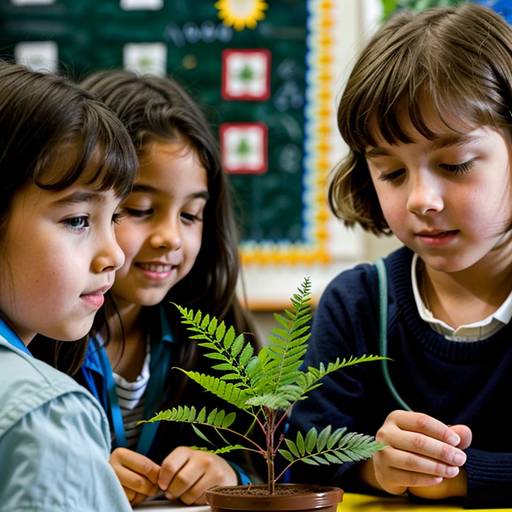
In this 2nd-grade life science lesson, students will investigate the essential needs of plants through hands-on activities and observation. The lesson begins with a multimedia introduction to various plants, prompting a discussion about what plants require to thrive.
Students will engage in a group experiment where they plant seeds in clear cups, placing one in sunlight and another in a darker environment, while recording their predictions and observations in journals. They will also examine different potted plants to learn about their characteristics and discuss the factors that contribute to plant growth.
The lesson concludes with a review of key concepts through a KWL chart, allowing students to reflect on what they have learned and share their remaining questions. Assessment is conducted through an exit ticket where students express one new insight about plants. Extensions encourage ongoing care for their plants and potential field trips to botanical gardens. Overall, the lesson promotes a sense of curiosity and understanding of the important role plants play in the ecosystem.
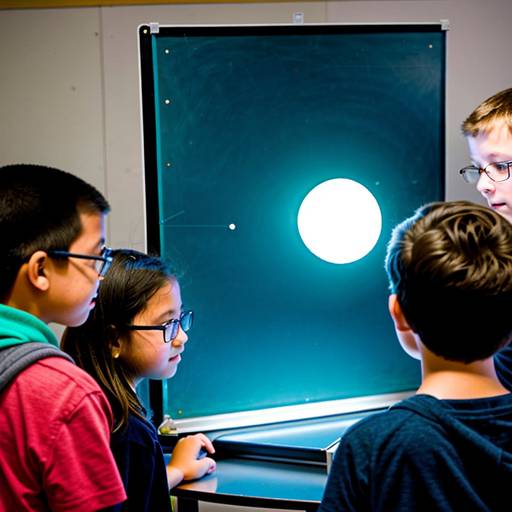
In this 5th-grade physical science lesson, students will explore the concepts of forces such as gravity, friction, and magnetism, and how these forces influence motion. The class will begin with an introduction to the topic, discussing real-world examples of forces in everyday life. Students will then engage in interactive group activities, conducting hands-on experiments where they test how different surfaces affect the distance and speed of toy cars on ramps. Each group will observe and record their findings about the effects of different types of forces on motion. The lesson concludes with a class discussion, where students can share their observations and insights, reinforcing key vocabulary and concepts. Assessment will be based on the accuracy of their worksheets and participation in discussions, providing a comprehensive understanding of the dynamics of forces and their practical applications. Safety measures will be in place during all experimental activities. Extensions for advanced learners include mini-projects related to forces in sports and simple machine concepts.

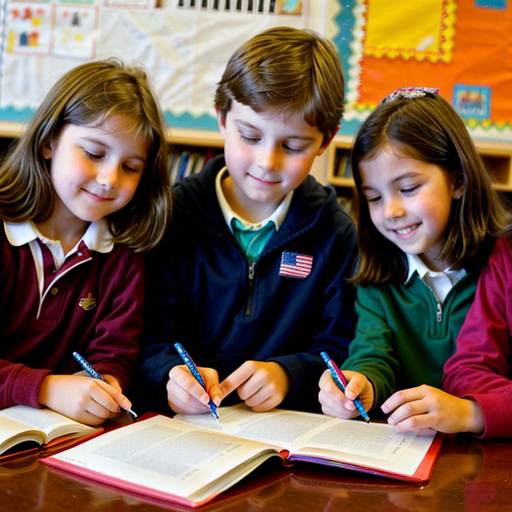
In this 3rd-grade language arts lesson, students will engage in expository writing focused on their favorite animals. The lesson begins with a discussion about animals and an introduction to expository writing, emphasizing its purpose of informing readers. An example of an effective expository paragraph is analyzed to highlight key components such as topic sentences, supporting details, and conclusions.
Students will then participate in a guided practice where they choose an animal and brainstorm relevant facts using a graphic organizer. This organizer will help them gather information about the animal's habitat, diet, and unique traits. Following this, students will write their own expository paragraphs based on the information collected in their graphic organizers, focusing on clarity and descriptive language.
The lesson concludes with opportunities for students to share their writing in small groups or with the class, promoting confidence in their writing skills and reinforcing the importance of clear communication. Assessment will involve reviewing the written paragraphs for structure, clarity, and the effective use of descriptive language. Additionally, extensions and adaptations are provided to accommodate diverse learners, enhancing inclusivity and engagement in the writing activity.
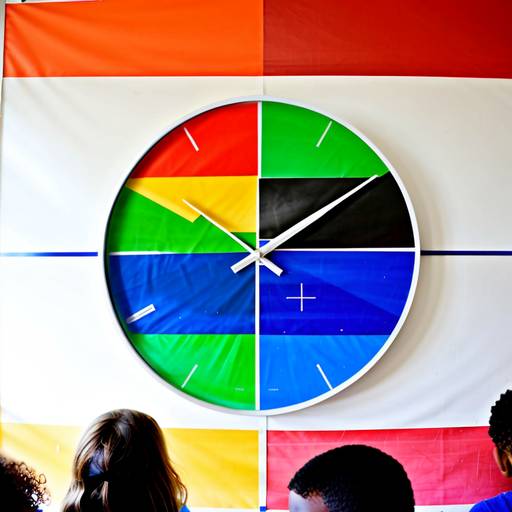
In this 3rd-grade math lesson, students will explore the concept of time and time zones. The lesson begins with an engaging discussion about clocks and the importance of telling time, followed by an introduction to time zones around the world. Using a world map, students will learn how different regions experience different times and how to convert time between these zones with practical examples.
Students will complete a worksheet that includes a time zone chart, allowing them to practice calculating the current time in various major cities based on a specified starting point. Afterward, they will create their own world clocks, selecting a city in a different time zone, and decorating their clocks while indicating the correct time.
The lesson concludes with a group discussion where students share what they’ve learned, reinforcing their understanding of the importance of time zones in daily life. Assessment will include checking the accuracy of their worksheets and creativity in their world clocks. Optional extension activities encourage further exploration of international time differences and their impacts on daily life. This comprehensive approach aims to build students' understanding of time measurement and its global implications.

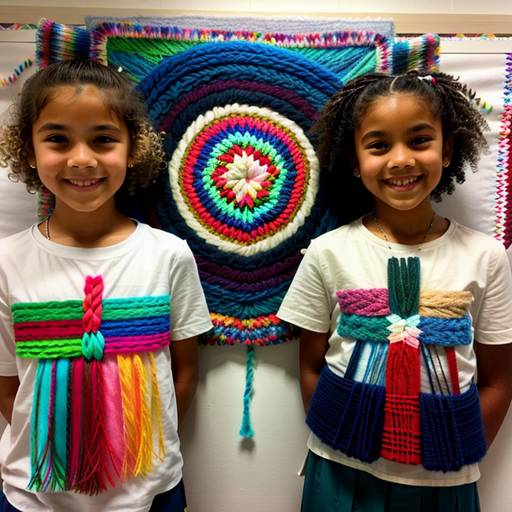
In this 2nd-grade art lesson, students will explore the world of fiber arts by learning basic weaving techniques using cardboard looms. The session begins with a discussion about various forms of fiber art and visual examples to inspire creativity. The teacher will then demonstrate how to set up the loom and weave with yarn and natural fibers. Students will have hands-on time to create their woven pieces, allowing them to experiment with different colors and textures. As they work, the teacher will circulate to provide support and encouragement. The lesson concludes with a sharing session where students present their artwork, reflect on their creative choices, and discuss the importance of texture and design in fiber arts. This engaging lesson aims to ignite students' imagination and introduce them to the possibilities within textile art.
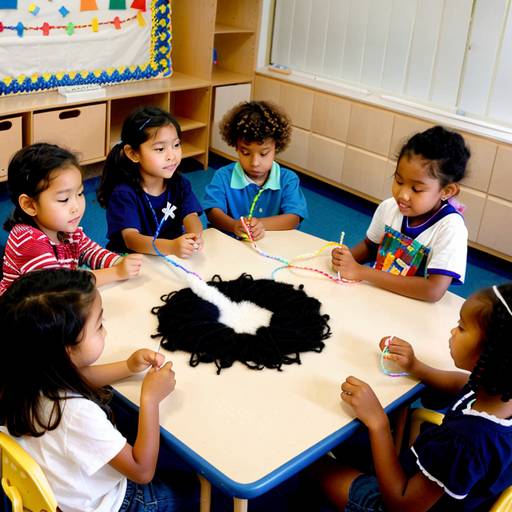
In this kindergarten art lesson, students will be introduced to fiber arts through hands-on exploration and creation. The lesson begins with a discussion about fiber art and its significance in various cultures, followed by an interactive session where students share their experiences with textiles. A demonstration of a simple loom method will guide them in weaving yarn using cardboard plates or paper plates as their loom base.
During the hands-on activity, students will create their own fiber art pieces by weaving colorful yarn and, if time allows, adding fabric scraps for embellishment. The lesson concludes with a sharing session where students present their creations to the class, discussing their choices of colors and textures. The lesson aims to foster creativity, fine motor skills, and an appreciation for different art forms while encouraging students to express their individuality through their artwork. Assessment will be based on participation and creativity, with extensions and adaptations available for varied learning needs.