
Filters
Level
Grade
Subject
Subject Area
Subject Topic
Standard(s)
Audience
Keyword
DurationMinutes
Elementary School Lesson Plans

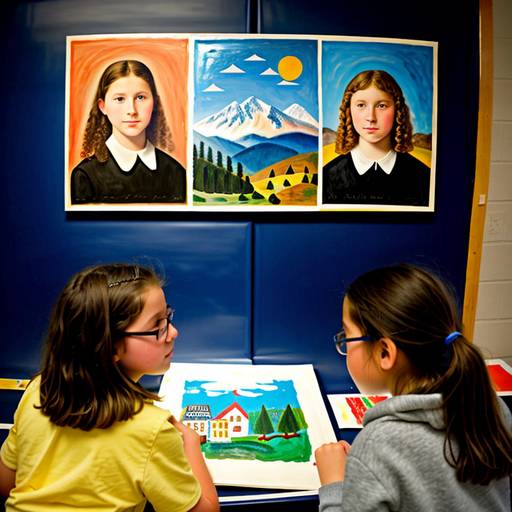
In this 5th-grade art lesson, students will explore key art movements and their historical significance. The class will begin with a visual presentation of famous artworks from various movements, followed by group presentations where students will research and share details about assigned movements, including their characteristics and notable artists. After the presentations, students will create their own artwork inspired by a chosen art movement, incorporating its unique styles and techniques. The lesson will conclude with a sharing session where students can showcase their creations and reflect on what they learned. A fun Bingo game will reinforce the vocabulary and concepts discussed. Assessment will focus on participation, creativity in the art project, and reflections in art journals. Adaptations will be provided for diverse learning needs, ensuring all students can engage meaningfully with the material.

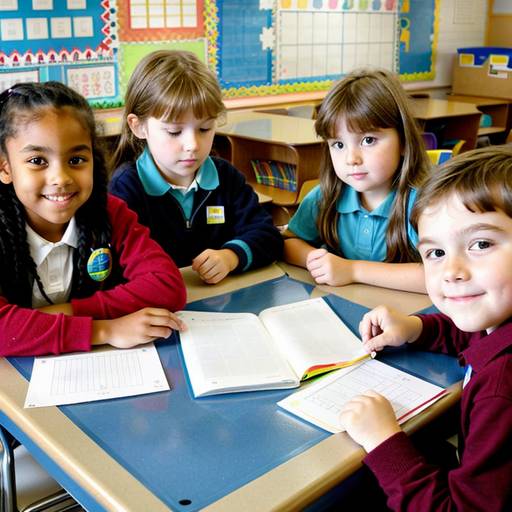
In this 1st grade math lesson, students will explore the concepts of reading time on both analog and digital clocks. The lesson begins with a discussion on the importance of time in daily life, followed by a direct instruction segment demonstrating how to read different clock types. Students will practice reading clock times as a class using visual aids.
Next, they will engage in a guided practice activity focused on creating time patterns related to their daily routines. Afterward, students will work independently on worksheets that reinforce time recognition and pattern creation. The class will conclude with students sharing their routines and a summary of the key concepts learned.
Assessment will involve observing student participation and reviewing their worksheets to gauge their understanding of reading time and recognizing time patterns. The lesson also includes accommodations for students needing additional support and suggests follow-up activities to further reinforce learning. Overall, the lesson aims to make the concept of time interactive and relatable while building foundational math skills.
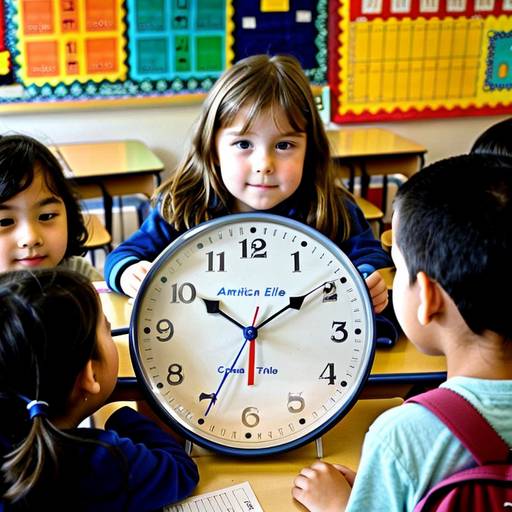
In this 1st-grade math lesson, students will explore the concept of telling time, focusing specifically on identifying hours and half-hours using both analog and digital clocks. The lesson begins with a discussion about the importance of time and proceeds to a demonstration of how to read a clock, highlighting the functions of the hour and minute hands. Students will engage in guided practice by setting their own paper clocks to various announced times, reinforcing their understanding through hands-on activity. Following this, they will complete a worksheet that allows them to apply their knowledge independently by writing down the times corresponding to clock images. The lesson concludes with a review of the key concepts and a possible extension activity for further reinforcement. Assessment will involve collecting worksheets and observing student participation to gauge comprehension. Differentiation strategies will be in place to support students at various levels of understanding.
In this 5th-grade math lesson, students will learn to read both analog and digital clocks, calculate elapsed time, and recognize patterns in time intervals. The lesson begins with a discussion about the significance of time in daily life, followed by a review of clock reading. Students will be introduced to concepts of elapsed time and time patterns using group activities with worksheets and time cards. As part of a guided practice, they will work collaboratively to solve time-related problems and identify patterns. To reinforce their learning, students will create their own clocks using craft supplies, demonstrating their understanding of time intervals. The lesson concludes with a wrap-up discussion to consolidate their learning, followed by assessments through worksheets and a potential short quiz in the next session. Homework assignments will further reinforce their skills in calculating time intervals and tracking daily activities. Overall, the lesson prioritizes student engagement and creativity while covering essential mathematical concepts related to time.
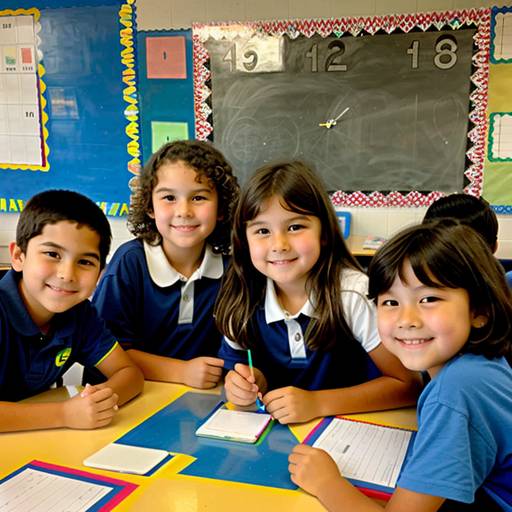
In this 3rd-grade math lesson, students will explore the concepts of time and time zones to enhance their understanding of how time is measured and perceived across different regions. The lesson begins with an engaging discussion about the significance of time, followed by a demonstration of both analog and digital clocks.
Next, students will learn about time zones, using a world map to identify major zones and their relationships. They will be guided through calculating time differences by using a provided time zone chart, practicing these calculations with worksheet scenarios that involve various cities around the globe.
In small groups, students will work collaboratively on an activity that requires them to apply their knowledge of time zones to a real-world situation. Each student will then choose a country, research the current time there, and create a personalized clock design reflecting that time, incorporating cultural elements.
The lesson concludes with a reflection where students share their findings, and they will complete an exit ticket to summarize what they learned and express any remaining questions. Assessment will focus on participation, worksheet accuracy, and creativity in their clock designs, with extensions available for advanced learners and support for those needing assistance.
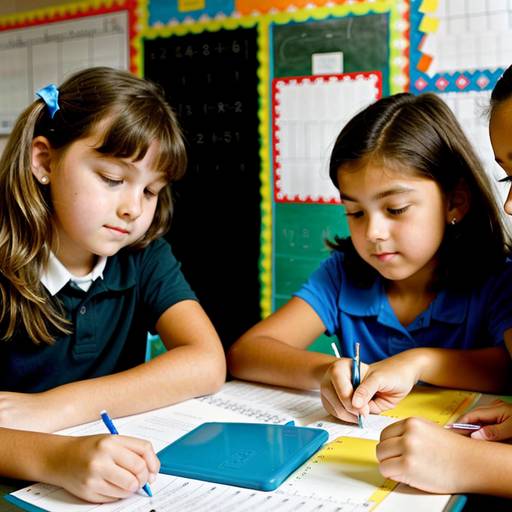
This 4th-grade math lesson focuses on measurement and time, guiding students to understand and convert between different units of time (hours, minutes, seconds) and measure lengths using standard units (inches, feet, centimeters, meters). The lesson begins with an engaging discussion about daily activities related to time, followed by a demonstration on how to tell time and understand time conversions.
Students are introduced to measurement concepts and tools, such as rulers, and practice measuring classroom items. In small groups, they engage in a hands-on activity where they measure various objects and time simple tasks, recording their results. The independent practice involves solving a worksheet that combines measurement and time conversion problems, reinforcing the concepts learned.
The lesson concludes with a review and discussion of how time and measurement play important roles in everyday life. Assessment is conducted through observation during group activities and evaluation of worksheet accuracy. An extension activity allows interested students to further explore measurement by creating a "Measurement Collage." Overall, this lesson aims to build students' confidence and practical skills in measurement and time.
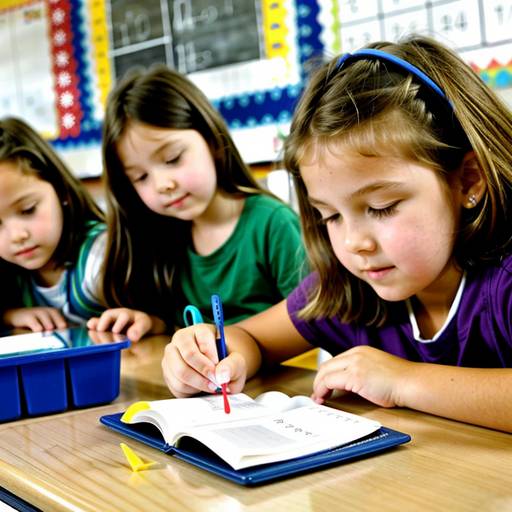
In this second-grade math lesson, students explore the concepts of time measurement and object measurement. The lesson begins with an introduction to telling time using both analog and digital clocks, where students learn to read and set the time to the nearest hour and half-hour. Following this, students engage in a hands-on activity where they measure various classroom objects using non-standard units, specifically paper clips, encouraging them to record their findings.
Students then participate in a group discussion to compare their measurements and share observations about the lengths of the objects they measured. The lesson concludes with a summary of the key concepts learned and assigns a simple homework task for students to measure an object at home using a non-standard unit. Throughout the lesson, assessments are made through observation, worksheet collection, and homework to ensure understanding of the material covered. Extension activities are available for advanced learners, such as introducing rulers and a fun clock-themed game or song.
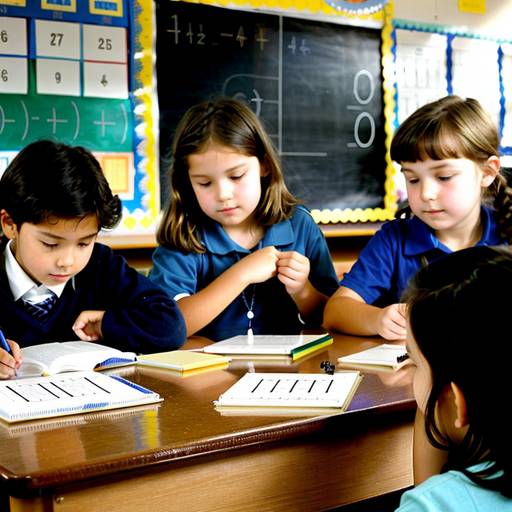
This lesson plan for 2nd-grade students focuses on teaching the concept of time and how to read an analog clock. It aims to help students identify the parts of a clock, including the hour and minute hands, and to read time to the nearest hour and half-hour. The lesson begins with an engaging introduction that utilizes a large wall clock and a catchy song to capture students' attention.
After a demonstration, students participate in guided practice by matching clock faces to written times on worksheets. They then engage in a hands-on activity where they create their own clocks using templates, allowing them to practice setting different times. The lesson concludes with a recap and opportunities for students to share their creations, while assessment is conducted through observation and completed worksheets.
The plan includes adaptations for diverse learning needs and suggestions for extensions to enhance understanding, such as exploring digital clocks and incorporating timed activities in daily routines. Overall, this lesson lays a solid foundation for students to understand and engage with the concept of time in their lives.
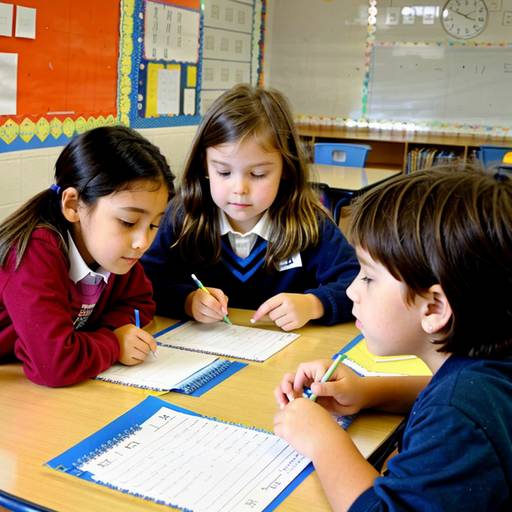
In this 60-minute math lesson for 2nd graders, students will explore the concept of time by learning to read both analog and digital clocks while recognizing time patterns such as quarter-hour and half-hour intervals. The lesson begins with a discussion about the importance of time in daily routines, followed by direct instruction on how to tell time using both types of clocks.
During guided practice, students will work in small groups to match analog times with their digital counterparts, facilitating collaborative learning. Each group will then create a visual timeline representing their daily activities at specific times, allowing them to apply their understanding creatively. The lesson concludes with group presentations of their timelines, reinforcing comprehension of time and patterns.
Assessment will be through worksheets and observation of group work, with extensions and differentiation strategies available to cater to the varying needs of students. Overall, this interactive lesson aims to engage students in understanding the role of time in their lives.
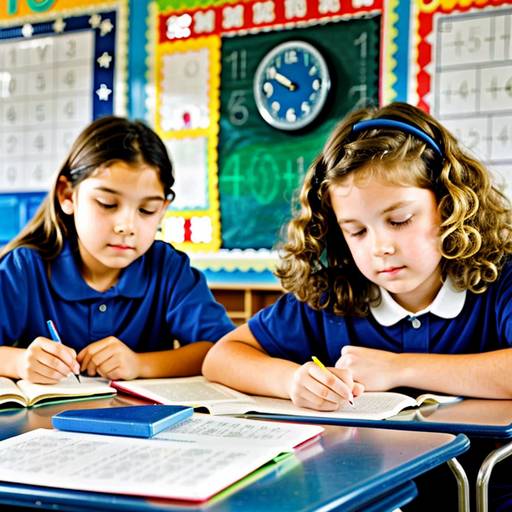
In this 3rd grade math lesson, students will learn to read clocks, tell time, and calculate elapsed time through engaging activities and real-life examples. The lesson begins with a class discussion about where they encounter time in their daily lives, followed by a hands-on demonstration using a large clock to illustrate how to tell time.
Next, the concept of elapsed time will be introduced, highlighting how to determine the duration between two events using familiar scenarios. Students will then work in pairs with individual clocks to set different times and calculate elapsed time in guided practice. Following this, they will complete worksheets that include various problems related to telling time and elapsed time, which will reinforce their understanding through independent practice.
The lesson will conclude with a class review of the worksheet answers and an exit ticket activity where each student shares something they learned. Throughout the lesson, student participation will be monitored, and completed worksheets will be reviewed to assess their comprehension of the material. This engaging lesson aims to build students' confidence in understanding time and its applications in everyday life.