
Filters
Level
Grade
Subject
Subject Area
Subject Topic
Standard(s)
Audience
Keyword
DurationMinutes
Elementary School Lesson Plans

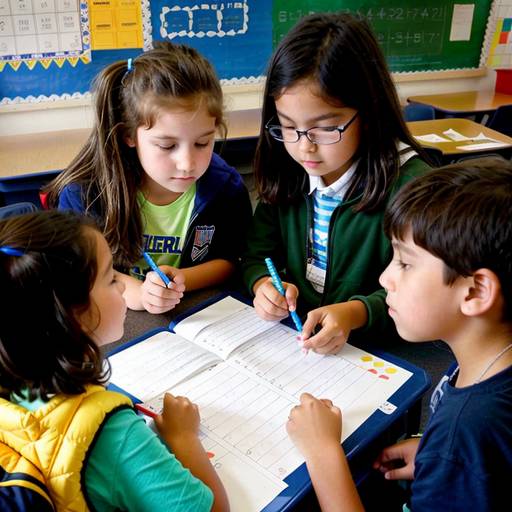
In this 4th-grade math lesson, students will explore the concepts of multiplication and factors, enabling them to understand multiplication as repeated addition and identify factors of numbers. The lesson begins with a review of prior knowledge and discussions on the practical importance of multiplication. Direct instruction will involve demonstrating multiplication equations, discussing terms, and explaining how to find factors and factor pairs.
Students will then engage in guided practice, working in small groups with factoring cards to identify factors and present their findings to the class. Following this, they will complete independent practice through worksheets that require them to list factors, solve multiplication problems, and create number sentences.
The lesson will conclude with a brief review of key concepts and an opportunity for students to share their learning experiences. Assessment will include monitoring group activities and reviewing worksheets for understanding. Extensions will be offered for advanced learners, while modifications will be available for those needing additional support. Overall, the lesson encourages collaboration and critical thinking while reinforcing essential mathematical skills.
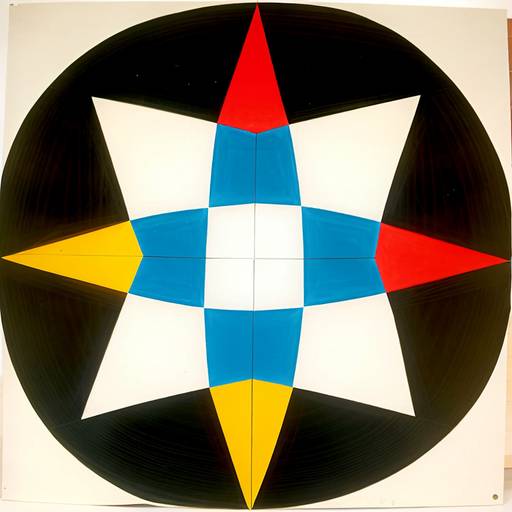
In this 5th-grade mathematics lesson, students explore the concepts of geometry and perimeter through a series of engaging activities. The lesson begins with an introduction to shapes and the importance of understanding perimeter in real-world contexts. Students learn how to calculate the perimeter of various polygons using formulas and direct measurement, working in groups to identify and categorize different shapes.
During guided practice, students use rulers to measure the sides of their shapes and compute their perimeters. They then engage in independent practice, which includes a worksheet with perimeter calculations and real-life scenarios involving fencing a garden. To reinforce their understanding, students participate in a hands-on activity where they create their own polygons on graph paper, measure them, and find their perimeters using string.
The lesson concludes with a review of the concepts learned as students share their findings and discuss the interesting shapes they measured. The teacher assesses understanding through observations and collected worksheets, supplemented by a quick exit ticket to gauge individual comprehension. Optional extensions are provided for students seeking further challenge, allowing them to explore irregular shapes and compare perimeter with area. Overall, the lesson fosters teamwork and practical application of mathematics, promoting an engaging learning experience.
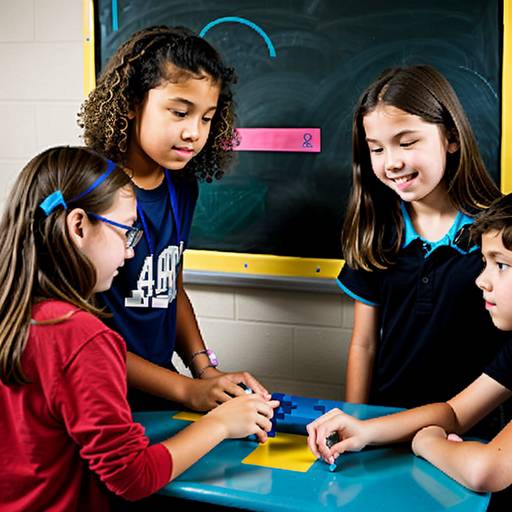
In this 5th-grade math lesson, students will explore the concept of perimeter through a hands-on and engaging approach. The lesson begins with an introduction to perimeter, highlighting its importance in real-world scenarios. Students will learn how to calculate the perimeter of shapes, specifically rectangles and squares, using established formulas.
After a demonstration and guided practice with worksheets, students will work in small groups to create their own shapes using string and graph paper. They will measure the length of the string to determine the perimeter of their unique creations. Each group will then present their shape and findings to the class, fostering discussion about their experiences and any challenges faced during the activity.
The lesson concludes with an assessment of student understanding through the collected worksheets and group presentations, along with a quick exit ticket to reflect on their key learnings. Extensions for advanced learners and support for those needing additional help are also provided. This interactive lesson encourages students to apply measurement concepts in practical situations and fosters collaboration and problem-solving skills.

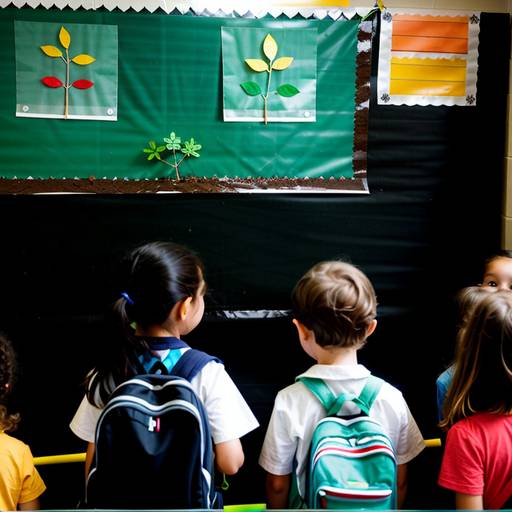
In this Kindergarten science lesson, students will explore the world of plants, focusing on their basic parts and growth requirements. The lesson begins with an engaging story or video to spark interest, followed by a discussion where students share what they know about plants. Through direct instruction, they will learn to identify and understand the roles of roots, stems, leaves, and flowers, using pictures and real plants for demonstration.
Students will then participate in a hands-on planting activity, where they will plant bean seeds in cups with soil while learning about the importance of water and sunlight for growth. Following the planting, they will observe the parts of real plants with magnifying glasses and draw their observations.
The lesson wraps up with a recap where students share their learnings, reinforced by a creative coloring activity. Assessment will be based on student participation and their creative work. Extensions may include maintaining a plant journal and reading a relevant story to further enhance their understanding. Adaptations will be provided for students needing additional support, ensuring inclusivity. Overall, the lesson encourages curiosity and fosters a foundational understanding of life science centered around plants.
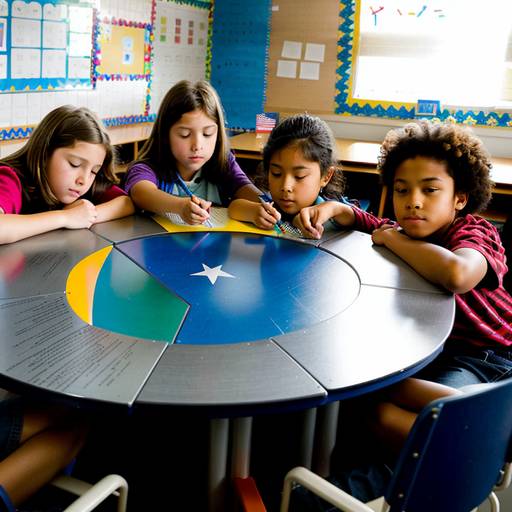
This 4th-grade science lesson focuses on helping students understand the fundamental concepts of forces and energy, specifically kinetic and potential energy, and their relation to motion. The lesson begins with an engaging discussion to elicit student ideas about how objects move. Through direct instruction, students learn about the definitions and real-life examples of kinetic and potential energy, as well as the role of forces like gravity.
Students participate in a hands-on experimentation activity in small groups, where they use toy cars, wooden ramps, and weights to explore how varying ramp heights and added weights affect motion and energy. They record their observations on worksheets to reinforce their understanding. The class reconvenes to share findings and discuss important concepts, solidifying their comprehension through collaborative learning.
The lesson concludes with a recap of the key concepts, encouraging students to identify examples of potential and kinetic energy in their everyday lives, as well as discussing the impact of forces on those energies. Assessment is based on worksheet completion and participation in discussions and activities, with extensions available for advanced learners to explore further connections to energy transformations and simple machines. This lesson aligns with Next Generation Science Standards and fosters an engaging and interactive learning environment.


In this 5th-grade Language Arts lesson, students explore the essential rules of capitalization and their significance in writing. The lesson begins with a discussion on why capitalization matters, followed by direct instruction on key rules, such as capitalizing the first word in a sentence, proper nouns, days, months, and the pronoun "I." Students then engage in guided practice by correcting capitalization errors in a provided short story excerpt, promoting teamwork and collaborative learning. For independent practice, they complete a worksheet with fill-in-the-blank and multiple-choice questions on capitalization rules. The lesson concludes with a review of the key concepts, allowing students to share examples of their writing. Assessment is conducted through observation of participation and evaluation of the worksheets, while an extension activity encourages students to write a paragraph about their favorite holiday, applying their capitalization skills.

This lesson plan is designed for 4th-grade students to explore the concept of forces, specifically focusing on pushes and pulls. Over the course of 60 minutes, students engage in discussions to identify everyday examples of forces, learn relevant vocabulary, and conduct hands-on experiments using toy cars and ramps. They will work in pairs to observe how different forces affect the motion of objects and measure their outcomes as they construct ramps at various angles.
Following this guided experimentation, students create visual charts to represent their findings and share their observations with the class, reinforcing their understanding of how forces impact motion. The lesson concludes with a review of key concepts and an exit ticket activity that allows students to reflect on what they have learned. Assessment involves evaluating student participation, group presentations, and individual comprehension through exit tickets. The plan also includes extensions that encourage students to connect forces to real-world applications, such as sports, and provides opportunities for further exploration. Overall, this lesson promotes active learning and scientific thinking through collaborative activities and experimentation.
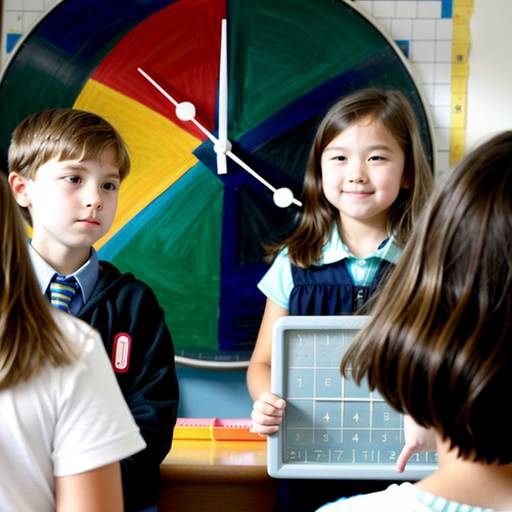
In this 2nd Grade math lesson, students will explore the concepts of time and time patterns through engaging activities that enhance their ability to read both analog and digital clocks. The lesson begins with a warm-up discussion highlighting the importance of time in daily routines. Following this, students will receive direct instruction on how to read analog and digital clocks, complemented by an introduction to simple time patterns.
During guided practice, students will participate in a collaborative group activity, solving time-related questions and presenting their findings. This will be followed by independent practice using worksheets where they will fill in missing times, match analog and digital formats, and tackle word problems related to time. The lesson concludes with a review of key concepts and an exit ticket activity for students to reflect on their learning.
Throughout the lesson, assessment will be ongoing, focusing on participation, completed worksheets, and individual exit tickets, ensuring that all students grasp the essential skills of telling time and recognizing patterns. Extensions and adaptations are included to cater to diverse learning needs and to encourage deeper understanding for advanced students.

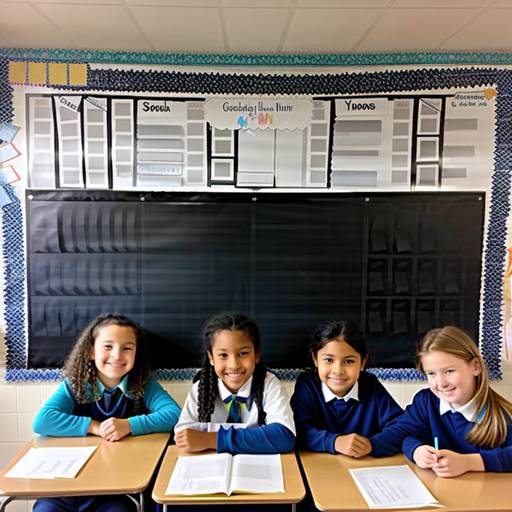
This lesson plan for 3rd graders focuses on teaching the concept of timelines and their importance in understanding history and personal experiences. The lesson begins with a discussion about significant events in students' lives to stimulate interest and introduce timelines as a tool for organizing events chronologically. Through direct instruction, students learn the components of a timeline and examine sample timelines depicting key historical moments.
Students then participate in a collaborative activity to create a class timeline that combines historical events with personal experiences. Afterward, they independently construct their own personal timelines, illustrating 5-7 significant events from their lives. The lesson concludes with students sharing their timelines with partners and reflecting on the connections between personal histories and broader narratives.
Assessment includes monitoring student participation and evaluating the creativity and completeness of their personal timelines. The lesson also offers extensions for students who want to delve deeper into historical research while providing adaptations for those needing additional support. Overall, this plan aims to enhance students' understanding of timelines while allowing them to express their personal histories creatively.
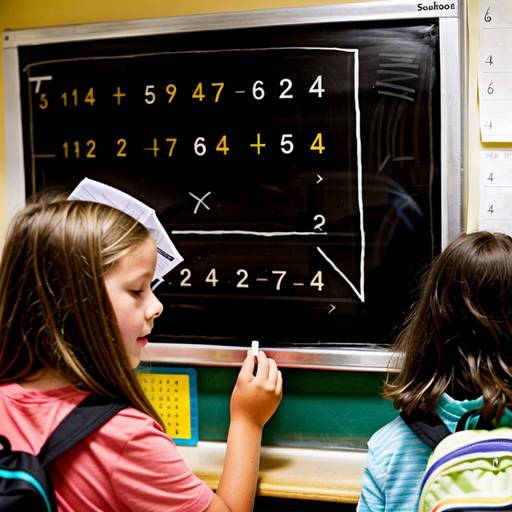
In this 5th-grade math lesson, students will explore subtraction through an engaging, real-world context. The objective is for students to confidently solve two-digit and three-digit subtraction problems while enhancing their critical thinking skills.
The lesson begins with a captivating introduction involving a safari story that sets the stage for subtraction. Direct instruction follows, where the teacher reviews subtraction concepts and demonstrates problem-solving with the whole class.
Students then participate in hands-on learning through "adventure stations," where they work in small groups to solve various themed subtraction problems. After this guided practice, they complete a worksheet independently and engage in peer discussions to check their work.
The lesson concludes with a summary of key concepts, where students reflect on their learning through written notes. Finally, the teacher assesses understanding through worksheet reviews and observations of group interactions. Additional opportunities for extension and modifications ensure that all students can engage meaningfully with the material.