
Filters
Level
Grade
Subject
Subject Area
Subject Topic
Standard(s)
Audience
Keyword
DurationMinutes
Elementary School Lesson Plans


This lesson plan for 4th-grade students focuses on astronomy, specifically the study of stars and constellations. It begins with engaging discussions about the nature of stars, including their composition and twinkling effect, followed by an exploration of various star types and their life cycles using visual aids. Students then identify and research different stars and constellations using star charts and online resources.
The creative component of the lesson allows students to design their own constellations on black construction paper, incorporating star stickers or dots and connecting them with lines or glitter. They will name their created constellations and describe their significance.
The lesson wraps up with a gallery walk where students present their projects to the class and reflect on their newfound knowledge. Assessment includes observational notes during activities and a review of the constellation creations. Additionally, suggestions for extensions, such as field trips and star-gazing nights, deepen students’ engagement with the topic. Overall, the lesson fosters both scientific understanding and creative expression related to the wonders of the night sky.
In this 3rd-grade science lesson, students will explore the fascinating world of stars and constellations. They will engage in a discussion about their observations of the night sky and the stories behind different patterns of stars. The instructor will present various constellations, highlighting their myths and historical significance.
Following the presentation, students will participate in a hands-on activity where they create their own constellations on black construction paper using star stickers or glitter and will write a short paragraph explaining the story behind their chosen constellation. This creative approach will be complemented by sharing sessions where students present their work to the class.
The lesson concludes with a recap of key concepts and an introduction to using a planetarium app for further exploration at home. Students will be assessed based on their participation, creativity, and presentation skills. The goal is to ignite curiosity about astronomy and encourage students to observe the night sky independently.

In this 1st-grade science lesson, students will explore the fascinating world of astronomy and the solar system. The lesson begins with engaging questions about the night sky, followed by a visual introduction to the sun, stars, and planets using flashcards and a large poster. Through a read-aloud session featuring a space-themed storybook, students will learn about the planets and their unique characteristics.
The activity portion of the lesson allows students to create their own models of the solar system using black construction paper, glitter, and stickers, encouraging creativity while reinforcing their understanding of the planets' order and differences. The lesson concludes with a sharing session where students reflect on what they learned and share their models with the class.
Assessment will be conducted through observation during the crafting activity and a checklist to ensure students can name planets and distinguish between stars and planets. Extensions are suggested for take-home activities, while adaptations are made to support diverse learning needs, ensuring an inclusive and interactive experience for all students. The overall goal is to ignite curiosity about space and lay a foundation for further exploration in astronomy.

In this 1st Grade Language Arts lesson, students will learn about grammar and capitalization, specifically focusing on the importance of capitalizing the first letter of a sentence. The lesson begins with a class discussion on why capitalization is necessary, followed by a demonstration using incorrect sentences to illustrate the concept. Guided practice involves students working in pairs to identify and correct sentences lacking capital letters. Afterward, students will complete a worksheet individually to reinforce their understanding. The lesson concludes with students sharing their corrected sentences, emphasizing the role of capitalization in writing. Extension activities and differentiation strategies are included to cater to various learning needs, ensuring all students can engage with the material effectively. Assessment occurs through observation during activities and review of completed worksheets. Reflection on the lesson's effectiveness will help inform future instruction.
This lesson plan is designed for 3rd-grade students to develop essential internet skills and understand the importance of online safety. The session starts with a discussion about students' internet experiences and emphasizes the need for caution while navigating the digital world.
Students will learn to identify safe and unsafe online behaviors through engaging scenarios, encouraging them to think critically about their actions. They will work in pairs to classify these scenarios and discuss their reasoning, promoting collaboration and communication.
In a creative activity, students will create a "Digital Shield" collage that highlights their top three internet safety tips, allowing for personal expression while reinforcing their understanding of safe online practices. The lesson concludes with students sharing their collages and summarizing key safety concepts. Assessment will involve observing participation, reviewing worksheets, and evaluating the creative projects.
This plan also includes extensions such as creating a class blog or inviting a guest speaker to deepen students' understanding of internet safety in a fun, interactive manner. The overall goal is to empower students to become responsible digital citizens in an engaging and supportive environment.
This lesson plan focuses on teaching 3rd-grade students the fundamental concepts of digital citizenship and the importance of protecting their personal information online. The lesson begins with an engaging video that introduces these concepts, followed by a guided discussion to reinforce understanding. A slide presentation highlights key points, including what constitutes personal information, safe online practices, and examples of safe versus unsafe behaviors.
Students then work in small groups to create colorful posters that illustrate effective online safety practices, promoting creativity and collaboration. The lesson includes an interactive game, Online Safety Bingo, to reinforce learning through fun engagement. To conclude, the instructor recaps the key points and distributes a handout summarizing the topics covered, encouraging students to share their newfound knowledge with family members. Assessment occurs through observational participation, group poster presentations, and Bingo game involvement, and possibilities for future lessons are suggested to build on this essential foundation of digital safety.
In this 5th-grade technology lesson, students will explore the concepts of digital citizenship and privacy protection. The lesson begins with a class discussion to gauge students' understanding of digital citizenship, followed by a presentation that covers key principles, the types of personal information, and the importance of keeping it private. Students will engage in group activities where they analyze various online scenarios related to privacy and devise appropriate responses to ensure safety. The lesson includes an interactive quiz to reinforce learning and assess understanding. To conclude, students will recap key points and complete a homework assignment involving scenarios that require identifying safe or unsafe actions regarding privacy. Extensions include creating posters with privacy tips and hosting a "Digital Citizenship Day" to share insights. The lesson emphasizes responsible online behavior and aims to equip students with the knowledge needed to protect their personal information in digital spaces.
In this 3rd-grade technology lesson, students will explore the fundamentals of internet skills and the importance of netiquette—polite behavior online. The class will begin with a discussion about the internet and its uses, followed by a brief educational video on internet safety and netiquette. Students will then work in small groups to create posters highlighting key netiquette rules, which they will present to their peers.
To reinforce their learning, students will participate in an internet scavenger hunt, utilizing safe and age-appropriate websites to find specific information while practicing respectful online communication. The lesson will conclude with a review of key concepts and distribution of handouts on internet safety tips for students to share with their families. Assessment will focus on group participation, the accuracy of scavenger hunt responses, and the quality of the netiquette posters. Extensions to the lesson may include creative writing or collaborative projects to further engage students in demonstrating their understanding of online etiquette.
In this 4th-grade technology lesson, students will learn vital internet skills focused on protecting their privacy while online. The session will begin with a discussion about what constitutes safe information to share on the internet, leading to an exploration of digital footprints and the importance of keeping personal information private. Through interactive instruction, students will see how to navigate privacy settings on popular social media platforms.
Engaging in group activities, they will analyze various online scenarios to identify privacy risks and present their solutions. Each student will then reflect on their own online habits by completing a "Safe Browsing" checklist. The lesson wraps up with a recap and an opportunity for questions, reinforcing the importance of safe internet practices. Students may also have opportunities to extend their learning by creating digital posters on internet safety or inviting a guest speaker to discuss cyber safety. Overall, this lesson aims to equip students with the knowledge and tools needed for responsible online behavior.

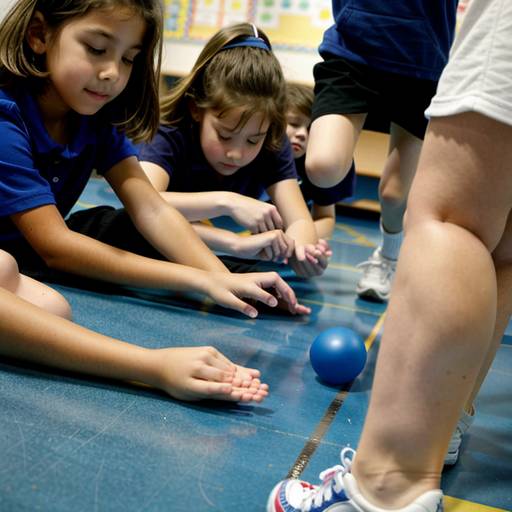
In this 1st Grade Physical Education lesson plan focusing on coordination and balance, students will engage in a series of fun and interactive activities designed to enhance their physical skills. The session begins with a dynamic warm-up featuring animal movements to energize the class. Students will then participate in three main activities: walking along a balance beam to practice their balance, navigating a 'tightrope' created with tape or cones while maintaining control, and hopping across hula hoops representing 'stepping stones' to challenge their balance further.
After the main activities, students will engage in a cool-down session that includes calming stretches, allowing them to reflect on what they have learned and enjoyed. Throughout the lesson, the teacher will assess students' abilities, providing positive reinforcement and encouragement. The session emphasizes the importance of balance and coordination in everyday life while promoting teamwork and cooperation among students.