
Filters
Level
Grade
Subject
Subject Area
Subject Topic
Standard(s)
Audience
Keyword
DurationMinutes
Elementary School Lesson Plans


In this 1st-grade Earth Science lesson plan, students will explore various types of weather, including sunny, rainy, cloudy, and stormy conditions. The lesson begins with a discussion about weather, prompting students to share their ideas, followed by a reading of a weather-themed story to enhance understanding.
Students will then engage in a hands-on activity where they create weather charts using cotton balls to represent clouds and small cups of water to simulate rain on blue construction paper. This creative project allows them to visually represent their understanding of different weather types.
The lesson concludes with students sharing their weather charts with partners, reinforcing their learning through verbal communication. Overall, the students will gain insights into how weather impacts daily life, fostering an appreciation for the diverse conditions of our planet. Assessment will be based on participation and the completed weather charts, with potential extensions including a daily weather journal.

In this 2nd-grade language arts lesson, students will explore narrative writing by learning about the key elements of storytelling, including characters, setting, plot, and conflict. The lesson begins with a discussion about favorite stories, allowing students to articulate the components of narratives. After a mini-lesson where a familiar tale is analyzed, students will complete story map worksheets in pairs, brainstorming their own characters, settings, problems, and resolutions. They will then individually draft their own narratives based on their story maps, incorporating illustrations. The lesson concludes with opportunities for students to share their stories with classmates. Assessment will involve reviewing both the story maps and drafts to gauge understanding of narrative structure, and an extension activity will involve compiling a class storybook featuring student contributions. This lesson promotes creativity and engagement with writing while developing essential narrative skills.
This Kindergarten language arts lesson plan focuses on writing and creative expression through storytelling. The session begins with a read-aloud of an engaging story to introduce the essential elements of a narrative, including characters, setting, and plot. After discussing these components, students engage in a story map activity where they illustrate and describe their own characters, settings, and plots. Following this, they write simple sentences based on their story maps, allowing them to practice their writing skills. The lesson culminates in a sharing session, where students present their stories to the class, fostering confidence and communication skills. Assessment is based on participation and understanding of story elements, with opportunities for differentiation provided for varying skill levels. The session encourages creativity and culminates in a classroom project that compiles students' work into a storybook for future sharing.
This lesson plan focuses on enhancing first-grade students' reading skills through an engaging exploration of story elements and reading strategies. Students will learn to identify key components of a story, including characters, setting, and plot, while practicing strategies such as predicting, questioning, and summarizing. The session begins with a read-aloud of a picture book, where students participate by making predictions and posing questions. Following the read-aloud, the class engages in a group discussion to fill out a graphic organizer, summarizing the story's elements. In small groups, students will then work with different picture books to identify similar story components and share their insights with the class. The lesson concludes with a recap of the strategies developed, and all students receive recognition for their participation. Assessments will include observations of student engagement and comprehension through group work and the completion of graphic organizers. Differentiation strategies are also included to support varying proficiency levels among students.
In this first-grade Language Arts lesson, students will engage in creative writing by crafting their own short stories. The lesson begins with a group reading of a picture book that highlights key story elements such as character, setting, and plot, prompting a discussion to identify these components. Students will then use a provided worksheet to brainstorm and outline their stories, focusing on the main character, setting, and sequence of events. After drafting their stories, they will illustrate a scene from their narratives. The lesson concludes with students sharing their stories in pairs or small groups, fostering a supportive environment for feedback. Assessment will involve observing participation and reviewing their worksheets for comprehension of story elements. The lesson encourages creativity and confidence in writing while emphasizing the joy of storytelling. Extensions are available for students needing further challenge or engagement.
In this 4th-grade language arts lesson plan, students will explore the art of creative writing by focusing on the key elements of storytelling: character, setting, plot, conflict, and resolution. The lesson begins with a classroom discussion about favorite stories, followed by a review of story elements. Students will then work in small groups to brainstorm unique story ideas using a graphic organizer. They will choose one idea to develop into a short narrative, writing independently while receiving peer feedback during a sharing session. The lesson concludes with select students sharing their drafts with the class and reflecting on their writing experience. Assessment will include participation in activities, the completion of the graphic organizer, and evaluation of their short stories for creativity and the incorporation of story elements. Extensions include illustrating stories and presenting them in a storytelling festival, promoting further engagement with creative expression.
In this 2nd Grade Language Arts lesson plan, students will enhance their reading comprehension skills by employing specific strategies to investigate a text. The lesson begins with a discussion on the importance of understanding stories, followed by a read-aloud of a chosen picture book. During the reading, students will be encouraged to make predictions and identify key story elements such as characters, setting, and plot.
Following the read-aloud, students will engage in guided practice using story maps to collaborate with a partner in identifying story elements. They will also participate in a prediction activity by writing alternative endings based on clues from the text. As part of the lesson, students will formulate questions about the story using guided prompts, which they will share with the class.
Assessment will involve monitoring student participation, and collecting story maps and predictions to evaluate comprehension and engagement. The lesson promotes differentiation by offering support for struggling students while challenging advanced learners with creative tasks. The closing reinforces the importance of active reading strategies to deepen understanding and enjoyment of literature.
In this 2nd Grade Language Arts lesson, students will explore the elements of storytelling, including characters, setting, problem, and solution. The lesson begins with a discussion about what makes a good story, followed by an introduction to story starters that prompt creative thinking. Students will first brainstorm ideas based on their assigned story starter in pairs, then independently write their own short stories that incorporate all four story elements. Peer sharing and feedback are integral to the lesson, allowing students to learn from each other and practice their oral communication skills. The lesson concludes with a reflection on the writing experience and the uniqueness of each story. To enhance learning, differentiation strategies are provided for students who may need additional support, and a follow-up activity involves creating a class display of students’ work.
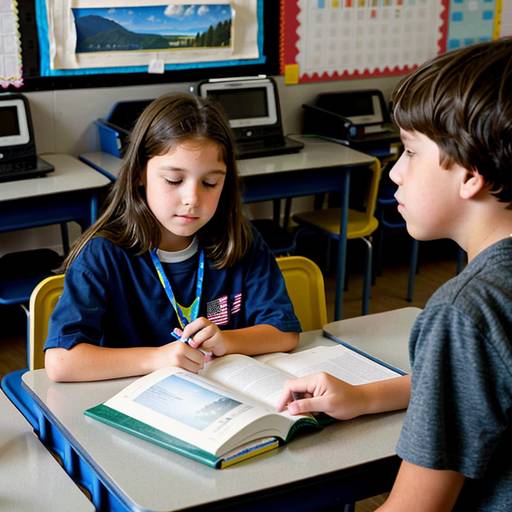
This lesson plan focuses on teaching 4th-grade students the fundamentals of multimedia creation and digital storytelling over the course of a week. Students will explore different elements of multimedia—such as text, images, sound, and video—and understand how these components come together to enhance storytelling.
Throughout five class sessions, they will engage in various activities, starting with brainstorming ideas and scriptwriting in pairs. They will then create storyboards and gather multimedia elements, ultimately using digital tools to craft their stories. The final class will involve presentations where each pair shares their creations with classmates, allowing for constructive feedback and discussion.
Assessment will be based on participation, the creativity and completeness of their digital stories, and a reflective writing assignment summarizing their experiences. The lesson also includes differentiation strategies to support various learners and offers extension activities to further community engagement.

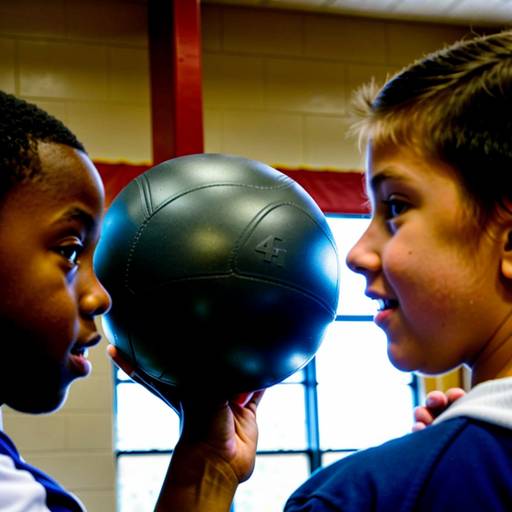
In this 4th-grade physical education lesson, students will engage in a variety of activities designed to enhance their fitness and strength. The class will begin with a dynamic warm-up routine to prepare the students' muscles, followed by a discussion on the significance of physical fitness and the concept of strength.
The main portion of the lesson consists of five different fitness stations, each focusing on a specific strength-building exercise, including push-ups, bodyweight squats, resistance band workouts, plank holds, and jumping jacks, allowing students to learn proper form and technique. Following this, students will participate in a fitness relay race that incorporates the exercises practiced at the stations, fostering teamwork and friendly competition.
The session will conclude with a cool-down period that includes stretching and reflection, where students can share their experiences and thoughts on the exercises. Throughout the lesson, student participation, effort, and form will be observed for assessment. Adaptations will be provided for students needing additional support, ensuring an inclusive and positive learning environment that promotes the importance of staying active and healthy.