
Filters
Level
Grade
Subject
Subject Area
Subject Topic
Standard(s)
Audience
Keyword
DurationMinutes
Lesson Plans


This lesson plan focuses on helping toddlers identify and express basic emotions—specifically happy, sad, angry, and scared—through various interactive activities. The session begins with an engaging introduction using emotion cards to demonstrate and name different feelings. A storytime component allows children to explore emotions through relatable characters, fostering discussion and expression.
Children then participate in an emotion charades game, acting out feelings for their peers to guess, which enhances their understanding of non-verbal communication. An art activity encourages toddlers to express their current emotions through color and creativity, while reflection in a large mirror allows them to make facial expressions that correspond with different feelings. The lesson concludes with a joyful dance to music, inviting children to connect with the emotions evoked by the sounds.
Throughout the lesson, children are encouraged to share their feelings, promoting emotional literacy and community building. Observational assessment focuses on each child's participation and their ability to convey and recognize emotions. Extensions to this lesson can be integrated into daily routines for ongoing emotional development.

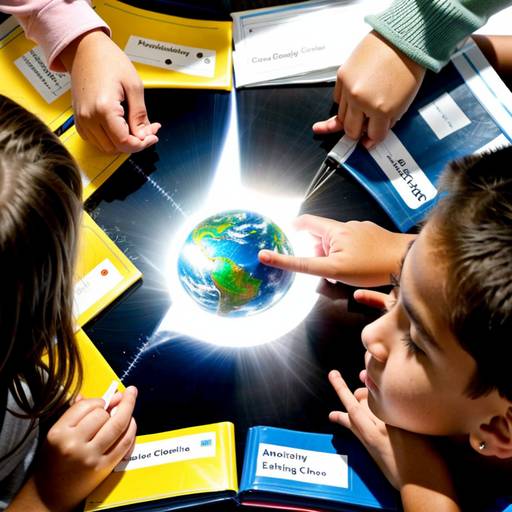
In this 3rd-grade science lesson, students explore the concepts of potential and kinetic energy through engaging activities and discussions. The lesson begins with a brief introduction to energy and its two main types, supported by visual examples from everyday life. Students then participate in a hands-on activity where they work in small groups to create ramps for toy cars or marbles. They experiment with different ramp heights to observe how potential energy is converted into kinetic energy. Measurements of how far the cars travel are recorded, promoting teamwork and critical thinking. The lesson concludes with a class discussion that reinforces the concepts and encourages students to share personal examples of potential and kinetic energy. Assessments include observation during activities and the recording of experimental results, ensuring students grasp the foundational principles of energy.
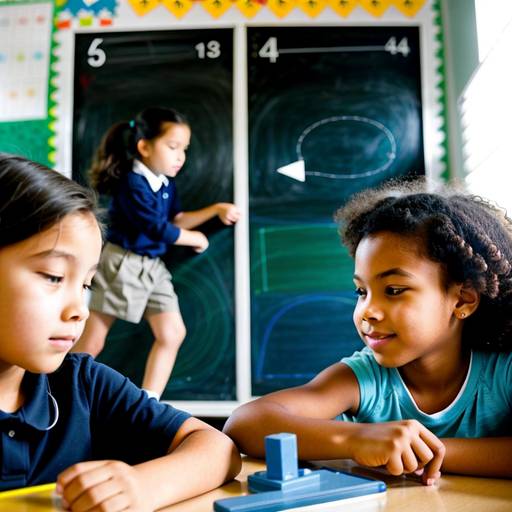
This 2nd-grade science lesson introduces students to the concept of energy, focusing on kinetic and potential energy through engaging, hands-on activities. The lesson begins with a discussion to gauge students' prior knowledge about energy, followed by the exploration of two main types of energy.
During the first activity, students create balloon rockets to observe how potential energy in the air is transformed into kinetic energy as the balloons are released. In the second activity, students work in small groups to launch toy cars using rubber bands and ramps, experimenting with different ramp heights and measuring the cars' distances traveled and speeds.
The lesson concludes with a group discussion where students share their discoveries and complete worksheets that reinforce what they learned. Through observation and assessment, the teacher evaluates student understanding and engagement, and opportunities for extension are suggested to encourage further exploration of energy in their everyday lives. The lesson effectively combines theoretical concepts with practical application, promoting active learning and collaboration among students.
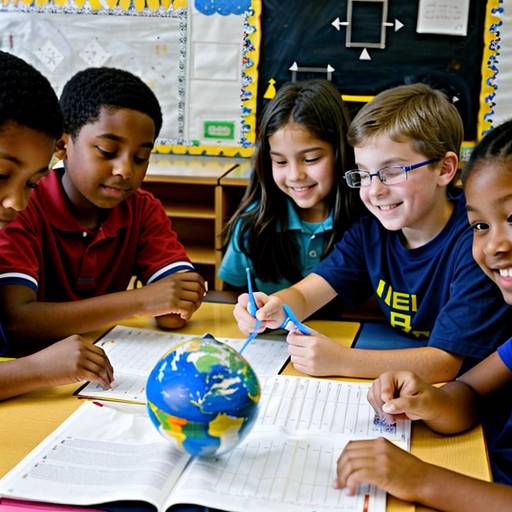
This lesson plan for 4th-grade students focuses on the concepts of potential and kinetic energy within the realm of physical science. The objective is for students to understand these two types of energy, identify real-life examples, and experience the transformation between them through a hands-on activity.
The lesson begins with an introduction to energy, including a discussion about what it is and where it can be observed in daily life. Students learn about potential energy (stored energy) and kinetic energy (energy of motion) through interactive questioning.
Following the discussion, students participate in a hands-on activity where they use rubber bands, toy cars, and ramps to explore energy transformations. They will stretch rubber bands to create potential energy and release them to observe the resulting kinetic energy as the car moves down the ramp. Students record their observations and discuss how different factors like height affect movement.
The lesson concludes with a class review and encourages students to reflect on energy transformations they observe outside of the classroom. Assessment is based on participation and understanding during activities, as well as reflections in their science journals. Extensions include a homework assignment inviting students to identify and illustrate examples of energy transformation in their own environments.
Overall, the plan aims to engage students actively in discovering energy concepts through interactive learning experiences.

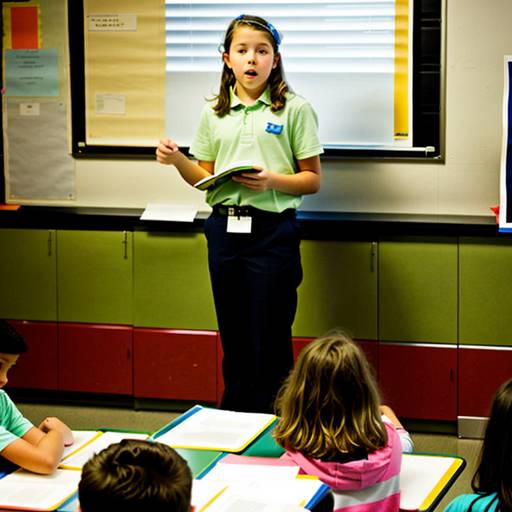
This lesson plan focuses on teaching 5th-grade students the principles and structure of expository writing. It begins with a discussion about the purpose of writing, followed by an introduction to expository writing, including its key components: an introduction, body paragraphs, and a conclusion. Students will participate in a guided practice session using a graphic organizer to outline their thoughts on a chosen topic.
After setting their outlines, they will independently draft an expository essay. The lesson concludes with students sharing their writing, fostering reflection on their writing process and organization. Assessment will be based on participation during activities, the completion of graphic organizers, and the quality of their rough drafts. Homework will involve finalizing their essays for a future peer review session, with extensions provided for advanced students and additional support for those needing it. Overall, this lesson promotes clarity and organization in student writing while enhancing their ability to inform and engage readers.
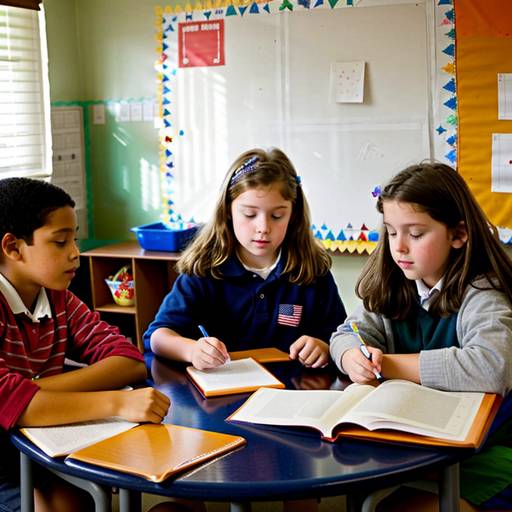
In this 4th-grade Language Arts lesson, students will explore the elements of folktales through character analysis and theme identification. The lesson begins with an introduction to folktales, where students share their prior knowledge and experiences. Students will read a selected folktale aloud, highlighting important character traits and events. Following the reading, they will analyze the main characters using graphic organizers, focusing on their motivations and actions. This analysis will lead to a class discussion about the story's themes and moral lessons. Students will conclude the lesson by reflecting on what they learned through writing and potentially illustrating a scene from the tale. The lesson incorporates assessments of participation, graphic organizer completion, and written reflections while providing differentiation to support diverse learners. Extensions may include comparing folktales from different cultures or creating original stories. Overall, the lesson aims to enhance students' reading comprehension and critical thinking skills in an engaging and interactive manner.
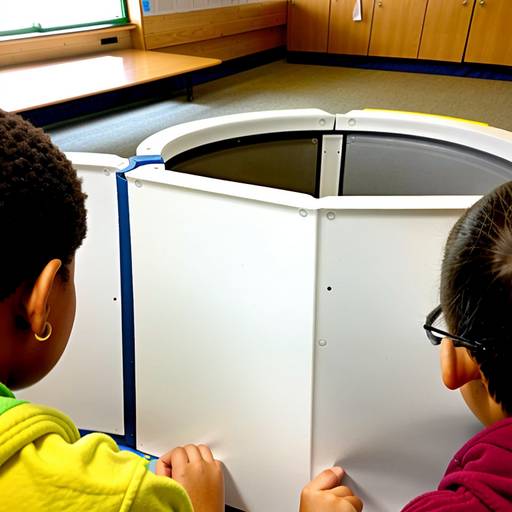
This 4th-grade physical science lesson focuses on the concepts of force, push, and pull, helping students understand how these forces affect the motion of objects. The lesson begins with an interactive discussion where students share their prior knowledge of forces, followed by an introduction to key vocabulary and concepts, including gravity and friction.
Students are then divided into small groups for hands-on experiments involving toy cars, ramps, weights, and various surfaces. They conduct two main activities: one to explore how pushing or pulling affects distance traveled with added weights and another to examine the impact of different surface textures on motion. Each group records their observations and findings.
After the experiments, groups present their results, fostering discussion about real-world applications and encouraging peer questions. The lesson concludes with a brief review of key concepts and an exit ticket assessment to gauge understanding. Extensions and adaptations are included to support diverse learners and enhance engagement. Throughout the lesson, students actively explore and engage with the material, laying a strong foundation for their understanding of physical forces.

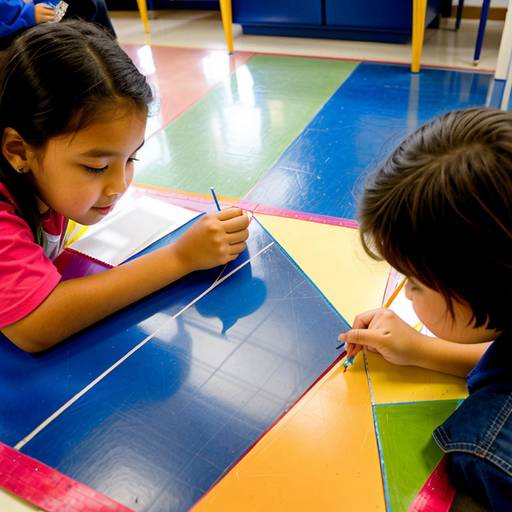
In this 2nd-grade math lesson, students will explore the concepts of geometry and lines through interactive activities and creative expression. The lesson begins with a discussion on various types of lines, including straight, curved, horizontal, vertical, and diagonal, accompanied by visual examples. Students will then engage in a fun game to identify geometric shapes, such as squares, rectangles, triangles, and circles, by observing their characteristics.
Following this, the class will participate in a scavenger hunt, during which students will search for and document different types of lines and shapes found in their environment. The lesson culminates in an art activity where students create their own artwork using the lines and shapes they have learned about, encouraging creativity and application of their understanding.
Students will share their artwork with the class and reflect on their learning, discussing the importance of lines and shapes in everyday life. Assessment will take place through observation during activities, review of the completed artwork, and a quick exit ticket to reinforce the concepts covered. The lesson is designed to be engaging, allowing for differentiation to support varying levels of student understanding.
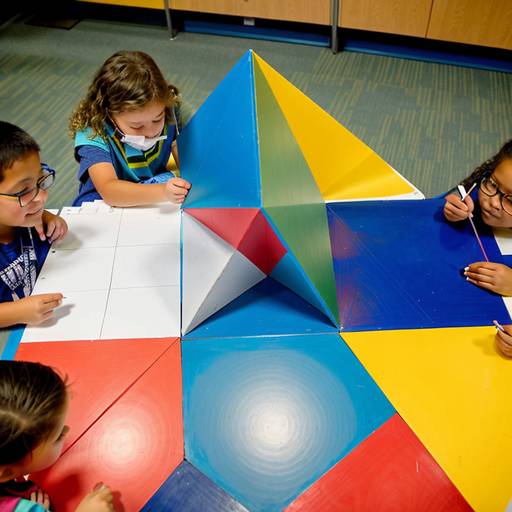
In this 3rd-grade math lesson, students will explore basic geometric shapes, including triangles, squares, rectangles, and circles, while learning about perimeter. The class will begin with a "Shape Hunt" activity to identify shapes in their environment, followed by a discussion on the concept of perimeter and how to measure it. Direct instruction will guide students in using rulers to calculate perimeter for various shapes, emphasizing formulas for rectangles, squares, and triangles.
Students will engage in a collaborative Shape Creation Activity where they will draw their own geometric shapes and measure them to calculate the perimeter. After this guided practice, they will independently complete a worksheet that requires them to find the perimeter of different shapes using the concepts learned. The lesson will conclude with a review of key concepts, encouraging students to share their insights and submit an exit ticket reflecting their learning.
Overall, this lesson aims to combine hands-on activities with practical problem-solving to enhance students' understanding of geometry and perimeter while fostering collaboration and independent thinking in mathematics.

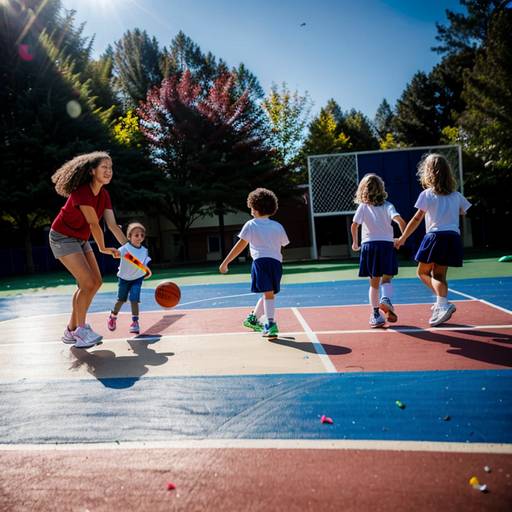
This lesson plan focuses on enhancing preschoolers' gross motor skills through a variety of engaging activities spanning 105 minutes. The session begins with an energetic warm-up that incorporates movement and stretches, followed by five activity stations where children can practice jumping, balancing, running, and navigating an obstacle course. Each station allows for skill development in a fun and interactive environment, promoting coordination and teamwork. A group activity involving mimicking animal movements further encourages creativity and physical expression. Following the main activities, children participate in a cool-down session with calming stretches, concluding with group reflection to share their favorite experiences. Throughout the lesson, safety is prioritized, and supervision ensures that children can explore and enjoy movement safely, fostering a positive attitude toward physical activity. The lesson aims not only to enhance motor skills but also to build social skills and a love for play.