
Filters
Level
Grade
Subject
Subject Area
Subject Topic
Standard(s)
Audience
Keyword
DurationMinutes
Lesson Plans

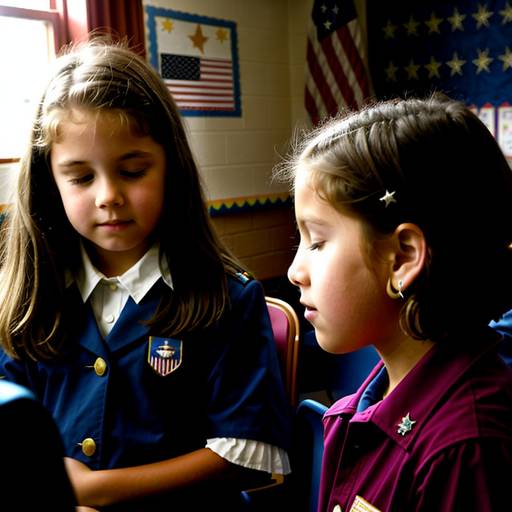
This lesson plan for 3rd-grade students focuses on exploring significant historical figures in American history. The lesson begins by introducing the concept of heroes, facilitating a class discussion about what characteristics make someone a hero. Students are then presented with various American historical figures, learning about their contributions and impact on society.
Afterward, students engage in a research activity where they select a hero to study further, filling out a worksheet with details about the hero’s life, achievements, and qualities they admire. This personal reflection is followed by a sharing session where students present their findings to the class, promoting public speaking skills and fostering a sense of community.
The lesson concludes with a discussion that highlights the common traits among the heroes and encourages students to think about how they can embody those qualities in their own lives. Assessment includes participation in discussions, completion of the worksheets, and the quality of presentations. The plan also includes adaptations for diverse learners and extension activities to reinforce the material.

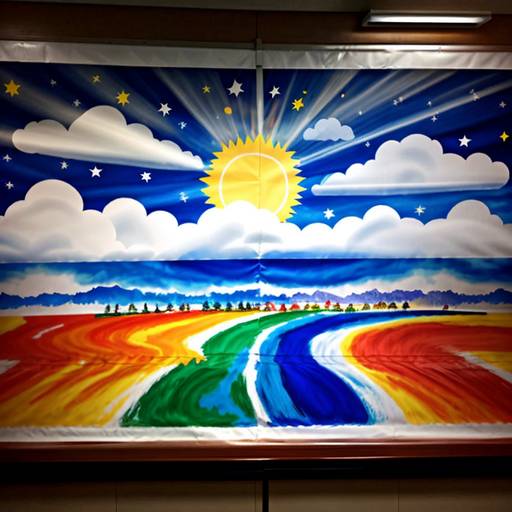
In this kindergarten Earth Science lesson, students will explore fundamental concepts of weather, including various types such as sunny, rainy, snowy, windy, and cloudy. The lesson begins with a captivating picture book that introduces weather and prompts discussion about students’ experiences with different weather conditions.
Students will then engage in a hands-on activity where they create weather-related artwork using cotton balls and crayons to depict their chosen weather scenes. Additionally, a simple mini-experiment will simulate rain, allowing students to observe how clouds hold water.
The lesson will culminate in filling out a class weather chart, helping students connect their observations to real-life activities and clothing choices based on weather conditions. Informal assessments will be conducted through participation in discussions and the creative activities. Extension ideas include a “Weather Journal” project, encouraging ongoing observation of daily weather. This lesson aims to enhance students' understanding of weather while fostering creativity and observational skills.
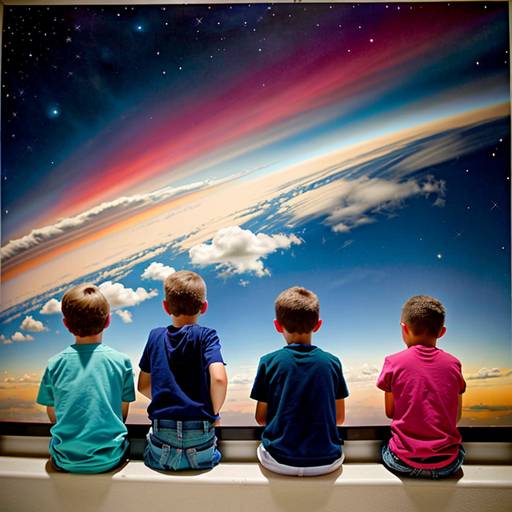
In this 2nd-grade Earth Science lesson, students will explore different types of weather, including sunny, cloudy, rainy, snowy, and windy conditions. The objective is to help students identify various weather types and understand how weather affects their daily lives. The lesson begins with a discussion about personal weather experiences and continues with an introduction to simple weather instruments such as thermometers, rain gauges, and anemometers.
Students will engage in group activities to sort weather images and share their findings with the class. They will then work independently on a weather journal, illustrating their favorite type of weather and writing about it. The lesson concludes with a class discussion that reinforces the key concepts learned. Assessment will occur through participation in discussions and reviewing the weather journals. Extensions include creating a class mural and conducting outdoor weather observations. The lesson is designed to be interactive, supporting various learning styles and encouraging creativity while fostering an understanding of Earth Science and weather patterns.
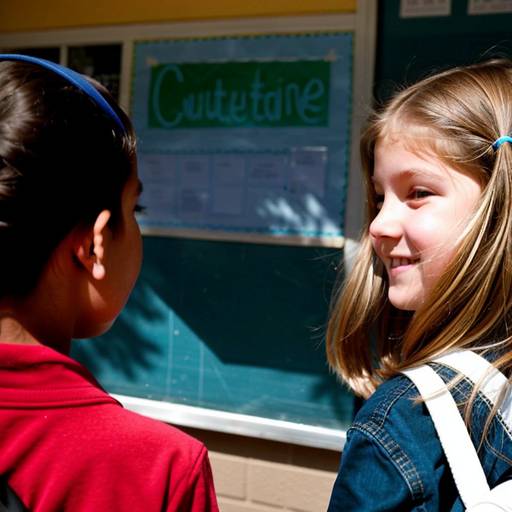
In this 2nd-grade social studies lesson, students will explore the concept of community and the various roles of community helpers. The lesson begins with a discussion about what a community is, followed by an introduction to different community helpers such as police officers, firefighters, doctors, and teachers. Through interactive group activities, students will analyze the roles of these helpers and how they contribute to the community's wellbeing. Each student will then create a poster featuring a chosen community helper, including facts about their jobs and a drawing. The lesson concludes with students presenting their posters to the class, promoting understanding of community contributions. Assessment will involve observing participation and evaluating the completed projects. An extension activity may include a field trip or guest speaker to further reinforce the concepts learned.
In this 5th-grade social studies lesson, students will explore the various roles within their community and the responsibilities associated with those roles. The lesson begins with a discussion about what a community is, followed by an examination of important community members and their contributions. Students will work in small groups to select a specific community role from provided role cards and brainstorm its associated responsibilities. Each group will create a poster highlighting their chosen role, which they will present to the class. The lesson concludes with a reflective discussion about the importance of these roles and how students can actively engage in their community as responsible citizens. Assessment will be based on group presentations and participation in discussions, with opportunities for extensions and differentiation to support all learners.
In this 1st-grade social studies lesson, students will explore the concept of community and the various roles of community helpers. The lesson begins with a read-aloud of a picture book that introduces different professions, followed by a discussion using a KWL chart to highlight what students know, want to know, and eventually learn about community helpers.
Students will participate in interactive role-play activities, rotating through stations that represent different community helper professions, allowing them to act out scenarios relevant to each role. They will then create artwork representing their chosen community helper, encouraging self-expression and creativity.
The lesson concludes with a review of what students learned, promoting appreciation for community helpers and discussing ways to show gratitude toward them. An optional video clip may be shown to further illustrate the roles within the community. Assessment will be based on student engagement, participation in discussions and activities, and their ability to articulate their understanding of community helpers. A follow-up activity may include inviting local community helpers for a presentation or organizing a field trip to enhance real-life learning experiences.
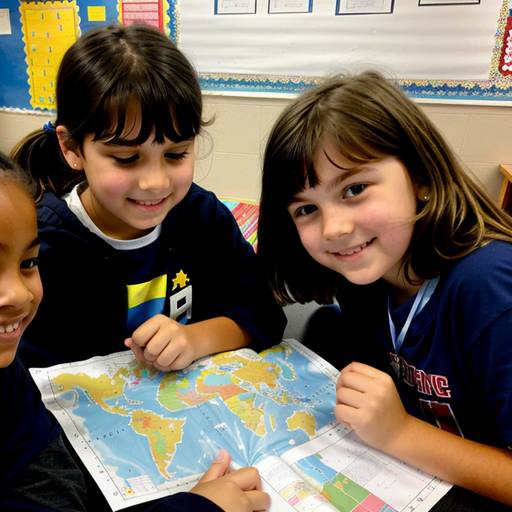
In this 3rd-grade social studies lesson focused on geography and maps, students will explore the essential components of maps, such as the legend, title, compass rose, and scale. The lesson begins with an engaging discussion about maps, where students share their experiences and observations. Using printed examples, the teacher demonstrates key map features and symbols.
During guided practice, students work in small groups to create a map of their classroom or playground, incorporating the components learned. Each group presents their map to the class, explaining their symbols and choices. Following this, students independently design their personal map of a familiar location, including essential map elements and writing a reflective paragraph about the importance of maps in daily life.
The lesson concludes with a review of key concepts and an exit ticket for each student to share their newfound knowledge. Assessment is conducted through group presentations and individual map evaluations. Extension activities may be provided for advanced learners, while additional support is available for those needing assistance. Overall, students will gain a foundational understanding of maps and their significance in navigating our world.
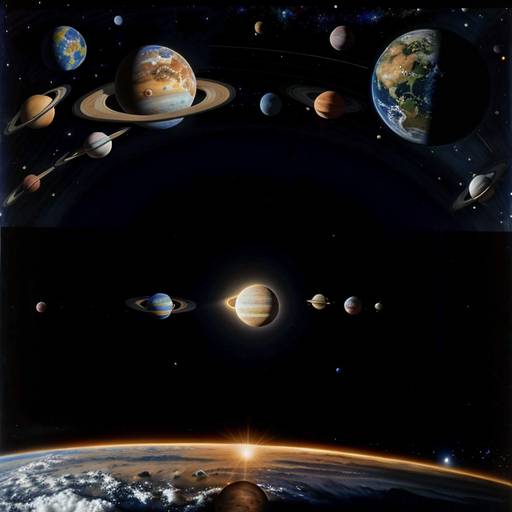
This lesson plan is designed for third-grade students to explore the solar system and learn about the planets that orbit the sun. It begins with an engaging video or animation to capture students' interest, followed by a discussion about their observations of the night sky. The teacher will introduce each planet, highlighting key characteristics and the concepts of orbit and gravity.
Students will participate in guided activities where they work in groups to create fact cards for assigned planets, including drawings and interesting information. They will also build a scale model of the solar system using Styrofoam balls or balloons to represent the planets and string for their orbits.
To reinforce learning, students will complete reflective journal entries about their favorite planet. The lesson concludes with sharing insights and reviewing the order of the planets. Assessment will be based on group interactions and journal reflections. Extensions and adaptations are included to cater to various learning needs, ensuring an engaging and informative experience centered around astronomy.
This lesson plan focuses on helping 5th-grade students explore and understand the solar system. Over two class periods, students will learn about the eight planets and other celestial bodies, including their sizes, distances from the Sun, and unique features. The lesson begins with an engaging video and a presentation that covers key aspects of each planet. Students will also participate in a scaled-down model activity to visualize distances between planets.
In the second class, students will present their research on a chosen planet, fostering collaboration and interactive learning. After presentations, they will engage in a hands-on creative project, crafting models of their assigned planets using Styrofoam balls and paint, emphasizing their characteristics. The lesson culminates in a group discussion to reflect on their learning and share insights. Assessment will be based on student participation, presentation quality, and model creativity, with an extension option for further exploration through field trips or astronomy apps. The overall goal is to deepen students’ understanding of the solar system and their place within it.
In this 4th grade science lesson, students will explore the solar system and its planets through engaging discussions, multimedia resources, and hands-on activities. The lesson begins with an introduction to the solar system, where students share their prior knowledge and watch a video to spark interest. Following this, the teacher presents detailed information about the eight planets, using visual aids to highlight their unique features and the concept of orbits around the sun.
Students will then participate in an interactive activity where they represent different planets in groups, showcasing their assigned planet's characteristics to the class. They will also simulate orbits around the sun in a movement exercise, reinforcing their understanding of how planets travel in space.
To conclude the lesson, students will reflect on their learning through discussion and by completing a labeled diagram of the solar system. Assessment will be based on participation in activities and the accuracy of the diagrams. Extensions and adaptations are included to enhance learning opportunities and support diverse learners. Overall, this lesson aims to instill a fascination with astronomy and provide foundational knowledge about our cosmic neighborhood.