
Filters
Level
Grade
Subject
Subject Area
Subject Topic
Standard(s)
Audience
Keyword
DurationMinutes
Lesson Plans

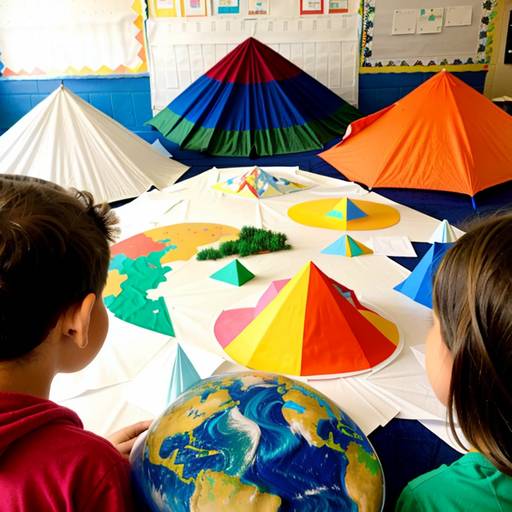
This lesson plan for 3rd graders focuses on geography and landforms, aiming to help students identify and understand various types of landforms, including mountains, valleys, plains, and rivers. The lesson begins with an interactive discussion about geography, where students share what they know about landforms. It then includes a presentation that defines each landform and discusses its importance to the environment and human life.
Students engage in a hands-on activity where they create their own maps using colored pencils to illustrate different landforms creatively. They work in small groups matching flashcards with definitions and pictures, reinforcing their learning through collaboration. The lesson concludes with a fun game of “Landform Bingo,” allowing students to test their knowledge in an engaging way.
Assessment is conducted through observation during activities and the evaluation of completed maps. To extend learning beyond the classroom, students are assigned a homework task to find pictures of landforms to share with their peers in the next session. Overall, the lesson promotes active participation, teamwork, and creativity while deepening students' understanding of landforms and their significance.
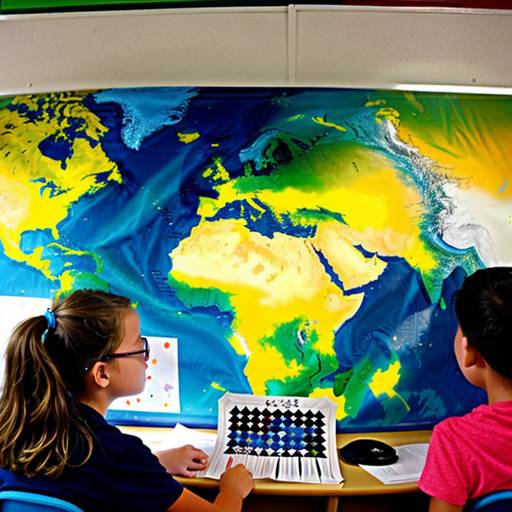
This 4th-grade social studies lesson focuses on exploring geography and landforms. Students will begin by watching a video showcasing various landforms, followed by a discussion about their characteristics and significance. They will learn about different types of landforms, including mountains, hills, plains, valleys, plateaus, and deserts, along with the processes that form them.
In small groups, students will create models of assigned landforms using modeling clay or playdough, promoting teamwork and creativity while reinforcing their understanding. Each group will then present their model to the class, explaining its features and importance. Students will also label and illustrate a blank map of their locality with the landforms they learned about.
The lesson wraps up with a review of what students have discovered and emphasizes the importance of understanding landforms in the context of their own environment. Assessment will include observational notes during group activities and an evaluation of the maps created by students. Extensions may involve further independent research on specific landforms and their cultural impact. This engaging lesson blends visual, tactile, and collaborative activities to enhance students' understanding of geography.

This lesson plan aims to enhance toddlers' understanding and expression of emotions through engaging activities. It begins with an introduction where children are shown colorful emotion cards to help them identify their feelings. A read-aloud session follows, utilizing a storybook that highlights different emotions, encouraging discussion and expression.
Participants then engage in a creative activity where they draw faces depicting their current emotions, fostering emotional vocabulary. The lesson also includes a charades game, where children act out emotions using soft toys, and peers guess the feelings being expressed.
Lastly, a musical segment allows children to dance to various songs that evoke different emotions, with discussions about how the music makes them feel. The session concludes with a group reflection on their drawings and experiences, reinforcing the emotional vocabulary learned. Overall, the plan aims to create a supportive environment where toddlers can comfortably explore and articulate their emotions.

In this 2nd-grade Language Arts lesson, students will explore the concept of expository writing by focusing on their favorite animals. The lesson begins with a discussion on what expository writing is, highlighting its purpose to inform and explain. Students will learn how to structure their writing, incorporating an introduction, body paragraphs containing facts, and a conclusion.
After modeling the writing process, students will engage in guided practice to brainstorm and organize their thoughts using a graphic organizer. They will then write their expository paragraphs independently, focusing on clarity and organization. The lesson concludes with students sharing their writing with the class, fostering peer feedback and reinforcing their understanding of the genre. Throughout the lesson, there will be opportunities for assessment and differentiation to support diverse learners. Overall, students will develop their expository writing skills while expressing their personal interests.

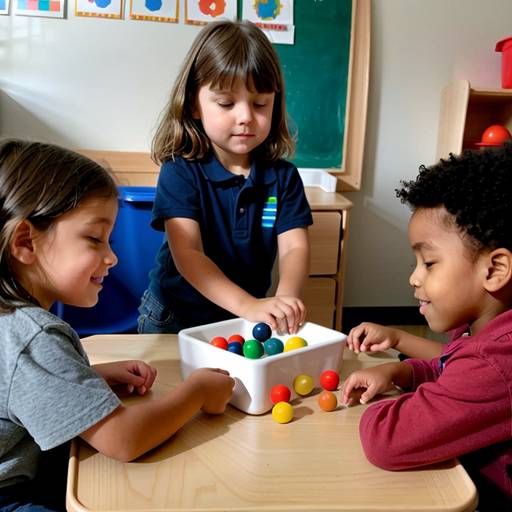
In this preschool science lesson, students will explore the five senses: sight, hearing, taste, touch, and smell through a series of interactive activities. The session begins with an engaging introduction to the senses, followed by five sensory stations where children can independently experience each sense. At the sight station, they will describe colorful objects, while at the hearing station, they will listen to various sounds. The taste station offers opportunities to sample different fruits and vegetables, and at the touch station, children will engage with various textures. Finally, the smell station will challenge them to identify various scents.
After rotations, students will gather for a group discussion to reflect on their experiences, sharing their favorite moments from each station. To conclude, they will create drawings representing their favorite sense, promoting creativity and expression. Optional snack time may be included, allowing further exploration of taste. The lesson aims to foster curiosity and enhance observational skills while accommodating individual needs throughout the activities. Assessment will focus on participation, understanding, and expression during discussions and completed worksheets.
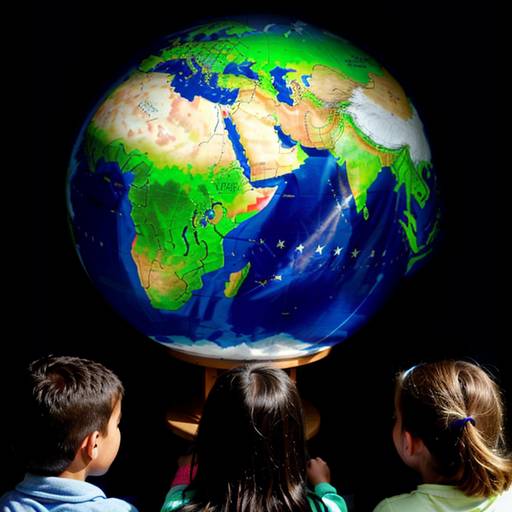
In this 1st-grade social studies lesson, students will embark on an exploration of various countries around the world, focusing on geography and cultural diversity. The lesson begins with a brief introduction to the concept of countries and geography, using a world map to highlight their own country. Educators will introduce selected countries, providing interesting facts and showing picture cards related to each country's flag, traditional clothing, and landmarks.
Students will then engage in a group activity where they locate the discussed countries on a map while discussing what makes each one unique. For the independent activity, each student will select a country of interest and create a poster that includes the country's name, a drawing or picture of a landmark, traditional food or cultural items, and a fun fact.
The lesson concludes with students sharing their posters with the class, fostering a sense of community and appreciation for global diversity. Assessment will be based on observation during the activities and the creativity demonstrated in the poster project. Optional extensions include a "Cultural Day" event, promoting further engagement with the material. The lesson aims to enhance students' understanding of different cultures and the world in which they live.
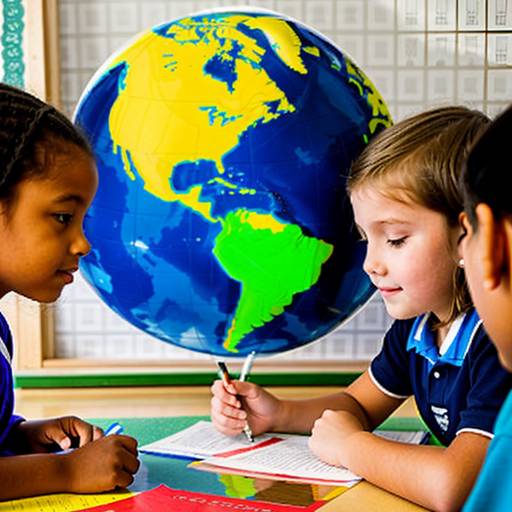
In this 2nd-grade social studies lesson, students will embark on an exploration of different countries and their geographic locations. The lesson begins with a discussion about geography, introducing students to the concept of maps and the significance of understanding various places around the world. Students will be divided into small groups, each assigned a specific country. They will use fact cards to learn about their country's capital, flag, and an interesting cultural aspect, and then locate it on a world map.
Following their research, each group will present their findings to the class, sharing the country’s key information and engaging their peers with questions. The lesson will conclude with a creative activity where students will decorate individual maps with stickers representing the countries discussed. This lesson aims to help students recognize global diversity and develop a basic understanding of world geography while fostering teamwork and presentation skills. Assessment will include observations during group presentations and the evaluation of students' individual maps for accuracy and creativity. Extensions to the lesson may include ongoing exploration of additional countries or personal connections to different cultures.
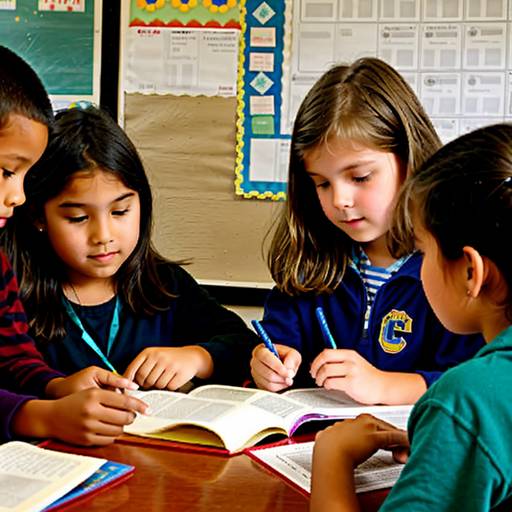
In this 4th-grade social studies lesson, students explore geography and different countries, aiming to understand cultural diversity and the importance of geography. The lesson spans two class periods. In the first session, students learn about the continents and oceans, and then work in small groups to select a country for research. They gather information about the country's population, capital, language, landmarks, and cultural aspects using various resources.
In the second session, groups create informative posters based on their findings. They present these posters to the class, fostering engagement through questions and discussion. The lesson culminates in a wrap-up discussion that reinforces the concepts learned and highlights cultural appreciation. Assessment focuses on group participation, the accuracy of information, creativity, and engagement during presentations. Optional extension activities include creating a class geography book and considering pen pal exchanges to connect with students globally.
In this 4th grade social studies lesson, students will explore the key events and figures of the American Revolution. The class begins with a short video to capture students' interest, followed by a discussion to gauge prior knowledge. The teacher will then provide a focused overview of significant events, such as the Boston Tea Party and the signing of the Declaration of Independence, alongside key individuals like George Washington and Thomas Jefferson.
Students will work in small groups to create visual timelines of the events, which they will present to the class, fostering collaboration and presentation skills. To wrap up, students will complete a reflection worksheet, articulating their understanding of one key event and figure from the revolution. Assessment will include participation, presentation evaluation, and completed worksheets. Extensions and adaptations are included to enhance learning and accommodate diverse needs, making the lesson both engaging and educational.
This lesson plan aims to engage 5th-grade students in understanding the events surrounding the American Revolutionary War. The lesson begins with a warm-up discussion, allowing students to share their prior knowledge about the war, followed by a brief animated video that summarizes its significance. Direct instruction focuses on key events leading up to the war, such as the Stamp Act and the Boston Tea Party, as well as important figures like George Washington and Thomas Jefferson.
Students will participate in a collaborative activity where they create visual timelines that illustrate these events and figures, fostering teamwork and creativity. Each group will present their timeline to the class, promoting peer learning. The lesson concludes with a class discussion about the lasting impacts of the Revolutionary War on modern governance and an exit ticket exercise that encourages students to reflect on their learning and express any lingering questions.
Assessment will involve monitoring group activities and evaluating the timelines for comprehension, as well as reviewing the exit tickets. Differentiation strategies include providing additional support for struggling students and challenging advanced learners with research projects. Overall, the lesson is designed to build knowledge of a pivotal moment in American history while developing critical thinking skills.