
Filters
Level
Grade
Subject
Subject Area
Subject Topic
Standard(s)
Audience
Keyword
DurationMinutes
Lesson Plans

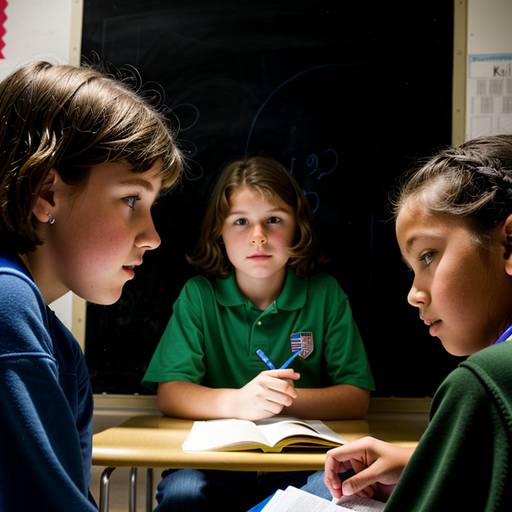
In this 5th-grade Language Arts lesson, students will focus on analyzing character development and motivations within a selected text. The lesson begins with a discussion about favorite characters to spark interest. Students will then engage in guided reading of a short story or excerpt, practicing comprehension strategies such as summarization and inference through targeted questions.
Following the reading, students will work in small groups to complete a character trait chart, identifying and providing evidence for the main character’s traits based on the text. A class discussion will follow, allowing groups to share their findings and explore how characters evolve throughout the story.
To encourage creative expression, students will create visual representations of their chosen character's journey, including relevant quotes from the text. The lesson concludes with a brief sharing session and a homework assignment where students will write a paragraph about the character's impact on the overall story. Assessment will include participation in discussions, the accuracy of character trait charts, and creativity in their illustrations. Various differentiation strategies will be employed to meet the needs of all learners.

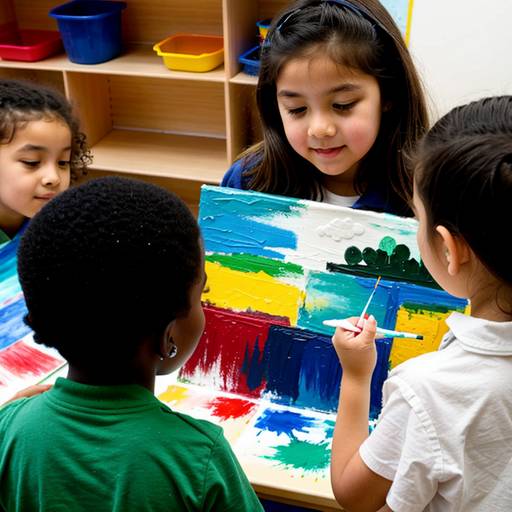
In this preschool art lesson, children will engage in a creative painting activity that emphasizes the exploration of color and texture through nature-inspired themes. The lesson begins with a discussion about the colors and textures found in nature to ignite students' curiosity. After a demonstration showcasing various painting techniques with brushes and natural materials, students will have the opportunity to create their own artwork using a variety of paints and tools.
Throughout the activity, children will experiment freely, mixing colors and applying different strokes while drawing inspiration from their observations of the natural world. As they work, the teacher will circulate to offer guidance and encouragement. The class will conclude with a clean-up session followed by a mini art gallery where students can share their creations and the stories behind them, fostering a sense of community appreciation for everyone's artistic efforts.
This lesson promotes fine motor skills, creativity, and self-expression while allowing children to connect with their environment through art.

This lesson plan is designed for toddlers aged 2-4 and focuses on teaching colors and shapes while enhancing spatial awareness through interactive and engaging activities. The session begins with a circle time where children are encouraged to share their favorite colors. A story featuring colors and shapes is read, prompting children to identify these elements within the illustrations.
Following the story, a shape hunt invites kids to explore the environment, collecting various colorful cut-outs while naming the shapes and colors they find. A movement break incorporates dance and physical expression, allowing children to mimic shapes with their bodies.
Next, children sort the collected shapes by color and type, reinforcing their understanding of categorization and spatial language. An art station enables kids to draw their favorite shapes and colors, promoting creativity while discussing spatial relationships in their artwork.
The session concludes with a circle time reflection, allowing children to share what they learned, reinforcing their understanding of colors and shapes. Throughout the lesson, the focus remains on interactive learning, fostering both cognitive skills and physical development in a playful context.

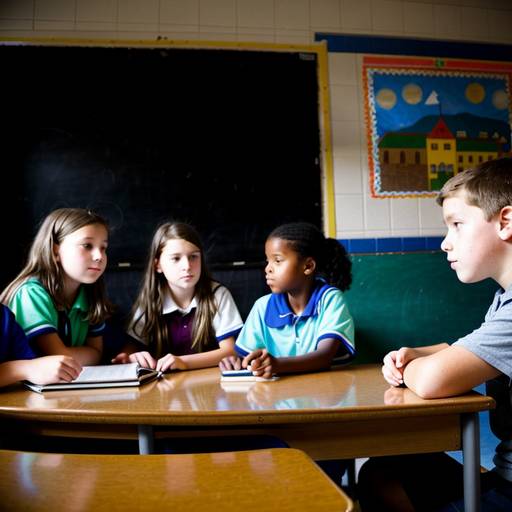
This lesson plan is designed for 5th-grade students to explore geography and the cultural aspects of various countries around the world. It begins with a brief introduction to geography and its significance, followed by a brief overview of continents and key geographic features. Students are divided into small groups, each assigned a specific country to research using digital resources. They will investigate the country’s location, major geographic features, and one cultural aspect such as traditions, food, or language. Each group will create a poster to visually present their findings and share them with the class, fostering engagement and discussion. The lesson concludes with a reflection on the relationship between geography and culture, while assessments will be based on participation, collaborative work, and the quality of the group presentations. Additionally, there are opportunities for extensions and adaptations to accommodate diverse learners and further enrich the learning experience.

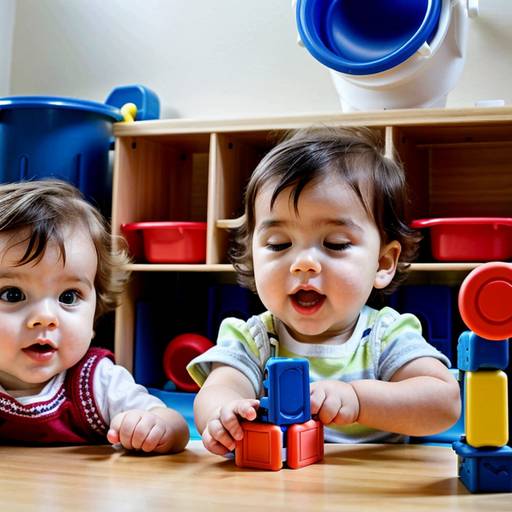
This lesson plan aims to help infants aged 6 to 12 months develop fine motor skills through a series of engaging activities designed to enhance hand-eye coordination, grasping, and manipulation. The session begins with a welcoming circle that includes a song with hand movements to foster engagement.
Infants will explore texture through soft sensory balls and wooden blocks in a sensory exploration station. Following this, they will have creative manipulation time using non-toxic play dough to squish and roll, promoting finger strength. A sorting and grasping activity with large buttons and containers will encourage pinching and dropping skills, while a fun pull and tug segment with fabric strips will focus on grasping and pulling.
The lesson concludes with a musical movement finale, where infants can explore sound using easy-to-grab shakers. Observations will be made regarding each child’s progress, and caregivers will be encouraged to support fine motor development at home through shared insights. Overall, this interactive session promotes the essential fine motor skills critical for infants' growth and future exploration.
In this preschool lesson, students will engage in digital storytelling to foster creativity, language skills, and basic technology comprehension. The session begins with a discussion about storytelling, where students share their favorite stories and learn the elements of a good story. The teacher demonstrates the use of a story creation app on tablets, showcasing how to select backgrounds, add characters, and record narration.
Following the demonstration, students will brainstorm and sketch their story ideas using printed templates, promoting collaborative thinking and planning. Once ready, they will work individually or in pairs on their devices, creating their own digital stories with guidance from the teacher.
At the end of the session, students will present their stories to the class, helping to build confidence in sharing their work. The lesson wraps up with a reflective discussion, allowing students to share their experiences and thoughts on using technology creatively. This activity not only enhances their storytelling abilities but also familiarizes them with digital tools in a fun and interactive way. Extensions of the activity involve creating more stories and hosting a showcase for parents.

This preschool science lesson focuses on introducing young children to the fundamental concepts of Earth and space. The lesson aims for students to recognize basic features of Earth, such as land and water, and celestial bodies like the sun, moon, and stars.
The session begins with a brief introduction where pictures of Earth and space are displayed to spark discussion. Children then engage in an interactive balloon activity, where they handle balloons representing Earth and celestial bodies, promoting tactile exploration and allowing them to express their observations.
Following the balloon activity, children participate in creating their own art pieces on a large poster board, illustrating their understanding of Earth and space using markers, crayons, and stickers. This creative component encourages self-expression and teamwork as children share their creations with peers.
The lesson wraps up with a group discussion, where children share their artwork and reflect on what they’ve learned. A brief story read-aloud reinforces the themes covered in the lesson.
Assessment is based on student participation and engagement throughout the activities, while potential extensions include deeper explorations of related topics, nurturing curiosity about the world and universe. Overall, the lesson serves to foster a foundational understanding of Earth and space in a fun and interactive manner.
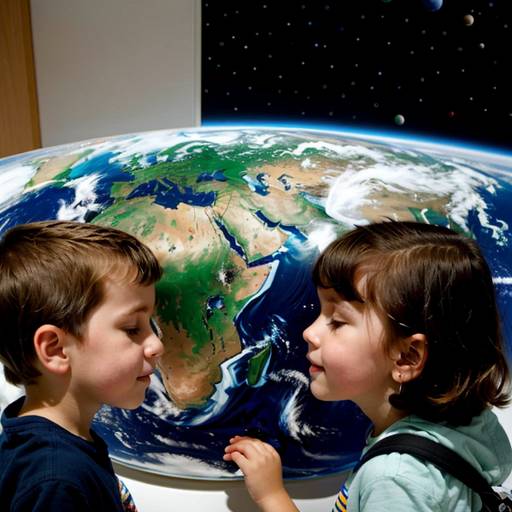
This preschool lesson plan introduces young learners to the five senses through an engaging exploration of Earth's and Space's wonders. Over a 39-minute session, students will participate in various hands-on activities at different sensory stations. They will have the opportunity to feel textures from nature, listen to various sounds associated with Earth and space, identify scents, and taste fruits that represent different planets.
Following the sensory exploration, children will create a mural reflecting their experiences, using their senses as inspiration for artistic expression. The lesson concludes with a group discussion allowing students to share their insights and observations. Throughout the session, the teacher will facilitate engagement and assess understanding by observing student participation and encouraging conversation. This interactive and sensory-based approach aims to foster curiosity and a deeper appreciation for the world around them.

In this engaging preschool science lesson, students will participate in hands-on activities to discover Earth’s elements, such as soil, water, and air, while also exploring basic concepts related to the Earth and space. The lesson begins with an interactive discussion that encourages students to share their prior knowledge about the ground, the stars, and the Moon.
Next, students work in small groups to investigate different Earth materials by filling cups with various elements, discussing their observations, and predicting outcomes when mixing soil and water. Following this, the class participates in a celestial simulation using balloons to represent the Earth and Moon, where children learn about orbits by walking in circles and using flashlights to imitate stars in the night sky.
The lesson concludes with a group discussion where students share what they learned and a storytime session featuring a space-themed book to reinforce the concepts introduced. By the end of the lesson, students will have a foundational understanding of Earth and space elements through experiential learning, fostering curiosity and scientific inquiry.


The lesson plan is designed for infants aged 6 months to 1 year and focuses on helping them recognize and respond to basic emotions through interactive, engaging activities. The session begins with an introduction to emotions, encouraging caregivers to participate and engage with their infants.
Activities include showing emotion flashcards, allowing caregivers to demonstrate facial expressions, and using soft mirror toys to promote self-recognition. An emotion movement game follows, where infants respond to upbeat music that corresponds to different emotional expressions while being held by their caregivers.
The lesson culminates in storytime with emotion-themed picture books, encouraging caregivers to discuss characters' feelings with their infants. The session concludes with a closing circle for sharing insights and reinforcing the importance of emotional expression. Caregivers receive a handout with home activities to continue fostering emotional understanding. Overall, the plan aims to enhance social skills and emotional recognition in a nurturing environment.