
Filters
Level
Grade
Subject
Subject Area
Subject Topic
Standard(s)
Audience
Keyword
DurationMinutes
Lesson Plans
This lesson plan is designed for 5th-grade students to enhance their understanding of digital citizenship and online safety. The lesson begins with a discussion about students' online activities, transitioning into a video that covers essential safety concepts. Students then explore the idea of digital footprints and their implications through group discussions, followed by an interactive activity where they analyze different online scenarios to devise safe and responsible solutions. The class concludes with a comprehensive wrap-up that highlights key takeaways and encourages personal reflection on improving online safety practices. Assessment of learning occurs through participation, group work, and individual reflections. An extension activity invites students to create digital posters to share online safety tips with their peers, promoting a safer digital environment for all.
In this 5th-grade technology lesson, students will explore the concept of digital footprints and the importance of safeguarding their privacy online. The lesson begins with a discussion about what a digital footprint is and how it is formed, followed by a short video that illustrates the significance of maintaining privacy in the digital world.
After the video, students will engage in a class discussion about safe versus unsafe information to share online, examining the implications of their online actions. They will then work in pairs to analyze various scenarios that pertain to online sharing, identifying which actions are safe or unsafe.
To conclude, students will create a Personal Online Safety Action Plan outlining strategies to protect their privacy and safe online behaviors. The lesson wraps up with students sharing their action plans with the class, reinforcing the importance of responsible digital citizenship and making informed choices while interacting online. Throughout the lesson, students will gain valuable insights into their digital presence and the impact of their online actions, fostering a sense of responsibility as they navigate the internet.
This lesson plan focuses on teaching 4th-grade students the principles of digital citizenship and raising awareness about cyberbullying. The lesson engages students through discussions, interactive activities, and group scenarios that illustrate various forms of cyberbullying. Students will learn to define digital citizenship, identify the impacts of cyberbullying on individuals and communities, and explore effective strategies for prevention and intervention.
The lesson includes a guided activity where students work in groups to analyze real-life cyberbullying situations, followed by class discussions to foster understanding and empathy. To conclude, students will reflect on their learning by completing a worksheet that encourages them to think about how they can contribute positively to the online community. Overall, the lesson aims to empower students with the knowledge and skills necessary to navigate the digital world responsibly and supportively.
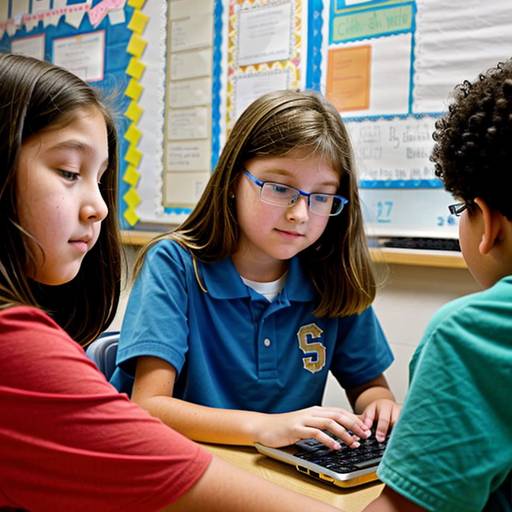
This 5th-grade technology lesson focuses on helping students understand digital citizenship and the issue of cyberbullying. The lesson begins with a group discussion to define digital citizenship and its significance in today’s online environment, followed by an introduction to cyberbullying, including its various forms and impacts on individuals.
Students will watch a short video illustrating cyberbullying and participate in small group activities where they role-play scenarios related to the topic. This exercise encourages them to depict both the bullying incident and a respectful response, promoting positive online behavior.
The lesson concludes with individual reflections in which students express how they can exemplify good digital citizenship and combat cyberbullying. Students will also create awareness posters to reinforce the lesson's concepts in the classroom. By the end of the session, students will have gained valuable insights into responsible online behavior and strategies for addressing cyberbullying.

This lesson plan focuses on enhancing preschool children's social skills, imagination, and creativity through dramatic play in a fantasy-themed environment. The session begins with a circle time discussion where children share their favorite stories about magical characters, setting the stage for collaborative play. After choosing costumes and props, children engage in dramatic play for twenty minutes, enacting scenes from their own imagined kingdom, which encourages interaction and storytelling.
Following the play, children gather to reflect on their experiences and share their character roles and favorite moments. They then have an opportunity to express their creativity by illustrating their kingdom or a memorable scene from the play, fostering further artistic expression. The lesson emphasizes collaboration, communication, and imaginative exploration, concluding with a focus on cleaning up the play area to reinforce responsibility. Assessment is conducted through observation during play and reviewing the children's illustrations, with options for extension activities to keep the theme alive in the classroom.

This lesson plan focuses on enhancing visual sensory development in infants aged 0-12 months through engaging activities and interactive materials. The session lasts 30-45 minutes and begins with an introduction that highlights the importance of visual stimulation.
Activities include exploring colorful toys to encourage hand-eye coordination, using light projectors or fairy lights for a soothing visual experience, and presenting high-contrast images to promote eye tracking. Infants will also engage with unbreakable mirrors to observe themselves, fostering social-emotional development, and explore a sensory blanket with various textures to stimulate touch and vision.
The session concludes with a gathering to discuss observations and experiences, emphasizing the importance of ongoing visual stimulation at home. Caregivers are provided with tips to continue supporting their infants' visual development, all while ensuring a safe and nurturing environment for exploration and interaction.

This preschool physical education lesson plan is designed to teach young children about healthy habits through interactive and engaging activities. The session lasts 53 minutes and aims to promote physical activity while educating students about nutrition and personal hygiene.
The lesson begins with a brief introduction that encourages students to express their thoughts on health. Following this, students participate in a fun warm-up activity filled with movement and stretching to prepare their bodies for physical exercise.
The main segment consists of three activity stations featuring a food relay race that teaches about healthy foods, a hula hoop station that enhances core strength and coordination, and a ball tossing activity that incorporates discussions on hygiene and cleanliness. After rotating through the stations, the class gathers to create a healthy habits chart, summarizing what they've learned and reflecting on their experiences.
The lesson concludes with a calming cool-down session that includes stretching and deep breathing, allowing students to share their favorite parts of the lesson. Each child receives a sticker as a reward for participation, reinforcing positive engagement. Overall, this lesson aims to instill foundational knowledge and practices related to healthy living in a fun and supportive environment.

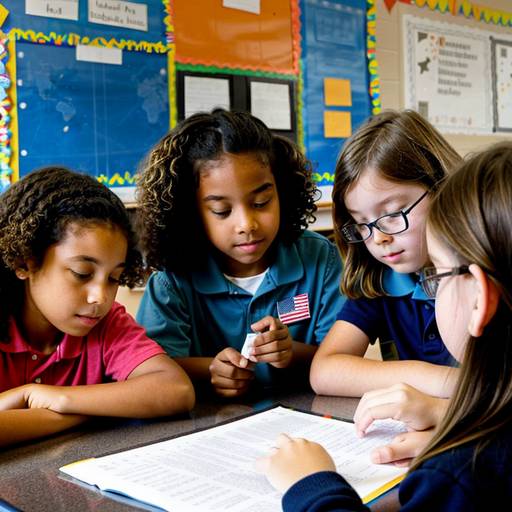
In this 4th-grade science lesson, students will explore the concepts of energy, focusing on kinetic and potential energy through hands-on activities. The lesson begins with a discussion about energy types, followed by a fun balloon rocket activity where students observe how air escaping transforms potential energy into kinetic energy. Next, students work in groups to set up ramps and test how the height of a ramp affects the motion of toy cars, recording distance traveled and time taken. This encourages them to analyze data and draw conclusions about energy transformation. The lesson concludes with a group sharing session, reinforcing the principles learned and introducing the idea of energy conservation. Students are assessed informally through participation and their science journals, with extensions provided for those looking to further their understanding. The lesson incorporates collaborative learning and critical thinking, helping students to grasp fundamental physical science concepts.

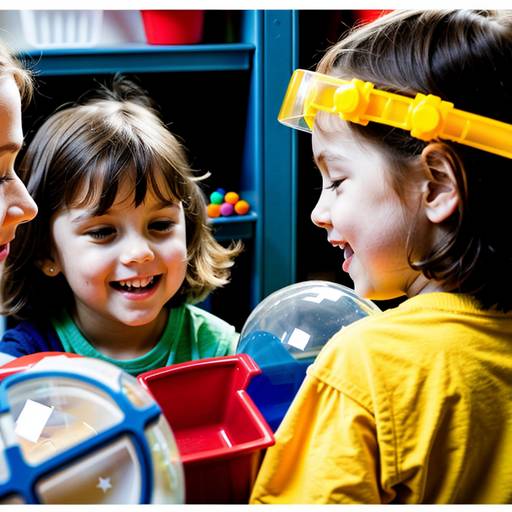
This preschool science lesson introduces young children to the concept of energy through engaging, hands-on activities and exploration. Designed for a group of 4-5-year-olds, the lesson lasts 30 to 45 minutes and includes various activity stations focused on different aspects of energy. Children will experiment with toy cars on ramps to observe how energy affects motion, release air from balloons to see air pressure in action, shake musical instruments to explore sound energy, and go outside to identify forms of energy in nature like sunlight and wind.
The lesson begins with a circle discussion to familiarize children with the idea of energy, prompting them to think about what makes things move or produce sound. After station activities, children gather to reflect on their experiences, sharing their observations and preferences. They then engage in a creative drawing activity, illustrating their favorite energy-related experience from the day. The lesson concludes with a recap of the different forms of energy explored and the distribution of a small energy “passport” for them to take home.
Assessment focuses on children's engagement and understanding during activities and discussions, providing an opportunity for reinforcement of concepts. Extensions encourage families to explore energy at home, fostering ongoing curiosity and learning. Overall, this lesson aims to lay a foundation for scientific inquiry and literacy by making the concept of energy accessible and fun for young learners.
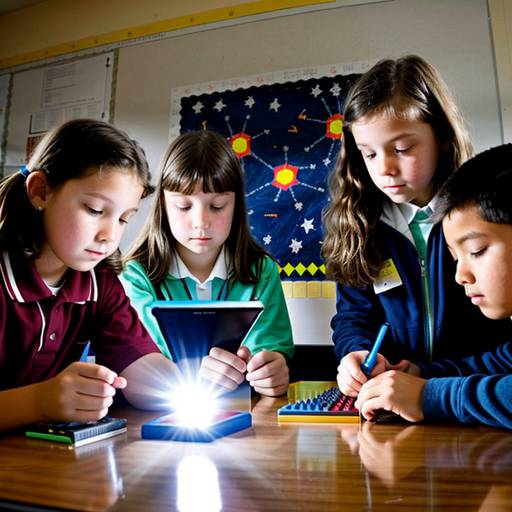
In this 5th grade physical science lesson, students will explore various forms of energy, including kinetic, potential, thermal, and electrical energy, while understanding the concept of energy transformation. The lesson begins with a discussion on the importance of energy in daily life, followed by an overview of different energy types.
Students will engage in hands-on experiments that allow them to witness energy transformation. First, they will use balloons and ramps to observe how potential energy converts to kinetic energy. Then, they will create a simple electrical circuit with light bulbs to explore how electrical energy can be transformed into thermal and light energy.
Following the experiments, the class will engage in a group discussion, sharing their observations and summarizing key points about energy transformation. Students will also be tasked with identifying examples of energy transformation in their own lives for further reflection in their science journals.
Assessment will involve observation of student participation in discussions and experiments, along with reviewing worksheets and homework assignments to gauge understanding. Extension activities will encourage creativity and exploration in energy applications. The lesson concludes with a reflection on student engagement and understanding to inform future instruction.