
Filters
Level
Grade
Subject
Subject Area
Subject Topic
Standard(s)
Audience
Keyword
DurationMinutes
Lesson Plans
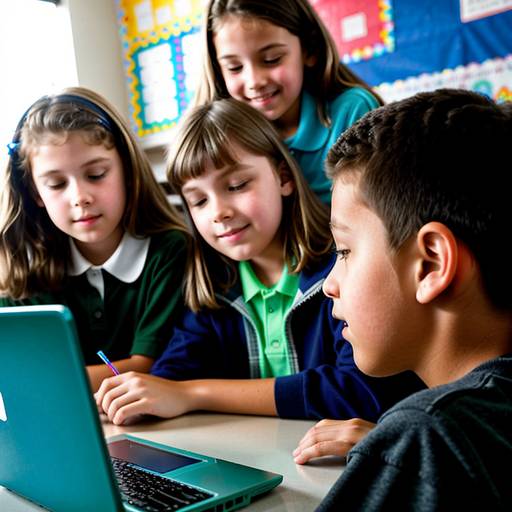
In this 4th-grade lesson on digital citizenship and cyberbullying awareness, students will explore the importance of being responsible and respectful online. The session begins with a discussion about their online activities, leading to an introduction of digital citizenship concepts. Students will engage in group activities where they analyze scenarios depicting cyberbullying, discussing the impact on individuals and identifying ways to respond positively. The lesson emphasizes the role of bystanders as upstanders, encouraging students to think critically about how they can support peers and promote a safe online environment. The class will conclude with a reflective discussion, where students share their insights and action steps for fostering kindness in digital spaces. An assessment via exit tickets will gauge understanding, and a take-home handout will reinforce the concepts learned. Additionally, students will create posters to promote online kindness, contributing to a supportive classroom atmosphere.

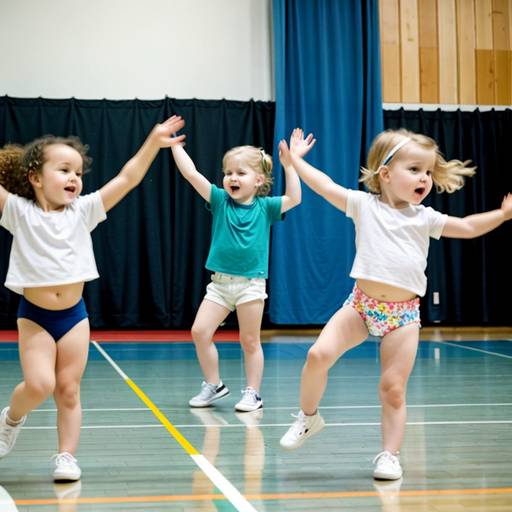
This lesson plan is designed for toddlers aged 2-4 years, focusing on enhancing their coordination skills through imaginative movement inspired by various animals. The session begins with a welcoming circle where children are introduced to the day's theme. A fun warm-up helps prepare their bodies for movement, featuring stretches and actions mimicking different animals.
The core activities involve an interactive animal parade where children mimic various animals, incorporating both movement and sounds, fostering creativity and physical coordination. Following that, a coordination game called "Animal Freeze Dance" encourages children to dance and then freeze in animal poses when the music stops, further reinforcing their coordination and focus.
The lesson concludes with a calming cool-down activity, allowing children to relax while continuing the animal theme. They are guided through gentle stretches and have the opportunity to share their favorite animal experience from the day. Throughout the session, the emphasis is on positive reinforcement and adaptation to individual children's abilities, ensuring an engaging and enjoyable experience that promotes physical development.
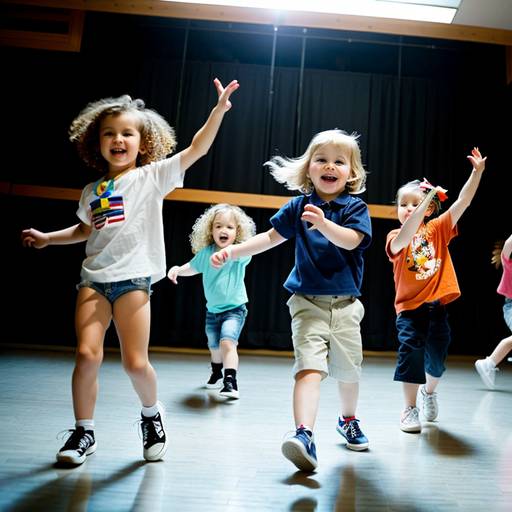
This toddler music and movement lesson focuses on enhancing children's creative movement skills through playful imitation of animal movements and sounds. The session begins with a warm-up that invites children to participate in a fun song, promoting engagement. The main activities involve an animal movement game where children emulate various animals while making corresponding sounds, followed by a creative segment using colorful scarves to represent different animal actions and elements. The lesson culminates in a lively dance party where children can express themselves freely to upbeat animal-themed music. To cool down, the group gathers for a calming storytime, allowing for reflection and sharing their favorite moments. The lesson aims to foster physical activity, imaginative play, and social interaction, while accommodating the diverse needs of all participants.

In this preschool art lesson, children will explore the connection between dance and visual art by expressing their movements through painting. The session begins with an introduction to how dance can convey feelings, followed by a warm-up dance where students freely move to music. After discussing their experiences, they will transition to creating their artwork using large sheets of paper and various paint materials. While painting, children are encouraged to mimic their dance movements, using colors to represent their emotions and experiences. The lesson culminates in a sharing and reflection period, where each child presents their artwork and explains how it connects to their dance movements. This activity fosters creativity, self-expression, and the ability to connect physical movement with artistic expression.
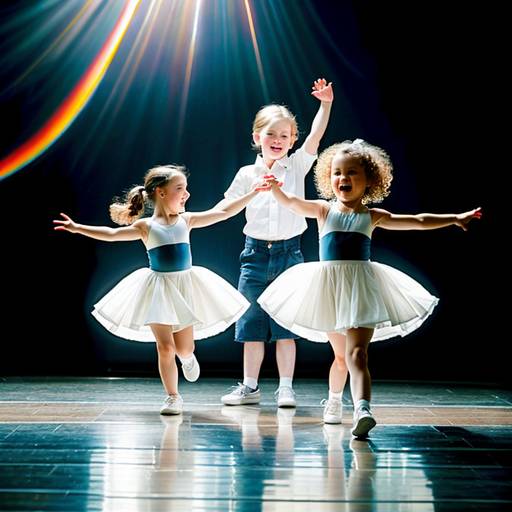
This lesson plan is designed for toddlers, aiming to foster music appreciation through a dynamic and interactive experience. Over a duration of 30-45 minutes, children will explore various music genres, such as classical, jazz, folk, and world music, while engaging in movement and dance activities. The session begins with a warm-up that encourages stretching and body movement imitating different instruments.
As music is played, children are invited to express themselves through movement, reflecting on how each genre influences their feelings and actions. They will also have the opportunity to explore musical instruments, creating their own rhythms in small groups, fostering creativity and collaboration.
Colorful scarves are introduced for an imaginative movement activity, allowing children to express the music's mood while enhancing their coordination. The lesson concludes with a cool-down period featuring softer music, where children can reflect on their experiences and favorite moments. The overall goal is to instill a sense of joy and appreciation for music and movement, encouraging children to explore these concepts further at home.

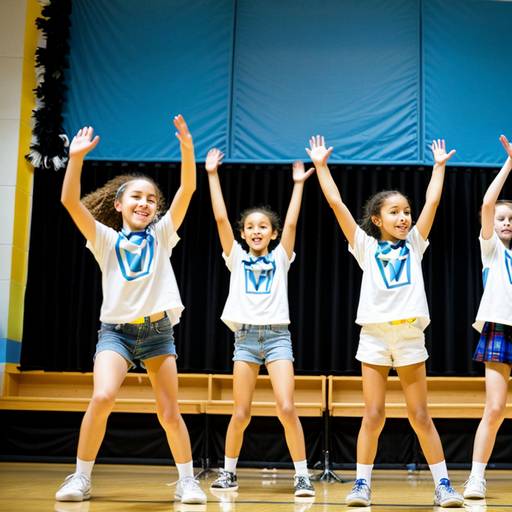
In this 45-minute music lesson for 3rd graders, students will explore the concept of dynamics, focusing on loud and soft sounds in music. The lesson begins with a discussion about dynamics, introducing key terms such as piano (soft), forte (loud), mezzo-piano, and mezzo-forte. Students will practice these concepts through movement activities, where they express dynamics by moving energetically for loud sounds and gently for soft sounds, coordinated with varying music selections.
Next, the class will engage in vocal exercises using a familiar song, taking turns singing at different dynamic levels to understand how dynamics can change the mood of a piece. The lesson further includes a group percussion ensemble, where small groups of students are assigned different dynamic levels to perform together, reinforcing their understanding through collaborative music-making.
Finally, the lesson concludes with a reflection on the importance of dynamics in music and encourages students to listen for these changes in their favorite songs at home. Assessment will be based on students' participation and demonstration of dynamic concepts throughout the activities. Extension ideas include a homework assignment that involves listening to music and identifying dynamic changes. Overall, the lesson effectively combines music theory and physical activity to deepen understanding of musical dynamics.
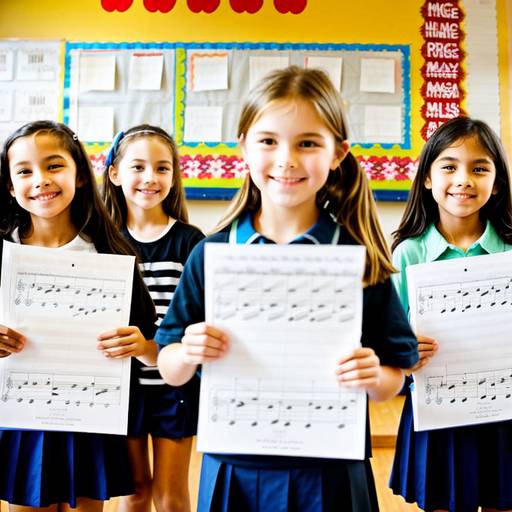
In this 2nd-grade music lesson, students will explore the basics of rhythm and music theory by learning about different note values, including quarter notes, half notes, and whole notes. The lesson begins with a discussion on rhythm, followed by a group clapping activity where students practice clapping simple patterns that incorporate the note values. Afterward, students will engage in a hands-on activity using percussion instruments to create their rhythms, emphasizing the importance of maintaining a steady beat.
To reinforce their understanding, students will create their own rhythmic patterns on worksheets, which they will later share with the class by clapping or using their instruments. The lesson concludes with a reflection on the concepts learned and how rhythm influences music. Assessment will be based on participation, the ability to perform rhythmic patterns, and the completion of worksheets. Extension activities are suggested to further explore rhythm through movement and technology.

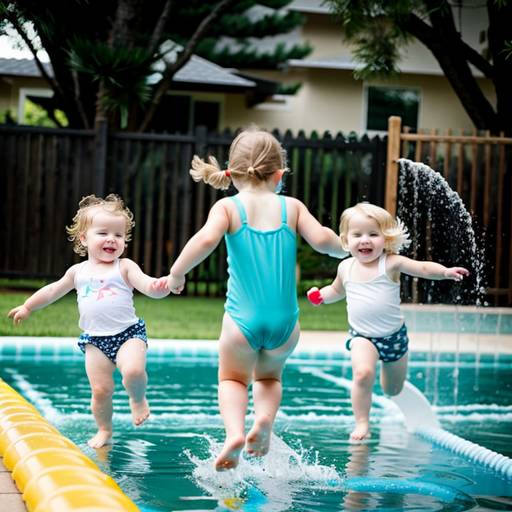
This lesson plan focuses on enhancing toddlers' gross motor skills through a series of engaging running activities. The session begins with a warm-up that includes fun stretches and movements designed to prepare the children for physical activity. Participants then rotate through three main stations: running a designated track where they race to improve speed and coordination, navigating hula hoops that encourage jumping and agility, and completing a simple obstacle course that practices balance and movement control.
After the active portion, the children engage in a cool-down period to help regulate their heart rates while incorporating relaxation techniques. The session concludes with a closing circle, where kids can share their favorite activities and reflect on their experiences. The overall goal is to foster a love for running and movement, promote physical fitness, and encourage social interaction among peers in a lively and supportive environment.

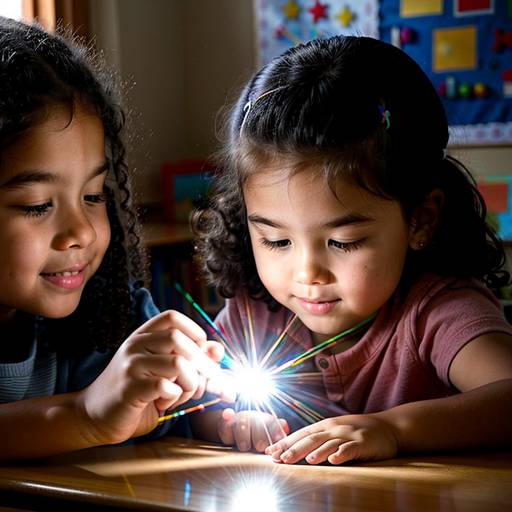
In this preschool science lesson, students will engage in hands-on exploration of the concepts of light and sound. The session begins with an introduction where students discuss their observations and experiences related to light and sound.
During the first activity, students work in small groups to discover shadow play using flashlights and cutout shapes, observing how shadows change with distance and angles. Following this, they experiment with colored cellophane overlays on flashlights to create colorful shadows, deepening their understanding of light properties.
The second part of the lesson focuses on sound exploration. Children experiment with various musical instruments and everyday objects to create sounds. They participate in a sound mystery box activity, allowing them to guess sounds based on their experiences.
The lesson concludes with a group discussion, where students reflect on their favorite activities and share what they learned about light and sound. Through creative exploration, observation, and interaction, students gain foundational knowledge of these sensory concepts while developing vocabulary and fostering curiosity.

This lesson plan focuses on enhancing toddlers' fine motor skills through interactive activities that promote precision and control. The session begins with a brief introduction to the importance of hand movements, followed by four engaging activity stations. In the first station, children use tongs to pick up colorful pom-poms and place them in bowls, fostering grip strength and color recognition. The second station allows for free play with playdough, encouraging creativity and finger strength. The third station involves stringing large beads onto shoelaces, which develops eye-hand coordination and dexterity. The final station introduces drawing with crayons and supervised cutting with child-safe scissors, promoting control over art tools and enhancing creativity.
After the individual activities, a group game called "Precision Toss" encourages turn-taking and hand-eye coordination through light tossing and catching of a bean bag. The session concludes with a group reflection, where children share their favorite activities and experiences. Throughout the lesson, instructors observe and provide positive feedback, emphasizing the significance of practice in developing fine motor skills and suggesting follow-up activities that integrate these skills into everyday routines. Overall, this lesson plan creates an engaging and supportive learning environment for toddlers to develop essential fine motor skills.