
Filters
Level
Grade
Subject
Subject Area
Subject Topic
Standard(s)
Audience
Keyword
DurationMinutes
Lesson Plans

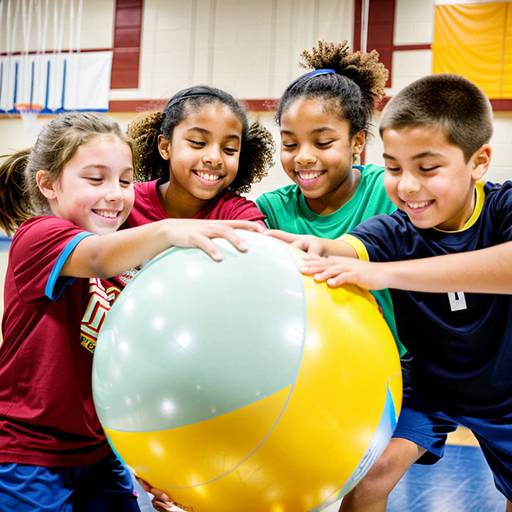
This 60-minute physical education lesson for 4th graders focuses on enhancing coordination and teamwork through a series of engaging activities. The class begins with a dynamic warm-up followed by discussions on the importance of collaboration in physical activities.
Students participate in three main activities: a hula hoop relay that encourages communication, a cone navigation challenge that tests their coordination, including a blindfold twist for added difficulty, and a ball pass exercise that fosters teamwork as they work together to keep the balls moving around a circle.
The lesson concludes with a cool-down session involving stretching and a reflective discussion about the strategies used during the activities and lessons learned about effective teamwork. Assessment is based on students’ participation and their ability to collaborate effectively. Adaptations are provided to ensure inclusivity for all students. Overall, the lesson provides a fun and educational experience that promotes physical activity and social skills among peers.

In this 1st-grade social studies lesson plan, students will explore the concepts of community and diversity. The lesson begins with a discussion about what a community is and the diverse individuals that comprise it. Students will listen to a picture book that illustrates various cultures and participate in a discussion about the unique contributions of the characters.
Following this, students will engage in an interactive activity where they survey their classmates to learn about different traditions and backgrounds. The class will then create a collaborative community quilt, with each student designing a square that represents their family’s culture or aspirations. The lesson concludes with a reflection on how these diverse contributions strengthen and enrich the community. Assessment includes observing participation, reviewing surveys, and evaluating the quilt squares. Extensions may involve inviting guest speakers or organizing a cultural day, further deepening students’ understanding and appreciation of diversity within their community.
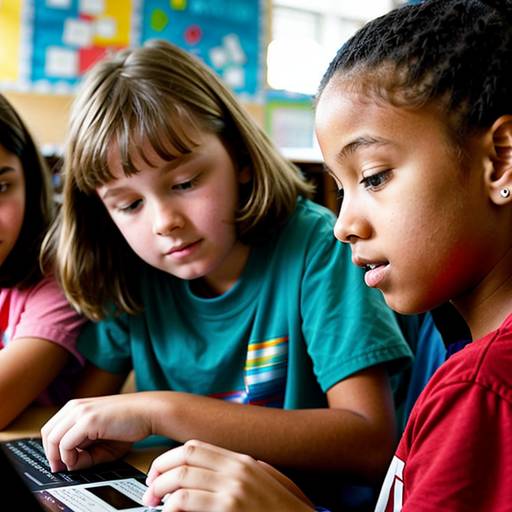
In this 5th-grade technology lesson, students will explore the concepts of technology and innovation through discussion, research, and creative collaboration. The lesson begins with an engaging video highlighting various technological advancements, followed by a class discussion to connect students' personal experiences with technology in their daily lives.
Students will work in small groups to research assigned technological innovations, focusing on their origins, functionalities, and societal impacts. Each group will create a visual poster to present their findings to the class. Presentations will encourage peer engagement and questions, fostering a deeper understanding of the innovations shared.
The lesson wraps up with a reflective discussion, allowing students to share their insights and predictions about future technologies. An exit ticket will assess their understanding by asking them to identify a significant technology they believe will shape the future. This lesson promotes not only knowledge about technology but also collaboration, critical thinking, and creativity among students.
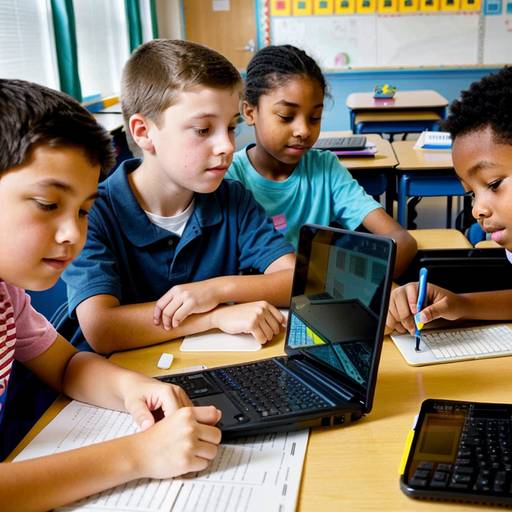
In this 4th-grade technology lesson, students will embark on an introductory exploration of coding and programming languages. The session begins with a discussion about the meaning of coding and its presence in everyday technology, enhancing students' vocabulary with key terms like algorithm and debug. Following this, learners will gain insight into various programming languages and their applications.
The main focus of the lesson involves a hands-on activity where students utilize a block-based coding platform, such as Scratch or Code.org, to create simple animations or games. Through guided instruction, students will learn to navigate the platform, apply various programming blocks to their projects, and develop their own unique creations.
Finally, students will have the opportunity to share their projects with peers, fostering a collaborative environment where they can reflect on their learning experiences and discuss any challenges faced during the coding process. This lesson not only serves to introduce fundamental coding concepts but also encourages problem-solving and creative thinking, setting the stage for future learning in technology and programming.

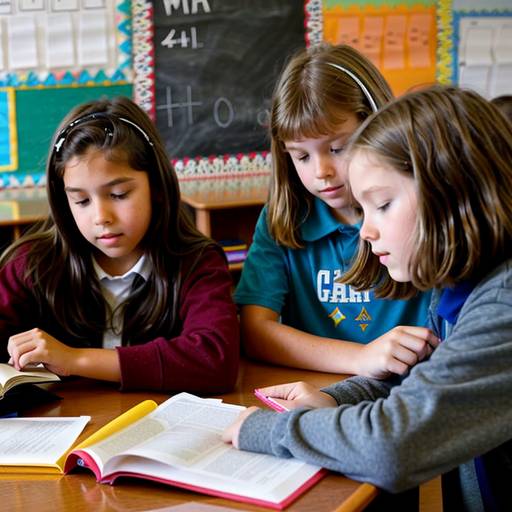
In this 4th-grade Language Arts lesson, students will explore the fundamentals of expository writing, focusing on its purpose and structure. The lesson begins with an engaging discussion to elicit prior knowledge about informative writing. Students will learn about the key components of an expository essay, including the introduction, body paragraphs, and conclusion, through a class reading of a sample essay.
During guided practice, students will collaborate in small groups to brainstorm topics of interest and select one for their essays. They will then create an outline to organize their ideas. In the independent practice phase, students will write the first draft of their expository essay based on their outlines, with the teacher providing support and feedback.
The lesson concludes with a sharing session where students present their main ideas. Assessment will focus on students’ outlines and drafts, evaluating clarity, organization, and completeness. Extensions may involve deeper research or the creation of visual aids. The lesson will also include differentiation strategies to support all learners. Reflection on student engagement and understanding will inform adjustments in future lessons.
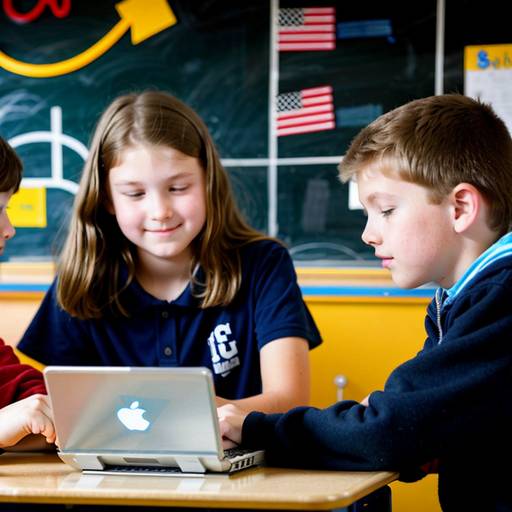
In this 5th-grade technology lesson, students will learn essential internet skills focused on search engine usage. The class begins with a discussion about the internet's significance and students' favorite websites. Next, the teacher introduces search engines, explaining their functionality and how they differ from regular websites.
Students will discover effective search strategies, including the use of keywords, quotation marks, exclusion operators, and site-specific searches. They will also learn how to evaluate the credibility of sources by examining authorship, the purpose of the website, and the timeliness of information.
During guided practice, students will work in pairs to research a specific topic, employing the techniques they’ve learned to find information and assess the reliability of various sources. The lesson concludes with a class discussion where groups share their findings, reinforcing the importance of search skills and source evaluation. Students will complete a worksheet during the practice session to document their search strategies and results.
As a follow-up activity, students will be tasked with finding an article on a topic of interest at home and summarizing it while evaluating its credibility. Throughout the lesson, safe browsing practices will be emphasized, and teacher support will be available as needed.
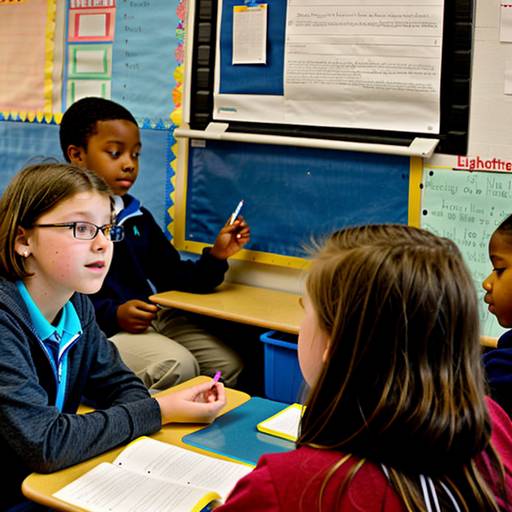
In this 5th grade Language Arts lesson, students will learn about expository writing, focusing on its purpose and structure. The session begins with a group discussion to gauge students’ prior knowledge, followed by direct instruction on the key components: main idea, supporting details, and conclusion. Students will participate in guided practice by filling out graphic organizers for a chosen topic, then move on to independent practice to write their own expository paragraphs. The lesson concludes with student presentations, where classmates receive constructive feedback. Assessment will be based on the clarity and coherence of their writing. Differentiation strategies are included to support varying skill levels, and extension activities encourage further exploration of research tools for future writing assignments.
This 5th-grade language arts lesson focuses on enhancing students’ reading comprehension skills through the exploration of key story elements, including characters, setting, plot, conflict, and resolution. The lesson begins with an engaging discussion about favorite stories to spark interest, followed by direct instruction on identifying story elements using a selected short story.
Students participate in guided reading, filling out graphic organizers as the class discusses each story element. Afterward, they work independently to answer comprehension questions while referencing the text. The lesson concludes with a review of answers and a reflective exit ticket activity, allowing students to express new insights gained from the lesson. Differentiation strategies are included to support varying skill levels, and follow-up activities encourage creativity through writing and performance. Overall, the lesson aims to build foundational reading skills and foster a deeper understanding of literature.
In this 4th-grade Language Arts lesson plan, students will enhance their reading comprehension skills by focusing on two key strategies: visualization and prediction. The lesson begins with an engaging discussion that encourages students to share how they create mental images while reading. The teacher will model these strategies using a short passage, demonstrating how to visualize and make predictions based on text clues.
Students will then work in small groups to read an excerpt together, discussing their visualizations and predictions, which will be shared with the class. Following this collaborative activity, each student will complete a visualization worksheet, drawing or writing about their mental images and predictions from a different text. They will also create prediction bookmarks summarizing their thoughts.
To conclude, students will reflect on how these strategies aided their understanding of the text, and they will be assigned homework to practice these skills at home. Assessment will occur through observations and the review of worksheets and bookmarks, allowing the teacher to gauge student comprehension and mastery of the strategies. Differentiation strategies will be incorporated to support varying levels of student understanding.
This 5th-grade Language Arts lesson focuses on enhancing students' reading comprehension through the identification of key story elements and the application of effective reading strategies. The lesson begins with a discussion about the components of a good story, such as setting, characters, plot, conflict, and resolution. Students are introduced to four reading strategies: making predictions, visualizing, questioning, and summarizing.
In a guided reading section, the class reads an adapted short story together while engaging with the text using the strategies introduced. As they read, students take notes on sticky notes to capture their thoughts and questions. Following the reading, students work in small groups to complete graphic organizers, known as story maps, where they identify the story elements and summarize their understanding. The lesson culminates in a class discussion where groups share their insights and reflect on how the strategies aided their comprehension.
Assessment includes observing participation, reviewing story maps, and collecting exit tickets in which students summarize what they learned about the reading strategies. Extensions encourage students to apply the strategies to their own book selections at home and create short stories to reinforce the lesson’s concepts. The lesson emphasizes student engagement and interaction, fostering critical thinking skills and a deeper understanding of narrative structure.