
Filters
Level
Grade
Subject
Subject Area
Subject Topic
Standard(s)
Audience
Keyword
DurationMinutes
Lesson Plans

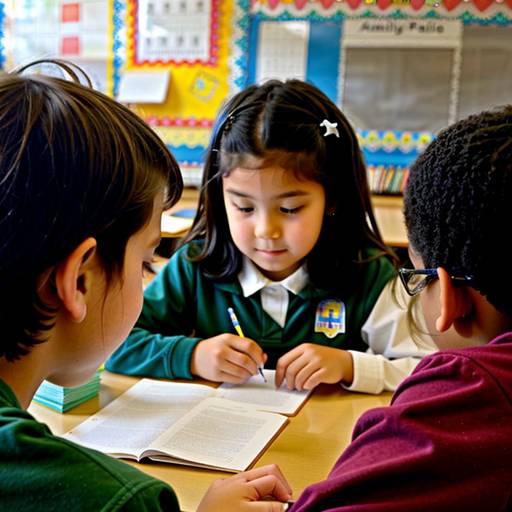
In this 2nd-grade Language Arts lesson, students will explore the concept of antonyms and their importance in vocabulary development. The lesson begins with a discussion to activate prior knowledge about antonyms, followed by a direct instruction segment where key vocabulary is introduced and examples are provided. Students will work on worksheets to practice identifying and using antonyms in context, followed by a collaborative group activity where they match antonym pairs and create sentences. The lesson concludes with a recap of what antonyms are, encouraging students to find examples in their everyday lives. Assessment will be based on participation, worksheet completion, and the quality of sentences generated in group activities. Additionally, an extension activity will be introduced, allowing students to further engage with the topic throughout the week. Reflection on the lesson's effectiveness will inform future instruction.
Following this, a mini-lesson on using context clues will help students learn how to deduce the meanings of unfamiliar words within sentences, allowing them to practice this skill through guided exercises. To apply their new knowledge, students will write sentences using the vocabulary words and share them with partners.
The lesson concludes with a reflection on the importance of a strong vocabulary, assigning students to read a short story, identify new words, and create a vocabulary web for each. Assessment will involve monitoring participation, reviewing group work and individual worksheets for understanding, and observing students’ use of new vocabulary. Extensions and accommodations will further support student engagement and individual learning needs.
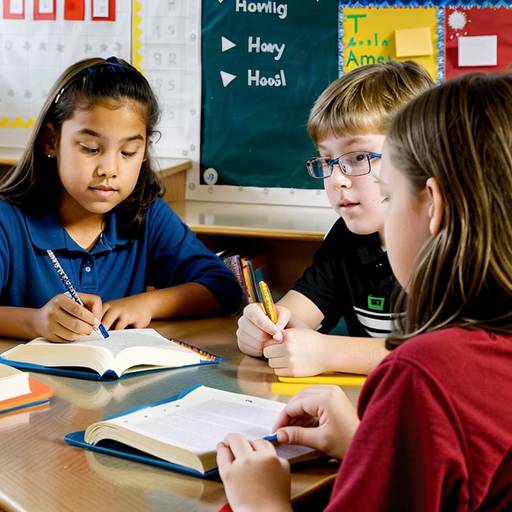
In this 5th-grade Language Arts lesson, students embark on an engaging exploration of new vocabulary words linked to grade-level texts. The lesson begins with a discussion on the importance of vocabulary and introduces a selection of 5 to 10 target words. Students work in small groups to create informative word maps that include definitions, synonyms, antonyms, and creative illustrations. After presenting their maps to the class, students individually craft sentences using two of the new vocabulary words to demonstrate their understanding in context. The lesson wraps up with a reflection activity in their vocabulary journals, where students consider their favorite word and potential usage in their writing and conversations. Assessment focuses on participation during group work, sentence construction, and reflections in journals. Extensions encourage further creativity and use of technology to reinforce vocabulary learning, while differentiation strategies support diverse learning needs within the classroom.

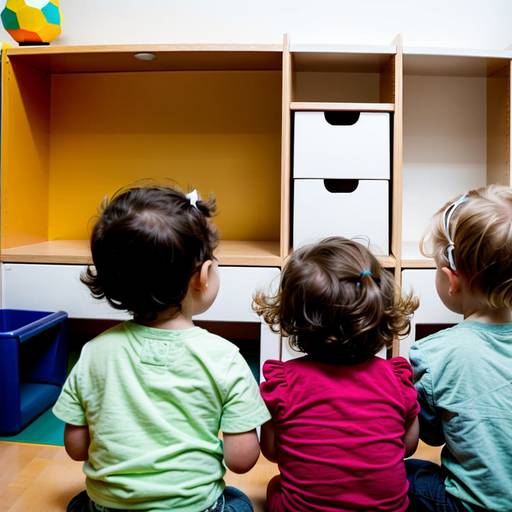
This lesson plan focuses on enhancing vocabulary acquisition for toddlers aged 2-3 years through engaging and interactive activities. It begins with a welcoming circle time where children are introduced to new words related to their surroundings, such as common objects and actions. An interactive game encourages toddlers to identify and describe items from a basket, promoting word recognition and sentence structure. A story time component utilizes a soft fabric book to reinforce vocabulary through illustrations and sound effects.
Musical activities incorporate movement and song to further engage the children while allowing them to practice the vocabulary in a fun way. An art activity culminates the lesson, where toddlers can express their understanding by drawing their favorite objects or animals and sharing their creations. The lesson concludes with a recap of the vocabulary learned and positive reinforcement for participation. Parents are provided with follow-up resources to support vocabulary development at home. Overall, the lesson emphasizes a hands-on, sensory-rich approach to learning new words in a supportive environment.

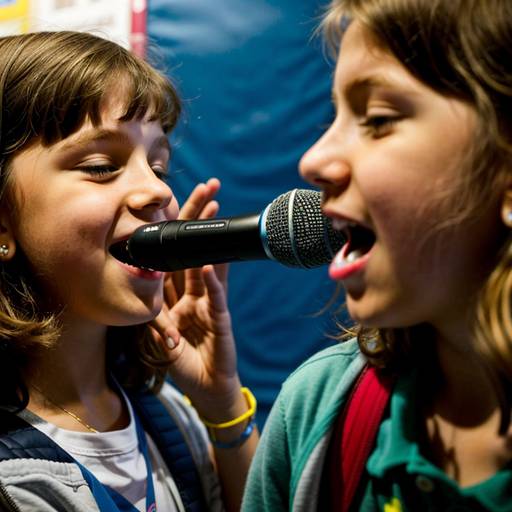
In this 4th grade music lesson, students will explore the emotional and expressive qualities of singing while practicing a selected song. The lesson begins with a discussion about the connection between music and emotions, followed by vocal warm-up exercises to enhance vocal skills. Students will learn rhythmic patterns using clapping and instruments to build teamwork and listening abilities.
As they dive into the song, students will work together to practice the lyrics, focusing on pitch and dynamics. The importance of expression and body language will be discussed to enhance their performance skills. After group rehearsals, students will perform the song, showcasing their individual and collective efforts.
The lesson concludes with a reflection on their experiences and learning, emphasizing personal growth in singing and teamwork. Assessment will be based on engagement, rhythm accuracy, and expression during performance, with opportunities for extensions and adaptations to support diverse learners. This engaging lesson encourages creativity and builds confidence in students' musical abilities.

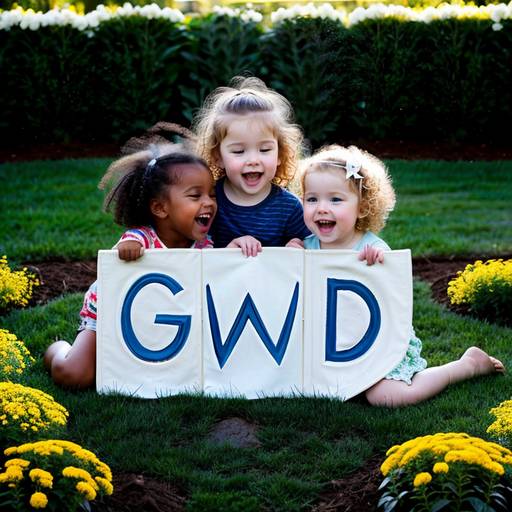
This lesson plan focuses on vocabulary building for infants aged 6-12 months, emphasizing words related to the natural environment. The session begins with caregivers and infants gathered in a circle to introduce the theme and new vocabulary words such as "flower," "tree," "sun," "bird," and "water." Engaging activities include using colorful picture cards for word introduction, playing nature-themed songs for active movement and interaction, and providing a sensory bin filled with safe natural items for hands-on exploration. During storytime, caregivers read soft fabric books that reinforce vocabulary through engaging visuals.
The lesson concludes with a closing circle where words are reviewed, and a goodbye song is sung. Caregivers are encouraged to continue using the new vocabulary at home during daily routines. The lesson aims to foster an interactive and enriching environment, promoting early language development through playful and engaging activities. Observations of infants' engagement serve as a means of assessment, allowing for real-time feedback on their responses to the vocabulary introduced. Adaptations are provided to cater to infants' varying mobility levels, ensuring inclusivity and stimulation throughout the session.
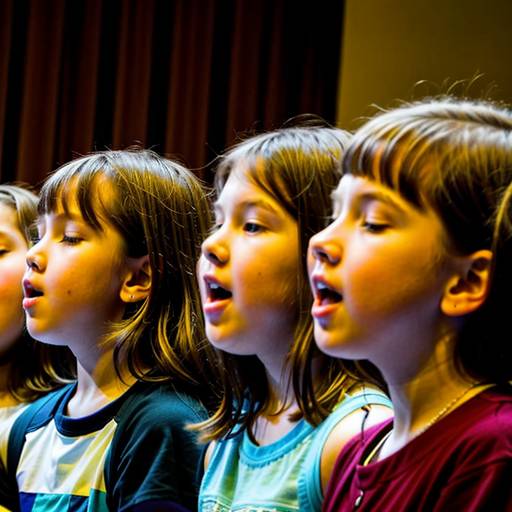
In this 4th-grade music lesson, students will explore the concepts of singing and harmony through engaging activities that foster collaboration and creativity. The lesson begins with an introduction to key musical terms such as melody, harmony, and unison. After a series of vocal warm-ups to prepare their voices, the class will practice singing a familiar song together in unison before learning a simple harmony part. Students will be divided into smaller groups to create their own harmonies for a different well-known song, allowing them to apply what they’ve learned in a collaborative environment. The lesson will culminate with group presentations, where students can share their unique harmonizations and reflect on their experiences. Throughout the lesson, emphasis will be placed on teamwork and listening skills, providing students with a foundational understanding of singing together in harmony.
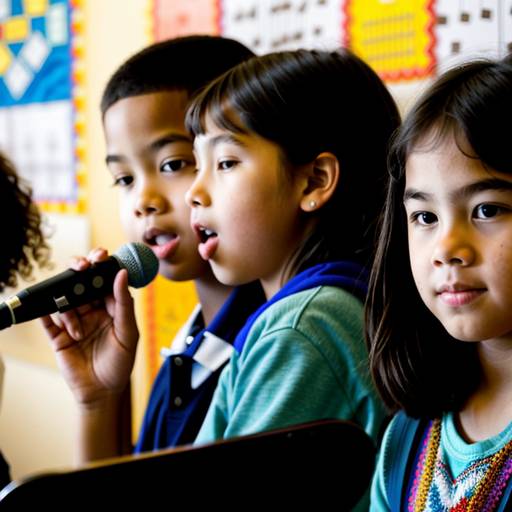
In this 1-hour music lesson for 3rd graders, students will explore vocal techniques and performance skills through a group singing activity. The lesson begins with a warm-up to prepare their voices, followed by learning and practicing the song "This Little Light of Mine" in parts. Students will develop their singing abilities by focusing on breath support, pitch, and dynamics. The class will then be divided into two groups to practice harmonizing before coming together for a final performance. The lesson concludes with a reflection on their singing experience, encouraging ongoing musical engagement. Assessment will be based on participation and the ability to sing in harmony, fostering teamwork and appreciation for music.

This Kindergarten music lesson plan focuses on engaging young students in the joy of singing through various activities. The lesson begins with a discussion about singing and vocal warm-ups, followed by a fun game where students mimic animal sounds to explore different vocal qualities. The main portion of the lesson involves singing well-known children's songs, such as "Twinkle, Twinkle, Little Star" and "The Wheels on the Bus," with opportunities for movement and the use of simple percussion instruments to enhance rhythm. Students are then divided into small groups to create and perform their own melodies, fostering teamwork and creativity. The lesson concludes with a calming goodbye song and a reflective discussion about their experiences. Assessment is based on participation and engagement, and follow-up activities encourage continued singing at home and the possibility of a seasonal performance. Overall, the plan emphasizes experiential learning and builds foundational musical skills in a fun and interactive environment.
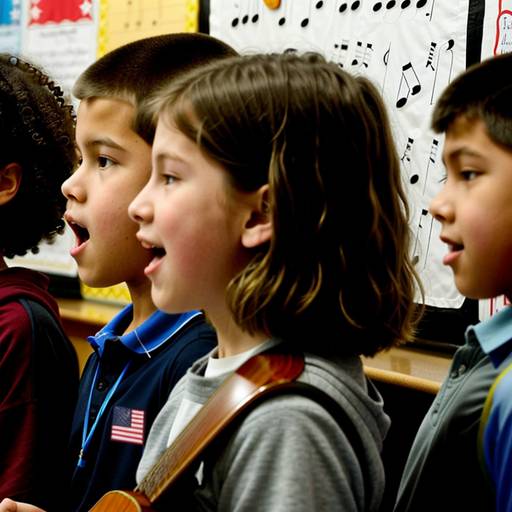
In this 5th-grade music lesson, students will explore the fundamentals of singing in unison and harmonizing through a collaborative performance. The lesson begins with vocal warm-ups and a discussion on the importance of group singing. Students will learn an age-appropriate song, first mastering the melody before being introduced to harmony. Emphasis will be placed on expression and dynamics, encouraging students to convey emotions and storytelling through their performance.
As the lesson progresses, students will practice their respective parts and come together for a group rehearsal, where constructive feedback will guide their improvement. To enhance their performance, simple movements or gestures may be incorporated. The session wraps up with a reflection on what they learned and how they felt about the experience, while preparing for an upcoming class performance. Through this engaging activity, students will develop their vocal skills, teamwork, and self-expression in music.