
Filters
Level
Grade
Subject
Subject Area
Subject Topic
Standard(s)
Audience
Keyword
DurationMinutes
Lesson Plans

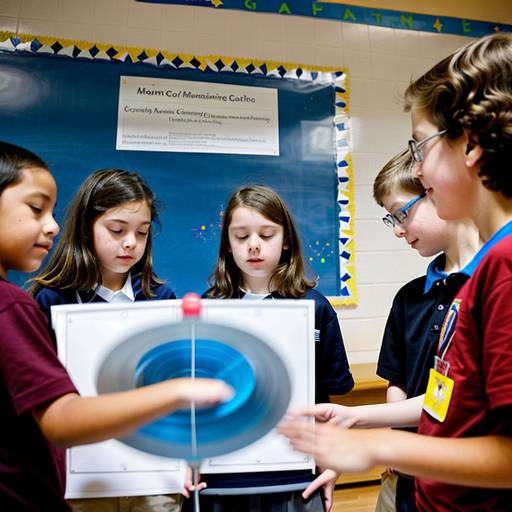
This fifth-grade science lesson focuses on understanding the concepts of motion and forces. Students will learn about different types of forces, including gravity, friction, pushes, and pulls, and explore how these forces affect the movement of objects.
The lesson begins with an engaging discussion to activate prior knowledge, followed by a direct instruction segment that provides definitions and examples of key concepts. Students will then participate in a hands-on experiment where they will work in small groups to test how varying ramp heights and surfaces influence the distance a toy car travels. They will record their observations on worksheets and engage in discussions to analyze their findings.
Finally, groups will present their results to the class, reinforcing their understanding of the impact of forces on motion. Assessment will be based on the collected worksheets and group presentations. The lesson encourages collaboration and critical thinking, with opportunities for extension activities that promote further exploration of the topic.

In this lesson plan for 3rd-grade students, participants explore the concept of digital citizenship and the importance of online safety. Students begin by discussing what digital citizenship means and brainstorm safe versus unsafe online behaviors. A brief presentation highlights key points about protecting personal information and recognizing online risks, accompanied by an age-appropriate video that reinforces these concepts.
Following the introduction, students engage in a hands-on activity where they create their own superhero characters that embody safe online practices. Each superhero reflects a unique superpower related to online safety, encouraging creativity while emphasizing essential messages about responsible technology use.
At the conclusion of the lesson, students share their superheroes with the class, showcasing their understanding of online safety principles. The lesson fosters a sense of responsibility and awareness among young learners as they navigate the digital world, reinforcing important skills through collaborative and creative learning experiences. Extensions such as family discussions and bulletin board displays enhance the impact of the lesson, promoting ongoing conversations about digital citizenship.

In this 5th-grade music lesson, students will explore the concept of dynamics in music, focusing on volume variations through interactive activities. The lesson begins with a vocal warm-up where students experiment with soft and loud sounds. They will learn and identify dynamic markings such as piano, forte, mezzo piano, mezzo forte, crescendo, and decrescendo.
Students will then work in small groups to create and perform short pieces that incorporate at least three different dynamics, allowing them to practice their understanding creatively. Following their performances, the class will engage in a listening exercise featuring music that demonstrates varying dynamics, encouraging discussion on the emotional impact of these changes.
Next, students will participate in a movement activity where they physically express dynamics through assigned movements corresponding to each dynamic term. The lesson concludes with a recap of the concepts learned, followed by a group performance where students will sing a simple song together, alternating between soft and loud sections. Participation in discussions, group activities, and an optional homework assignment will help assess their understanding of dynamics in music.
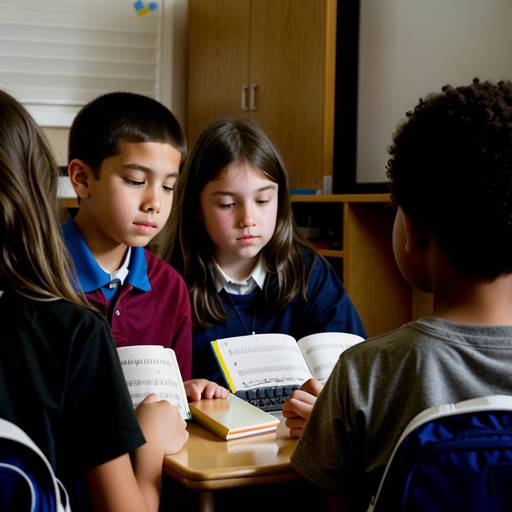
In this engaging 5th-grade music lesson, students will explore the concept of dynamics in music, focusing on volume levels such as piano, mezzo piano, mezzo forte, and forte. The class will start with an introduction to these terms, accompanied by audio examples to illustrate each dynamic. Students will then participate in a movement activity, using physical expressions to embody each dynamic, fostering a deeper understanding of how dynamics can convey emotions.
Next, students will engage in a discussion about the impact of dynamics on music's mood and feeling, supported by a dynamic chart. In small groups, they will create and rehearse a short performance piece that incorporates at least three different dynamics, using body movements, clapping, or classroom instruments. The lesson will culminate in group performances, allowing students to showcase their work while reflecting on the emotional effect dynamics had on their presentations and their audience. Assessment will focus on participation, understanding of dynamics, and the ability to express how dynamics influence music's emotional impact. Modifications will be available for students needing additional support. Optional homework will encourage students to analyze a song at home for its dynamic elements.
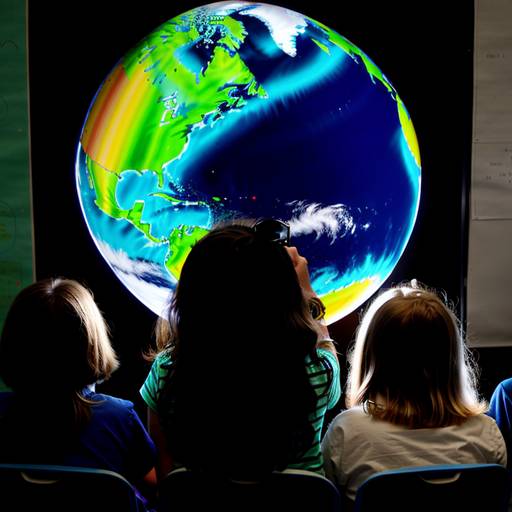
In this engaging Earth Science lesson tailored for 3rd graders, students will explore basic weather patterns and understand the water cycle's processes, including evaporation, condensation, and precipitation. The lesson begins with an interactive discussion about different types of weather, encouraging students to share their personal experiences and observations.
Through hands-on activities, students will observe real-time weather conditions and record their findings. They will also learn to create a simple weather report, combining drawing and writing to articulate the effects of the weather on their daily lives.
By the end of the lesson, students will demonstrate their understanding of weather concepts through active participation, and they will reflect on how these patterns influence their environment. The lesson incorporates practical activities to enhance learning and provides opportunities for extension projects, encouraging ongoing observation and curiosity about the weather.

In this 4th-grade math lesson, students will explore the concept of addition through interactive and hands-on activities. The lesson begins with an introduction to addition, using a number line to illustrate the process with two-digit numbers while discussing its real-life applications. Following this, students will receive direct instruction on addition, including carrying over (regrouping), and will solve problems on small whiteboards in guided practice, allowing for collaboration with peers.
Next, students will work in small groups to tackle addition problems using manipulatives, fostering teamwork and showing their problem-solving strategies. Each group will present their solutions to the class, highlighting their methods and any challenges encountered. The lesson concludes with a recap of key concepts, prompting students to think about how they can use addition in everyday scenarios. Assessment will include observation during activities, checking worksheets for accuracy, and an exit ticket requiring students to demonstrate their understanding of addition. Accommodations and extensions will be provided to support varying skill levels and promote further practice.
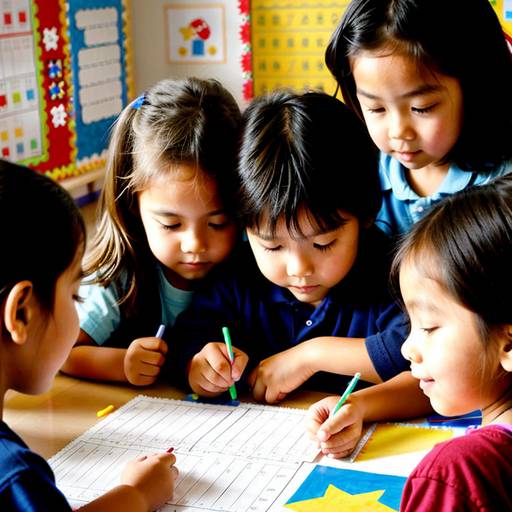
The lesson plan focuses on teaching Kindergarten students the concept of subtraction through interactive and engaging activities centered around a fun theme involving plush animals. The lesson begins with an interactive discussion where students count and take away animals, helping them grasp the idea of subtraction as "taking away." Visual aids, such as a number line and chart paper, are used to reinforce this concept.
Students then participate in a collaborative animal rescue activity, working in pairs or small groups to solve subtraction problems using the plush animals provided. Following this, each student practices independently by solving subtraction problems on their whiteboards.
To conclude, the class reviews the concepts learned and each student reflects on their understanding by drawing a subtraction problem and writing the corresponding equation. Assessment is based on observation during group activities, correctness of whiteboard solutions, and the completeness of exit tickets. Differentiation strategies support students at various learning levels, while extensions encourage real-life applications of subtraction, making the lesson comprehensive and engaging.

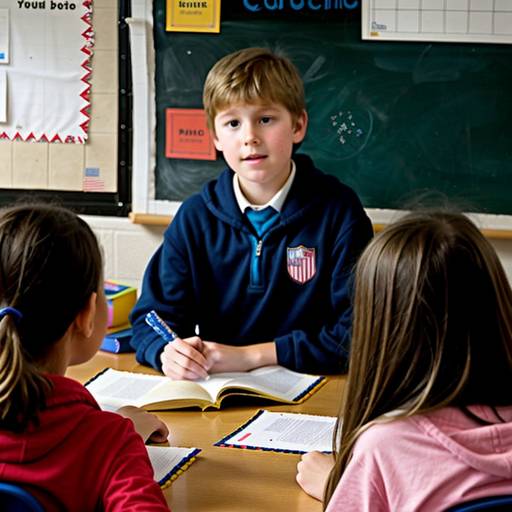
In this 4th Grade Language Arts lesson, students will engage in exploring grammar and punctuation, specifically focusing on different types of sentences: declarative, interrogative, imperative, and exclamatory. The lesson begins with a discussion highlighting the importance of punctuation in writing, followed by a clear presentation of each sentence type with examples on the whiteboard.
During guided practice, students will work in small groups to sort sentence strips into the correct categories while discussing the appropriate punctuation for each type. This collaborative activity will be shared with the class, fostering understanding through peer interaction. Following this, students will complete worksheets with various exercises that include identifying sentence types, adding proper punctuation, and creating their own examples.
As the lesson concludes, students will reflect on what they learned through a brief recap and an exit ticket activity where they write and present one sentence of each type. Assessment will involve monitoring group participation, reviewing worksheet answers, and collecting exit tickets to gauge individual understanding. Adaptations will be in place to support diverse learners, ensuring all students can engage meaningfully with the content. The lesson will conclude with a reflection on effectiveness for future improvement.

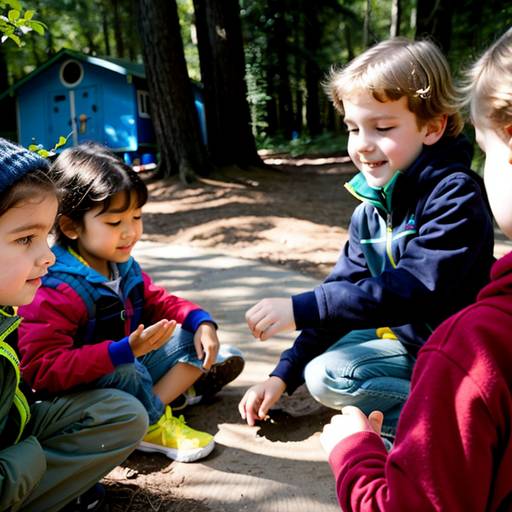
In this preschool science lesson, students will explore the concepts of living and nonliving things, emphasizing their characteristics and differences. The lesson will begin with an interactive discussion to elicit prior knowledge, followed by a visual presentation using pictures to categorize items into living and nonliving groups.
Next, students will participate in a hands-on nature scavenger hunt, using magnifying glasses to investigate their environment for examples of both categories. After sharing their findings with the group, they will engage in a creative collage activity where they will illustrate their understanding by constructing a visual representation of living and nonliving things.
The lesson will conclude with a group discussion to reinforce key concepts, encouraging students to reflect on what they learned. Assessment will be based on participation, understanding during group activities, and the accuracy of the collages created. Optional extensions include reading a related story or playing a game to further solidify the concepts. Adjustments will be made for timing based on student engagement.
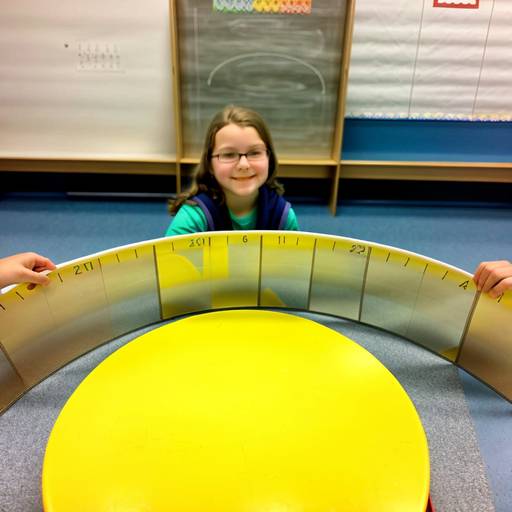
In this 5th-grade math lesson on measurement and weight, students will explore the concepts of length and weight using both standard and metric units. The class will begin by discussing the importance of measurement in everyday life, leading into direct instruction on how to accurately measure objects with rulers, measuring tapes, and digital scales.
Students will engage in guided practice by working in small groups to measure and weigh a variety of objects, recording their findings in both metric and standard units. Following this collaborative activity, they will complete a worksheet that includes conversion problems and word problems related to the measurements taken.
The lesson will conclude with a class discussion where groups share their findings, reinforcing the key concepts learned. Assessment will focus on group participation, individual worksheet completion, and engagement in discussions. Additionally, extension activities will provide opportunities for further exploration of measurement standards and creative presentations. This lesson emphasizes hands-on learning and real-world applications of measurement skills.