
Filters
Level
Grade
Subject
Subject Area
Subject Topic
Standard(s)
Audience
Keyword
DurationMinutes
Lesson Plans

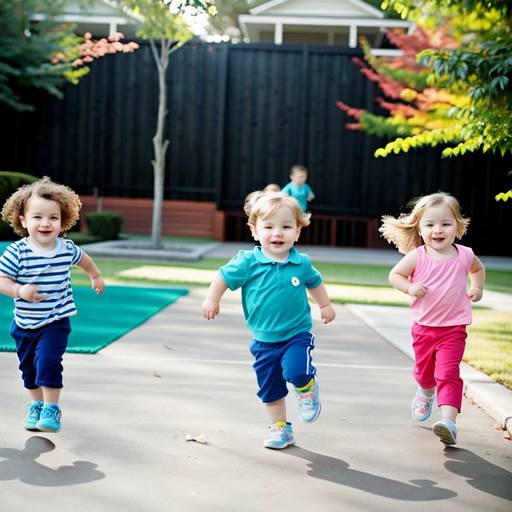
This lesson plan focuses on enhancing gross motor skills, particularly running, for toddlers aged 2 to 3 years. The session begins with a brief introduction to the importance of physical activity, followed by a fun warm-up activity that encourages movement.
Children participate in a running relay where they take turns running between markers, promoting teamwork and excitement through cheers. An engaging obstacle course is then set up using cones and hoops, allowing kids to navigate various challenges while improving their coordination and balance.
The lesson also includes a "Chase and Roll" activity with large, soft balls to enhance speed as toddlers chase after them. It concludes with a cool-down session consisting of simple stretches and a circle discussion where children share their favorite parts of the activities.
Throughout the lesson, educators are encouraged to observe the children's engagement and abilities, providing positive reinforcement and ensuring a safe, enjoyable environment for all participants.


This lesson plan focuses on helping infants understand and practice making eye contact as a fundamental aspect of social interaction and connection. The session begins with an introduction to the importance of eye contact, using simple language and demonstrations involving caregivers.
Engaging activities include a colorful card game to recognize emotions, a mirroring exercise with a safe mirror to encourage self-recognition and expression, and a storytime segment featuring characters who interact through eye contact. The lesson concludes with a closing circle where children are prompted to practice eye contact with peers, fostering a sense of friendship and community through shared visual engagement.
Throughout the lesson, caregivers are encouraged to model eye contact and provide supportive feedback, which reinforces the skill in different settings, both during the session and at home. The overall goal is to promote comfort and familiarity with eye contact as a tool for communication and emotional connection among infants.

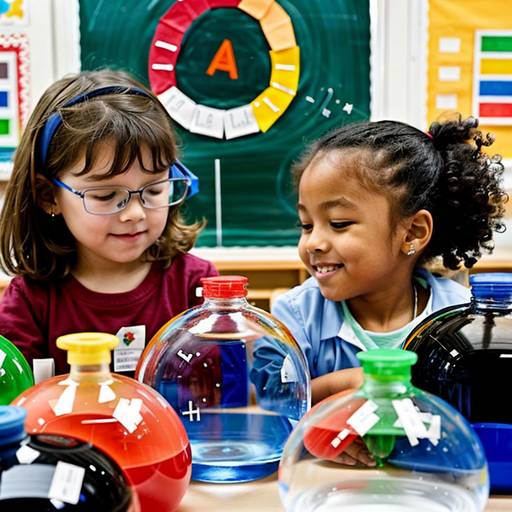
In this kindergarten science lesson, students will explore the concept of matter by learning to identify and classify it into three states: solids, liquids, and gases. The lesson begins with an engaging introduction, using everyday objects to capture students' attention and spark their curiosity about matter. Direct instruction follows, where simple definitions and examples are provided alongside a visual aid to reinforce understanding.
Students will then participate in hands-on exploration stations, where they will interact with solid objects, observe the behavior of liquids, and experiment with gases using balloons. After the exploration, a group discussion will allow students to share their observations and reflect on their experiences at each station.
To conclude the lesson, students will journal about what they've learned by drawing and labeling items from each state of matter. Assessment will include observational notes during activities and review of the journal entries to gauge comprehension. The lesson can be extended in future sessions to include concepts of changing states of matter, fostering further curiosity and engagement.
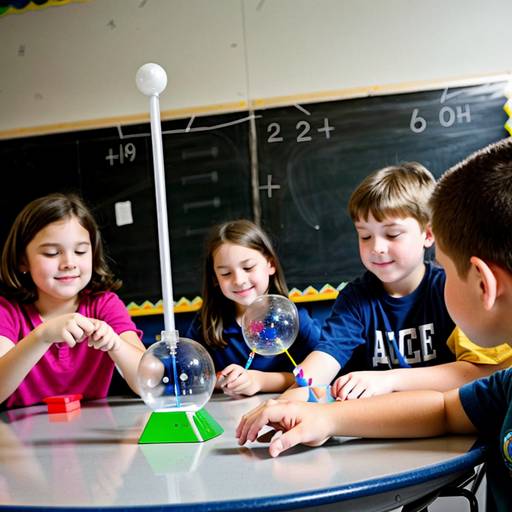
In this 60-minute lesson for 3rd-grade students, learners explore the concepts of forces and how they affect motion through engaging, hands-on activities. The lesson begins with a group discussion to activate prior knowledge about pushes and pulls, supported by a short video demonstration. Students then rotate through four interactive stations, where they conduct experiments with toy cars on ramps, launch balloon rockets, test the ease of moving various objects by pushing and pulling, and utilize rubber bands to launch small items, measuring their distances.
Following the exploration, a guided group discussion helps students articulate their observations and draw connections between their activities and the underlying science of motion. To wrap up the lesson, students reflect in their science journals, summarizing their learnings and including illustrations. Assessment includes monitoring participation during the activities and reviewing journal entries. Extensions and adaptations are provided to ensure all learners are engaged and challenged appropriately. Overall, the lesson fosters curiosity and a foundational understanding of physical science principles related to forces and motion.
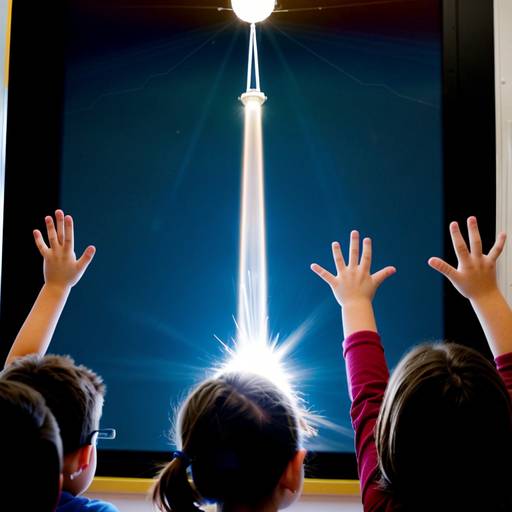
This lesson plan focuses on introducing 3rd-grade students to the concept of energy in physical science through interactive activities and discussions. Students begin by exploring various forms of energy, such as kinetic and potential energy, while engaging in a hands-on experience that involves rolling toy cars down inclined planes and creating balloon rockets. Through these activities, they observe energy transformations in action and measure their results, fostering a deeper understanding of how energy works in everyday life.
The lesson includes a group discussion where students share their findings and reflections, reinforcing their learning with energy-related vocabulary. To wrap up the lesson, students write down insights they gained and questions they still have, allowing for assessment of their understanding. Extensions offer opportunities for further exploration at home or through a field trip. The lesson is designed to be engaging and accessible, with provisions made for differentiation based on student needs. Overall, it aims to instill a foundational comprehension of energy and its various forms while encouraging scientific inquiry and collaboration among students.

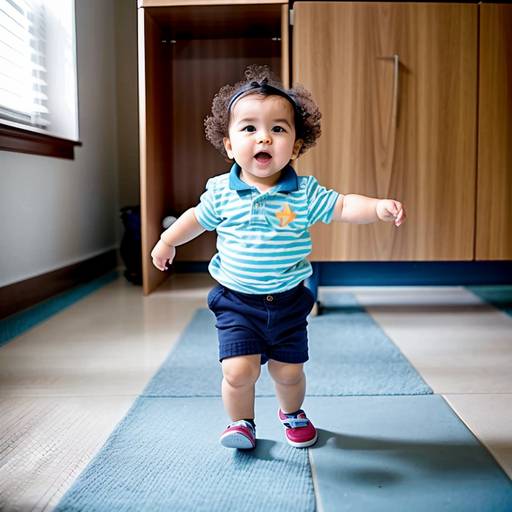
This lesson plan focuses on helping infants understand the concept of cause and effect through interactive and sensory-based activities. The session is designed for children aged 6 to 12 months and includes a variety of engaging materials such as soft balls, musical instruments, and water play items.
The lesson begins with a simple demonstration of rolling a ball, allowing infants to explore how their actions lead to specific outcomes. This is followed by a musical activity where they can create sounds by shaking instruments, reinforcing the connection between movement and auditory response. The water play activity encourages further exploration as infants discover which objects float or sink when introduced to water, emphasizing the cause-and-effect relationship in a hands-on manner.
Throughout the lesson, caregivers are encouraged to verbalize the actions and outcomes, supporting language development while ensuring an immersive learning experience. The session concludes with a group discussion to reinforce the concepts learned, accompanied by a fun, interactive song that invites participation, further solidifying their understanding of the concepts introduced.
Assessment is based on observational engagement, with plans for follow-up activities aimed at deepening their comprehension of cause and effect in future lessons.

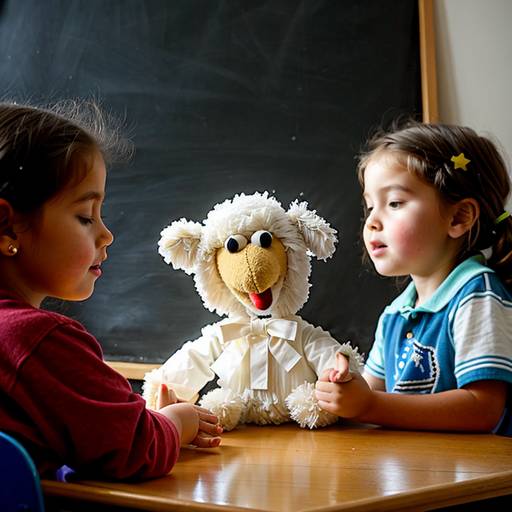
In this preschool art lesson, students will explore storytelling and drama concepts through the medium of puppetry. The session begins with a read-aloud of a children's book to inspire discussions about characters and emotions. Following this, students will create their own puppets using various art materials, allowing for creativity and self-expression. Working in small groups, they will craft simple stories featuring their puppets, focusing on interaction and emotional expression. Finally, each group will perform their puppet shows using a designated puppet stage, fostering collaboration and confidence. The lesson will conclude with a reflection on the activities, highlighting what the students enjoyed most and encouraging them to continue exploring puppetry at home. Throughout the lesson, the emphasis will be on creativity, teamwork, and the joy of storytelling.
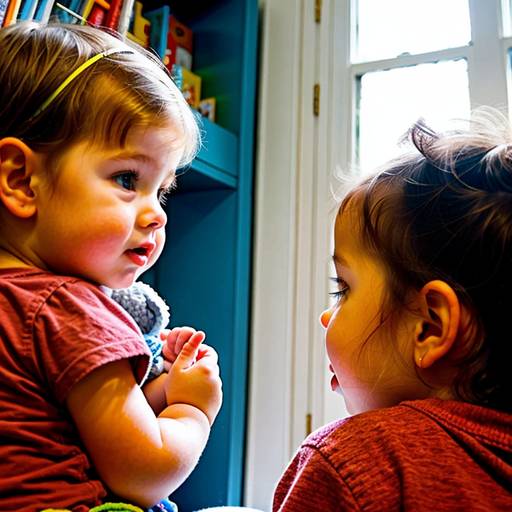
This lesson plan focuses on introducing infants to the concept of object permanence, helping them understand that objects continue to exist even when they are not visible. The session, designed for infants between 6 to 12 months, lasts for 30 minutes and includes engaging activities that stimulate cognitive development.
The lesson begins with an introduction to the concept in simple terms, followed by a warm-up rhyming song that incorporates hiding and finding objects to engage both infants and caregivers. The main activity involves a hidden object game, where caregivers facilitate the exploration of hidden toys under a blanket and within a container, encouraging infants to actively search for the items.
At the end of the session, caregivers and infants gather to reflect on the experience, reinforcing the understanding of object permanence through discussion and visual cues. Observations of infants' reactions during the activities are used to assess their engagement and understanding. The lesson also includes suggestions for similar extension activities that caregivers can replicate at home, further promoting the development of cognitive skills through play and interaction.
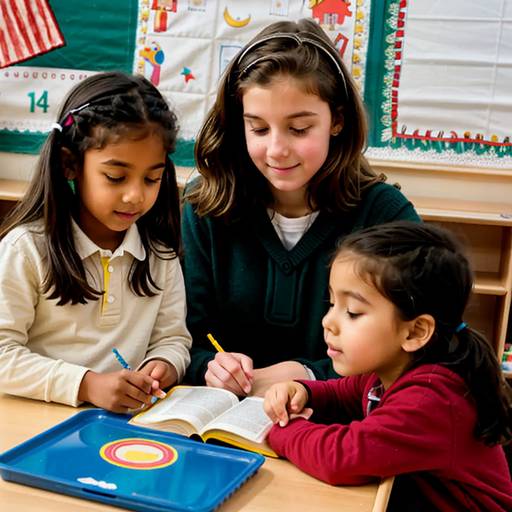
This preschool language arts lesson focuses on enhancing pre-reading skills through an engaging storytelling experience. The session begins with a welcoming introduction where students share their favorite stories. An interactive read-aloud of a selected picture book captivates the children's attention, prompting questions about the story's plot and character emotions. After reading, a discussion allows students to explore the main characters further, using plush toys or puppets to bring the characters to life.
Next, students collaboratively create a mind map on a large piece of paper, identifying key elements of the story, such as characters, setting, and main events. This is followed by a comprehension segment where open-ended questions encourage children to share their thoughts about the story and relate it to their own experiences. To reinforce understanding, a role-playing activity allows selected children to act out scenes while others provide sound effects.
The lesson concludes with a recap of the main ideas discussed and a short transition activity that reflects the actions of the story’s characters. Assessment is conducted through observation of student participation and engagement throughout the lesson. Differentiation strategies are included to cater to varying levels of literacy development among the students. This approach not only fosters early literacy skills but also cultivates a love for reading and storytelling.
This lesson focuses on introducing 4th-grade students to the concept of matter and its three states: solid, liquid, and gas. Students will begin by discussing their existing knowledge of matter and learn about the characteristics that define each state. The lesson incorporates hands-on activities, where students observe a melting ice cube to witness the transition from solid to liquid, a teacher-led demonstration of boiling water to illustrate the change from liquid to gas, and an experiment with an inflated balloon to understand how gas occupies space.
Through these experiments, students will engage in active observation and reflection, encouraging them to articulate what they have learned about the properties of matter. They will complete worksheets to reinforce their understanding and share findings in group discussions. The lesson aims to help students grasp fundamental scientific concepts while promoting inquiry and critical thinking through exploration and experimentation.