
Filters
Level
Grade
Subject
Subject Area
Subject Topic
Standard(s)
Audience
Keyword
DurationMinutes
Lesson Plans

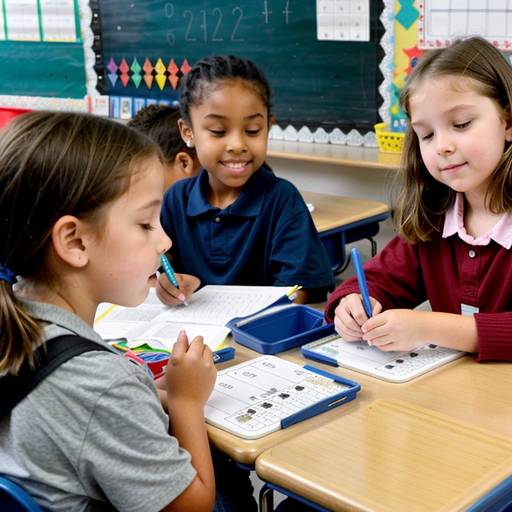
This 1st-grade math lesson focuses on introducing students to the concept of subtraction through interactive activities and hands-on learning. The lesson aims for students to understand subtraction as taking away and to solve simple subtraction problems using manipulatives, drawings, and games.
The session begins with a discussion on subtraction, where students share their thoughts on its meaning. The teacher then demonstrates subtraction using manipulatives, explaining the subtraction symbol and providing examples for the class to solve together.
Students are then guided through practice with manipulatives, reinforcing the concept by physically taking away items to find answers. The lesson includes three engaging math stations where students can explore subtraction in different ways: counting and taking away with manipulatives, drawing visual representations of subtraction problems, and playing a bingo game centered on subtraction equations.
In the closing segment, the teacher reviews key concepts with the class, encouraging students to share their favorite parts of the activities. Assessment occurs through observation during the stations and the review of completed worksheets and drawing activities. Differentiation is provided for advanced learners and those needing additional support to ensure all students grasp the concept of subtraction. Overall, the lesson promotes active learning and fosters a positive environment for math exploration.
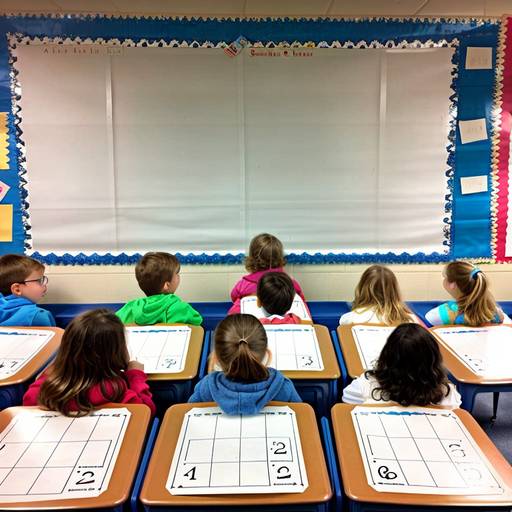
This 2nd-grade math lesson focuses on teaching students the concept of subtraction through engaging activities and hands-on experiences. The lesson begins with a warm-up discussion that relates subtraction to real-life situations, followed by a demonstration using manipulatives. Students participate in group activities to solve subtraction problems collaboratively, fostering teamwork and communication. Flashcards are employed for quick recall practice, adding an element of fun through competition.
For independent practice, students complete worksheets featuring a variety of subtraction problems, including word problems and visual aids like number lines. The lesson concludes with a review where students share their learning experiences, and those who actively participated are awarded stickers, reinforcing positive behavior. Assessment is conducted through observation and worksheet evaluation, ensuring students grasp the subtraction concept. Adaptations are included to support both advanced learners and those struggling, with additional resources and extensions for further practice at home. Overall, this lesson aims to build a strong foundation in subtraction while creating an enjoyable learning environment.
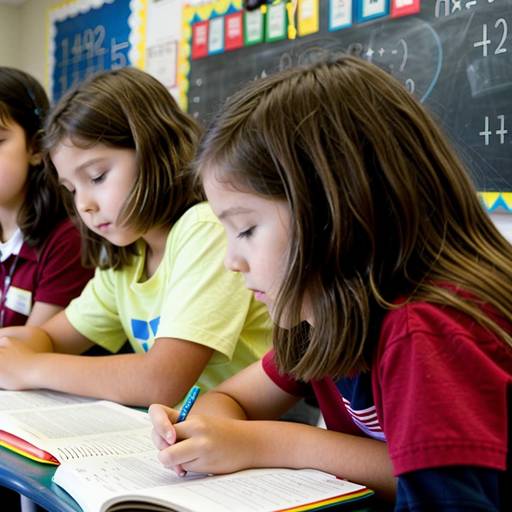
In this 4th-grade mathematics lesson plan, students will focus on understanding and applying the concept of subtraction. The lesson begins with a warm-up activity that connects addition to subtraction through interactive questioning. Direct instruction follows, where various strategies for solving subtraction problems are introduced, including using a number line, counting back, and utilizing manipulatives like blocks or counters.
After the instructional phase, students will engage in guided practice, solving problems as a class while exploring different methods. They will then work independently on worksheets that feature both numerical and word problems that require subtraction skills. The teacher will circulate to provide assistance and assess students' understanding.
The lesson concludes with a review of the problems, encouraging students to share their challenges and strategies. To celebrate their participation and efforts, certificates will be awarded. Throughout the lesson, accommodations will be made for diverse learners, and reflection will take place post-lesson to identify successes and areas for improvement. This structured approach aims to foster a solid understanding of subtraction while promoting collaboration and motivation among students.
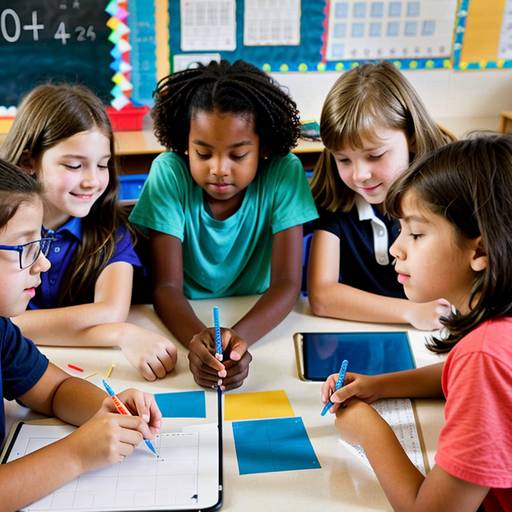
This 4th-grade math lesson focuses on teaching students the concept of subtraction through an engaging treasure hunt activity. Students will start with a story about pirates to pique interest and then review the principles of subtraction. The teacher will model several subtraction problems on the whiteboard, discussing strategies for solving them.
In small groups, students will receive maps with subtraction problems that they must solve to collect paper "treasure" tokens located around the classroom. Following the group activity, students will work independently on a subtraction worksheet to reinforce their skills.
The lesson concludes with a class review of the worksheet answers, where students will share their thought processes, fostering a collaborative learning environment. Teachers will assess understanding through observation during the activities and the completed worksheets, and opportunities for extension or support are also provided to accommodate different learning needs. Overall, the lesson aims to make subtraction interactive and enjoyable while promoting teamwork and critical thinking.
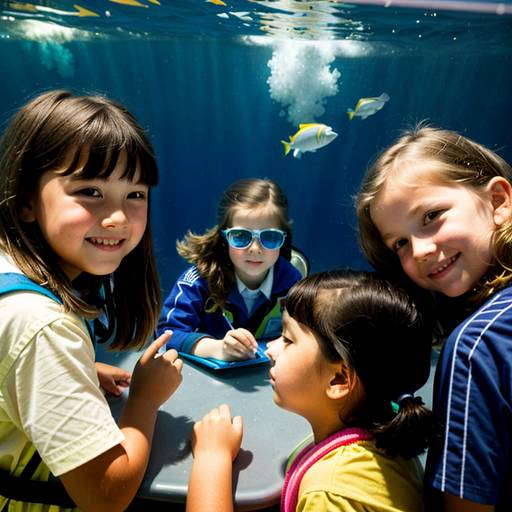
In this 1st-grade math lesson focused on subtraction, students will explore the concept of taking away through engaging activities and manipulatives. The lesson begins with an interactive ocean-themed song to capture students' attention, followed by direct instruction where the teacher demonstrates subtraction using visual aids like seashells and fish. Students will then participate in guided group activities, solving subtraction problems with their manipulatives.
Afterward, they will work independently on worksheets designed with ocean illustrations that reinforce their understanding of subtraction concepts. The class will reconvene to discuss answers and share strategies, followed by reading a subtraction-related storybook to deepen engagement. Finally, students will participate in an interactive game to practice subtraction with a partner. Assessment will occur through observation during group activities and the review of worksheets. Adaptations will be made for students needing extra support or those ready for advanced challenges. This lesson not only teaches subtraction but integrates creativity and collaboration, fostering a comprehensive learning environment.

In this first-grade Earth Science lesson, students explore the concepts of weather and the water cycle. The lesson begins with a discussion about different types of weather, where students express their preferences and feelings associated with various conditions. Weather symbols are introduced to help students identify sunny, rainy, snowy, windy, and cloudy weather.
Next, the teacher presents a diagram of the water cycle, explaining its stages: evaporation, condensation, precipitation, and collection, potentially demonstrating these concepts with a simple experiment. Students then participate in an engaging activity where they create weather journals, illustrating their favorite weather and writing a sentence about what activities they enjoy during that weather.
After sharing their journals with classmates, the lesson concludes with a recap and an exit ticket activity, where students draw a weather symbol and describe something they learned. Throughout the session, students are assessed based on their participation, journal entries, and exit tickets, enabling them to actively engage with fundamental Earth science concepts while expressing their creativity. Extensions for the lesson may include outdoor observation and weather forecasting activities.


This lesson plan focuses on introducing toddlers to various types of weather, such as sunny, rainy, snowy, and windy, through interactive discussions, sensory exploration, and creative activities. The session begins with a circle time where children engage with picture cards depicting different weather conditions and participate in a read-aloud session featuring a weather-themed book.
As part of hands-on learning, children rotate through three activity stations: a sensory station where they create weather scenes using materials like cotton balls and felt; a rainy day play station with a spray bottle for simulated rain and floating boats; and a dress-up station where they can role-play different weather scenarios with props.
The lesson concludes with a sharing circle where children express their favorite weather types and celebrate what they created. To reinforce learning, a simple song about weather is sung, encouraging movement and participation. Follow-up activities include crafting a "Weather Wheel" to take home and planning outdoor experiences that allow children to explore weather in real-life contexts. The plan emphasizes observation, participation, and engagement as key indicators of the children's understanding and interest in weather concepts.
This Kindergarten Earth Science lesson focuses on introducing students to various types of weather and the concept of seasons. The lesson begins with an engaging discussion about weather, followed by an introduction of key vocabulary through picture cards. Students learn to identify different weather types, such as sunny, rainy, cloudy, stormy, and how these relate to the four seasons.
During guided practice, students work in small groups to sort weather cards and make predictions based on a simple weather forecast. A hands-on activity involves drawing their favorite type of weather, allowing them to express their understanding creatively. Additionally, the lesson includes a demonstration of basic weather measurement tools, such as a thermometer and barometer, to help students become familiar with how weather is observed and recorded.
At the end of the lesson, students share their drawings, reinforcing their learning about weather patterns and seasonal changes. Assessment includes observing student participation and evaluating their drawings for comprehension. Extensions to the lesson encourage the use of a weather journal and the creation of a class weather station, fostering ongoing engagement with the topic. The lesson accommodates diverse learning needs with adaptations to support all students.
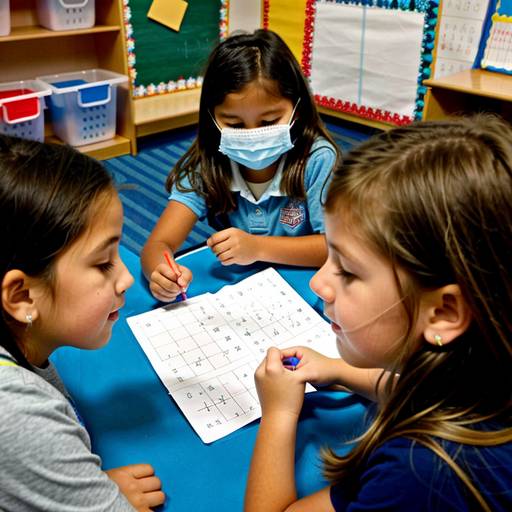
The lesson focuses on teaching 3rd-grade students the concept of addition with regrouping. It begins with an engaging discussion to introduce the idea of carrying over when adding larger numbers. The instructor demonstrates the process using an example on the whiteboard, emphasizing the steps involved in regrouping and utilizing base ten blocks for better visualization.
Students then work in pairs to practice similar addition problems, with guidance provided as needed. Following collaborative practice, each student completes an independent worksheet to reinforce their understanding of regrouping.
The lesson concludes with a reflective sharing session, wherein students express what they learned about the topic. An engaging game is introduced to allow students to further apply their skills in a fun and competitive manner. Assessment throughout the lesson involves monitoring participation, collecting worksheets for review, and evaluating student comprehension through sharing sessions. Accommodations for varying learning needs are included, ensuring all students can successfully engage with the material.
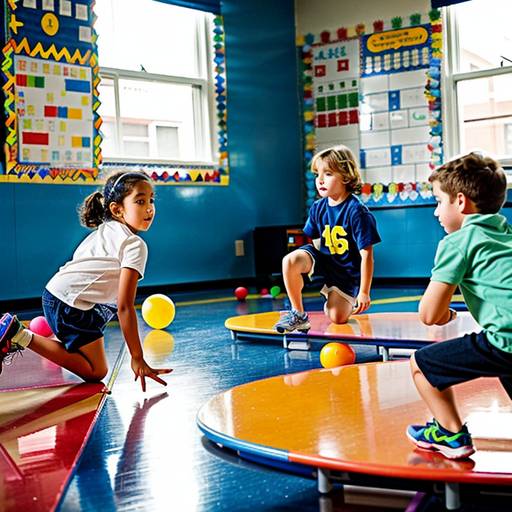
In this 1st-grade science lesson, students will explore the concept of motion through engaging, hands-on activities. The lesson begins with a discussion on motion, introducing key vocabulary such as "push," "pull," "slide," "roll," and "speed." Students are then divided into small groups to participate in three interactive stations: one focusing on rolling objects using toy cars and ramps, another on sliding objects across different surfaces, and the third on pushing and pulling various-sized balls. They will observe and record their findings, discussing how different factors affect movement. To reinforce their understanding, students will reflect on their observations and share their learning with the class. As an optional extension, they can conduct a "Motion Hunt" at home, identifying items that move and how they do so. The lesson encourages active participation and fosters an understanding of motion, distance, and speed through observation and collaboration. Assessment will involve monitoring student engagement and reviewing their notes and drawings to gauge comprehension.