
Filters
Level
Grade
Subject
Subject Area
Subject Topic
Standard(s)
Audience
Keyword
DurationMinutes
Lesson Plans


This lesson plan focuses on enhancing toddlers' gross motor skills through various jumping activities designed to improve coordination, balance, and muscle strength. It is intended for children aged 2-3 years and lasts approximately 30-45 minutes.
The session begins with a warm-up that includes movement songs and gentle stretches to prepare the children for jumping. Three engaging activity stations are set up: "Hoop Hops" where children jump between hula hoops; a "Cone Course" where they navigate around cones by jumping; and "Ball Bounce" where they jump to catch bouncy balls or land on bean bags.
A group game titled "Follow the Leader" encourages children to replicate different jumping actions demonstrated by their peers. The lesson concludes with a calming cool-down period involving reflection and stretches, fostering a sense of community and encouraging each child to share their favorite jumping experiences.
Throughout the lesson, careful attention is paid to safety, ensuring a soft landing area and adequate space to avoid collisions. Adaptations are also suggested for varying skill levels, allowing each toddler to engage comfortably and confidently in the activities. Overall, this lesson promotes physical development through active, playful learning.

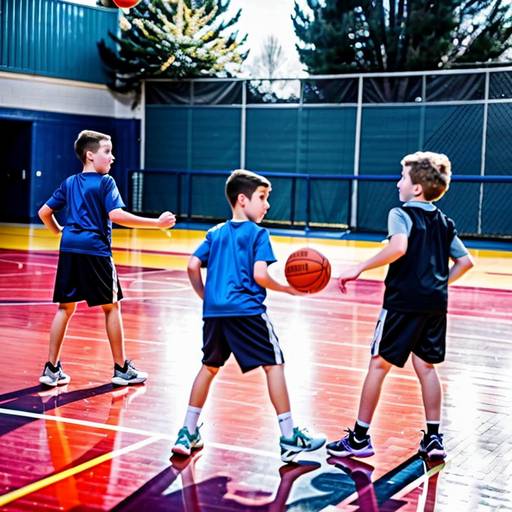
This third-grade physical education lesson focuses on introducing students to the fundamental skills of dribbling and passing in basketball. The lesson begins with a dynamic warm-up and a brief overview of basketball's basic rules and terminology, emphasizing teamwork. Students engage in various drills to practice their dribbling skills, including stationary dribbling and a relay race using an obstacle course.
Next, learners participate in partner passing exercises to enhance their passing techniques, followed by a target game that encourages precision. The lesson culminates in mini basketball games, where students apply their skills in a fun, competitive setting while working together in teams.
To conclude, students cool down with stretches and reflect on the day's activities by sharing their thoughts on what they enjoyed and learned, particularly about teamwork in sports. Throughout the lesson, teachers assess students' skill levels and provide modifications for those needing extra support. Overall, the session aims to cultivate a passion for basketball, improve fundamental skills, and promote collaboration among students.

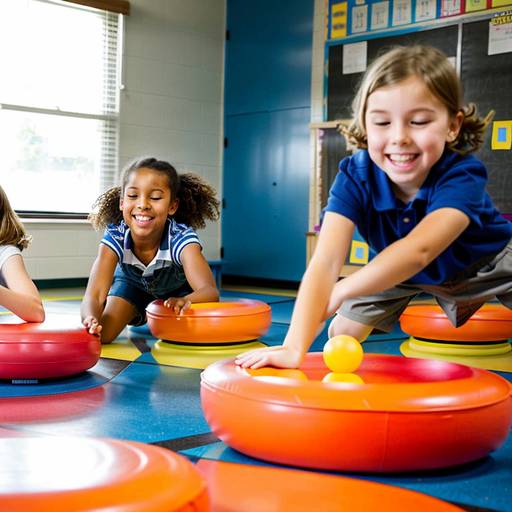
In this 2nd-grade science lesson focused on physical science, students will explore the concepts of energy and motion through engaging activities. They will learn about two main types of energy: kinetic energy, which is the energy of motion, and potential energy, which is the stored energy of position. The lesson begins with a discussion to elicit students' ideas about energy, followed by demonstrations showcasing the conversion of potential energy into kinetic energy using a ramp.
Students will then engage in a hands-on experiment in small groups, using different types of balls (rubber and ping pong) to observe how height affects the distance traveled when rolled down a ramp. They will predict outcomes, measure distances, and record their findings, fostering teamwork and critical thinking skills. The lesson concludes with a class discussion, where students share their observations and reflect on how energy was demonstrated during the activities. Assessment will be based on participation, collaboration, and the accuracy of their recorded results. Extensions for further exploration of energy in everyday life are suggested for future lessons.
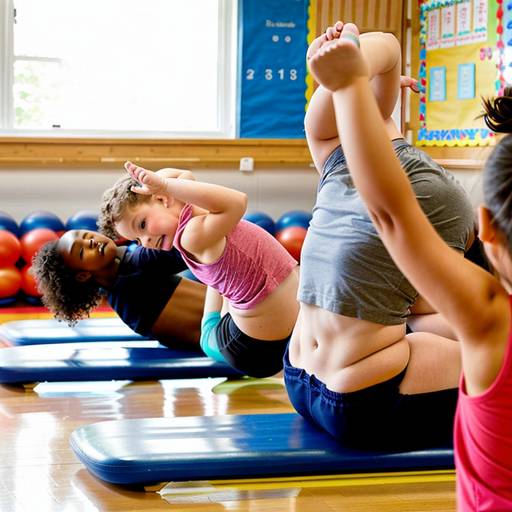
This Kindergarten Physical Education lesson focuses on introducing students to fitness and flexibility through engaging activities. The session begins with a brief discussion on the importance of fitness and stretching, followed by a fun warm-up routine that activates their bodies. Students participate in flexibility stations, where they practice various stretching techniques in small groups. Next, they engage in a lively bouncy ball relay that promotes physical activity and teamwork. The class concludes with a calming cool down, including deep breathing and gentle stretches to relax their bodies. Finally, a reflection circle helps reinforce what they learned and encourages the continuation of flexible practices at home. Overall, the lesson aims to create a positive and enjoyable environment while promoting physical health and well-being among young learners.

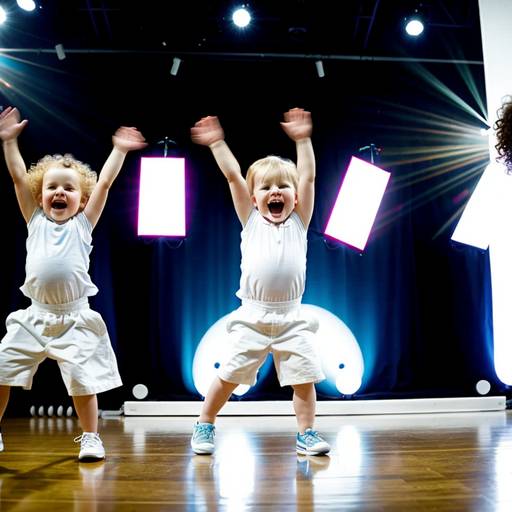
This toddler music and movement lesson plan focuses on fostering creativity and gross motor skills through engaging and imaginative activities. The session begins with a welcome circle, where children are introduced to the concept of movement inspired by music. After a warm-up involving stretching and swaying, toddlers participate in various activities that encourage imaginative movement, such as jumping like bunnies, swaying like trees, and moving fluidly like a river.
The lesson also includes an exploration of simple percussion instruments, allowing children to express themselves rhythmically. To conclude, a calming cool-down period allows children to reflect on their experiences while engaging in gentle movements with scarves. The session wraps up with a goodbye song, fostering a sense of community and closure. Throughout the plan, caregivers are encouraged to participate, creating a supportive and interactive environment that enhances learning and enjoyment.

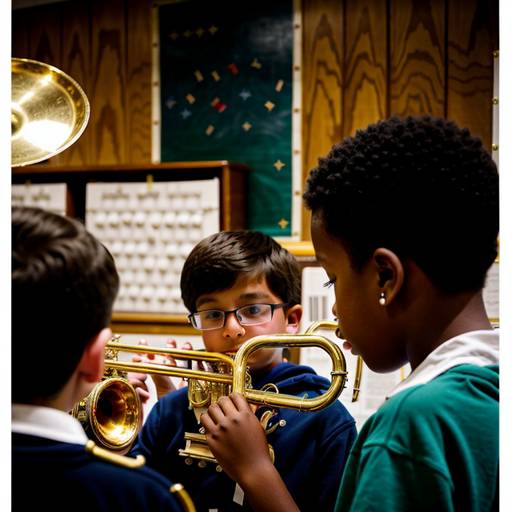
In this 5th-grade music lesson, students will explore the world of brass instruments, learning to identify various types such as the trumpet, trombone, tuba, and French horn. The lesson begins with an interactive introduction that includes listening to audio samples, allowing students to connect sounds with the instruments. Students will engage in a discussion on how sound is produced in brass instruments through the buzzing of lips and the use of valves or slides.
As the lesson progresses, students will participate in a group listening activity, analyzing a piece of music featuring brass instruments and noting their distinct sounds. They will then complete worksheets that involve identifying and learning interesting facts about each instrument. To reinforce their understanding, students will have the opportunity to engage in a creative activity where they can draw their favorite brass instrument.
The lesson concludes with a recap of key concepts and an opportunity for students to share what they learned. Assessment will be based on their participation, completed worksheets, and creative projects. This engaging approach promotes both knowledge and appreciation for brass instruments while encouraging collaboration and creativity in the classroom.
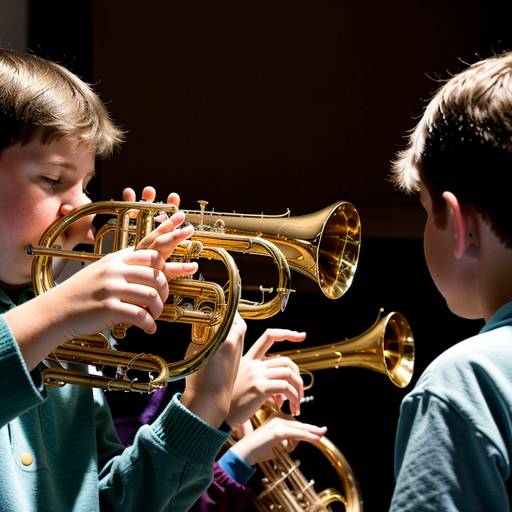
In this lesson plan designed for 5th-grade students, the focus is on exploring and understanding brass instruments. The session begins with an introduction to various brass instruments, including their characteristics and roles in music. Students will listen to music featuring these instruments, identifying the sounds while discussing their functions in different musical contexts.
Following the listening activity, students will engage in a hands-on demonstration where they can see and, if available, hold real or replica brass instruments. They will learn how sound is produced through buzzing lips and the use of valves or slides. In a creative group activity, students will work together to mimic the sounds of brass instruments using voice and rhythm, allowing them to express their understanding of how these instruments function.
The lesson will conclude with a reflection on their learning, where students will share their favorite brass instruments and interesting facts. Assessment will be based on participation and completion of a worksheet. Opportunities for extension include inviting a professional musician or organizing a trip to a brass ensemble concert, further enriching students' appreciation for brass instruments and music as a whole.
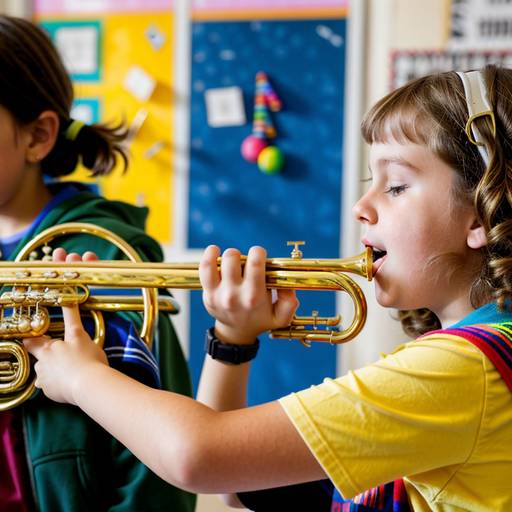
In this engaging 5th-grade music lesson, students will explore the world of brass instruments, including how they produce sound and their significance in various musical genres. The lesson begins with an introduction to different brass instruments through pictures, videos, and sound samples, encouraging students to describe their characteristics. Students will then learn about the science behind sound production in brass instruments, followed by a discussion on the role these instruments play in genres like jazz, classical, and pop music.
The hands-on activity allows students to practice playing simple melodies or rhythms, either on available brass instruments or with kazoos, fostering a collaborative experience as they create short ensemble performances. The lesson concludes with reflections on what they learned, promoting critical thinking and appreciation for brass instruments in music. Assessment will focus on participation and completion of a reflective worksheet, with potential extensions including research projects and field trips to observe brass instruments in action.
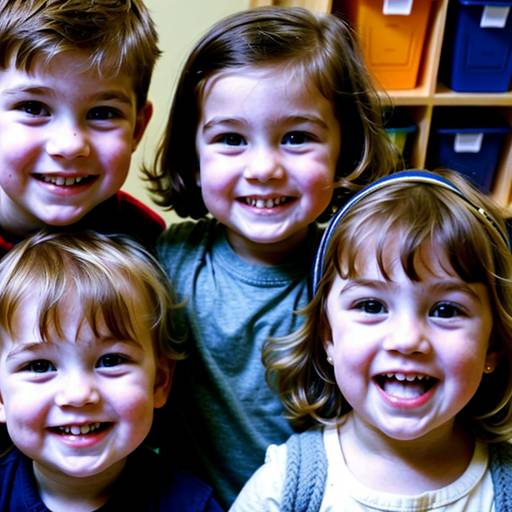
This lesson plan aims to foster self-confidence in toddlers through engaging and interactive activities. It begins with a circle time discussion where children are encouraged to share their experiences of bravery while looking in a mirror, creating a joyful atmosphere. The session includes an affirmation activity where each child expresses something they appreciate about themselves by passing around a soft toy or puppet.
Following this, toddlers engage in an art activity, illustrating moments when they felt brave, which promotes self-expression and reflection on their unique attributes. The lesson features a game called "Follow the Leader," allowing children to take turns leading physical activities, reinforcing their ability to be confident leaders.
To further enhance the theme of confidence, a musical dance party with simple instruments encourages free movement and self-expression without fear of judgment. The lesson concludes with a group reflection, where children share what brave actions they aspire to take in the future, supported by positive affirmations to celebrate their growth. Throughout the plan, emphasis is placed on participation and reinforcement, creating a supportive environment aimed at building confidence in each child.


In this 4th-grade social studies lesson, students will explore the concept of westward expansion in American history. They will begin with a discussion about pioneers, sharing their prior knowledge, followed by a short video introduction on the topic. The lesson will provide insights into the motivations behind westward migration, the challenges faced by pioneers, and the effects on indigenous populations.
Students will engage in a group activity where they will research specific aspects of pioneer life and the routes taken during this period. Following this, they will individually write a journal entry from the perspective of a pioneer, reflecting on their experiences, emotions, and challenges encountered during the journey.
To conclude, students will share their journal entries and participate in a reflective discussion about their learnings. The lesson will be assessed through student participation and the content of their journal entries, with opportunities for extension activities, such as guest speakers, to deepen their understanding of the historical context.