
Filters
Level
Grade
Subject
Subject Area
Subject Topic
Standard(s)
Audience
Keyword
DurationMinutes
Lesson Plans

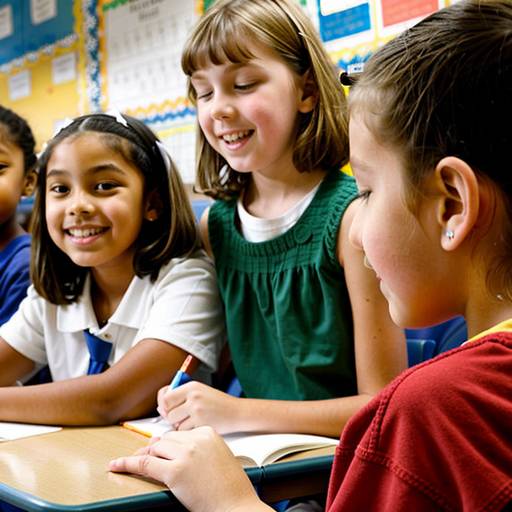
In this 3rd grade Language Arts lesson, students will focus on identifying and constructing complete sentences through an engaging and interactive approach. The lesson starts with a brief introduction to the components of a sentence—subjects and predicates—using relatable examples to make the concepts clear. After modeling sentence breakdowns and practicing together, students will work in small groups to create their own sentences by matching subject and predicate flashcards.
Following the group activity, students will complete a worksheet that reinforces their understanding by having them identify the subject and predicate in given sentences and compose their own. The lesson concludes with a review of key concepts and an exit ticket, where students share their favorite food in a complete sentence. This comprehensive approach ensures students grasp fundamental grammar skills while fostering creativity and collaboration in their learning. Assessments will include observation during group work, worksheet analysis, and exit ticket responses, with opportunities for differentiation and extensions provided to meet diverse student needs.

In this 5th-grade language arts lesson, students will focus on improving their understanding of grammar and sentence structure. The session begins with a discussion about the importance of sentence construction, introducing key concepts such as fragments, run-on sentences, and types of sentences (simple, compound, and complex). Students will work in pairs to identify and correct errors in provided sentences on handouts.
Following guided practice, they will participate in a collaborative activity where they create posters using word cards to form a variety of complete sentences, showcasing both correct and incorrect structures. Groups will present their work, explaining their choices and thought processes. The lesson concludes with a brief class reflection on the concepts learned, and for homework, students will write a paragraph that includes different types of sentences, further solidifying their understanding. Adaptations will be provided for diverse learners, ensuring that all students can engage with and benefit from the material. The lesson emphasizes interactive learning and creative expression while reinforcing essential grammar skills.
In this 5th Grade Language Arts lesson, students will focus on enhancing their grammar and punctuation skills. The lesson begins with an engaging storytelling activity where students listen to a purposely mis-punctuated story, prompting discussions about the importance of clear writing. After reviewing essential grammar rules such as subject-verb agreement and the use of proper nouns, as well as the correct application of punctuation marks like periods, commas, question marks, and exclamation points, students participate in a group activity. They work collaboratively to identify and correct sentences on cards, reinforcing their understanding through teamwork.
Following guided practice, students complete a worksheet featuring a mix of exercises focused on grammar and punctuation, allowing for independent assessment of their understanding. The lesson concludes with a review of worksheet answers and reflections on new insights gained, ensuring students recognize the relevance of the skills learned.
To accommodate diverse learning needs, advanced learners are encouraged to engage in creative writing, while struggling learners receive targeted support. For homework, students will write a descriptive paragraph about their favorite hobby, applying proper grammar and punctuation techniques. Overall, the lesson promotes active participation and collaboration, fostering a deeper understanding of grammar and punctuation in writing.
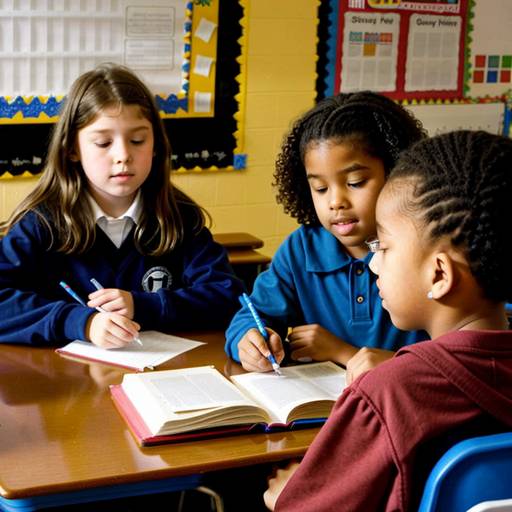
In this 4th-grade language arts lesson, students will learn about capitalization rules, focusing on when to use capital letters for the beginning of sentences, proper nouns, and titles. The lesson begins with a review of capitalization concepts, where students identify errors in example sentences on the whiteboard. Guided practice involves correcting sentences as a class, followed by individual work on a worksheet that contains a paragraph filled with capitalization mistakes. Students will work in pairs to discuss their corrections and reasoning. The lesson concludes with students sharing their findings with the class, with an emphasis on the importance of proper capitalization in writing. Assessment will include observation during practice and review of the completed worksheets. For homework, students will write original sentences incorporating capitalization rules, promoting reinforcement of the skills learned.
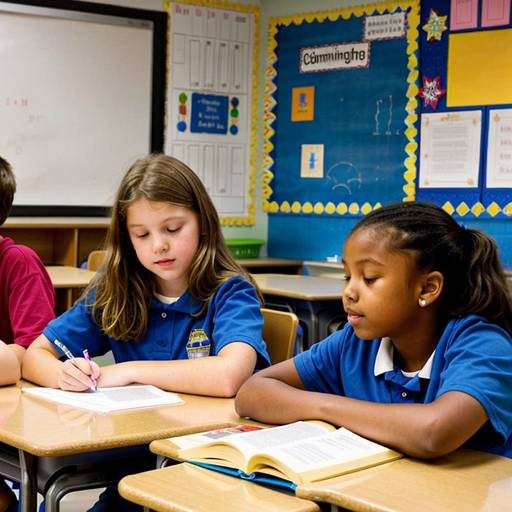
In this 4th-grade language arts lesson focused on grammar and sentence structure, students learn to identify and construct complete sentences. The lesson begins with a discussion on the importance of clear communication, followed by direct instruction on the parts of a sentence, including subjects, verbs, objects, and adjectives. Students engage in guided practice by collaborating in small groups to create sentences using sentence strips, encouraging creativity and collaboration.
During independent practice, students complete worksheets with incomplete sentences, adding necessary components and revising for clarity and detail. The lesson concludes with students sharing their revised sentences and illustrating their favorites. Assessment is based on participation and the quality of completed work, with differentiation strategies in place to support learners at varying levels. Extensions include writing a short story using the sentences created during the lesson, further reinforcing the skills practiced.
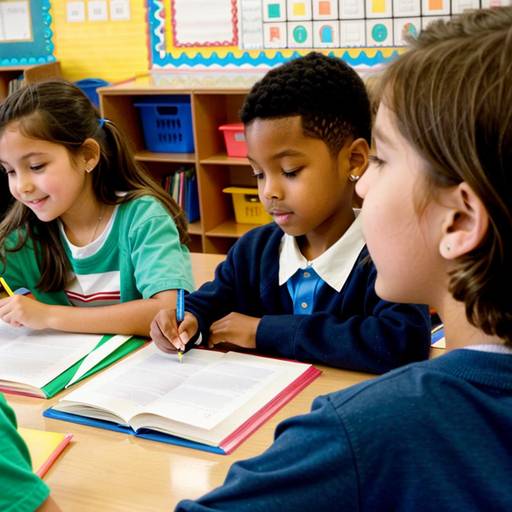
In this first-grade language arts lesson, students will explore the basics of grammar and punctuation by learning about sentences, including their subjects and predicates. The lesson begins with a discussion on the importance of sentences in communication. Students will be introduced to three key punctuation marks: periods, question marks, and exclamation marks, along with their appropriate uses.
Through guided practice, students will work collaboratively to identify and add the correct punctuation to provided sentences displayed on chart paper. They will then complete a worksheet independently, where they will practice adding punctuation and labeling the components of simple sentences.
The lesson concludes with a review of the key concepts and an opportunity for a few students to share their written sentences. Assessment will take place through the collection of worksheets, and early finishers will have an extension activity involving illustration. Overall, the lesson aims to engage students in understanding the foundational elements of sentence structure and punctuation.

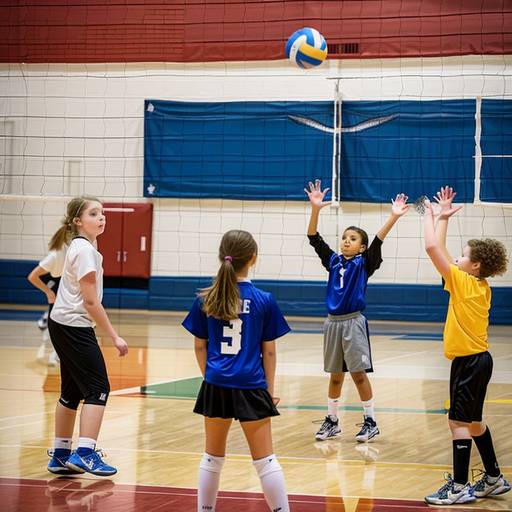
In this 60-minute physical education lesson for 5th graders, students will be introduced to the fundamental skills of volleyball, including serving, passing, and setting. The class will begin with dynamic stretching and a volleyball-focused warm-up to prepare students for activity. Students will then break into small groups to rotate through skill stations where they will practice each volleyball technique. This hands-on approach will reinforce proper form and body positioning.
Following the skill stations, students will participate in a mini-game, applying their skills in a team setting while learning the basic rules of volleyball. The lesson will conclude with a cool-down period that includes stretching and a reflective discussion about their experiences, emphasizing teamwork and sportsmanship. Throughout the lesson, the teacher will assess student engagement and technique, providing feedback and adaptations as necessary to cater to varying skill levels. Safety will be prioritized to ensure an enjoyable and productive experience for all participants.
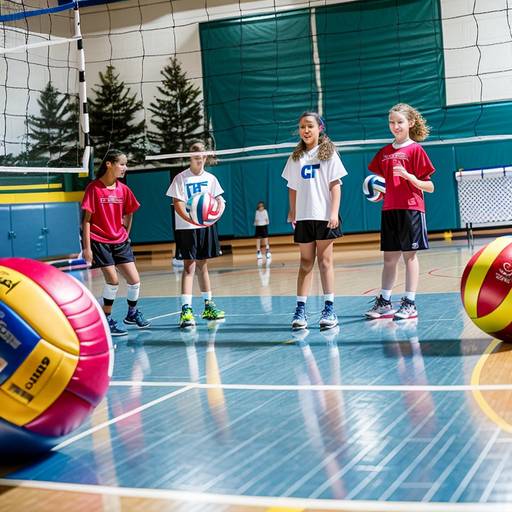
This lesson plan is designed for 4th-grade students to introduce them to the fundamental skills of volleyball through engaging activities that promote teamwork and sportsmanship. The 60-minute session begins with an overview of volleyball rules and key techniques, followed by a dynamic warm-up. Students will participate in skill drills focusing on passing, setting, and serving, rotating through various stations to practice these techniques.
After skill development, students will partner up to refine their passing and setting abilities before engaging in mini-games that apply their learned skills in a team environment. The lesson wraps up with a cool-down and reflection session, allowing students to discuss their experiences and the importance of teamwork in sports. Assessment will be done through observation during drills and games, and modifications will be provided to accommodate different skill levels. Safety precautions will be emphasized throughout the activities, ensuring a fun and educational experience for all participants.

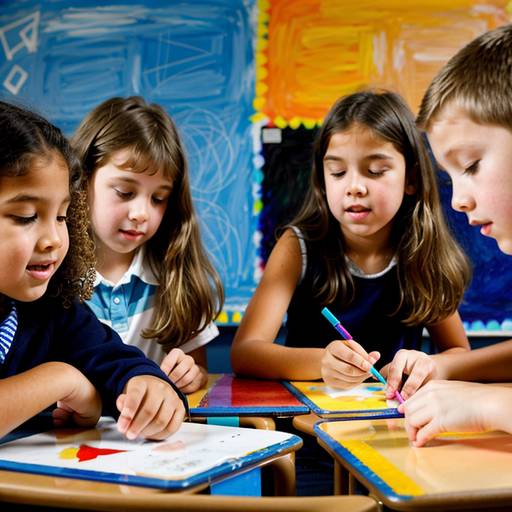
In this 3rd-grade art lesson, students will explore the concepts of primary and secondary colors, as well as the emotional impact of colors and shapes in their artwork. The lesson begins with a discussion of the color wheel and engaging students in sharing their favorite colors and associated emotions. Through guided instruction, they will learn about warm and cool colors, along with basic geometric shapes. Students will then cut out shapes from colored construction paper and creatively arrange them on a blank sheet to express a specific emotion or feeling. Following this, they will write a sentence about their artwork, explaining their color choices and the emotions conveyed. The class will conclude with students sharing their creations and discussing the relationship between color and emotional expression, providing a comprehensive understanding of color theory and artistic expression in a collaborative environment. Assessment will focus on observing students' creativity and their ability to articulate their choices. Extensions for early finishers and follow-up lessons on mixing colors will further enhance learning opportunities.

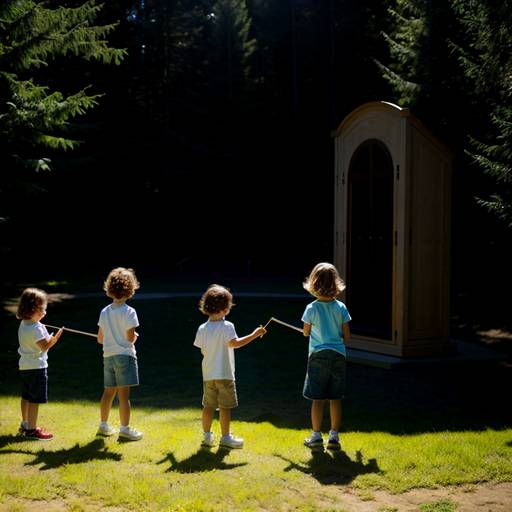
This preschool lesson plan focuses on exploring the concepts of light and sound through engaging, hands-on activities. The session begins with a group discussion about light and sound, using simple instruments and a flashlight to spark curiosity. Children then participate in a shadow play activity, where they use a flashlight to create and observe shadows formed by different objects. Following this, they explore sound by experimenting with various musical instruments, engaging in a "sound parade" to share what they create.
A reflective group discussion allows children to express their observations and experiences, enhancing their critical thinking skills. For those with extra time, an optional art activity encourages children to draw their interpretations of light and sound, fostering creativity. Throughout the lesson, assessment is based on participation, engagement, and understanding of the concepts discussed. This interactive approach helps young learners develop foundational scientific knowledge while enjoying the sensory experiences of light and sound.