
Filters
Level
Grade
Subject
Subject Area
Subject Topic
Standard(s)
Audience
Keyword
DurationMinutes
Lesson Plans

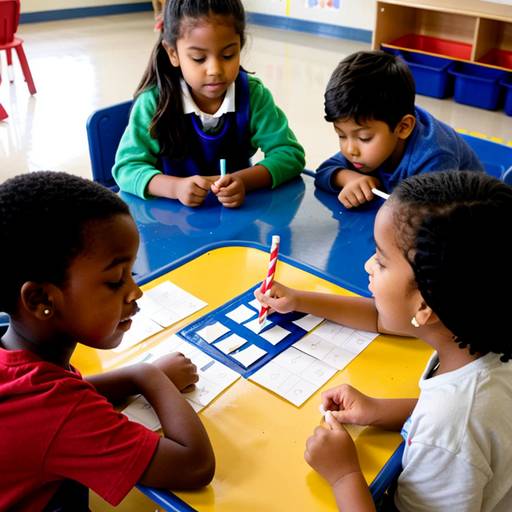
This preschool language arts lesson focuses on teaching students the basics of sentence structure, specifically identifying nouns and verbs. The session begins with an interactive discussion where students learn what a sentence is and explores its components through engaging flashcards and collaborative examples. During guided practice, children observe and participate in creating sentences based on picture prompts, reinforcing their understanding through verbal expression. As an independent activity, each student draws from a given picture prompt and writes a sentence about it, allowing them to apply what they've learned creatively. The lesson concludes with a sharing session, where students present their work, enhancing their confidence and reinforcing their learning. This approach promotes active participation and foundational writing skills in a fun, collaborative environment. Assessment is conducted through observations and the evaluation of student-created sentences. Extension activities provide opportunities for further exploration of sentence construction.

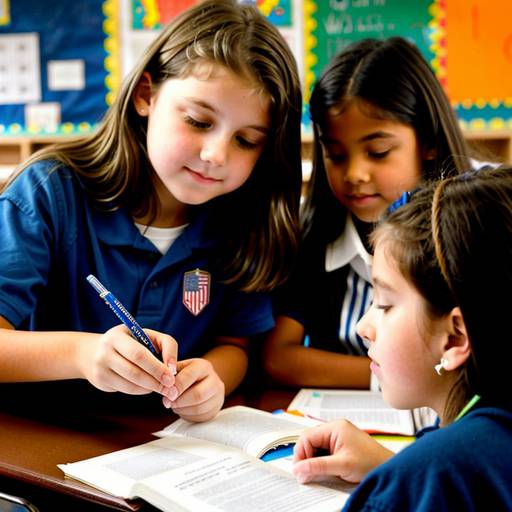
In this 4th-grade Language Arts lesson, students will explore the essential components of sentence structure, including subjects, predicates, and objects. The lesson begins with a discussion on what constitutes a complete sentence, followed by direct instruction on different sentence types and their structures. Students will engage in guided practice by working in small groups to create sentences using provided word cards, fostering creativity and collaboration. For independent practice, they will combine simple sentences into more complex forms, illustrating one of their creations. The lesson concludes with a sharing session to reinforce learning and community building. Assessment will include observation during group activities and the evaluation of worksheets to measure understanding and creativity. Differentiation strategies will be employed to support diverse learners, and extensions will be offered for those ready to delve deeper into sentence structure. Overall, this lesson aims to enhance students' writing skills and their ability to express thoughts clearly.

This 3rd-grade Language Arts lesson focuses on teaching students about the components of complete sentences, specifically subjects and predicates. The lesson begins with a discussion that encourages students to define and understand these terms. Students participate in a collaborative activity where they rearrange scrambled sentence cards to form complete sentences and identify their subjects and predicates. Following this, they create their own sentences using a worksheet, where they select a subject and construct a corresponding predicate, and illustrate their sentences. The lesson concludes with a class discussion to reinforce concepts learned, and student understanding is assessed through their participation in activities and completion of the worksheets. Differentiation strategies are included to support diverse learners, and an extension activity encourages students to apply their knowledge in a creative homework assignment.
In this 1st grade Language Arts lesson, students will explore the fundamental structure of sentences, focusing on subjects and predicates. The lesson begins with a read-aloud of a simple story, during which students listen for complete sentences. After discussing sentences from the text, the teacher introduces the concept of sentence structure through visual aids. Students engage in an interactive activity using sentence-building cards to collaboratively create sentences.
In small groups, they practice constructing sentences while identifying subjects and predicates, followed by an independent illustration activity where they depict a provided sentence. The lesson concludes with students sharing their illustrations and sentences with the class. Assessment includes observing participation in group work, reviewing illustrated sentences, and evaluating exit tickets for correct sentence structure. Modifications are included for varying student needs, ensuring an inclusive learning environment. The overall aim is to enhance students' understanding of grammar and sentence structure while fostering creativity and collaboration.
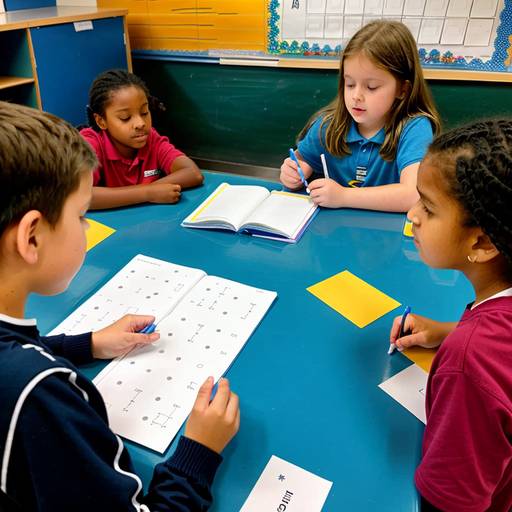
In this 2nd-grade language arts lesson, students will explore the basic components of sentence structure, focusing on subjects and predicates. The lesson begins with an engaging discussion about what constitutes a complete sentence, followed by direct instruction where the teacher models sentence construction on the whiteboard. Students will learn to differentiate between complete and incomplete sentences and the concept of declarative sentences.
During guided practice, students will work in pairs to rearrange words on sentence strips or index cards to create complete sentences, which they will illustrate and present to the class. For independent practice, they will complete worksheets where they cut out words to form sentences and decorate their creations.
The lesson concludes with a group discussion where students share their favorite sentences and identify subjects and predicates. An exit ticket will assess their understanding by asking them to write a sentence and underline its components. Throughout the lesson, the teacher will monitor participation and comprehension, providing support as needed to ensure all students grasp the concept of sentence structure.

In this 1st grade Language Arts lesson, students will explore the fundamentals of grammar and punctuation through an engaging and interactive approach. The lesson begins with a discussion about safaris and animals to capture students' interest, followed by an introduction to the parts of a sentence, focusing on subjects and verbs. Students will learn about three key punctuation marks: periods, question marks, and exclamation marks, and how to use them correctly in sentences.
Through guided group activities, students will collaborate to create sentences about animals, identifying the subject and verb while ensuring proper punctuation. Independent practice will involve writing their own sentences on a worksheet, where they will underline the subject, circle the verb, and add the correct punctuation marks.
The lesson concludes with a review of the main concepts and a sharing session, allowing students to celebrate their work. Assessment will be carried out through observation during group activities and by collecting worksheets to evaluate understanding. Extensions for advanced learners are included to encourage further development of sentence complexity and creativity in writing.
In this 1st-grade language arts lesson plan, students will explore basic grammar concepts and sentence structure by focusing on subjects and verbs through engaging activities related to animals. The lesson begins with a discussion to ignite interest in animals, followed by direct instruction where the teacher models how to construct simple sentences, highlighting the importance of complete sentences, capitalization, and punctuation.
During guided practice, students work in small groups to fill in incomplete sentences using animal picture cards, fostering collaboration and creativity. For independent practice, students complete a worksheet where they write sentences about various animals, ensuring they understand the components of a complete sentence.
The lesson concludes with students sharing their sentences with the class, reinforcing learning through presentation. Assessment will be conducted informally during group work and by evaluating worksheets for sentence completion and grammatical accuracy. Differentiation strategies are included to support diverse learners, and an extension activity encourages ongoing engagement with the material.
In this preschool language arts lesson, students will explore basic sentence structure through engaging activities that emphasize grammar and writing. The lesson begins with an introduction to sentence components, including subjects, verbs, and objects, using visual aids and interactive discussions.
Next, students participate in a hands-on vocabulary activity with picture cards, discussing and acting out various subjects and actions to create example sentences as a group. Following this, they will draw scenes that illustrate their understanding of sentence structure, incorporating at least one subject, one action, and one object into their artwork.
As each student shares their drawing, they will articulate sentences about their creations, fostering peer interaction and collaborative learning. The lesson concludes with a reflection on what they learned and offers the opportunity for an optional extension activity focused on sentence mixing. Assessment will be based on participation, sentence formulation, and the drawings created, ensuring that students grasp the fundamental elements of sentence structure in a fun and imaginative way.
In this 4th-grade language arts lesson, students will explore the fundamentals of grammar and sentence structure to enhance their communication skills. The lesson begins with a discussion about the importance of clear communication, followed by a review of complete sentences and the different types of sentences: simple, compound, and complex. Students will engage in group activities to transform simple sentences into more complex forms, reinforcing their understanding of subjects, predicates, and conjunctions. After collaborative practice, students will complete individual worksheets where they identify sentence parts, rewrite sentences, and create their own examples. The lesson concludes with reflection and an exit ticket to assess their learning. Throughout the session, students will be encouraged to think critically about how sentence structure impacts clarity and creativity in writing. Differentiation strategies are included to support diverse learners.

In this 2nd-grade Language Arts lesson, students will learn about grammar and sentence structure by engaging in a variety of activities centered around building complete sentences. The lesson begins with a discussion on the components of sentences, emphasizing the subject and verb, and includes a modeling segment where a simple sentence is analyzed. Students will then work in small groups to create their own sentences using provided prompts and share their creations with the class.
Following this collaborative activity, learners will complete individual worksheets that allow them to fill in the blanks and craft their own sentences, incorporating creativity and self-expression. The lesson concludes with a review of key concepts regarding sentence construction and punctuation, and students will write an exit ticket to summarize their learning. Throughout the lesson, assessment will occur through observation during group tasks and analysis of completed worksheets. Optional extension activities include a crafting project to further engage students’ creativity. This lesson aims to strengthen students’ understanding of sentence structure while making the learning process enjoyable.