
Filters
Level
Grade
Subject
Subject Area
Subject Topic
Standard(s)
Audience
Keyword
DurationMinutes
Lesson Plans

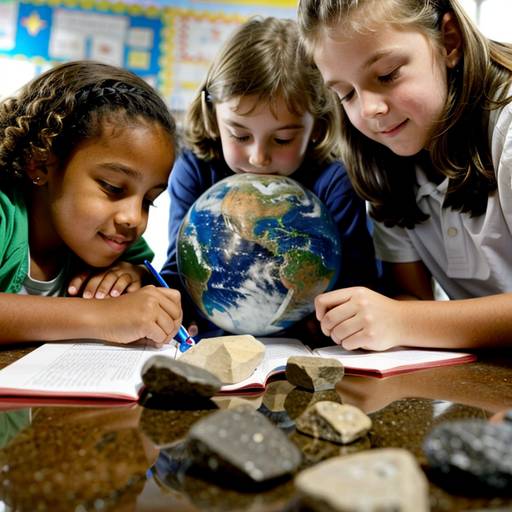
In this 3rd-grade Earth Science lesson, students will explore different types of rocks, including igneous, sedimentary, and metamorphic, while learning about their characteristics and formation processes. The lesson begins with a discussion about rocks, followed by a short video introducing the rock cycle. Students will then receive direct instruction on the three rock types, with samples provided for hands-on examination.
The class will engage in exploratory stations where they observe rock samples under magnifying glasses, completing a worksheet to classify their findings. A discussion on the importance of rocks in everyday life will help reinforce their learning. To conclude, students will share their observations and reflect on one new thing they learned and any questions they still have. Assessment will be conducted through the completed worksheets and exit tickets, with opportunities for extension activities and differentiation to enhance learning for all students.

In this 4th-grade Earth Science lesson, students will explore the three main types of rocks: igneous, sedimentary, and metamorphic. They will learn how each type is formed and gain an understanding of the rock cycle through visual aids and a short video presentation.
The lesson includes a hands-on activity where students work in small groups to classify a variety of rock samples using identification charts and hand lenses. They will observe the physical characteristics of the rocks and document their findings on worksheets.
After sharing their discoveries in a group discussion, the class will review the key concepts learned about the rock cycle and the processes of erosion, cooling, and metamorphism. The lesson emphasizes engagement through observation, teamwork, and discussion while facilitating student understanding of Earth's geology. Assessment will include reviewing students' worksheets and monitoring their participation during group activities.
Extensions to deepen learning may include creating a mobile to illustrate the rock cycle or planning a field trip to observe geological features in nature. Post-lesson reflections will help assess the effectiveness of the instruction and gather student feedback for future improvements.
This lesson plan focuses on teaching 5th-grade students about different types of rocks and the rock cycle. The objectives include helping students identify and classify igneous, sedimentary, and metamorphic rocks, as well as understanding the processes involved in the rock cycle.
The lesson begins with an engaging discussion to activate prior knowledge about rocks, followed by a brief video introduction (if time permits). Students then work in small groups to observe and classify rock samples using magnifying glasses and worksheets. Afterward, they create posters illustrating the rock cycle, incorporating their categorized rocks and explaining the formation processes for each type.
Each group presents their poster to the class, fostering collaborative learning and discussion. The lesson concludes with a class summary, where students reflect on what they learned through an exit ticket. The assessment includes observing group participation, evaluating worksheets, and reviewing exit tickets for comprehension.
Extensions may involve field trips to geological sites or creating a classroom rock collection. Differentiation strategies are included to support diverse learners and encourage advanced students to explore local geology further. Overall, the lesson aims to engage students and foster a deeper understanding of Earth Science and the nature of rocks.
In this 60-minute Earth Science lesson for 5th graders, students will explore the fascinating world of rocks by learning about the three main types: igneous, sedimentary, and metamorphic. The lesson begins with a class discussion to gauge prior knowledge and spark interest. Students will be introduced to the rock cycle through a visual diagram, which illustrates how rocks transform from one type to another.
Following the instruction, students will engage in a hands-on activity where they will work in small groups to observe and classify a variety of rock samples using magnifying glasses and worksheets. They will analyze the characteristics of each rock, identify its type, and present their findings to the class.
The session will conclude with a discussion about the significance of rocks in everyday life and the natural environment. Students will then complete a short quiz to assess their understanding of the material. To reinforce learning, they will have a homework assignment to find and bring in a rock from their surroundings for further exploration in the next class. Differentiation strategies are included to support all learners.
This 3rd-grade Earth Science lesson focuses on introducing students to the diverse world of rocks and minerals. Over the course of one hour, students will explore various types of rocks—igneous, sedimentary, and metamorphic—through hands-on activities at designated stations. They will use magnifying glasses to observe rock samples and complete worksheets to document their findings. A discussion on the rock cycle will follow, where students will learn about how rocks change forms through processes like melting, cooling, and erosion. The lesson incorporates collaborative learning, encourages curiosity, and reinforces key concepts through class discussions, exit slips, and potential extensions like field trips or projects. Accommodations are provided to support diverse learners and ensure everyone can engage with the material effectively.

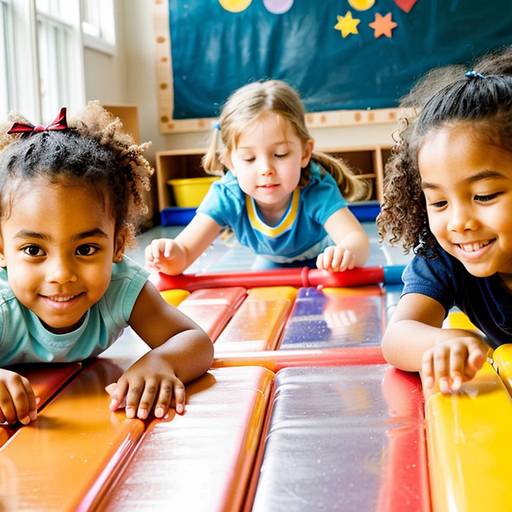
In this preschool science lesson, students will engage in hands-on activities to explore the basic concepts of forces and motion through pushing and pulling. The lesson begins with an interactive discussion where students are encouraged to share their ideas about movement. They will then work in small groups to experiment with toy vehicles and balls on a smooth ramp, observing how different objects move in response to these forces.
After conducting their experiments, students will come together to discuss their observations, learning about the influence of gravity on motion. To reinforce their understanding, they will create drawings of their favorite experiments, labeling the types of forces involved. The lesson concludes with students sharing their artwork and reflecting on what they learned. Throughout the lesson, teachers will assess engagement and comprehension based on observations and discussions. This engaging experience aims to provide preschoolers with a foundational understanding of how forces impact the movement of objects.
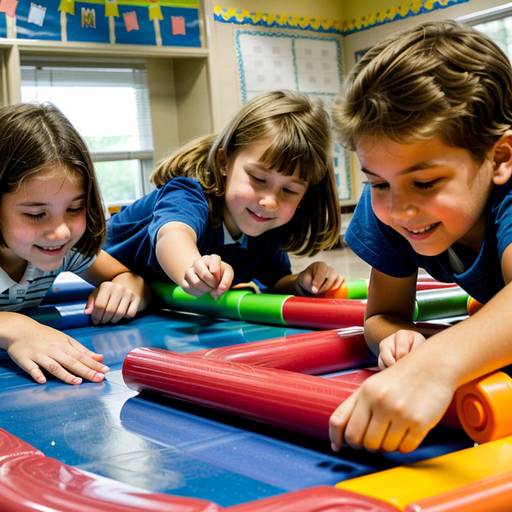
In this 2nd-grade science lesson focused on physical science and motion, students will explore basic concepts of movement, including rolling, sliding, and spinning. The lesson begins with an engaging discussion that prompts students to think about how different objects move. Next, the teacher explains motion and demonstrates how various objects behave on a ramp, emphasizing the influence of forces.
Students are then divided into small groups to participate in hands-on activities. Each group tests different objects by rolling them down a ramp, sliding them on a flat surface, and spinning them to observe and measure their motions. They will record their findings on worksheets, encouraging collaboration and discussion within their groups.
The lesson concludes with a group discussion where each team shares their observations, allowing students to compare results and reinforce their understanding of the types of motion studied. Assessment will be based on participation, engagement during activities, and the quality of observations recorded. Opportunities for extension activities will be provided for students who finish early, fostering further exploration and creativity in understanding motion. Throughout the lesson, safety practices will be emphasized.

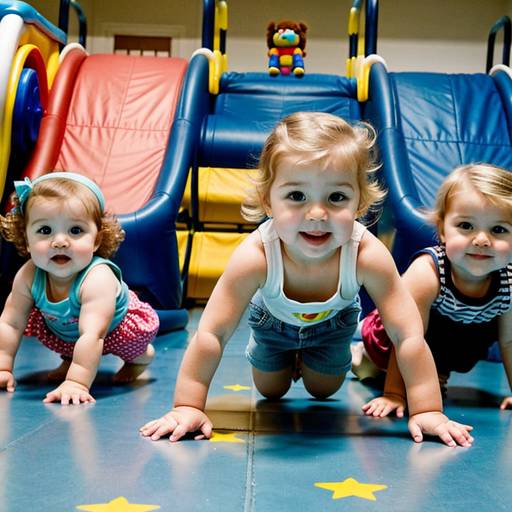
This lesson plan is designed for toddlers aged 18 months to 3 years and focuses on enhancing gross motor skills through basic tumbling activities, including rolling, balancing, and navigating obstacle courses. The session begins with a warm-up featuring fun stretches and animal movements, followed by three engaging activities: practicing rolling safely on mats, walking along balance beams made of foam blocks, and maneuvering through a simple obstacle course with cushions and cones. A calming cool-down helps transition the children back to a relaxed state, featuring deep breathing and gentle stretches. Throughout the lesson, children are encouraged to express their favorite activities and demonstrate newly learned skills, allowing for assessment of their engagement and development. Emphasis is placed on creating a safe, fun environment that fosters physical activity and coordination.
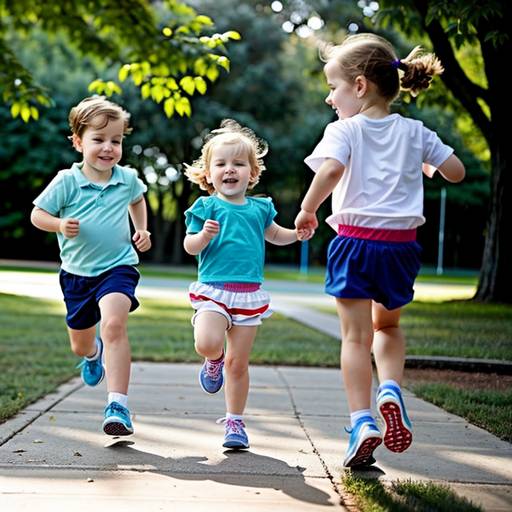
This lesson plan focuses on enhancing toddlers' gross motor skills through engaging running activities. Designed for children aged 2 to 3, the session begins with a warm-up that incorporates movement songs to prepare the children for physical activity. The main component consists of a running course set up with cones and optional balls for added coordination practice. Following this, an obstacle course encourages further movement through jumping and weaving, promoting physical agility. A musical running game allows children to enjoy free movement while also practicing listening skills as they freeze when the music stops. To conclude, the lesson includes gentle stretches and a group reflection, allowing children to share their favorite moments. Safety is prioritized throughout the session, ensuring that all activities cater to the varying skill levels of the participants. Caregivers are encouraged to support continued physical play at home to further develop these essential skills.

This lesson plan for 3rd-grade students focuses on teaching essential internet navigation skills and the importance of online privacy. Students will gain an understanding of how to safely explore the internet and recognize the significance of keeping personal information secure. The lesson begins with a discussion about their online interests, followed by an explanation of key terms related to the internet and privacy settings.
Through guided practice, students will navigate a kid-friendly website, learning how to adjust basic privacy settings to control who can see their information. They will then fill out a checklist to reinforce their understanding of the concepts covered. The lesson concludes with a review and a Q&A session, allowing students to share their insights about maintaining online safety. Extension activities encourage creativity and reinforce safe practices. The plan also includes differentiation strategies to support all learners in the classroom. Overall, this lesson aims to equip students with vital skills for their digital interactions.