
Filters
Level
Grade
Subject
Subject Area
Subject Topic
Standard(s)
Audience
Keyword
DurationMinutes
Lesson Plans
This lesson plan is designed for 4th-grade students to explore the concepts of digital citizenship and cyberbullying awareness. Students will engage in discussions to define digital citizenship and identify various forms of cyberbullying, understanding their emotional impact on victims. Through an interactive video and group role-playing activities, students will practice responding to cyberbullying scenarios. The lesson emphasizes the importance of responsible and respectful online behavior, culminating in students signing a Digital Citizenship Pledge to commit to these principles. Assessment will be based on participation in discussions and role-plays. The plan also includes extension activities, such as creating informative posters and writing short stories related to the topics covered.
This lesson plan aims to educate 3rd-grade students about digital citizenship and cyberbullying awareness. Students will explore the meaning of digital citizenship, emphasizing the importance of using technology responsibly and respectfully. Through discussions and a slideshow presentation, they will learn about key topics such as privacy, respectful online communication, and the impact of their digital footprint.
The lesson includes a focus on cyberbullying, where students will define the term, recognize examples, and understand its effects on individuals. In small groups, students will work on scenarios related to cyberbullying, brainstorming positive responses and solutions. They will create posters that illustrate their scenarios and proposed strategies, promoting teamwork and communication.
After group presentations, the class will engage in a discussion to reflect on the various strategies shared. The lesson concludes with a summary of the key concepts learned, emphasizing the importance of promoting kindness and responsible actions in online interactions. Assessment will include observation of participation and review of group projects, while follow-up activities encourage students to share their knowledge with their families and consider creating a digital citizenship pledge.
This lesson plan for 2nd-grade students focuses on introducing the concepts of digital citizenship and online safety. During the lesson, students engage in a discussion to relate being a good friend in real life to being a responsible internet user. They view a short video that highlights key aspects of digital citizenship and participate in group activities to identify safe and unsafe online behaviors based on provided scenarios. Each group presents their findings, reinforcing their understanding of online safety.
Students then create personal digital citizenship pledges, where they write or draw one way they plan to stay safe online, which they can share with their families. The lesson concludes with a review of key points and emphasizes the importance of kindness and respect in digital interactions. Assessment is done through group discussions and the review of individual pledges. Follow-up activities include creating a classroom poster of digital safety tips and implementing a tech-free day for deeper reflection on the lessons learned. Overall, the lesson aims to empower students to navigate their online lives responsibly and safely.
This fifth-grade technology lesson focuses on educating students about digital citizenship and the significance of their digital footprints. The lesson begins with an engaging video that introduces the concept of digital footprints, followed by a discussion to elicit students' initial thoughts on the topic. A PowerPoint presentation provides comprehensive information on digital citizenship, the different types of digital footprints, and the impacts of online behavior.
Students then participate in a group activity where they analyze various scenarios illustrating both positive and negative digital footprints. Through discussion and collaboration, they explore the implications of online actions and propose ways to improve digital reputations. The lesson concludes with a reflection exercise, allowing students to consider what they have learned and how they can ensure a positive digital presence.
Assessment includes participation in discussions, the quality of group presentations, and responses on a reflection worksheet. The lesson encourages responsible digital behavior and the awareness that online actions can have lasting effects. Accommodations are made to support diverse learners, reinforcing the importance of being thoughtful and informed digital citizens.

This 3rd-grade technology lesson focuses on teaching students about digital citizenship and online safety. The lesson begins with an engaging discussion about their favorite websites and games to introduce the concept of digital citizenship. Students learn essential online safety rules through a structured discussion and an interactive video, followed by a group activity where they analyze scenarios related to online behavior and share their responses.
Independently, each student creates a poster illustrating key online safety tips and aspects of good digital citizenship, which they then present to the class. The lesson wraps up with a recap of the concepts learned, and students reflect on their understanding through written notes. The overall goal is to empower students to navigate the online world responsibly, fostering a culture of respect and safety in digital interactions. Optional extensions include inviting a guest speaker and providing resources for families to continue the conversation at home.

This lesson plan aims to educate 5th-grade students about digital citizenship and online safety. The students will begin by discussing their experiences with digital devices and defining the concept of digital citizenship, focusing on responsible technology use. The lesson includes direct instruction on key online safety practices such as protecting personal information and recognizing the importance of respectful interactions online.
Following this, students will engage in a group activity where they analyze scenario cards depicting various online situations. In small groups, they will discuss potential responses and share their findings with the class. The lesson concludes with a reflection on digital citizenship, where students will collaboratively create a Digital Citizenship Pledge to commit to responsible online behavior. Handouts summarizing important tips will be provided for students to take home.
Participation in discussions, group presentations, and the completion of a reflective homework assignment will serve as assessment methods, while extension activities will offer opportunities for further exploration and application of the concepts learned.
In this 4th-grade technology lesson, students engage in understanding the concepts of digital citizenship and privacy protection. The lesson begins with a class discussion about responsible technology use, followed by a short video that highlights the importance of keeping personal information private. Students then participate in a group activity where they analyze various online scenarios related to privacy, discussing appropriate responses and the rationale behind them. The session concludes with a reflection activity, where students express their learning and commit to actions that will help protect their privacy online. The lesson aims to empower students with the knowledge and skills to navigate the digital world safely and responsibly. Extension activities include creating a digital citizenship poster and hosting a parent night to reinforce safe online practices at home.

In this music lesson for 3rd-grade students, the focus is on understanding music theory with an emphasis on rhythm and beats. The session begins with a warm-up clapping activity to introduce the concepts of beat and rhythm, highlighting how the beat serves as the foundation of music. Students then learn about quarter and eighth notes, identifying their values and how they can be combined to create rhythm patterns.
Through guided practice, students work in small groups to clap out rhythms from flashcards, fostering collaboration and active participation. They also engage in independent practice by completing worksheets with rhythm patterns to reinforce their understanding. The lesson concludes with a share-out session where students reflect on what they learned, followed by a fun rhythm game that encourages creativity in developing their own patterns. Throughout the lesson, student comprehension is informally assessed through observation and worksheet review, with opportunities for extension into cultural rhythms using percussion instruments.
In this 1st-grade music lesson, students will explore basic concepts of rhythm and music theory through engaging activities. The lesson begins with an introduction to rhythm, where students participate in a call-and-response clapping exercise to familiarize themselves with the beat of music. Using rhythm flashcards, students learn to differentiate between quarter notes and eighth notes, practicing clapping these rhythms in unison.
Next, students are divided into small groups to create their own rhythm patterns using the note values they’ve learned, which they then perform for the class. Following the group performances, each student receives a sticky note to write their own simple rhythm, which is shared and displayed for the class. To conclude, students listen to a piece of music and clap along, reinforcing their understanding of rhythm while reflecting on the lesson's activities. Assessment is based on participation, group performance, and the accuracy of individual rhythm creations. Opportunities for extension are provided to deepen engagement and understanding of rhythm in music.
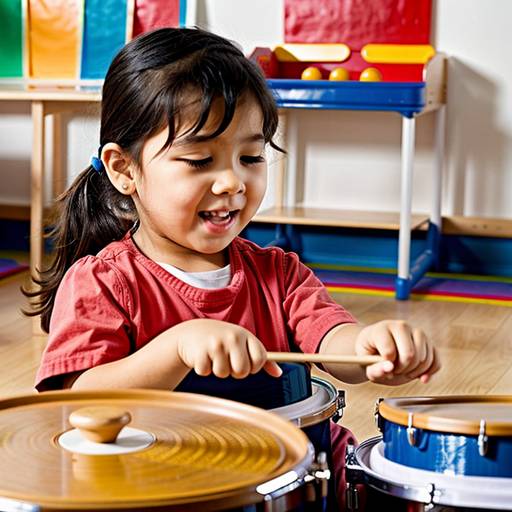
This 45-minute preschool music lesson focuses on engaging young children in rhythmic activities to enhance their understanding of beats, patterns, and coordination through movement and music. The session begins with a fun clapping pattern to introduce the concept of rhythm as the "heartbeat" of music.
Children participate in warm-up exercises using body percussion, which includes clapping, stomping, and patting their legs, followed by an exploration of various percussion instruments. This hands-on experience allows them to experiment with sounds and engages them in a group jam session.
The lesson includes interactive rhythm games, such as "Follow the Leader" and "Rhythm Freeze Dance," encouraging children to replicate rhythms and move to music. A creative movement activity involves colorful scarves or ribbons, allowing children to express themselves rhythmically in time with different tempos.
To conclude, the children gather in a circle to create a layered rhythm together, reinforcing the importance of listening and collaboration. The lesson ends with a reflective discussion on their experiences and a group rhythm clap as they finish. Throughout the session, educators assess children's participation, rhythm imitation, and their ability to listen and engage with others in a joyful learning environment.