
Filters
Level
Grade
Subject
Subject Area
Subject Topic
Standard(s)
Audience
Keyword
DurationMinutes
Lesson Plans


In this 4th-grade language arts lesson, students will learn the fundamentals of persuasive writing by exploring effective techniques to craft compelling arguments. The lesson begins with a discussion that encourages students to share personal experiences of trying to convince others, leading to the identification of key elements that make a strong argument.
Students will analyze sample persuasive letters to identify strategies such as emotional appeal, facts and statistics, testimonials, logical reasoning, and impactful word choice. Working in small groups, they will brainstorm topics relevant to their interests before selecting one to focus on for their own persuasive letters.
During the independent writing activity, students will compose letters structured with an introduction stating their opinion, supporting reasons, and a call to action in the conclusion. They will be encouraged to incorporate at least two persuasive techniques and will have the opportunity to share their letters with peers for feedback. The lesson concludes with reflections on the effectiveness of the techniques used and introduces potential extensions such as peer reviews and classroom debates to further engage students. Assessment will focus on clarity of opinion, the use of persuasive techniques, organization, creativity, and effort in their writing.

In this engaging 4th-grade Language Arts lesson, students will learn the fundamentals of persuasive writing by composing letters aimed at convincing a chosen audience. The lesson begins with a discussion on persuasion, encouraging students to think about their experiences with being persuaded. A mini-lesson follows, highlighting the key components of persuasive writing, including a clear opinion, supporting reasons, evidence, and a call to action.
Students will brainstorm topics they are passionate about, select an audience for their letters, and use a graphic organizer to plan their writing. After drafting their letters, students will have the opportunity to share their work with peers. The lesson concludes with a recap of the importance of persuasive skills in everyday life. Assessment will focus on the clarity and effectiveness of each letter, while extensions and adaptations are provided to cater to various student needs. Overall, this lesson fosters students' writing abilities and encourages them to express their opinions thoughtfully.


This preschool language lesson plan focuses on introducing young children to the sounds of letters in the alphabet, helping them associate each sound with familiar words and objects. The lesson is designed to last 30-40 minutes and includes a variety of engaging activities to reinforce phonetic awareness.
The session begins with a welcome song that incorporates letters and sounds, followed by a warm-up activity where children participate in clapping and repeating letter sounds. This is followed by an interactive introduction to letter sounds using flashcards and picture cards, encouraging students to think of words that start with those letters.
An interactive Bingo game reinforces the learning by allowing children to recognize and cover letters and sounds as they are called out. A storytime segment features a phonics-themed book, where children are encouraged to identify sounds within the text.
To conclude the lesson, students engage in a rhythmic dance, responding to letter sounds with movements. The session wraps up with a review of the sounds learned and distribution of stickers as rewards for participation. Overall, the plan emphasizes a fun and engaging approach to early literacy while fostering a love for language and learning among preschoolers.

In this lesson plan designed for toddlers aged 2-3 years, students will focus on enhancing their phonemic awareness through engaging activities centered around sounds and music. The session begins with a group circle where children are introduced to the theme of sounds. They will sing familiar songs, encouraging them to participate by making animal sounds and responding to questions about various noises.
Next, the lesson features an interactive game using flashcards, allowing children to identify sounds from pictures of animals and vehicles. This is followed by a rhythm and movement activity where children use rhythm instruments to play along, fostering their sense of beat and movement in relation to sound. A storytelling segment features a book with repetitive sounds, promoting listening skills and engagement as children are invited to join in on the sound patterns.
To connect sounds with letters, a large poster board of the alphabet is introduced, prompting children to identify sounds associated with each letter. The lesson concludes with a closing circle where children share their favorite sounds or songs, reinforcing their learning experiences. Observations on participation and engagement are made throughout the session, guiding future lesson planning. Additionally, parents are provided with follow-up resources to encourage sound exploration at home. This comprehensive approach creates a fun and interactive learning environment that nurtures early phonemic awareness skills.

The lesson focuses on teaching preschool students the sounds associated with specific letters of the alphabet through interactive activities. It begins with a brief introduction to letter sounds, utilizing flashcards and picture cards to engage students and promote recognition. A scavenger hunt follows, where children search for objects around the room that correspond to the sounds they’ve learned. This is complemented by a creative group activity where students make crafts related to specific letters, encouraging them to express their understanding through art. The lesson concludes with an enjoyable sing-along that reinforces phonics concepts, followed by a review to gauge understanding and celebrate participation. Extension activities are suggested for ongoing engagement with phonics during the week. The overall approach blends auditory, visual, and kinesthetic learning methods to create a fun and effective phonics experience.
In this 5th-grade technology lesson, students will explore multimedia creation through photo editing and storytelling techniques. Over the course of two class periods, they will learn essential photo editing skills using multimedia software, such as cropping, adjusting brightness, and adding text.
The lesson begins with a discussion on how visuals can convey messages, followed by a demonstration of the photo editing tools. Students will then work in pairs to select a theme for their digital photo collage, sketching out their ideas before creating their collages using the software.
On the second day, students will present their collages to the class, explaining their creative choices and the techniques they utilized. Assessment will focus on participation, creativity, and clarity in both the collage and the presentation. Additional extensions may include creating a digital portfolio of work and organizing a gallery walk to showcase student projects. Overall, the lesson fosters creativity, collaboration, and practical skills in multimedia creation.

The first day begins with an introduction to multimedia components, followed by a demonstration of basic photo editing tools. Students are then given hands-on practice to edit sample images, promoting engagement and skill development.
On the second day, students apply their newly acquired skills to create a short visual story. They select and edit images, write accompanying text, and combine these elements into a multimedia presentation. The lesson concludes with students sharing their projects with the class, fostering collaboration and public speaking skills. Assessment is based on creativity, clarity, and effective use of multimedia elements, while extensions allow for further engagement through sharing projects with families and incorporating audio components. Overall, this lesson promotes creativity and digital literacy in an interactive learning environment.
In this 3rd-grade technology lesson, students will explore the art of digital storytelling through multimedia creation. The lesson begins with a captivating example of a digital story, leading to a discussion about its engaging elements. Students will then work in small groups to brainstorm ideas for their own stories, using graphic organizers to outline the essential components of narrative structure, such as beginning, middle, and end.
During the main activity, students will create their digital stories using computers or tablets, incorporating images, text, and audio to enhance their narratives. Teachers will monitor progress, offering guidance and support as needed. At the end of the lesson, each group will present their digital stories to the class, fostering a sense of accomplishment and encouraging reflection on their creative processes.
The lesson emphasizes collaboration, communication, and creativity, with assessment based on student engagement and the effectiveness of their storytelling. Extension activities may include hands-on illustration work and introductions to more advanced editing tools for those interested in deepening their multimedia skills.

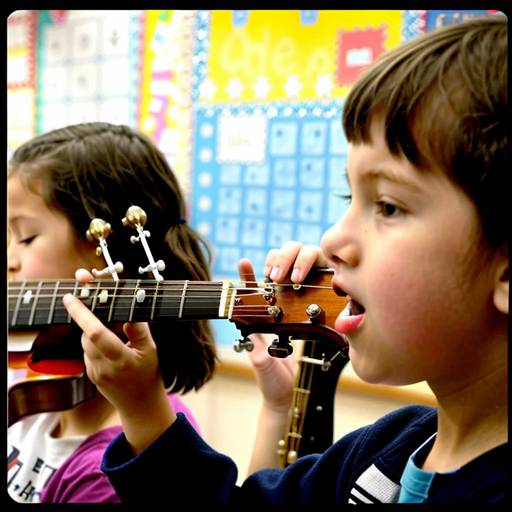
In this 2nd-grade music lesson, students will explore the concepts of high and low pitches through engaging activities and vocal exercises. The session begins with a greeting song to capture students' attention, followed by an introduction to high and low sounds using relatable examples and visual aids. A vocal warm-up will help students practice matching their voices to different pitches.
Next, the students will participate in a listening exercise where they respond to audio recordings of various instruments, and then they will engage in a movement activity that correlates to high and low pitches by mimicking animals. Following this, they will practice singing a simple song that incorporates both high and low tones.
The lesson concludes with a sharing session where students can discuss their favorite sounds, followed by a fun goodbye song that emphasizes pitch variation. Throughout the lesson, student participation and understanding will be assessed through observation and engagement in the activities. Adaptations will be available to support diverse learning needs, ensuring all students can participate and enjoy their musical experience.

This 1st-grade music lesson focuses on helping young students understand and differentiate between high and low pitches through a variety of engaging activities. The lesson begins with a vocal warm-up where students explore high and low sounds by mimicking animal noises. They then participate in a movement game that reinforces pitch concepts by jumping for high notes and crouching for low notes.
Next, students learn a simple song that incorporates both high and low pitches, accompanied by corresponding hand motions. They also use musical instruments to enhance their singing, reinforcing the pitch concepts further. The lesson concludes with a review discussion, allowing students to express their favorite parts and reflect on what they learned. The goal is to provide a foundational understanding of pitch through creative expression and active participation. Extension activities encourage further exploration of high and low sounds by drawing and sharing other examples from their environment.