
Filters
Level
Grade
Subject
Subject Area
Subject Topic
Standard(s)
Audience
Keyword
DurationMinutes
Lesson Plans

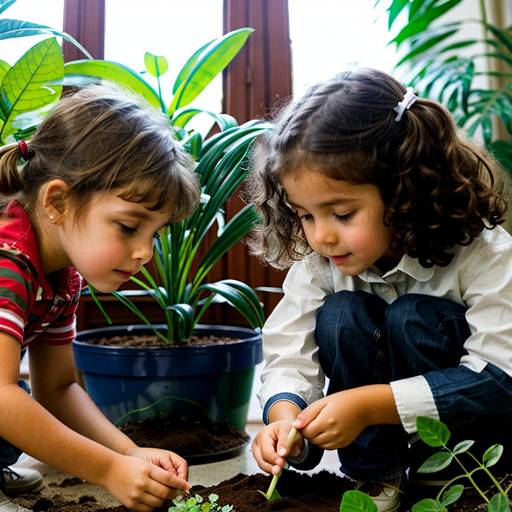
In this preschool science lesson, students will explore the basics of plants, focusing on their parts and growth needs. The lesson begins with a circle time discussion where students share their prior knowledge about plants. Visual aids, including pictures and live specimens, will be used to introduce the concepts of roots, stems, leaves, and flowers.
Students will engage in hands-on exploration by using magnifying glasses to closely observe live plants, encouraging curiosity and discussion about their findings. Following this activity, students will participate in planting seeds in soil, learning about the importance of water and sunlight for plant growth.
The lesson will conclude with a group reflection where students share their observations and thoughts about plant care. They will also create a simple chart together listing what plants need to thrive. Optionally, students can draw their favorite parts of a plant or imagine how their seeds will grow, reinforcing their understanding. Overall, this lesson aims to develop observation skills and a foundational understanding of plant biology while fostering a connection with the natural world.

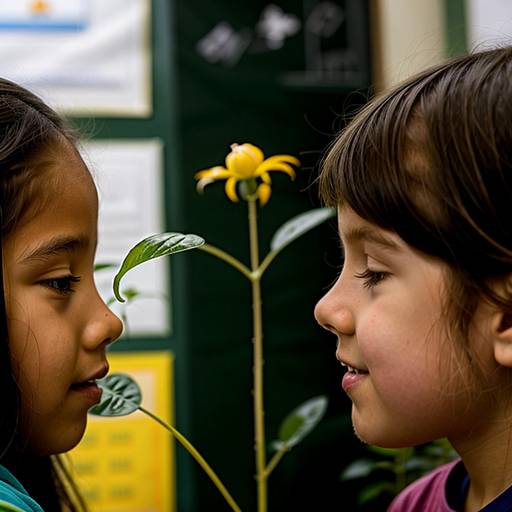
In this engaging 2nd-grade Life Science lesson, students will explore the fascinating world of plants, focusing on their basic parts and functions. The lesson begins with a discussion about the role of plants in the environment, where students will contribute to a KWL chart, sharing what they know and what they want to learn. Direct instruction will introduce the parts of a plant—roots, stems, leaves, flowers, and seeds—along with their functions, highlighting the importance of plants in providing oxygen, food, and habitat.
Following this, students will participate in a hands-on activity where they will work in small groups to examine a live plant or its image, using magnifying glasses to identify and label its parts on a worksheet. Each group will then share their findings with the class, fostering collaboration and communication among peers. The lesson will conclude with a reflection on the "superhero" qualities of plants, emphasizing their vital role in our ecosystem. Assessment will include participation and the completion of the worksheet, while extensions may encourage ongoing exploration through plant-growing projects or related reading activities.

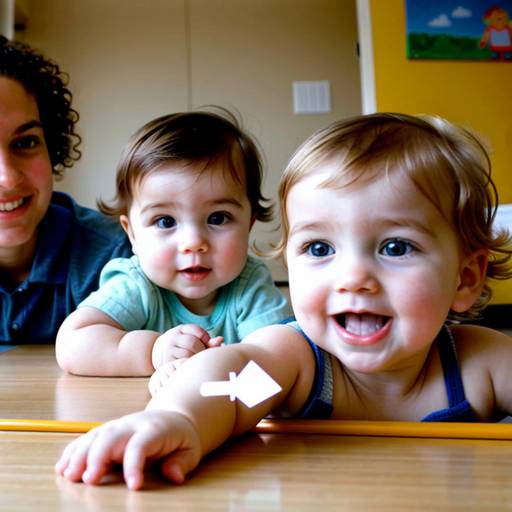
This lesson plan focuses on teaching infants the essential social skill of turn taking through a series of engaging activities. The objectives include fostering patience and cooperation among the children. The session begins with an introduction to the concept using a plush toy as a visual aid, followed by interactive circle time where visual aids depicting sharing are shown.
The main activity involves a structured toy time where infants take turns playing with various toys, utilizing a timer to regulate turns. A movement break with dance and music reinforces the joy of shared activities. The session concludes with a reflective circle where children discuss their favorite parts, followed by a short story that reinforces the theme of taking turns.
To support ongoing development, follow-up activities are suggested, allowing children to practice turn taking in a variety of contexts. Throughout the lesson, opportunities for assessment and positive reinforcement are given to help encourage successful interactions.
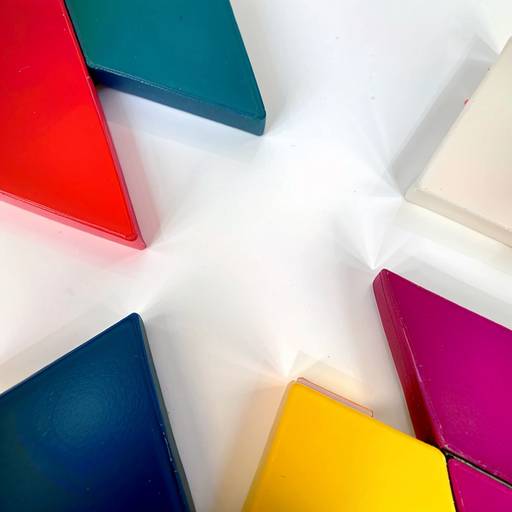
In this engaging lesson plan for toddlers, students will discover the world of colors and shapes by exploring color mixing. The session begins with an introduction to primary colors—red, yellow, and blue—using visual aids to help students identify and name the colors. A demonstration on mixing these colors to create secondary colors will follow, highlighting examples such as purple, green, and orange.
During the main activity, each child will receive a white paper with pre-cut shapes and primary color paints. They will experiment with mixing colors on trays to create new shades, applying them to their shapes while learning to communicate their findings. The lesson emphasizes creativity and self-expression, allowing children to share their colorful creations with peers, fostering a sense of community and collaboration.
Finally, students will clean up their work areas, reinforcing the importance of tidiness, while reflecting on their learning experience. The lesson provides opportunities for assessment through observation and encourages deeper exploration of colors through extension activities, such as creating a color mixing chart or reading related storybooks. Overall, this session aims to inspire curiosity and joy in the understanding of colors and shapes.

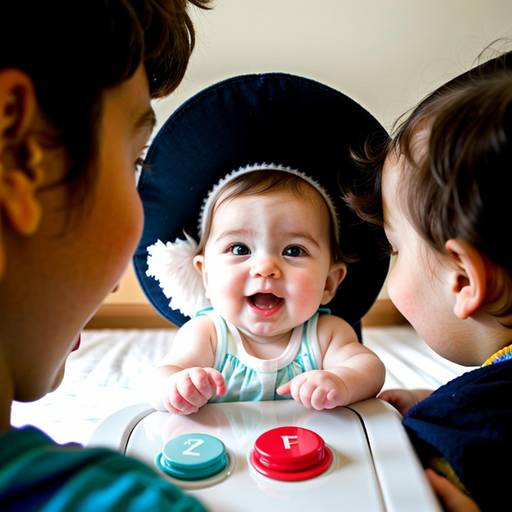
This lesson plan focuses on fostering early language development in infants and toddlers through engaging activities centered on rhythm and rhyming. The session includes a read-aloud of a rhythmic story, interactive rhyming games with picture cards, and the use of musical instruments to create sound patterns. Children are encouraged to express themselves through a movement-oriented song that incorporates rhyme, followed by a hands-on craft activity where they can draw and share their creations using rhyming words. The session concludes with a group discussion, allowing children to reinforce their understanding of rhymes. Throughout the lesson, observation of participation and engagement serves as an informal assessment of the children's developing language skills. This playful exploration aims to build a foundation for language awareness and enjoyment of sounds in words, creating a rich, interactive learning experience.

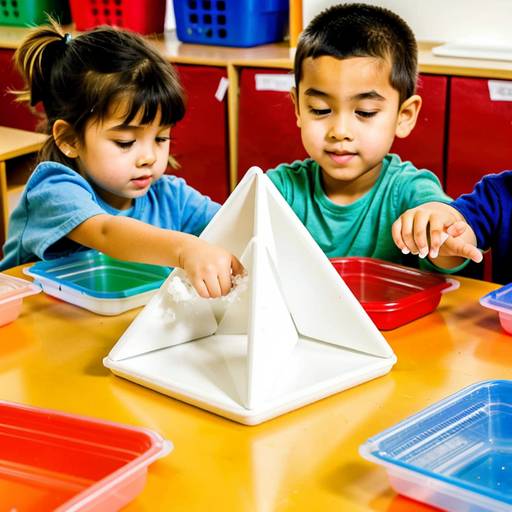
In this preschool art lesson, students are introduced to the concept of sculpture as a three-dimensional art form. The session begins with an engaging discussion about various sculptures, utilizing visual aids to spark interest. Children explore a variety of materials, including air-dry clay, recyclable items, and natural elements, encouraging tactile engagement and creativity. They then create their own sculptures, either individually or in pairs, allowing them to experiment with different shapes and textures. After completing their artworks, students share their sculptures with the class, discussing their materials and creative processes, fostering a supportive environment for feedback. If time permits, students may also decorate their sculptures with paints. The lesson concludes with a clean-up and optional extension activities, promoting teamwork and further artistic exploration. This hands-on experience enhances fine motor skills, creativity, and collaboration among young learners.

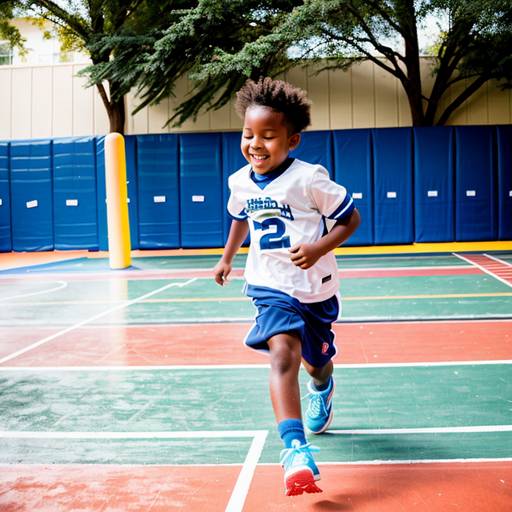
This lesson plan is designed for preschoolers aged 3-5 years and focuses on introducing basic sports fundamentals through playful activities. The session lasts 30 minutes and begins with a warm-up that includes dynamic stretching exercises to enhance flexibility and energy levels.
Students then rotate through three skill stations aimed at developing fundamental motor skills. At the first station, they practice dribbling and passing soft balls while navigating through cones, improving hand-eye coordination. The second station involves jumping in and out of hula hoops to enhance balance and coordination. The final station features team relay races that foster teamwork and speed as students take turns running and passing a baton.
Following the skill stations, a fun team game, "Sharks and Minnows," is played to encourage strategic thinking and teamwork, allowing students to apply their skills in a playful context. The session concludes with a cool-down that includes gentle stretching and a reflection time where children share their favorite parts of the activities. The lesson emphasizes movement, teamwork, and the joy of physical activity while catering to the developmental needs of preschoolers. Assessments are based on participation, motor skill development, and teamwork during activities. Adaptations are provided to support children with varying abilities.

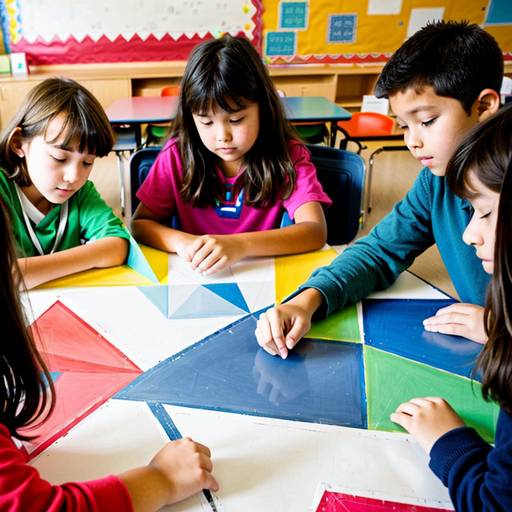
In this 5th-grade math lesson, students explore the concepts of geometry and area through the study of various polygons, including triangles, rectangles, parallelograms, and trapezoids. The lesson begins with a review of polygon types and the significance of area in real-life applications. Students learn and practice calculating the area of each polygon using the appropriate formulas, moving from direct instruction to guided and independent practice. Throughout the activities, they engage in drawing shapes on grid paper to reinforce their understanding and apply their knowledge to solve related word problems. The lesson concludes with a review and discussion of how area calculations are used in various fields, allowing students to connect mathematical concepts to everyday situations. Assessment is conducted through observation during paired activities and graded worksheets. Extension activities offer challenges for faster learners, while differentiation strategies support those needing additional help. Overall, the lesson encourages collaboration and hands-on engagement with geometry.

The lesson plan focuses on teaching toddlers the essential steps involved in using the toilet independently and understanding the importance of hygiene. It begins with an engaging introduction to the topic, followed by an interactive story time that introduces the concept of potty training in a fun way. Visual aids, including a step-by-step schedule and a demonstration using a doll, guide children through the process of using the toilet, reinforcing their understanding through role play.
After practicing the toilet steps, the lesson includes a handwashing segment, where children learn the proper technique and why it's important to wash their hands after using the bathroom. The session concludes with a closing circle where children recap what they learned, sing a fun song about toileting and hygiene, and receive positive reinforcement through stickers or stamps to encourage their newfound skills. Overall, the lesson aims to empower toddlers in their toileting journey while reinforcing good hygiene practices in a supportive and engaging environment.
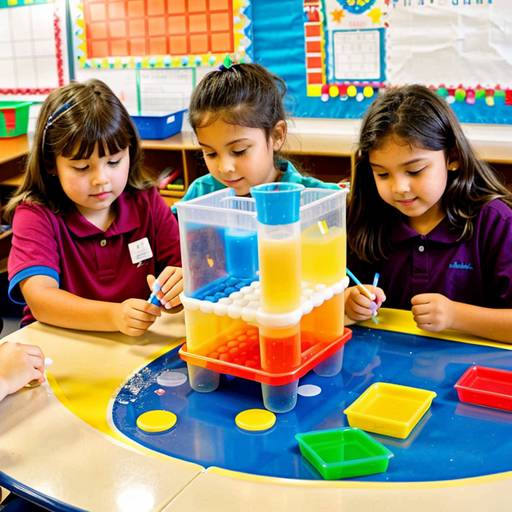
In this engaging 2nd-grade math lesson focused on measurement and volume, students will explore the concept of volume through hands-on activities and discussions. The lesson begins with an introduction to key vocabulary, such as volume and capacity, prompting students to share their understanding and examples.
Students will work in small groups, using a variety of containers to measure their capacity with standard units like measuring cups, estimating first before measuring the actual volume of each container. They will record their findings on worksheets to compare their estimates with their measurements.
Following the measurement activity, the class will regroup to share their results, facilitating a discussion about their discoveries. A fun "Pouring Race" activity will challenge students to transfer liquid between containers to see if one fits within another, reinforcing their understanding of volume through practical application and teamwork.
The lesson concludes with a reflection on what they learned, encouraging students to think about real-life applications of volume. Assessment will be based on observation, group participation, and the worksheets completed during the activities. Opportunities for extension and adaptations will be provided to accommodate different learning needs, ensuring an inclusive and comprehensive exploration of measurement and volume concepts.