
Filters
Level
Grade
Subject
Subject Area
Subject Topic
Standard(s)
Audience
Keyword
DurationMinutes
Lesson Plans


The lesson focuses on helping preschool students understand and create patterns using colors, shapes, and objects. It begins with a discussion about what patterns are and features interactive demonstrations where students identify and extend simple patterns. During a group activity, students create their own unique patterns using provided materials, followed by a challenge to extend their patterns collaboratively. The session concludes with a sharing discussion to reflect on their experiences and thought processes during the activities. The lesson aims to foster problem-solving and critical thinking skills, encouraging students to communicate their reasoning and discoveries. Assessment of understanding is based on participation and the ability to articulate their approach to pattern-making. Adaptations are included to support diverse learning needs, making the lesson accessible and engaging for all students.
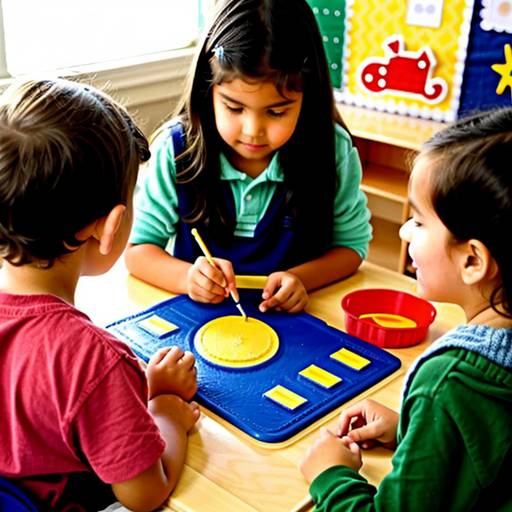
This preschool mathematics lesson plan focuses on introducing young children to the concept of patterns through engaging and interactive activities. The session begins with an introductory discussion about patterns, using visual examples and a story that incorporates pattern recognition.
Children then explore their outdoor environment, collecting natural items such as leaves, stones, and flowers. They sort these items based on various attributes and create their own unique patterns, sharing their creations with peers and justifying what comes next.
Next, students use colorful blocks or counting bears to build their own patterns, followed by a problem-solving challenge where they predict the continuation of various patterns presented by their classmates.
To further reinforce rhythm and patterns, the lesson includes a musical activity where children express patterns through clapping and stomping to a beat.
The lesson concludes with a reflection on the different patterns discovered, encouraging children to notice and share patterns they encounter in their daily lives. Throughout the session, children develop problem-solving skills and critical thinking through hands-on experiences and group collaboration, all while having fun engaging with mathematical concepts.

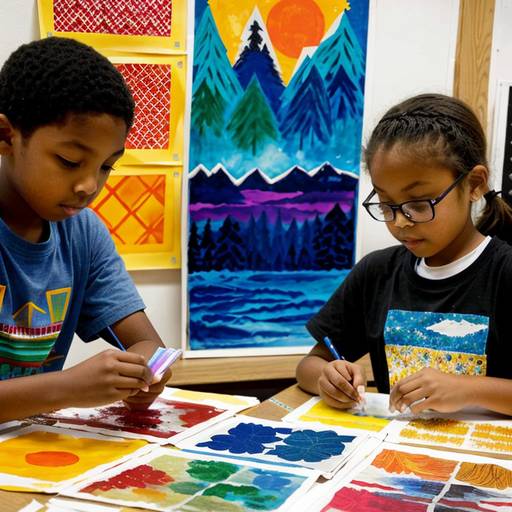
In this 4th-grade art lesson, students will explore the fascinating world of printmaking through nature-inspired creations. They will be introduced to the significance of printmaking as a form of artistic expression while examining patterns and textures found in the natural environment. The lesson begins with a discussion about printmaking techniques, followed by a demonstration of various methods, including the use of foam blocks and natural materials to create prints.
Students will engage in hands-on activities, producing multiple prints using their chosen techniques while experimenting with color and design. The lesson concludes with a mini art gallery walk, allowing students to showcase their work and discuss their favorite prints and the materials they used. Throughout the lesson, students will learn to reflect on their creative processes while enhancing their understanding of both art and nature. Assessment will focus on participation, engagement, and the originality displayed in their prints. Options for extension include incorporating scientific concepts related to the plants used in their artwork.

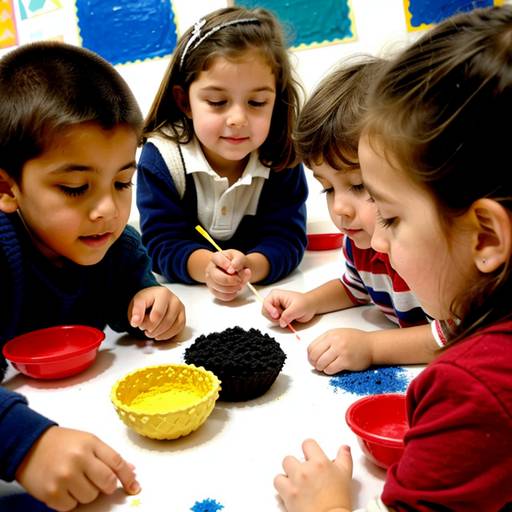
In this preschool art lesson, students will explore the concepts of texture and patterns through hands-on activities that enhance their sensory awareness and fine motor skills. The lesson begins with an interactive introduction where children examine various texture boards and discuss their findings. They will then engage in a creative activity, using art supplies such as paints, sponges, and textured objects to make their own unique artworks that incorporate different textures and patterns.
After the creative phase, students will participate in a clean-up session while reflecting on their experiences and sharing their artwork with peers. Throughout the lesson, educators will encourage descriptive language and inspire exploration, helping children develop an understanding of how texture and patterns are present in the world around them and in artistic expression. Additionally, there are opportunities for extensions, such as sensory play and movement games, to deepen the learning experience.

This lesson plan is designed for infants aged 6-12 months to introduce them to the concept of object permanence through interactive play and sensory exploration. The session begins with a warm welcome and a brief explanation for caregivers about object permanence. It features engaging activities such as a game of peek-a-boo, where caregivers cover their faces and then reveal themselves, helping infants understand that people still exist even when out of view.
Next, infants participate in a "hide and seek" game with toys hidden under blankets or inside boxes, encouraging them to uncover the toys and reinforcing the idea that objects remain, even when not visible. Mirror play allows infants to explore their reflections, further aiding their understanding of presence and identity. The lesson concludes with music and movement, where caregivers encourage interaction with simple instruments, emphasizing that sounds continue even when they can't be immediately seen.
Throughout the activities, caregivers are encouraged to observe and engage with their infants, enhancing learning experiences. The lesson wraps up with a reflection period where caregivers can share their observations and experiences, along with suggestions for continuing these activities at home to further support cognitive development. Overall, the plan emphasizes sensory exploration, active engagement, and playful interaction to foster infants' understanding of their environment.

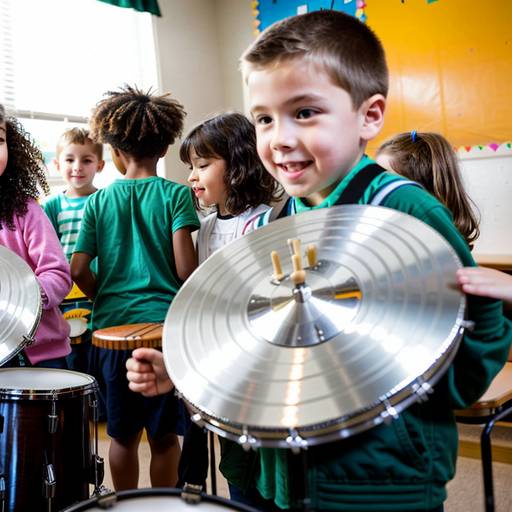
In this 1st Grade music lesson, students will explore percussion instruments and the concept of rhythm. The lesson begins with a discussion about various percussion instruments, using visual aids to help students identify them and understand their unique sounds. Students will then practice body percussion, learning simple rhythmic patterns through clapping, stomping, and patting.
After familiarizing themselves with body rhythms, students will work in small groups to explore different percussion instruments, creating their own rhythmic patterns to share with the class. Each group will have the opportunity to perform their rhythms, encouraging collaboration and active listening. The lesson concludes with a group reflection, where students share their favorite instruments and what they learned about rhythm.
Assessment will focus on students' participation and ability to replicate rhythms, while extension activities may include bringing in instruments from home or creating a classroom rhythm book. Overall, this lesson fosters creativity, teamwork, and a foundational understanding of rhythm and percussion.

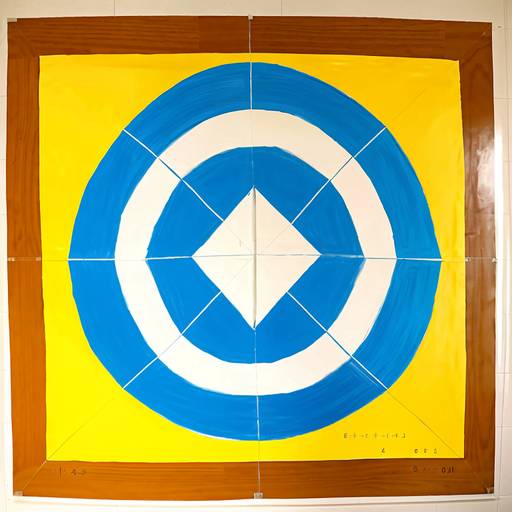
In this 4th grade math lesson, students will explore the concept of perimeter, learning how to measure and calculate the distance around various geometric shapes, such as squares, rectangles, and triangles. The lesson begins with a discussion about measurement, followed by direct instruction on perimeter formulas specific to each shape. Students will engage in guided practice in small groups, using rulers and measuring tapes to accurately measure sides of shape cutouts and calculate their perimeters. Independent practice will involve worksheets with perimeter calculations and real-world application problems. The lesson concludes with a class discussion to reflect on their findings, emphasizing the importance of accurate measurement and real-life applications of perimeter. Assessments will include evaluating group participation and worksheet accuracy, with extensions available for advanced learners. Modifications will also be provided to support diverse learners in the classroom.
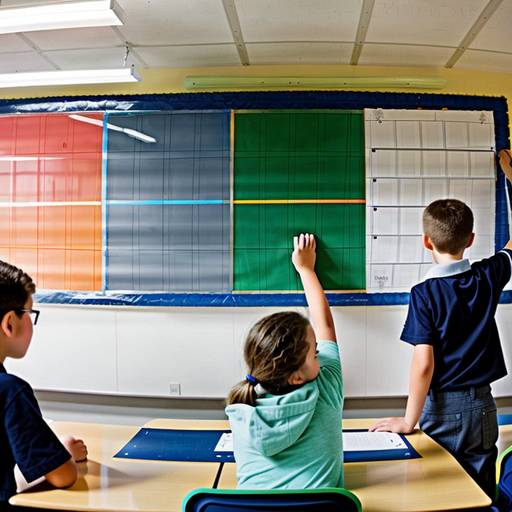
This 5th-grade mathematics lesson focuses on the concepts of measurement and perimeter. The lesson begins with an engaging introduction where students discuss their understanding of perimeter, followed by a clear explanation and demonstration of how to measure lengths and calculate the perimeter of shapes.
Students then pair up to measure various objects in the classroom, recording their findings and calculating perimeters collaboratively. After this guided practice, they will create their own shapes on graph paper, measure each side, and calculate the perimeter, showcasing their creativity.
The lesson concludes with a sharing session where students present their shapes and calculations, reinforcing their understanding of perimeter and measurement. Assessment will be based on observation during activities and the accuracy of their calculations. This lesson encourages hands-on learning, collaboration, and critical thinking, while also providing opportunities for differentiation based on student needs.
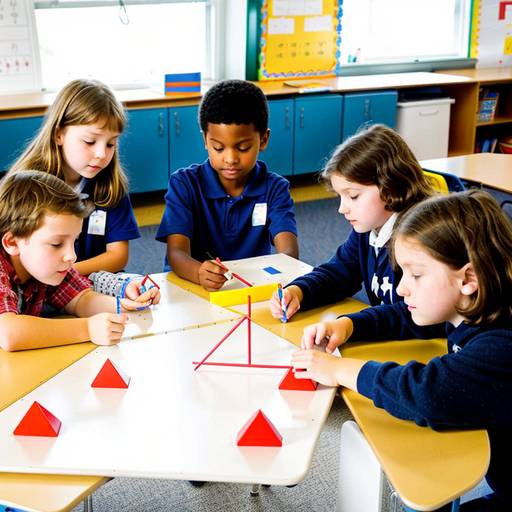
This 3rd-grade math lesson focuses on introducing students to the concept of perimeter. The lesson begins with an engaging discussion to elicit prior knowledge and define perimeter as the distance around a shape. Through guided practice, students use rulers and measuring tools to measure the sides of given polygons and calculate their perimeters by adding the lengths together.
Students then participate in an independent activity where they choose an object in the classroom, measure its sides using string or yarn, and calculate its perimeter. The lesson concludes with students sharing their findings and reflecting on their learning experiences. Assessment includes observation of group interactions, reviewing completed worksheets for measurement accuracy, and evaluating exit tickets to gauge individual understanding. Differentiation strategies are in place to support varying skill levels, ensuring all students can engage meaningfully with the content. Overall, students will gain practical measurement skills and a solid understanding of perimeter through interactive activities.

In this 5th-grade Language Arts lesson, students will explore persuasive writing, focusing on how to craft a compelling argument. The lesson begins with a discussion on the purpose and elements of persuasive writing, including clear opinions, reasons, evidence, counterarguments, and calls to action. Students will work in small groups to brainstorm ideas on a given topic, filling out a graphic organizer to structure their thoughts. Following the group activity, each student will write a persuasive paragraph on a topic of their choice, incorporating the discussed elements. The lesson concludes with opportunities for students to share their writing with the class, allowing for feedback and discussion on the effectiveness of their arguments. Assessment will involve evaluating the written paragraphs based on a rubric focused on clarity, reasoning, evidence, organization, and grammatical conventions. Extensions and adaptations are provided to support diverse learning needs and interests.