
Filters
Level
Grade
Subject
Subject Area
Subject Topic
Standard(s)
Audience
Keyword
DurationMinutes
5th Grade Lesson Plans

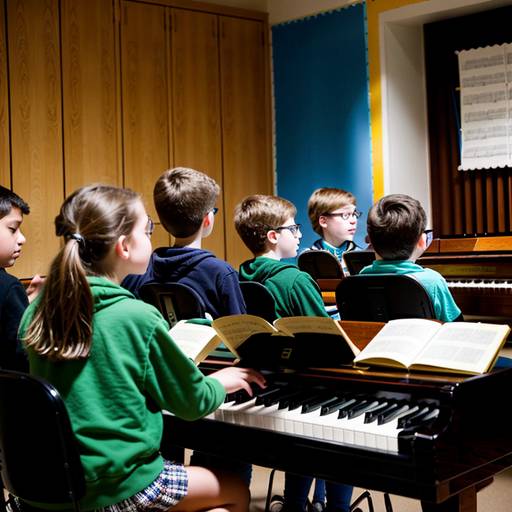
This 5th-grade music lesson focuses on music history and significant composers from various musical periods, including Baroque, Classical, Romantic, and Modern. Students will engage in discussions about the importance of composers and how they influenced music over time. The class is divided into groups, with each group researching and presenting a specific composer, highlighting their background, key works, and contributions to music. Listening activities will allow students to identify elements of each composer's style, while a creative project will enable them to create posters showcasing their favorite composer and piece. The lesson wraps up with students sharing their projects in small groups, reinforcing their learning and personal connections to the material. Assessment will include participation in discussions, the creativity of the poster projects, and a short reflection assignment on their favorite composer. Extensions encourage further exploration of composers and musical concepts.

In this fifth-grade physical education lesson plan, students participate in various activities designed to enhance coordination and foster teamwork. The session begins with a dynamic warm-up, which incorporates stretching and a coordination drill involving passing a ball in pairs. The main activities include a balloon relay, where teams pass a balloon using their bodies, a hula hoop challenge that focuses on collaboration to pass the hoop without breaking handholds, and a blindfolded obstacle course that emphasizes verbal guidance and trust among teammates.
To cool down, students engage in guided stretching, followed by a reflection circle where they share insights on the importance of coordination and teamwork. Throughout the lesson, students are assessed on their participation, communication skills, and ability to work together, ensuring inclusivity by adapting tasks as necessary for varying skill levels. The overall goal is to promote physical activity while developing critical social and motor skills.

In this 5th-grade technology lesson, students will explore essential internet skills and the concept of netiquette, which governs respectful online communication. The lesson begins with a discussion on students' personal online experiences, leading into an interactive presentation covering key principles of internet safety and appropriate communication. Through guided practice, students will evaluate various online scenarios and engage in role-play activities to showcase their understanding of respectful behavior in digital interactions. They will then reflect on their learning by writing down key takeaways and personal commitments regarding their online conduct. The lesson concludes with a summary of the main points and encouragement for students to apply what they've learned in their future online experiences. Overall, the aim is to equip students with the knowledge and skills to navigate the digital world safely and respectfully.

This lesson plan focuses on teaching 5th-grade students essential internet skills and email etiquette over two sessions. In the first session, students learn how to navigate the internet effectively, perform safe searches, and identify reliable sources of information. They engage in a scavenger hunt activity that reinforces their search skills and helps them assess website credibility. The second session emphasizes the importance of professional email communication. Students explore the components of a well-crafted email and learn key etiquette principles. They then practice composing professional emails based on given scenarios, allowing for peer feedback on clarity and adherence to etiquette guidelines. Through these activities, students develop responsible online habits and effective communication skills, while also understanding the significance of their digital footprint.

This lesson plan aims to teach 5th-grade students the fundamentals of persuasive writing. The objectives include understanding the purpose and key elements of persuasive writing, identifying persuasive techniques in sample texts, and creating their own persuasive pieces. The lesson begins with a discussion about advertisements to engage students' interest, followed by a detailed explanation of the elements of persuasive writing, such as hooks, opinion statements, supporting details, and calls to action.
Students work in small groups to analyze various persuasive texts, identifying techniques and elements within their samples. After this collaborative activity, they independently write a persuasive letter to the principal proposing a new school rule, utilizing a provided checklist for guidance. The lesson closes with students sharing their letters and reflecting on what they learned about persuasive writing, supplemented by an exit ticket that prompts them to express a key takeaway.
Assessment includes reviewing the persuasive letters to ensure understanding of the key concepts and participation in discussions. Extensions encourage visual expression through poster creation and oral presentation through classroom debates. Differentiation strategies are included to support diverse learners, ensuring that all students can engage and succeed in the persuasive writing process.

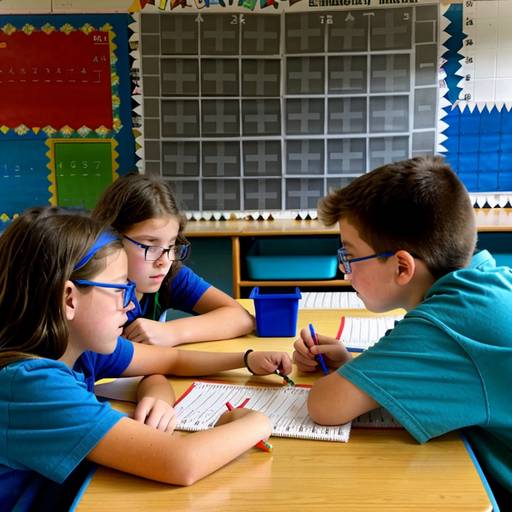
In this 5th-grade math lesson, students will explore the concepts of measurement and temperature while developing their skills in converting between Celsius and Fahrenheit. The lesson begins with a discussion on the importance of temperature measurement in everyday life. Students will learn the formulas for converting temperatures between the two scales before engaging in a guided group activity where they work collaboratively to solve temperature conversion problems. Each group will present their findings, reinforcing their understanding through collaboration.
Following the group work, students will complete a worksheet that includes a mix of temperature conversion tasks and real-life scenarios to further solidify their knowledge. The lesson concludes with a recap and discussion on the relevance of temperature understanding in various professions. Assessment will be based on the worksheets and observed participation during group activities, with differentiation strategies in place to support diverse learners. An optional homework extension encourages students to apply their skills by tracking and converting weekly weather forecasts. This engaging approach ensures that students not only grasp mathematical concepts but also see their practical applications in daily life.
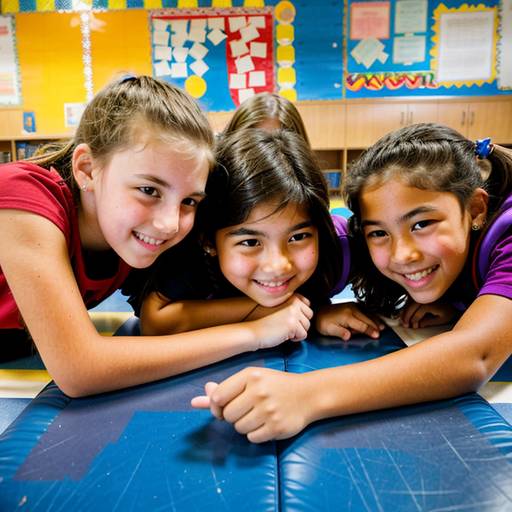
In this 5th-grade physical education lesson, students engage in activities aimed at enhancing their coordination and team-building skills through fun and interactive games. The session begins with dynamic stretches and coordination exercises that warm up the students. Following the introduction, students are divided into teams for a series of relay races that emphasize hand-eye coordination and teamwork as they pass a ball or complete various tasks at each cone.
Next, students participate in a blindfolded trust walk, where they must rely on verbal communication and guidance from a partner to navigate an obstacle course. This activity reinforces trust and collaboration while promoting effective communication. The lesson concludes with a cool-down period focused on reflection and stretching, allowing students to share their insights about teamwork and coordination.
Assessment occurs through observation during the activities, with the teacher noting students' teamwork and coordination skills. A closing discussion reinforces the importance of these skills, encouraging students to consider how they can apply what they've learned in various aspects of their lives, from sports to classroom projects. As an extension, students are invited to create their own games and reflect on their experiences in writing.


In this 5th-grade science lesson, students will delve into the fascinating world of stars and their significance in the universe. The lesson begins with a captivating video that showcases various stars and galaxies, followed by a discussion to activate prior knowledge. A PowerPoint presentation will provide insights into what stars are, their classifications, and the life cycle of a star, reinforced with visual aids like a poster.
Students will then engage in hands-on activities, including a star classification game where they work in groups to research different types of stars, create mini-posters, and simulate constellations using flashlights. The class will conclude with group presentations of their work, promoting collaboration and communication skills. Reflection questions will encourage personal connections to the material learned.
As an extension, students will be assigned a homework task to observe a constellation in the night sky and research its cultural significance. Overall, this lesson combines instruction, creativity, and collaboration to foster a deeper understanding of stars and their importance to life on Earth.
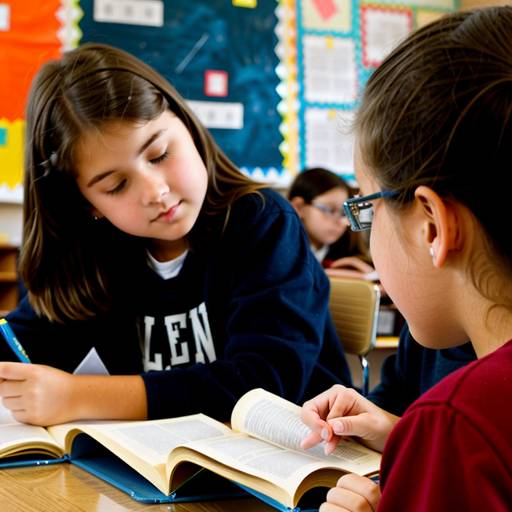
In this 5th-grade language arts lesson, students will learn about expository writing, a style focused on explaining and informing. The lesson begins with engaging students in a discussion about topics they enjoy, setting the stage for understanding how to communicate information effectively. Through a mini-lesson, students will explore the structure of an expository paragraph, which includes a topic sentence, supporting details, and a conclusion. They will analyze example paragraphs to identify these components.
During guided practice, students will fill out graphic organizers to brainstorm topics and supporting details, facilitated by a teacher-led demonstration. Following this, students will independently write their own expository paragraphs based on their chosen topics, applying the structure learned.
The lesson concludes with a peer review activity, where students share their paragraphs and provide constructive feedback to one another. Students will be assessed on their written work based on clarity, structure, and coherence. An extension activity is available for those who finish early to create a visual presentation related to their topic. Throughout the lesson, students will gain a solid understanding of how to write clear and informative expository texts.
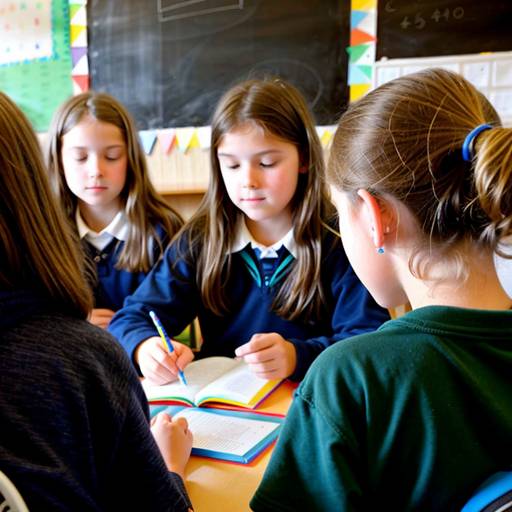
In this 5th-grade language arts lesson, students will explore the components of complete sentences, including subjects, predicates, and various sentence types (declarative, interrogative, imperative, and exclamatory). The lesson begins with a discussion on the importance of complete sentences in communication, followed by direct instruction on sentence structure. Students will engage in guided practice by working in small groups to create sentences using provided subject and predicate strips. This is followed by independent practice where students complete worksheets identifying subjects and predicates and converting sentence types. The lesson concludes with a reflective discussion, and students will be assigned a writing task for homework that involves composing a short paragraph using a variety of sentence structures. Assessments will include observations during group work, review of worksheets, and evaluation of the homework assignment. Extensions are provided for advanced learners and additional resources will be available for those needing extra support.