
Filters
Level
Grade
Subject
Subject Area
Subject Topic
Standard(s)
Audience
Keyword
DurationMinutes
5th Grade Lesson Plans

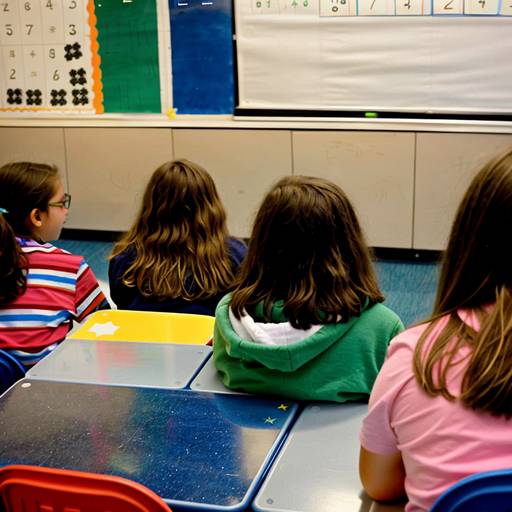
In this 5th-grade math lesson, students will explore the concept of multiplication as repeated addition. The lesson begins with an engaging discussion that prompts students to think critically about how to calculate items grouped together. Through direct instruction, the teacher will model the multiplication process using manipulatives and demonstrate various strategies such as arrays, number lines, and skip counting.
During guided practice, students will work in small groups to solve multiplication problems using manipulatives, sharing their thought processes with the class. Independent practice will involve worksheets featuring a mix of multiplication scenarios, including word problems and arrays. The lesson concludes with a review of key concepts and a fun multiplication game like Bingo or Memory to reinforce learning.
Assessment will be conducted through observation during group activities and the evaluation of worksheets. Adjustments will be made for learners at different ability levels, and extensions will provide opportunities for students to create their own multiplication story problems. The overall aim is to enhance students' understanding of multiplication and make the learning experience interactive and enjoyable.
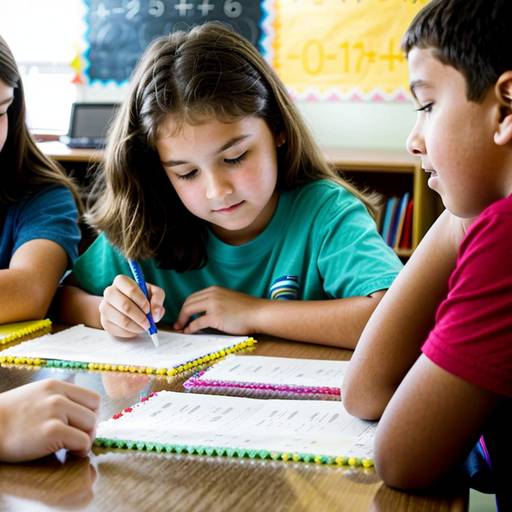
This lesson plan focuses on teaching 5th-grade students the concept of multiplication and its various properties, including associative, distributive, and commutative properties. The lesson begins with a review of multiplication as repeated addition, followed by direct instruction on different multiplication methods such as the area model, standard algorithm, and lattice method.
Students engage in guided practice in small groups, where they solve multi-digit multiplication problems using these various strategies and present their solutions to the class. A hands-on activity allows them to create and solve their own multiplication problems using counters or blocks. The lesson also emphasizes real-world applications of multiplication, such as calculating costs and areas, with a fun scenario involving price calculations.
At the end of the lesson, a quick exit ticket is used to assess students' understanding of the concepts covered. For homework, students receive a worksheet with multiplication practice and word problems related to everyday situations. Differentiation strategies are included to support students who need extra help and to challenge those who excel. Overall, the lesson promotes collaboration, critical thinking, and practical application of multiplication skills.

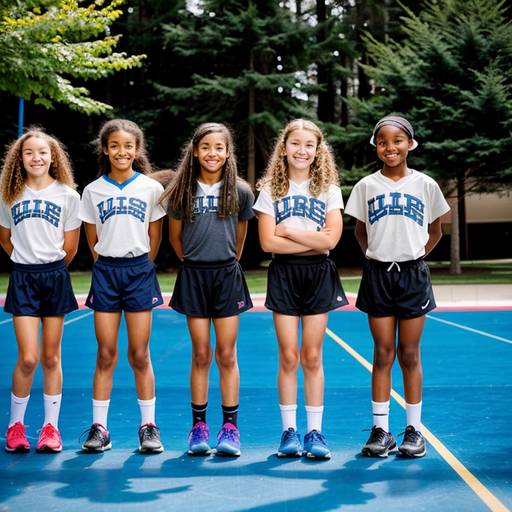
This 5th-grade physical education lesson focuses on fitness and strength through engaging activities that promote muscle development and teamwork. Students begin with a dynamic warm-up, including a body movement dance and stretches to prepare for physical activity. They then rotate through five interactive fitness stations—Resistance Band Rows, Dumbbell Deadlifts, Core Ball Pass, Body Weight Squats, and Plank Challenge—spending time at each station to practice various strength exercises. The class concludes with a cool-down period featuring static stretches and a reflective discussion about their experiences and learning outcomes. The lesson aims to enhance students' understanding of muscle groups and the importance of physical fitness while promoting participation and enjoyment in strength training activities. Adaptations are provided for different fitness levels, ensuring an inclusive environment for all students.

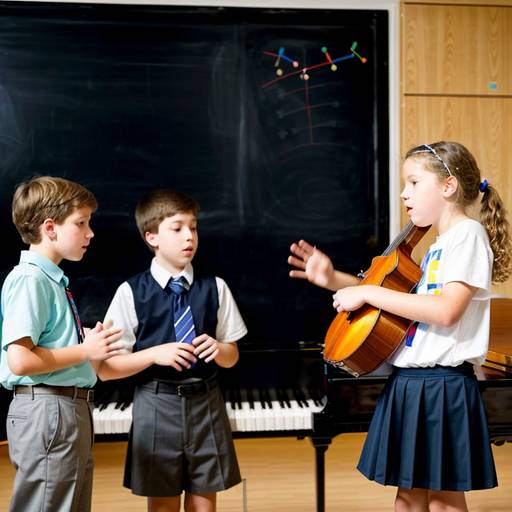
In this 5th-grade music lesson, students will explore the concept of dynamics in music theory by learning the definitions and uses of various dynamic markings such as pianissimo, piano, mezzo piano, mezzo forte, forte, and fortissimo. The lesson begins with a clapping exercise to illustrate different dynamic levels, followed by listening to musical excerpts that exemplify dynamic contrasts.
Students will participate in small group performances, where they will create rhythms or adapt familiar songs to include at least three dynamics. They will then compose a short 4-bar melody on staff paper, incorporating these dynamics. The class will conclude with a recap discussion on the emotional impact of dynamics in music, while students share their compositions. Assessment will be based on participation, understanding of dynamic terms, and the quality of their compositions. Extensions include a homework assignment that encourages students to analyze dynamics in their favorite songs and a project to create a "Dynamic Wall" for displaying their work.
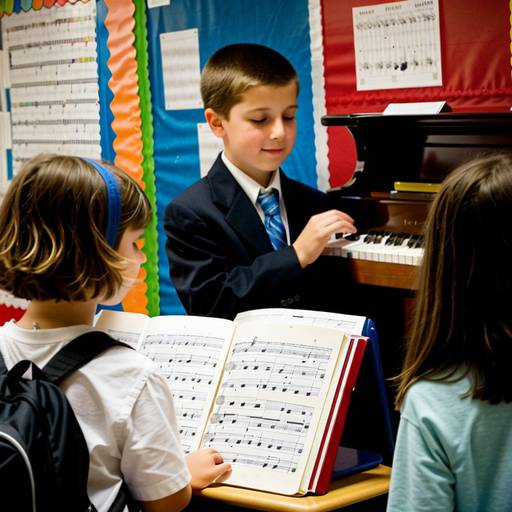
In this 5th-grade music history lesson, students will explore key composers from different musical eras, including Baroque, Classical, Romantic, and 20th Century. The lesson begins with a discussion about the significance of music and composers, followed by group activities where students research specific composers through biographical handouts and audio samples. Each group presents their findings, highlighting the composers' lives, works, and the historical contexts of their music. A class discussion then reinforces the similarities and differences among the composers. Students will then engage in a creative activity by composing a short musical piece inspired by the style of their assigned composer, which they will share with the class. For closure, students will be tasked with creating a poster about their composer to present in the next class. Assessment will be based on participation, creativity in composition, and the completed poster. This lesson aims to foster collaboration, creativity, and a deeper understanding of music history.
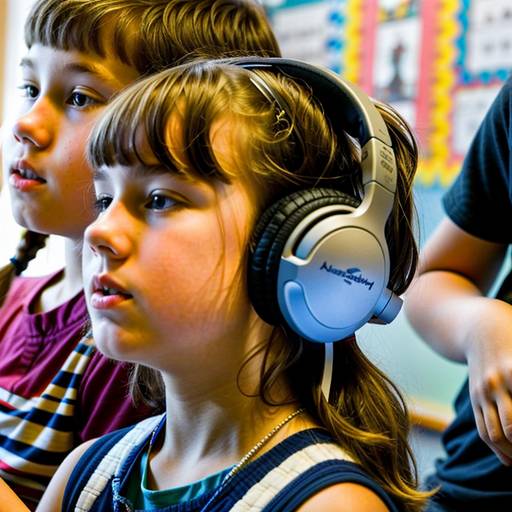
In this 5th-grade music appreciation lesson, students engage in an exploration of various music genres, including classical, jazz, rock, folk, and world music. The session begins with an open discussion about music's significance and personal favorites. Students then listen to short audio clips representing each genre, identifying instruments and expressing their thoughts and feelings about the music. After the listening session, students work in small groups to share their favorite genre and discuss its impact on them. The lesson encourages creativity as students experiment with simple percussion instruments to create rhythms inspired by the music they've heard. By the end, students reflect on their learning and consider the cultural significance of the different music styles. Assessments are based on participation in discussions and the completion of worksheets that capture their reflections. Extensions may include homework assignments focused on personal music exploration and opportunities to meet local musicians for live performances.
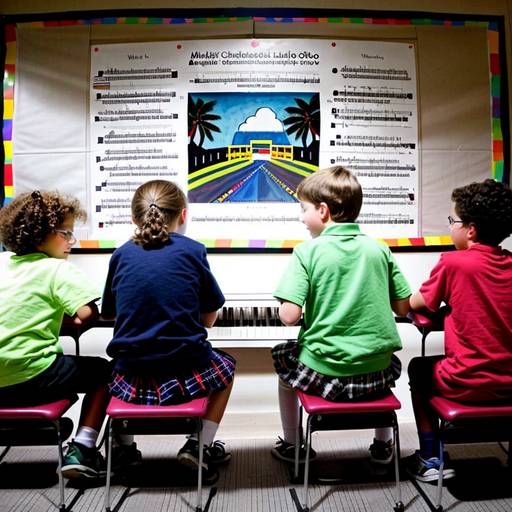
In this 5th-grade music lesson plan, students will explore various musical eras and styles, enhancing their understanding of music history. Over two class periods, they will start with an introduction to different musical eras, such as Baroque, Classical, Romantic, and 20th Century genres like Jazz, Rock, and Hip Hop. The lesson begins with a discussion about the significance of music and includes listening activities where students identify characteristics of each era through audio samples.
In small groups, students will research their assigned musical era, focusing on key composers, instruments, and defining features. They will present their findings to the class, using creative visual aids and audio demonstrations. Following the presentations, students will collaboratively create a visual timeline of music history that highlights important dates, musicians, and significant pieces from each era.
The lesson concludes with a class discussion reflecting on the connections between music and historical events and a brief writing task where students express which musical era resonates with them the most. Optional extended activities may include dressing up and performing music from their assigned era or analyzing modern songs for influences from historical styles. Assessment will be based on participation, presentation quality, and the creativity of the timeline project.
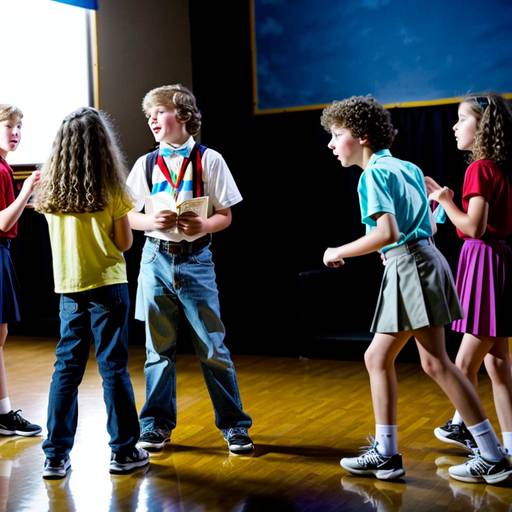
In this 5th-grade music appreciation lesson, students will engage in exploring iconic songs from different decades, examining how these tracks reflect the culture and historical events of their time. The lesson begins with a discussion on the significance of music in their lives, followed by a listening activity where students hear short clips from notable songs spanning the 1960s to the 2000s. After each song, students participate in discussions to share their impressions and thoughts regarding the music and its context.
Students will then work in small groups to analyze the distinct characteristics of music from a specific decade, presenting their findings to the class. To encourage creative expression, each student will choose a song that resonated with them and create a visual representation of its emotional impact or story. The lesson concludes with students sharing their artwork and thoughts about their chosen songs, promoting a deeper appreciation for the evolution of music and its role in society. Assessment will focus on participation, creativity, and the ability to articulate thoughts and feelings about music. Extensions include creating a class playlist featuring discussed songs and research presentations on influential artists.


In this 5th-grade science lesson, students will explore the properties and changes of matter, focusing on the three states: solid, liquid, and gas. The lesson begins with a discussion to define matter and its different states, followed by group activities where students observe various materials' physical properties. They will then engage in hands-on experiments to witness changes in states of matter through the melting of ice in warm water and the expansion and contraction of air in balloons. Through these activities, students will learn to identify characteristics of matter and understand how temperature affects state changes. The lesson concludes with a recap of key concepts and a homework assignment where students will find real-life examples of matter changing states at home. Assessment will be based on observations during group work and the quality of the homework assignment. Safety precautions will be emphasized throughout the activities.
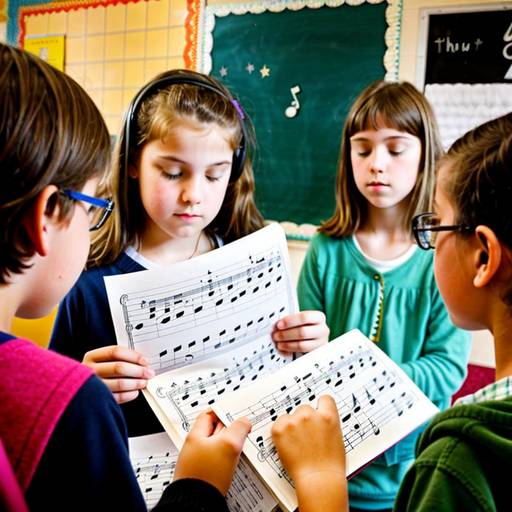
In this 5th-grade music theory lesson, students will learn to identify and name notes on the musical staff, focusing on both treble and bass clefs. The lesson begins with an engaging discussion about the importance of note names in music, followed by interactive instruction on reading notes, including memorable mnemonics for easy recall. Students will then participate in guided practice activities where they match note names to their positions on the staff and identify notes played on a keyboard.
To foster collaboration and creativity, students will be divided into small groups to create simple melodies using selected notes, which they will present to the class. The lesson concludes with a fun "Note Art" activity, where students illustrate their favorite note and write its name, allowing for artistic expression while reinforcing their learning. Throughout the lesson, teachers will assess understanding through observation and participation, ensuring students develop a strong foundation in music notation and theory.