
Filters
Level
Grade
Subject
Subject Area
Subject Topic
Standard(s)
Audience
Keyword
DurationMinutes
5th Grade Lesson Plans


This 5th-grade music appreciation lesson immerses students in the exploration of iconic songs from various decades, highlighting their cultural and historical significance. The class begins with a discussion about what makes a song famous and encourages students to share their experiences with impactful music. Students are then divided into small groups, each assigned a different decade from the 1960s to the 2020s. Each group listens to a short clip of a famous song and discusses its emotional impact, message, and relevance to the time period. Following the listening activity, students express their feelings about their chosen song through creative artwork. The lesson concludes with students sharing their artwork and reflections, fostering a deeper understanding of the powerful role music plays in shaping culture and personal experiences. Assessment focuses on participation in discussions, creativity in art, and optional reflective writing. Extensions include research projects, creating a class playlist, or organizing a music appreciation event.
This lesson plan for 5th-grade music students focuses on exploring key music periods in history, specifically the Baroque, Classical, Romantic, and 20th Century eras. The lesson begins with a brief discussion to assess students’ prior knowledge and interest in music. It then presents the defining characteristics of each music period through direct instruction complemented by audio clips from notable composers such as Bach, Mozart, Tchaikovsky, and Duke Ellington.
Following the listening activity, students work in small groups, each assigned a specific music period, to create a section of a timeline that includes the period’s name, characteristics, notable composers, and a relevant illustration or image. The groups then share their timelines with the class, facilitating peer learning. The lesson concludes with a review of the major points covered, emphasizing the importance of understanding music history and its influence on contemporary music. Students are assessed based on their participation, the accuracy of the timeline activities, and a reflective worksheet to reinforce their learning at home.

This lesson plan is designed for 5th-grade students to help them understand the concepts of money and budgeting. Throughout a 60-minute session, students explore different types of money, including coins and bills, and engage in discussions about income, expenses, and savings.
The lesson begins with an introduction to budgeting principles, followed by direct instruction where students learn to categorize expenses as needs or wants and how to create a simple budget based on a sample scenario. Students then work in small groups to analyze provided budgeting scenarios and collaboratively develop their own budgets.
As an independent exercise, each student creates a personal budget based on a chosen scenario, estimating income and expenses while determining potential savings. The class wraps up with students sharing their budgets and reflecting on the importance of financial planning.
Assessment includes observing participation and reviewing individual budgets to gauge understanding. Extensions are provided for those who finish early, allowing them to explore more complex budgeting situations. Overall, the lesson aims to instill practical money management skills and the value of making informed financial decisions.

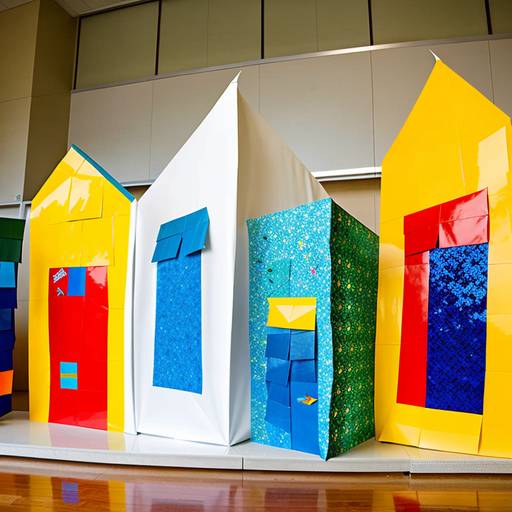
In this 5th-grade art lesson, students will delve into the world of collage by exploring various art techniques to create a layered paper composition that tells a story or conveys an emotion. The lesson unfolds over two sessions.
In the first session, students will learn about the fundamentals of collage art, including principles of composition, color theory, and texture. Following a discussion about the significance of storytelling in art, they will sketch their ideas and plan the layout of their collages.
During the second session, students will gather materials to construct their collages, applying the techniques learned. They will focus on layering paper pieces and incorporating different textures to enhance their work. As they complete their pieces, students will share their artworks with peers, explaining their creative choices and the narratives behind their collages.
Assessment will be based on creativity, effective use of materials, and active participation in discussions. Extensions may include class collaborations or writing components to accompany the artworks. The lesson aims to foster artistic expression and an appreciation for collage as a medium for storytelling.

In this 5th-grade science lesson focused on physical science and motion, students will explore essential concepts such as speed, direction, force, and gravity through hands-on activities. The lesson begins with a discussion to engage students and introduce key terminology. In the first activity, small groups will conduct experiments with toy cars or balls on a ramp, measuring their speed and distance. They will perform multiple trials to gather data, fostering observation and discussion about how various factors influence motion.
The second activity will involve adding weights to the cars or balls, allowing students to investigate how additional force impacts movement, speed, and distance. After completing both activities, groups will present their findings, followed by a reflective writing exercise in their science journals to cement their understanding. The lesson will include assessments based on group discussions, data collection, and reflective writing. Extensions may include research on notable scientists related to motion or a day dedicated to testing different movements. Ultimately, students will gain a fundamental understanding of how forces affect motion through active engagement and experimentation.

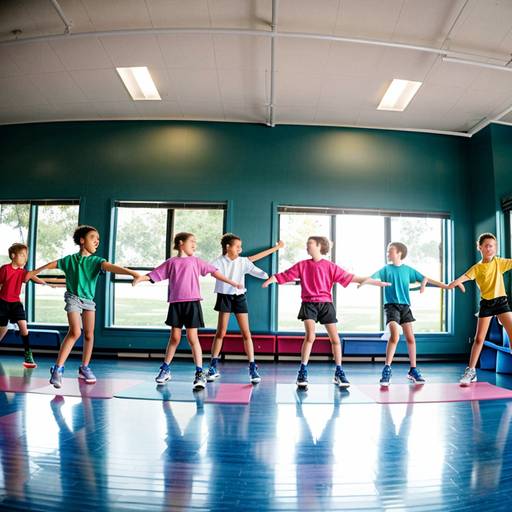
This 5th-grade physical education lesson focuses on fitness and flexibility through engaging activities and exercises. The lesson begins with a warm-up to increase heart rates, followed by a discussion highlighting the importance of fitness and flexibility in maintaining a healthy lifestyle. Students then participate in a series of guided stretching routines, where they learn and practice proper techniques for various stretches.
The primary component of the lesson consists of circuit stations that provide hands-on experience with resistance band stretches, balance challenges, yoga poses, agility drills, and a cool-down area focusing on relaxation and deeper stretches. A team activity encourages cooperation and demonstrates a fun approach to stretching.
Finally, the lesson concludes with a cool-down period and reflective discussion, allowing students to express what they enjoyed and learned. Through observation and feedback during the activities, the teacher assesses students' engagement and understanding, while also suggesting extensions for continued flexibility practice at home. Overall, the lesson aims to promote physical health and develop a positive attitude towards fitness among students.
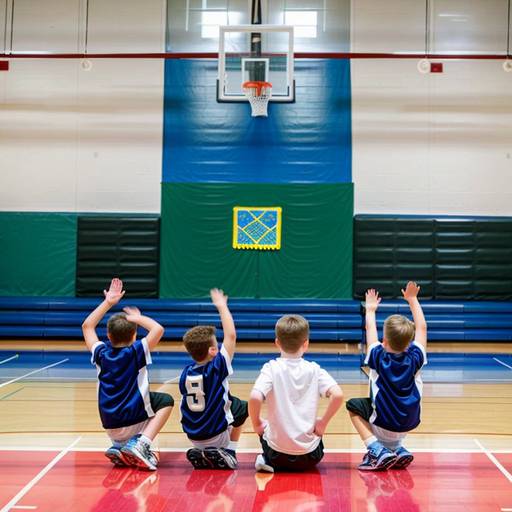
In this 60-minute physical education lesson for 5th graders, students will enhance their coordination and balance through a series of engaging activities. The session begins with a dynamic warm-up that includes jogging and movement drills to prepare the body for exercise.
Students will participate in three main activities: walking on balance beams, where they will focus on maintaining stability while incorporating various challenges; jumping in and out of hula hoops to improve coordination through different jumping techniques; and exploring a relay race with beanbags balanced on their heads, promoting balance while fostering teamwork.
The lesson concludes with a cool-down period featuring static stretching and a reflection session where students share their experiences and challenges. Throughout the lesson, the instructor will assess student participation and provide feedback to encourage further development of their skills, while also suggesting practice opportunities at home. Safety and adaptability will be emphasized to ensure an inclusive environment for all students.
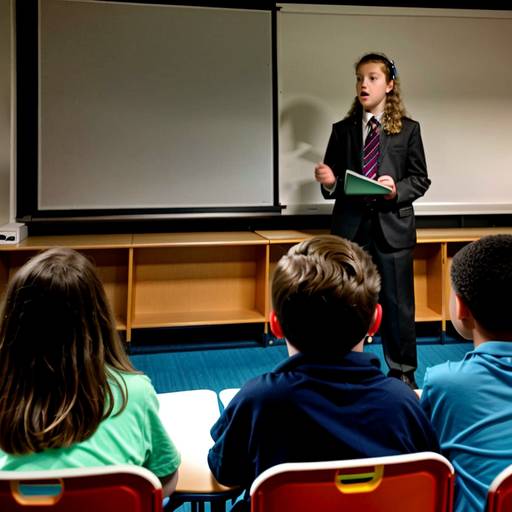
In this 5th-grade technology lesson plan, students will explore multimedia creation through the development of engaging presentations. Over two class periods, they will learn the principles of effective presentation design and how to incorporate various multimedia elements, such as images, audio, and video, into their work.
The first day involves discussions about multimedia and its importance, followed by the group brainstorming of topics relevant to their curriculum. Students will outline their presentations, setting the stage for their projects.
On the second day, students will use presentation software to create their projects, ensuring they include specific multimedia components. They will practice presenting their work within their groups, providing constructive feedback to one another. Selected groups will share their presentations with the entire class, allowing for questions and discussions afterward.
Assessment will be based on a rubric that evaluates criteria such as clarity, creativity, and media integration, along with peer feedback. The lesson also encourages reflection on the learning process and offers extension opportunities to present their work to family members, promoting further engagement with the material. Overall, the lesson fosters creativity, collaboration, and technology skills, making the learning experience interactive and enjoyable for the students.
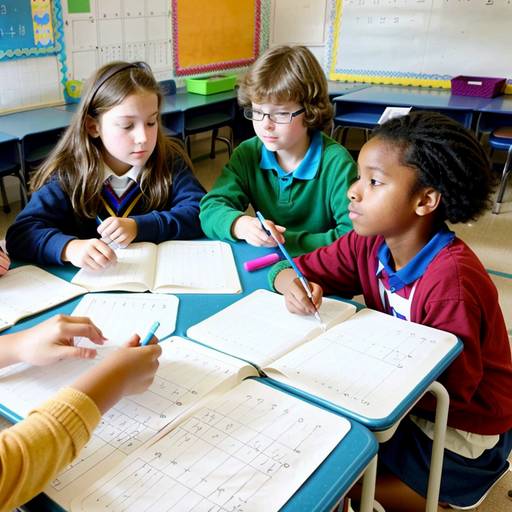
In this 5th-grade mathematics lesson focused on multiplication, students will develop an understanding of multiplication as both repeated addition and grouping. The session begins with an engaging discussion to connect multiplication with real-life scenarios. Educators will introduce core concepts such as factors and products, utilizing visual aids and group modeling with counters.
Students will actively participate in a hands-on activity called "Multiplication Stations," where they rotate through various engaging tasks, including building arrays, using flashcards for speed practice, and solving multiplication word problems. After the group activities, students will complete a worksheet to reinforce their understanding individually.
The lesson wraps up with a recap discussion and an exit ticket activity, allowing students to express one multiplication fact and its importance. Throughout the lesson, teachers will differentiate support for advanced and struggling learners and assess student understanding through observation, worksheet completion, and exit ticket responses. Overall, the lesson aims to create an interactive and supportive environment for mastering multiplication concepts.
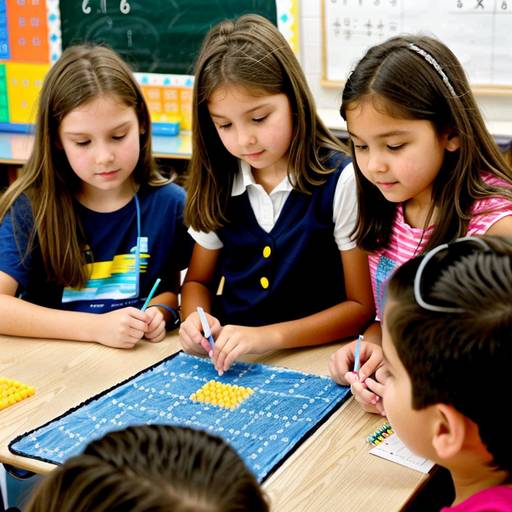
In this 5th-grade math lesson, students will delve into the concept of multiplication, emphasizing its role as repeated addition and its application in everyday scenarios. The lesson begins with an engaging discussion on the importance of multiplication, followed by a warm-up activity where students fill in a multiplication chart to reinforce their knowledge.
Next, students will explore patterns in multiplication tables and create visual arrays using counters to understand multiplication better. A guided practice segment introduces multi-digit multiplication, where students learn various strategies, including the standard algorithm and partial products.
Independent practice allows students to apply their skills to multi-digit multiplication problems through worksheets. The lesson concludes with a reflective journaling session, where students summarize their strategies and insights gained during the activities. Optional extension activities are provided for additional practice or challenges.
Assessment occurs through observation during group work, collection of worksheets, and journal entries. Differentiation strategies are included to support varying skill levels among students. Overall, this lesson fosters collaboration, critical thinking, and a deeper understanding of multiplication.