
Filters
Level
Grade
Subject
Subject Area
Subject Topic
Standard(s)
Audience
Keyword
DurationMinutes
5th Grade Lesson Plans

This 5th Grade Physical Science lesson focuses on understanding the concepts of forces and motion, specifically exploring push and pull through engaging activities. Students begin by discussing everyday examples of forces before learning about contact and non-contact forces, as well as the concepts of balanced and unbalanced forces. In small groups, they conduct hands-on experiments using various objects and a ramp to observe how distance traveled is influenced by factors like weight and the incline of the ramp. Each group records their findings and shares insights with the class, promoting collaborative learning and discussion. The lesson concludes with a summary of key concepts and encourages students to reflect on what they learned. Assessment includes monitoring participation and reviewing group presentations, with extensions available for further exploration through virtual simulations or individual projects. Modifications are provided to support diverse learners, ensuring an inclusive and interactive educational experience.
This 5th-grade life science lesson focuses on the major systems of the human body, including the circulatory, respiratory, digestive, and skeletal systems. Students will begin by engaging in a discussion about what they already know, followed by direct instruction using an interactive poster to introduce each system and its key functions. They will then work in small groups to create informative posters highlighting the organs and functions of their assigned body system, incorporating creativity and collaboration. Each group will present their findings to the class, fostering discussion and questions to enhance understanding. The lesson concludes with a reflection on the interconnectedness of the body systems and the opportunity for students to share new facts they learned. Assessment will include evaluating group participation and poster content, along with an exit ticket to gauge individual understanding. Accommodations will be made to support diverse learning needs, ensuring accessibility for all students while promoting curiosity and comprehension of the human body.
This lesson plan for 5th-grade students focuses on developing essential internet skills and online research abilities. Over the course of one hour, students will learn about internet safety, effective search strategies, and how to evaluate the credibility of online sources. The session begins with a discussion on the significance of online research, followed by direct instruction on using keywords and search techniques. Students will then work in groups to research assigned topics, applying their knowledge to find reliable sources while practicing evaluation criteria. After the guided research, groups will present their findings to the class, facilitating a discussion on the challenges and successes of their research. The lesson concludes with a recap and a short writing assignment, encouraging students to summarize their findings and reflect on the research process. Adaptations and an extension activity are included to support diverse learners and promote creativity.
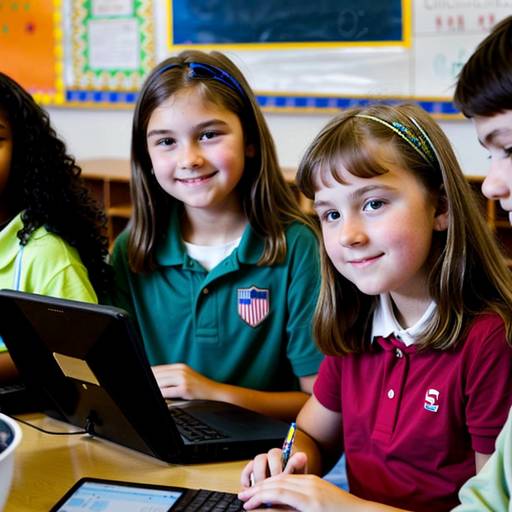
This lesson plan focuses on teaching 5th-grade students essential internet skills and email etiquette. The objective is for students to understand safe and responsible online practices, identify the components of an email, and compose polite and effective messages. The lesson begins with an engaging discussion about the internet and its importance in daily life, followed by direct instruction on internet safety and the structure of emails, including etiquette tips. Students will participate in guided practice by drafting emails in response to a given scenario, utilizing a provided template to ensure they follow the etiquette guidelines discussed. After peer review and revisions, students will send their final emails to the teacher for assessment. The lesson concludes with a brief quiz to evaluate students' comprehension of the material. Differentiation strategies are included to support diverse learners, along with opportunities for extensions into further topics related to internet safety. Overall, the plan aims to equip students with vital digital communication skills for their future interactions.

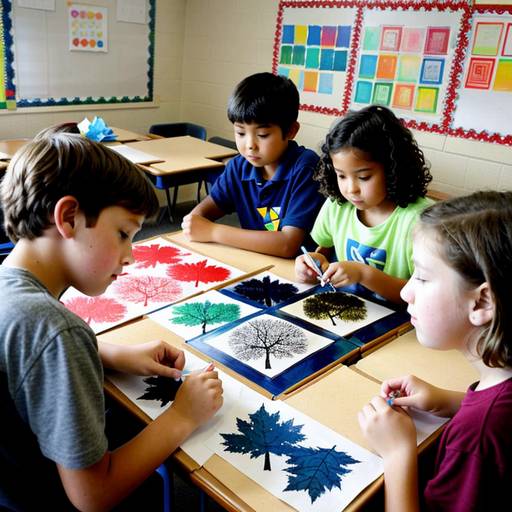
This art lesson for 5th graders focuses on the techniques of printmaking, specifically through the creation of stamps. Over two class periods, students will first learn about the history and various methods of printmaking through discussion and visual examples. They will then design their own unique stamps using foam sheets or potato halves, applying safe crafting techniques. In the second session, students will execute their designs by creating prints on heavyweight paper with water-based acrylic paints, experimenting with colors and layering. The lesson concludes with a reflection session where students share their creations and display their artwork in a classroom gallery. Assessment will be based on participation, creativity, and the ability to articulate their artistic process. Extensions of the project could include larger scale prints or integrating digital design elements.
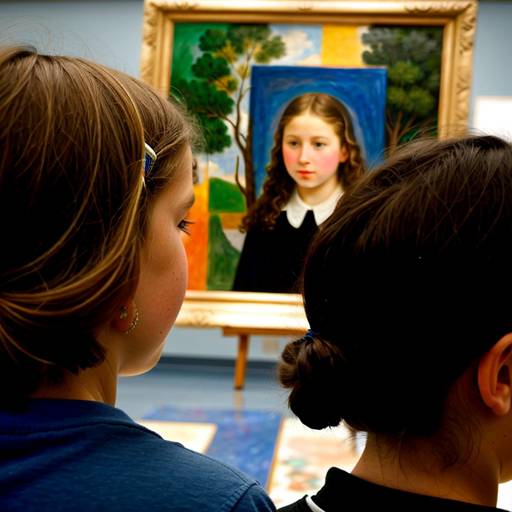
In this 5th Grade art lesson, students will explore significant art movements throughout history and their cultural contexts. The lesson begins with an interactive introduction to notable movements, showcasing key artists and their distinctive styles through visual aids. Students will then break into small groups to delve deeper into a specific movement, discussing its characteristics and presenting a notable artwork to the class. Following this collaborative activity, each student will choose a movement that resonates with them and create their own artwork inspired by it, incorporating techniques learned during the lesson. The class will culminate with a showcase where students share their creations and insights, fostering an appreciation for the diversity of artistic expression. Assessment will focus on participation, presentation skills, and the creativity demonstrated in students' artwork, encouraging them to further explore the world of art and its historical significance.
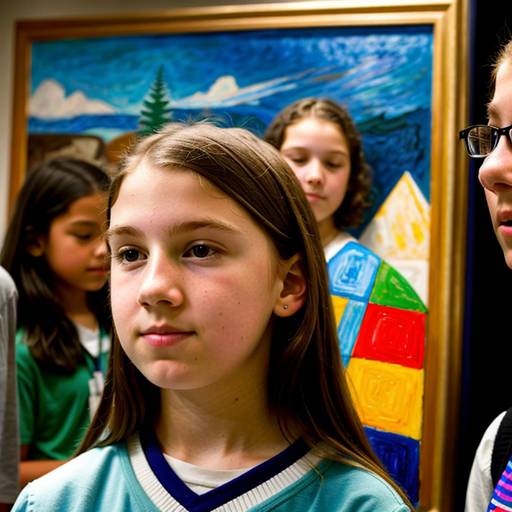
In this engaging art lesson for 5th graders, students embark on a journey through various significant art movements, including Impressionism, Cubism, Surrealism, and Abstract Expressionism. The lesson is spread over two class periods.
On the first day, students participate in a warm-up discussion about the nature and importance of art, followed by a presentation showcasing key characteristics and famous works from each art movement. They explore designated stations with flashcards and reproductions, deepening their understanding through observation and discussion.
On the second day, students choose an art movement that inspires them and create their own artwork reflecting that style using various materials. They are encouraged to incorporate elements learned from their chosen movements. After finishing their pieces, students share their artwork with peers, explaining the connections to the movements they studied.
Assessment is based on participation, the completion of a worksheet detailing their chosen movement, and the creativity displayed in their final artwork. Extensions include creating a classroom art gallery and virtual field trips to art museums, fostering an appreciation of art history alongside hands-on creative expression.
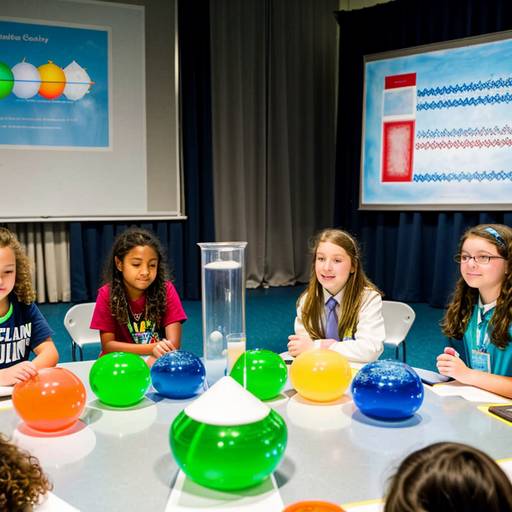
In this 5th-grade science lesson, students will explore the concept of matter, focusing on the three states: solids, liquids, and gases. The lesson begins with a discussion about the importance of matter in everyday life, followed by direct instruction that defines and describes the properties of each state. Using hands-on activities, students observe ice as a solid, water as a liquid, and air in inflated balloons. They record their observations in science journals.
On the second day, students recap their findings and learn about phase changes, such as melting and evaporation. They conduct an experiment to observe the melting of ice on a hot plate, measuring temperature changes and documenting their observations. The lesson concludes with a class discussion where students share their insights and reflect on the conservation of mass during state changes. Assessments will be based on participation, journal entries, and students' ability to explain the properties and transitions of matter. Extension activities may include exploring additional states of matter or conducting simple home experiments related to liquids.

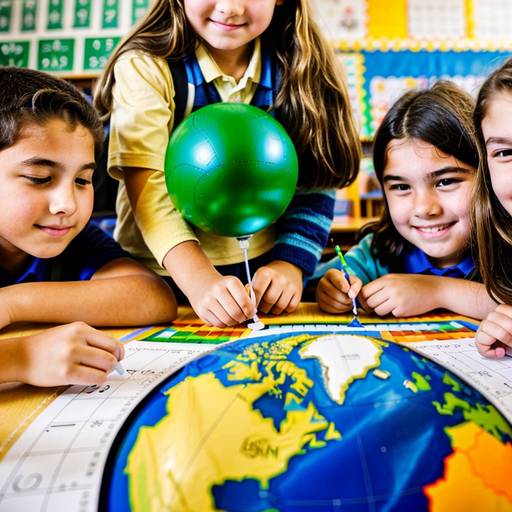
This 5th Grade math lesson focuses on measurement and area, aiming to help students understand the importance of these concepts in real life. Students will learn how to calculate the area and perimeter of shapes, especially rectangles, through guided practice and hands-on activities. They'll engage in measuring objects in the classroom and create unique polygons using graph paper, allowing them to apply their measurement skills in a creative way. The lesson encourages collaboration and discussion as students share their creations and calculations with classmates. Assessment will include worksheets and observation of student participation, with extensions offered for advanced learners. Differentiation strategies are provided to support all students in grasping the concepts effectively.
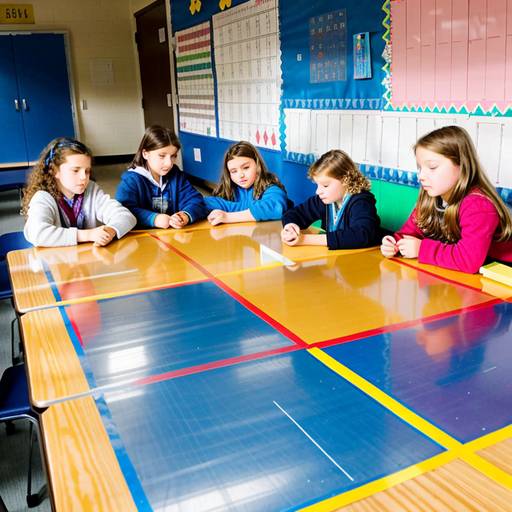
In this 5th-grade math lesson, students will explore the concepts of measurement, focusing on time and distance. The lesson begins with a discussion about the importance of measurement in daily life, followed by an introduction to key units for measuring time (seconds, minutes, hours) and distance (inches, feet, meters, kilometers), including how to convert between these units.
Students will engage in guided practice by measuring various classroom objects using rulers, measuring tapes, and string. They will then record their findings and practice conversions as a group activity. This will be followed by an independent practice session where students complete a worksheet with problems that require them to convert units of time and solve distance-related word problems.
The lesson concludes with a class discussion to review answers, address any questions, and reflect on the importance of measurement and time in everyday life. Assessment will occur through observation during activities and through evaluation of the completed worksheets. Differentiation options are provided to support varying skill levels, and an extension activity is available for early finishers, allowing for additional application of the concepts learned. This interactive and collaborative approach enhances student understanding and engagement with the topic.