
Filters
Level
Grade
Subject
Subject Area
Subject Topic
Standard(s)
Audience
Keyword
DurationMinutes
5th Grade Lesson Plans

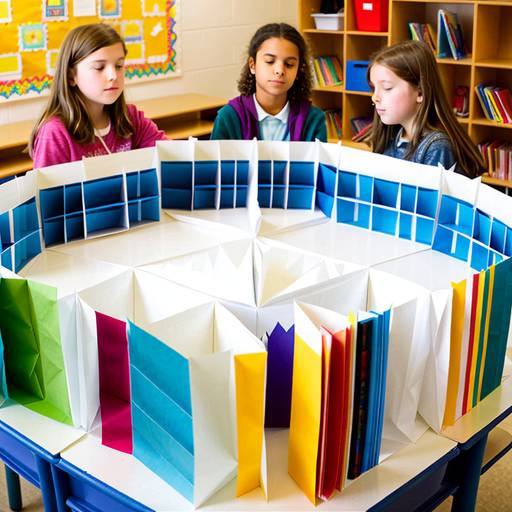
In this 5th grade art lesson, students will explore the art of collage by creating layered compositions that express a theme or tell a story. The lesson begins with a discussion about what collage is, including examples from famous artists and an overview of essential elements such as layering, texture, and composition.
Students will then observe a demonstration on basic collage techniques, followed by a brainstorming session to select their themes. Using a variety of materials, including colored paper, textured elements, and drawing supplies, they will craft their individual collages, applying the techniques learned.
Once the collages are complete, students will engage in a reflection and critique session where they share their work with peers. This culminates in a class gallery walk, allowing students to display their creations and provide feedback to one another. The lesson wraps up with a discussion on the techniques used and an optional homework assignment to enhance their collages or incorporate a narrative element. Assessment will focus on creativity, effort, and the ability to communicate their themes effectively. Extension activities may include writing a short story that complements their visual art.

This lesson plan focuses on teaching 5th-grade students the concepts of length measurement and telling time. It begins with an introduction to the importance of measurement in everyday life and the introduction of key vocabulary. Students participate in direct instruction that covers the use of measurement tools and the differences between standard and metric units, as well as how to read analog and digital clocks.
During guided practice, students work in small groups to measure classroom objects using both metric and standard units and practice timing activities with a stopwatch. The lesson includes an outdoor measurement scavenger hunt where students measure various objects and time a simple obstacle course.
To conclude, students gather for a review and discuss real-life applications of their newly acquired measurement skills. They will also complete a reflection assignment at home to deepen their understanding. The lesson incorporates hands-on activities, teamwork, and practical applications, ensuring an engaging and effective learning experience in measurement and time. Assessment is based on the accuracy of measurements, participation in activities, and reflection on real-life situations involving measurement. Modifications are included to support diverse learners and challenge advanced students.
In this 5th-grade math lesson, students will explore the concepts of measurement and length through an engaging and hands-on approach. The activity begins with a storytelling element, introducing students to the significance of measurement in everyday life. Instruction will include demonstrations on how to accurately use rulers and measuring tapes, as well as discussions on standard units of measurement and unit conversions.
Students will then participate in a guided practice activity, where they will measure various classroom objects using both inches and centimeters, recording their findings on worksheets. They will apply what they have learned by converting measurements and solving related problems.
To reinforce their understanding, students will complete an independent practice worksheet that includes measurement problems and a word problem that requires them to apply their skills. The lesson will conclude with students sharing their measurement discoveries and reflecting on their learning experiences. Assessment will be based on the worksheets and participation in activities.
Overall, this lesson promotes hands-on learning, collaboration, and critical thinking through the exploration of measurement.
In this 5th-grade math lesson focused on measurement and length, students will learn to measure various objects using standard units like inches, feet, centimeters, and meters. The session begins with a discussion on the importance of measurement in everyday life and a demonstration of measurement tools. Students will engage in an estimation activity, predicting the lengths of classroom objects, followed by a hands-on measurement activity in small groups where they will measure the actual lengths and compare them to their estimates. A class discussion will allow students to reflect on their findings and understand the discrepancies between estimation and actual measurements. The lesson concludes with a summary of key concepts and an assignment for students to measure objects at home, further reinforcing their learning. Through observation and worksheet review, teachers will assess student understanding, while differentiation strategies will support varied learners and extend challenges for advanced students.
In this lesson plan designed for 5th-grade students, the focus is on introducing the fundamentals of multimedia creation and video editing. Over two class periods, students will work in small groups to plan, create, and edit a short educational video on a topic of their choice. The lesson begins with a discussion about multimedia and video editing, followed by group brainstorming sessions to select topics. Students will engage in storyboarding and scripting, which will guide their recording process. The second class period will be dedicated to capturing video footage and learning to use video editing software to compile and enhance their projects. Each group will present their final video to the class, allowing for peer feedback and questions. Assessment will be based on collaboration, creativity, and presentation skills, and the lesson aims to foster teamwork and communication while enhancing technical skills in multimedia production. Extensions for the lesson may include publishing the videos online or exploring more advanced editing techniques in subsequent lessons.
This 5th-grade math lesson focuses on teaching students how to read both analog and digital clocks, calculate elapsed time, and recognize patterns in time intervals. The lesson begins with a discussion about the importance of time management, followed by direct instruction on telling time and converting between clock formats. Guided practice involves working together to solve real-life time scenarios, while independent practice allows students to complete worksheets on time calculations and patterns. The lesson concludes with a review and a hands-on activity involving a timed event, reinforcing the concepts learned. Accommodations are provided for students who may need additional support, and homework encourages students to track their activities with a time diary to connect learning to real-life situations. Overall, the lesson aims to engage students and enhance their understanding of time-related concepts.

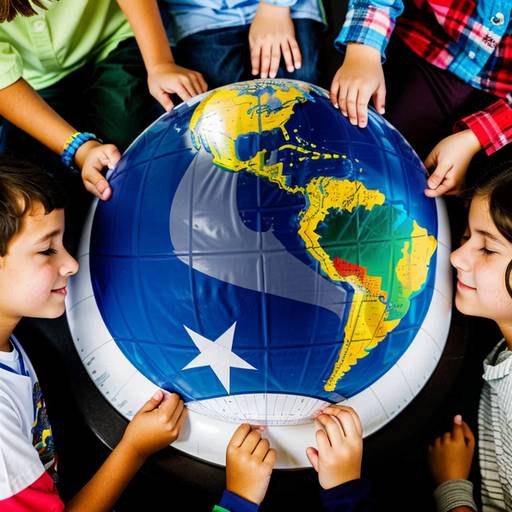
This lesson plan is designed for 5th-grade students to explore the geography of different countries around the world. The objectives include identifying countries on a map, describing significant geographical features, and presenting country profiles to classmates. The lesson begins with an engaging discussion about geography's importance and continues with instruction on map reading and geographical terminology.
Students will work in small groups, each assigned a different country, and will use fact sheets to fill out a country profile worksheet that highlights key geographical elements. After completing their profiles, groups will prepare short presentations to share their findings, using maps to illustrate their points. The lesson concludes with presentations and a summary of the geographical diversity of the world, emphasizing how these features influence cultures. Assessment will focus on group presentations and country worksheets, with opportunities for extension through creating a Geography Wall or organizing a Cultural Fair.
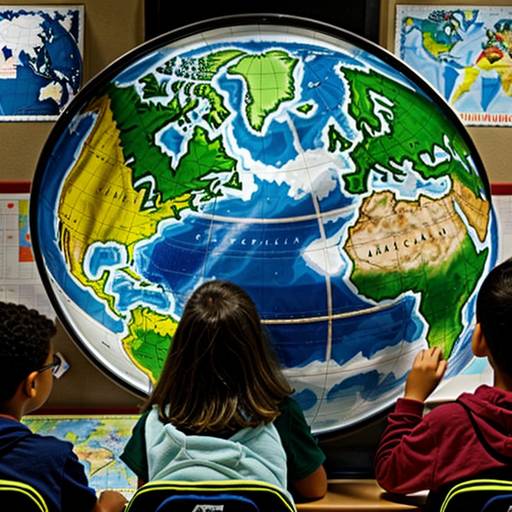
In this 5th-grade social studies lesson, students will explore the fundamental concepts of geography and map features. The lesson begins with a discussion where students share their prior knowledge about maps, followed by an introduction to key map elements such as titles, legends, scales, and compass roses. Students will engage in guided practice by identifying continents, oceans, and major countries on a world map, using color-coding for visual differentiation.
Next, students will apply their understanding by creating their own fictional maps, incorporating essential features like a title, compass rose, and a legend for significant landmarks. This creative activity encourages individuality and artistic expression. The lesson concludes with a sharing session, allowing students to present their maps and explain the choices they made.
Assessment will be conducted informally through observation and evaluation of the finished maps, focusing on the inclusion of required elements and creativity. Extensions could involve researching a specific country or creating a collaborative class map. Overall, the lesson aims to build students' geographic skills and foster a deeper appreciation for maps and their practical applications in everyday life.
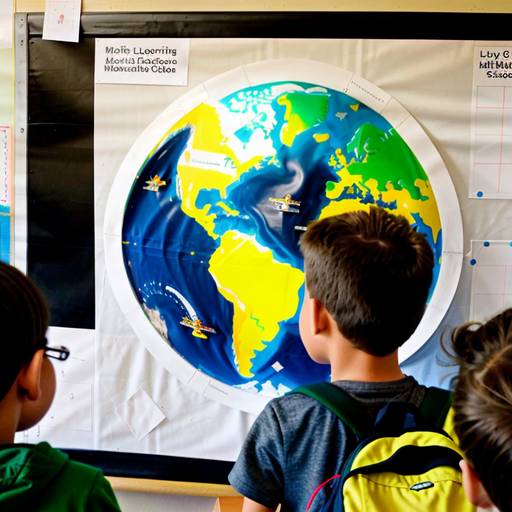
In this 5th-grade social studies lesson, students will explore various landforms and their significance to both the environment and human activities. The lesson begins with a visual introduction featuring different landforms, followed by a class discussion to activate prior knowledge. The teacher will present key terms and characteristics of each landform while guiding students in locating them on a world map.
Students will then engage in group work, conducting research on assigned landforms and creating mini-posters that include essential information about their features and importance. This will be complemented by an independent activity where each student creates a personalized map showcasing at least three different landforms, complete with labels and descriptions.
The lesson concludes with group presentations and a class discussion, encouraging students to share their thoughts on which landforms interested them the most. Assessment will focus on student participation, the accuracy of worksheets and projects, and the creativity displayed in their individual mappings. Differentiation strategies will be utilized to support learners at varying levels, with extensions available for those interested in further exploration of the subject. Overall, this lesson aims to deepen students' understanding of geography and the impact of landforms on life and the environment.
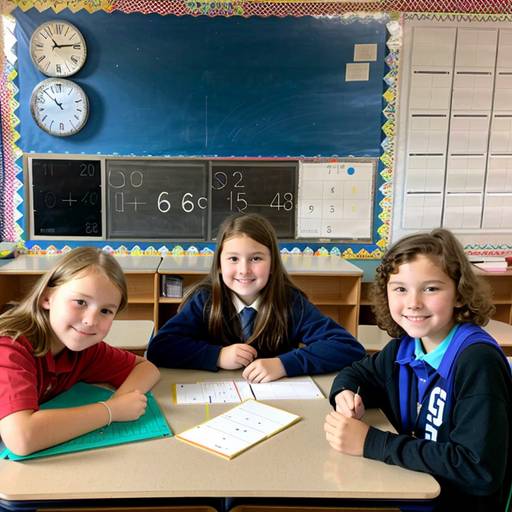
In this 5th-grade math lesson, students will learn about reading clocks, understanding time zones, and calculating time differences across the globe. The lesson begins with a discussion about the concept of time zones and their significance in daily life. Students will practice reading both analog and digital clocks, and they will learn to convert times between different time zones using a time zone chart.
In small groups, students will engage in a creative mapping activity where they will cut out and color different time zones on a world map, presenting their findings to the class. Additionally, they will complete worksheets with real-world math problems related to time zone calculations to deepen their comprehension. The lesson will conclude with a reflection on the practical implications of time zones in everyday situations, reinforced by an exit ticket activity that encourages individual thinking. Throughout the lesson, various assessment methods will be utilized to evaluate students' understanding, with adjustments made to accommodate different learning needs.