
Filters
Level
Grade
Subject
Subject Area
Subject Topic
Standard(s)
Audience
Keyword
DurationMinutes
5th Grade Lesson Plans

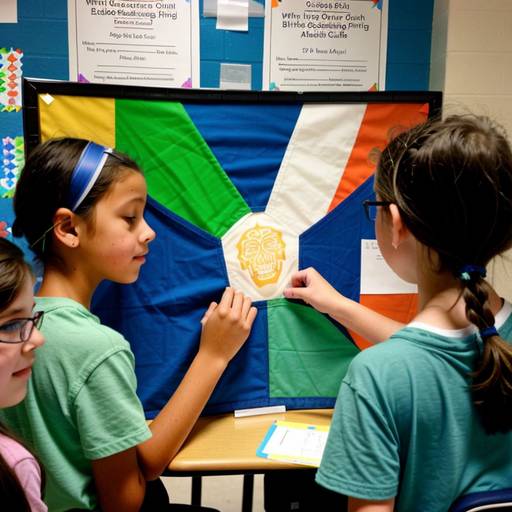
The lesson plan focuses on introducing 5th-grade students to the major systems of the human body, specifically the circulatory, respiratory, muscular, and skeletal systems. Over the course of 60 minutes, students will engage in a variety of activities aimed at understanding how these systems function and work together to maintain health and homeostasis.
The lesson begins with a video introduction followed by a class discussion to activate prior knowledge. Direct instruction includes an overview of each system, illustrated with diagrams to enhance comprehension. Students then break into small groups to create posters highlighting the functions, parts, and interesting aspects of their assigned body system.
Hands-on activities enable students to experience the systems in action, such as using balloons to represent lungs in the respiratory system or straws to simulate blood flow in the circulatory system. The class concludes with group presentations and a discussion summarizing key concepts learned.
Assessment methods include evaluating group posters, reviewing individual handouts, and observing student participation during discussions and activities. Extensions of the lesson encourage further research on diseases related to body systems, while accommodations ensure that all students can effectively participate and learn. The overall goal is to foster engagement with life science and provide a foundational understanding of human biology.
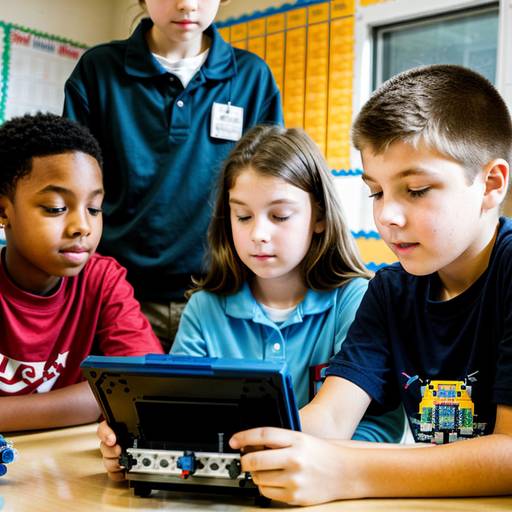
This lesson plan provides fifth-grade students with an engaging introduction to robotics, focusing on fundamental concepts, components, and applications. Over the course of two class periods, students will discuss the role of robots in various fields, explore the key components involved in robotic systems, and brainstorm real-world problems that robots can address.
In small groups, students will design their unique robots with specific functions and begin building them using provided robot kits. They will also learn the basics of programming to control their robots through simple software. The lesson culminates in demonstrations where each group presents their robot, explaining its design and functionality.
Assessment will be based on participation, the creativity of design plans, and the effectiveness of each robot during demonstrations. Extensions and accommodations ensure that all students engage with the material at an appropriate level, fostering collaboration, critical thinking, and technical skills in a fun and interactive environment.
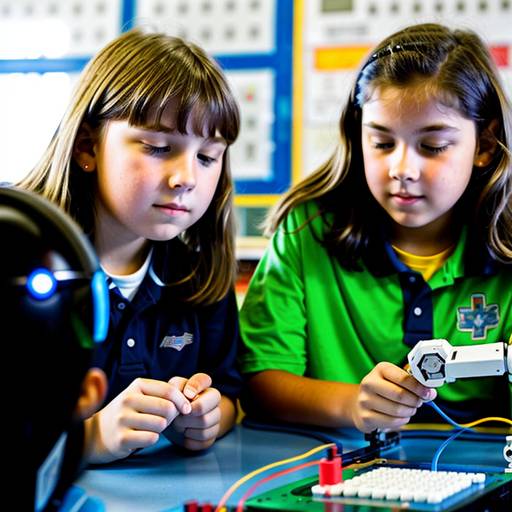
In this 5th-grade technology lesson, students will explore the fundamentals of robotics and programming. The lesson begins with an introduction to what robots are, their applications in various fields, and a discussion of basic programming concepts such as commands, loops, and sequences. Students will work in small groups to brainstorm and plan a simple task for a programmable robot, designing flowcharts to outline their programming logic.
During the second part of the lesson, students will learn to use specific programming software or apps to implement their flowcharts and control the robots. They will test their robots, make necessary adjustments, and each group will showcase their robot's performance by completing the assigned task. Throughout the lesson, students will enhance their collaboration and problem-solving skills while engaging in hands-on programming experiences. Assessment will focus on participation, the clarity of flowcharts, and the effectiveness of the programmed tasks. Extension opportunities will encourage students to delve deeper into programming and robotics applications in real-life scenarios.


In this lesson plan designed for 5th-grade social studies, students explore the geography of various countries and their unique features. The lesson spans two class periods, beginning with a warm-up discussion to introduce key geographic vocabulary, including continents, countries, and various landforms like mountains and rivers. Students are divided into small groups, each assigned a different country from various continents.
In the first class, groups research their assigned country using fact sheets and available resources, focusing on geographical aspects such as climate, major landforms, and natural resources. They then create informative posters that visually represent their findings, including maps and illustrations.
During the second class, groups present their posters to the class, sharing what they've learned about their country’s geography and how it influences local culture and lifestyles. The session concludes with a reflective discussion on the impact of geography on daily life. Assessment is based on poster creativity, accuracy, and presentation skills, with extensions available for further exploration of the topic. Modifications are included to support diverse learners, ensuring that all students can engage meaningfully with the material.

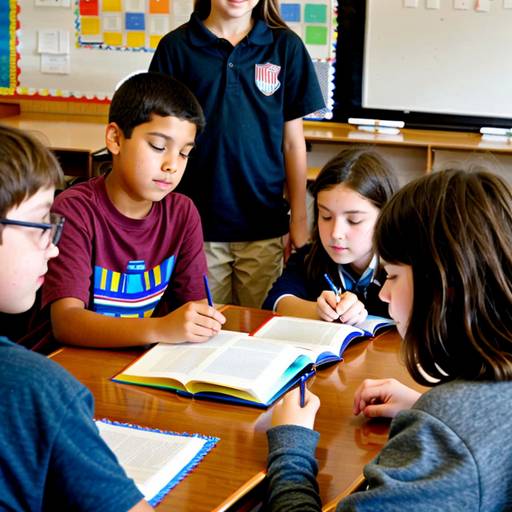
In this 5th-grade language arts lesson, students will explore narrative writing by creating their own imaginative stories. The lesson begins with a discussion about the elements of narratives, including characters, setting, plot, conflict, and resolution. Following this, a mini-lesson on descriptive language emphasizes its importance in enhancing storytelling by helping readers visualize and connect with the narrative.
Students will then brainstorm their story ideas using graphic organizers to outline key components. With ample writing time, they will compose their narratives, applying learned techniques, while utilizing a checklist to ensure they include all necessary elements. Afterward, students will share portions of their stories with peers for feedback, fostering a collaborative learning environment.
The lesson concludes with a reflection on what they learned about narrative writing and the significance of detail in storytelling. Assessments will focus on participation during discussions and the completeness and creativity of their narratives. Differentiation strategies will be employed to support diverse learners, with opportunities for extension activities, such as illustrating scenes from their stories.
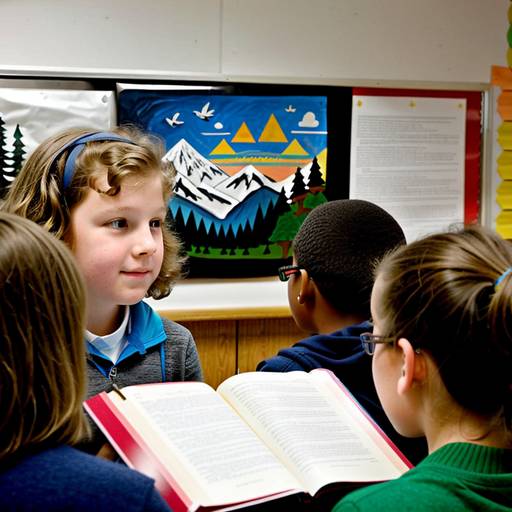
This 5th-grade language arts lesson plan focuses on introducing students to various literary genres. The lesson begins with a discussion about students' favorite types of books, followed by an overview of common genres such as fiction, nonfiction, fantasy, and mystery. Students participate in a group activity where they create genre maps that include definitions, descriptions, and illustrations for selected genres. Each group presents their map to the class, prompting discussions about the similarities and differences among the genres. The lesson concludes by emphasizing the importance of exploring diverse literature, with opportunities for students to engage further through reading assignments and a dedicated classroom library. Assessment is based on participation, creativity, and understanding demonstrated during presentations. Overall, the lesson aims to enhance students' comprehension of literary genres and inspire a greater appreciation for reading.

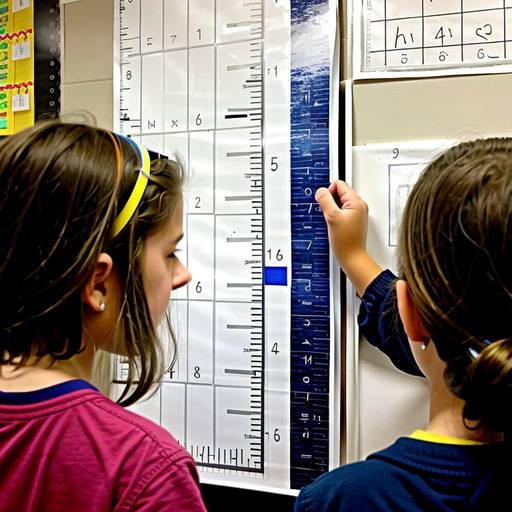
This 5th-grade math lesson focuses on the concept of measurement and length, emphasizing its real-world applications. Students will understand how to measure using standard units—specifically inches, feet, centimeters, and meters—and practice converting between these units. The lesson begins with a discussion on the importance of measurement in everyday life, followed by a demonstration of measuring techniques.
Students will engage in a hands-on activity where they work in small groups to measure various classroom objects and record their findings on a worksheet, including unit conversions. The class will then reconvene to discuss their measurements and any challenges they encountered. To conclude, a short quiz or exit ticket will assess their understanding of the material covered. This lesson aims to reinforce measurement skills while fostering collaboration and real-life connection to mathematics.

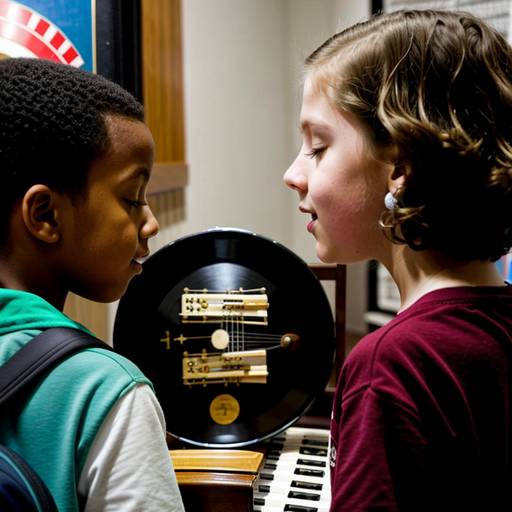
In this engaging 5th-grade music lesson, students will explore the evolution of music through various historical periods, including Baroque, Classical, Romantic, and 20th Century. The lesson begins with a discussion on the significance of music and a visual overview of the different eras. Students will listen to audio clips representative of each period and participate in group discussions to identify key characteristics and notable composers.
Following the listening activity, students will work in small groups to create collaborative timelines that outline the distinctive features of each music period, highlighting important composers and representative musical works. Each group will then present their timeline to the class, fostering a collaborative learning environment.
The lesson concludes with a recap of the key concepts learned and an exit ticket activity, allowing students to reflect on one new fact and any remaining questions about music history. Assessment will be based on group participation, creativity in the timeline presentations, and understanding demonstrated through the exit tickets. Optional extensions encourage further exploration of specific composers and contemporary connections to classical music.

In this 5th-grade science lesson, students will explore the solar system and the significance of space exploration through an engaging and interactive approach. The lesson begins with a discussion to spark curiosity about space, followed by a multimedia presentation that covers the eight planets, their characteristics, and the concepts of orbits and gravity. Students will also learn about important space missions and their contributions to our understanding of the universe.
The hands-on activity involves students working in small groups to create scale models of their assigned planet or celestial body, allowing them to apply what they have learned in a creative way. Each group will present their model and share interesting facts they discovered during their research. A concluding discussion will help reinforce key concepts, and students will complete a worksheet as a follow-up assignment to share their newfound knowledge.
This lesson fosters collaboration, critical thinking, and a passion for astronomy, while encouraging students to appreciate the wonders of space and the importance of ongoing exploration. Extensions such as field trips or guest speakers can further enhance their learning experience.
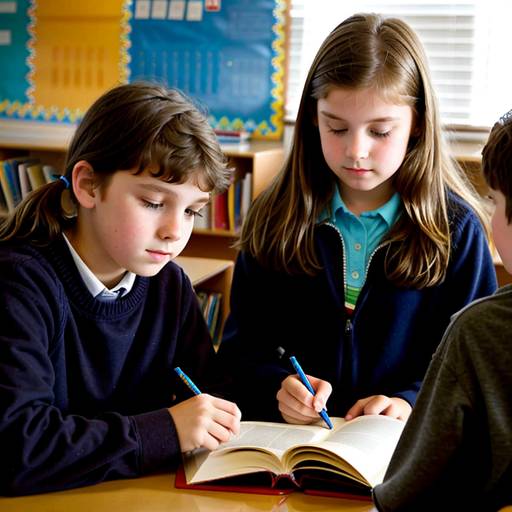
In this 5th Grade Language Arts lesson plan, students will enhance their reading and comprehension skills by identifying main ideas and themes within a text. The lesson begins with a discussion to define and differentiate between main ideas and themes. Students will read a selected story, either independently or as a class, while focusing on key story elements. Guided practice will involve filling out a graphic organizer to pinpoint the main idea and theme collaboratively. For independent practice, students will choose a theme from the story and write a paragraph supporting their choice with evidence from the text. The lesson will conclude with a few students sharing their findings, followed by a reflective writing assignment in their journals. Assessment will be based on the graphic organizers, written paragraphs, and participation in discussions. Extensions are provided for both advanced students and those needing additional support, ensuring a comprehensive approach to reading comprehension.