
Filters
Level
Grade
Subject
Subject Area
Subject Topic
Standard(s)
Audience
Keyword
DurationMinutes
4th Grade Lesson Plans

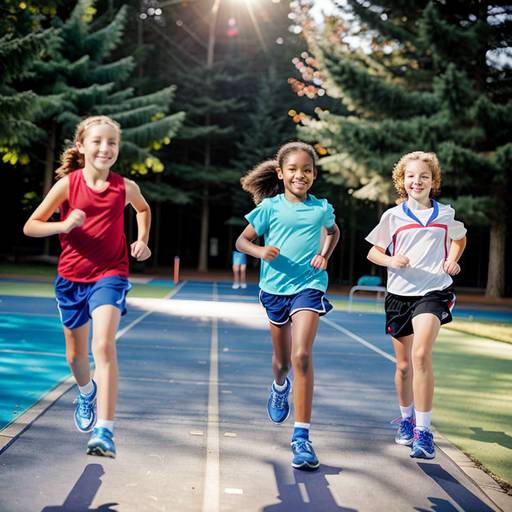
In this 4th-grade physical education lesson, students will explore the importance of cardiovascular fitness through fun and engaging activities aimed at promoting teamwork and cooperation. The lesson begins with dynamic stretching and jumping jacks as a warm-up to prepare the students for physical activity. Following the warm-up, students will participate in four rotating stations, including jump rope challenges, hula hoop relays, a cone fitness sprint, and a cardio freeze dance. Each station encourages heart rate elevation while fostering a sense of community among the participants.
After the vigorous activities, students will cool down with stretching exercises and reflect on their experiences by sharing their favorite parts of the lesson and insights about fitness. The lesson concludes with a homework assignment encouraging students to engage in a family fitness activity and track their heart rates together. Throughout the session, educators will monitor student engagement and ensure proper exercise techniques to promote safety and inclusivity.

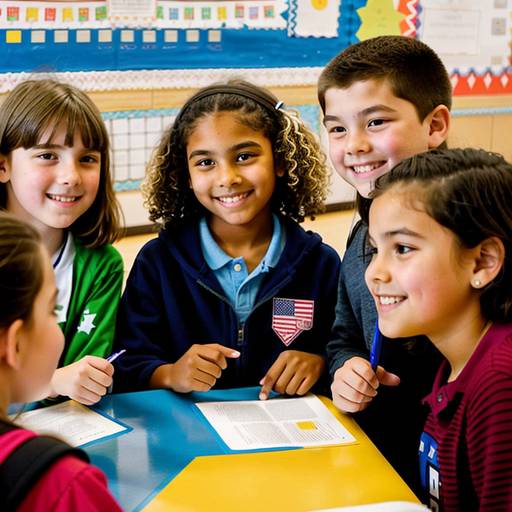
This lesson plan focuses on helping 4th-grade students understand the concept of community and the richness of diversity within it. It aims to foster appreciation for different cultural backgrounds through discussions, group activities, and collaborative projects.
The lesson begins with an interactive discussion where students share their ideas and experiences about their communities. Students are then organized into small groups to create a "Community Map," identifying various cultures, traditions, and practices present in their community. Following this, the class engages in an open discussion about the significance of these traditions and how they enrich their lives.
The students then participate in a creative activity where they each design a square representing their own cultural background or a culture they admire. These squares will be assembled into a "Diversity Quilt," symbolizing the collective identity of their classroom community.
The lesson concludes with reflections on what students learned about their classmates and the value of embracing diverse perspectives. Assessment is based on participation in discussions and activities, creativity in the quilt project, and the ability to communicate their understanding of community and diversity. Optional extensions include inviting guest speakers or organizing a culture day to further celebrate their learnings.
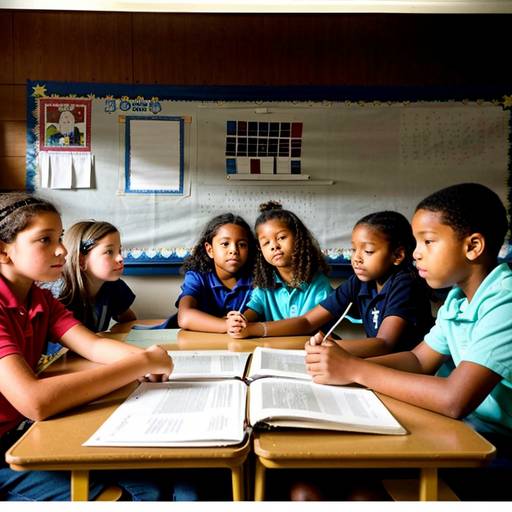
This 4th-grade social studies lesson plan focuses on teaching students about timelines and their significance in understanding historical events. Over two class periods, students will first explore the concept of timelines through the research and presentation of important historical events in small groups. They will create mini-timelines to visually represent these events and share their findings with the class, fostering collaboration and communication skills.
In the second part of the lesson, students will transition to creating their own personal timelines, identifying and organizing significant moments from their lives chronologically. This activity encourages self-reflection and helps students draw connections between their own experiences and broader historical narratives. The lesson promotes engagement through group activities and individual projects, allowing students to appreciate both collective and personal history. Assessment will be based on participation, creativity, and the ability to articulate the significance of events.

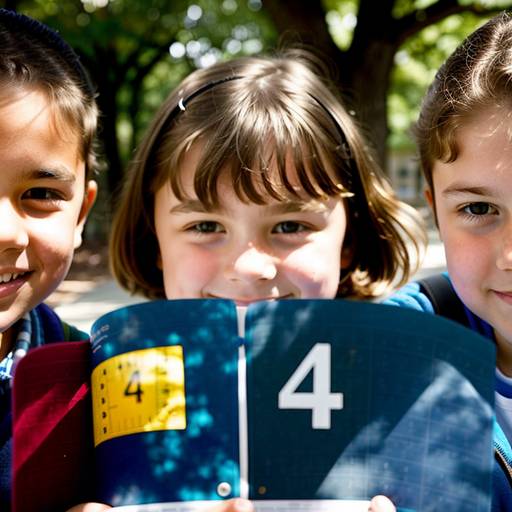
In this 4th-grade math lesson plan, students will explore the concepts of length measurement and temperature. They will learn to measure objects using both inches and centimeters, while also understanding how to read thermometers in Fahrenheit and Celsius scales. The lesson includes direct instruction on measurement techniques and temperature conversions, where students will practice converting between the two temperature scales.
Students will work in small groups, participating in hands-on activities where they measure various objects and conduct a temperature experiment using warm and cold water. They will predict, measure, and then convert the temperatures they record, enhancing their understanding through practical application.
The lesson concludes with group presentations of their findings and a reflection on the real-world applications of measurement and temperature in daily life. Optional homework will involve monitoring and recording daily temperatures, reinforcing the skills learned in class. Assessment will involve observing participation during activities, reviewing group posters for accuracy, and checking the submitted homework for understanding. Extensions of the lesson could explore weather reporting and the impact of environmental factors on temperature.
This lesson plan focuses on introducing 4th-grade students to the basic concepts of coding, including sequences, loops, and conditionals. It begins with an engaging discussion to assess students' prior knowledge followed by a direct instruction segment where the teacher demonstrates how to use a coding platform, such as Scratch, to create a simple project.
Students then work in pairs to complete a guided coding challenge, applying their understanding of the foundational concepts. After guided practice, they are encouraged to create their own projects, fostering creativity and independent application of skills. The lesson concludes with students sharing their projects and participating in a reflective discussion about their learning experiences.
Assessment includes observing student participation and collecting exit tickets to evaluate understanding. The plan also includes extensions for advanced learners and adaptations for those who may need additional support, promoting an inclusive learning environment focused on collaboration and problem-solving.
This lesson plan for 4th-grade students focuses on introducing the fundamentals of coding through interactive activities. Students will learn key concepts such as algorithms, sequences, loops, and conditionals. The lesson begins with a discussion about the significance of coding in everyday life, followed by a demonstration using a block-based programming platform like Scratch or Code.org. Guided practice allows students to collaboratively create a basic coding project while incorporating the learned concepts.
During independent work, students will partner up to brainstorm and develop their own unique projects, such as simple animations or games, utilizing loops and conditionals. The lesson culminates in presentations where each pair shares their creations and discusses the challenges and solutions they encountered. Assessment will be based on participation and the application of coding concepts in their projects. The plan also includes extensions for further exploration and accommodations to support diverse learning needs, ensuring an engaging experience for all students.
In this 4th-grade technology lesson, students will explore fundamental coding concepts such as algorithms, commands, and debugging through hands-on activities using a block-based coding platform like Scratch or Code.org. The lesson begins with an engaging discussion to activate prior knowledge about coding and its applications. Following a demonstration on how to navigate the coding platform, students will create a simple program while following specific steps that emphasize algorithm development and execution.
During guided practice, students will log into their accounts and work on a designated coding project, using a coding challenge worksheet to document their algorithms, commands, and any debugging efforts. After individual work, students will collaborate in pairs to share their projects and learn from each other’s experiences. The lesson concludes with a few students presenting their work to the class and reflecting on their learning.
Assessment will be based on observation during practice, the completion of worksheets, and peer presentations. Extensions encourage further exploration of coding at home, while accommodations support students who may need additional help. Overall, this lesson aims to foster a foundational understanding of coding in an engaging, collaborative environment.
In this 4th-grade technology lesson, students will explore fundamental coding concepts such as algorithms, sequences, loops, and conditional statements. The lesson begins with an engaging introduction to coding and its real-world applications, accompanied by a brief video. Students will learn essential vocabulary related to coding through a handout and group discussions.
Following this, they will participate in a group activity where they create an algorithm for a simple task, highlighting the importance of clarity in instructions. The lesson progresses to hands-on coding using a child-friendly platform, where students will build their own simple projects, applying the concepts they have learned.
To conclude, students will reflect on their experiences by sharing their creations and discussing the coding techniques they used. Assessment will focus on participation, understanding of vocabulary, and the ability to explain their coding projects. The lesson not only teaches coding basics but also fosters collaboration, creativity, and problem-solving skills.
This lesson plan is designed for 4th-grade students to introduce them to the basics of coding and programming languages. The lesson begins with a classroom discussion to gauge students' prior knowledge about coding. It progresses with a slideshow presentation outlining various programming languages, such as Python, JavaScript, and Scratch, and their real-world applications.
Students will engage in guided practice by exploring the Scratch interface, creating a simple program that makes a character say "Hello, World!" and adding interactive elements like movement or sound. They will then have the opportunity to work independently, modifying their projects and showcasing their creations to classmates.
The lesson concludes with a reflection where students share what they learned and how coding is relevant to everyday life. Assessment will involve monitoring student progress throughout the activities and reviewing their Scratch projects. Extensions are provided for students seeking further challenges, ensuring opportunities for deeper learning. Overall, this lesson combines creativity with technology, helping students develop foundational programming skills in an engaging manner.


In this 4th-grade art lesson, students will explore the technique of collage through the creation of nature-themed artworks. The lesson spans two class sessions, during which students will learn about the concept of collage and its significance in the art world, as well as identify various materials that can be used in their projects.
In the first session, students will engage in brainstorming activities to generate ideas about elements of nature, followed by an exploration of different materials they can incorporate into their collages. They will then sketch a rough design to plan their compositions.
During the second session, students will bring their sketches to life by assembling their collages, focusing on layering techniques to enhance texture and depth. After completing their artwork, students will share their creations in small groups, discussing their artistic choices and experiences. The lesson emphasizes creativity, composition, and the use of diverse materials, along with opportunities for reflection and assessment based on engagement and collaboration.
Extensions to the lesson include the possibility of creating a class collage and organizing a gallery walk. Modifications are available for students needing additional support, ensuring all learners can participate in this engaging art-making experience.