
Filters
Level
Grade
Subject
Subject Area
Subject Topic
Standard(s)
Audience
Keyword
DurationMinutes
4th Grade Lesson Plans

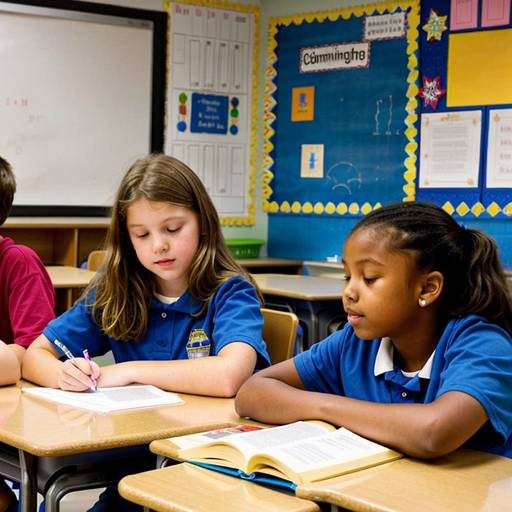
In this 4th-grade language arts lesson focused on grammar and sentence structure, students learn to identify and construct complete sentences. The lesson begins with a discussion on the importance of clear communication, followed by direct instruction on the parts of a sentence, including subjects, verbs, objects, and adjectives. Students engage in guided practice by collaborating in small groups to create sentences using sentence strips, encouraging creativity and collaboration.
During independent practice, students complete worksheets with incomplete sentences, adding necessary components and revising for clarity and detail. The lesson concludes with students sharing their revised sentences and illustrating their favorites. Assessment is based on participation and the quality of completed work, with differentiation strategies in place to support learners at varying levels. Extensions include writing a short story using the sentences created during the lesson, further reinforcing the skills practiced.
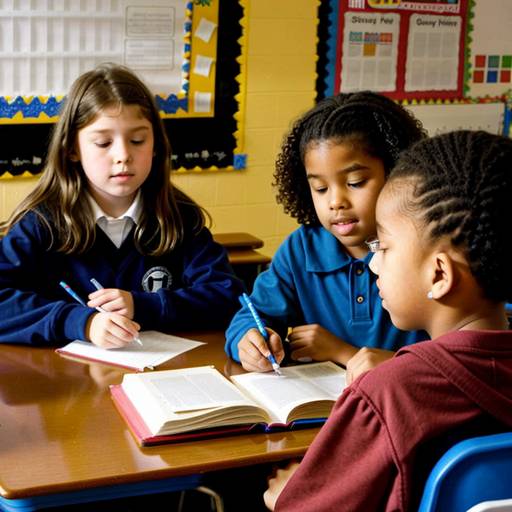
In this 4th-grade language arts lesson, students will learn about capitalization rules, focusing on when to use capital letters for the beginning of sentences, proper nouns, and titles. The lesson begins with a review of capitalization concepts, where students identify errors in example sentences on the whiteboard. Guided practice involves correcting sentences as a class, followed by individual work on a worksheet that contains a paragraph filled with capitalization mistakes. Students will work in pairs to discuss their corrections and reasoning. The lesson concludes with students sharing their findings with the class, with an emphasis on the importance of proper capitalization in writing. Assessment will include observation during practice and review of the completed worksheets. For homework, students will write original sentences incorporating capitalization rules, promoting reinforcement of the skills learned.

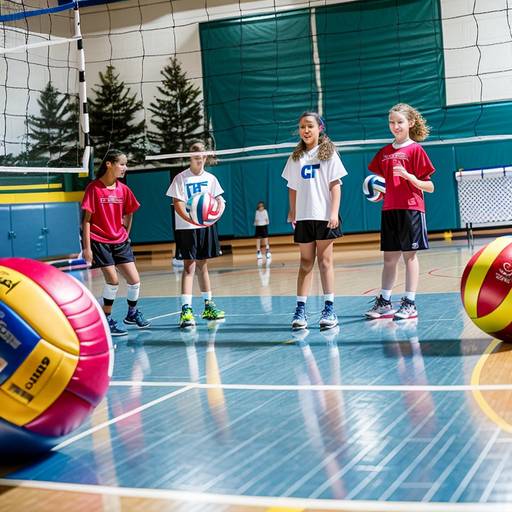
This lesson plan is designed for 4th-grade students to introduce them to the fundamental skills of volleyball through engaging activities that promote teamwork and sportsmanship. The 60-minute session begins with an overview of volleyball rules and key techniques, followed by a dynamic warm-up. Students will participate in skill drills focusing on passing, setting, and serving, rotating through various stations to practice these techniques.
After skill development, students will partner up to refine their passing and setting abilities before engaging in mini-games that apply their learned skills in a team environment. The lesson wraps up with a cool-down and reflection session, allowing students to discuss their experiences and the importance of teamwork in sports. Assessment will be done through observation during drills and games, and modifications will be provided to accommodate different skill levels. Safety precautions will be emphasized throughout the activities, ensuring a fun and educational experience for all participants.

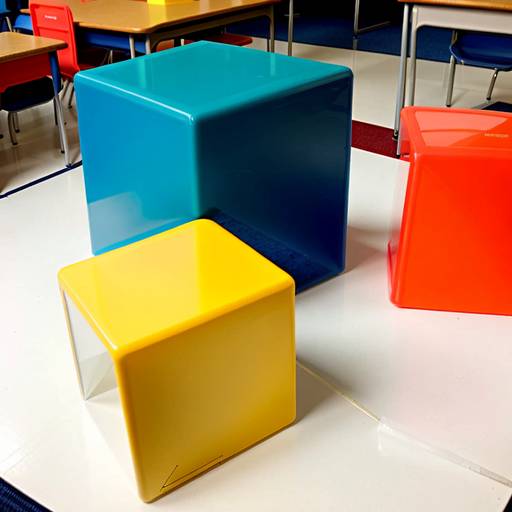
In this 4th-grade math lesson plan, students will explore the concept of perimeter through hands-on learning and real-world applications. The lesson begins with an introduction to shapes and the definition of perimeter, followed by direct instruction on the formulas for calculating the perimeter of rectangles, squares, and triangles.
Students will engage in guided practice with worksheets featuring various geometric shapes, working in pairs to calculate perimeters while explaining their reasoning to one another. Following this, a scavenger hunt will allow students to measure and record the perimeters of objects around the classroom using string or yarn, fostering a deeper connection to the concept.
The lesson concludes with a shared reflection on their discoveries and the significance of perimeter in everyday life. Assessments will include observations during activities and evaluation of the completed worksheets. Differentiation strategies will be implemented to provide support for struggling learners and challenges for advanced students, ensuring that all students benefit from the lesson.
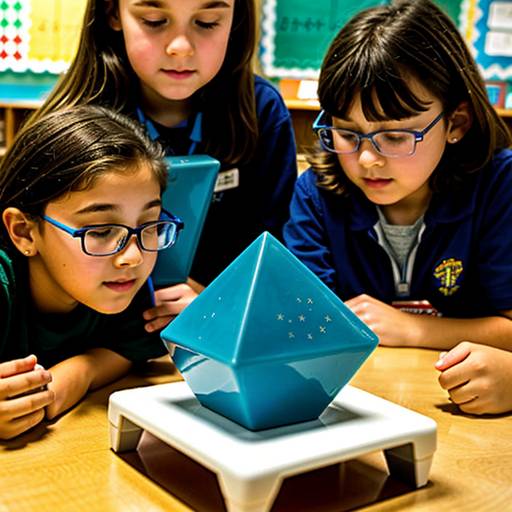
This lesson plan focuses on introducing 4th-grade students to three-dimensional shapes, or solids, emphasizing their properties, classifications, and real-world applications. The session begins with an engaging discussion about 3D shapes, where students identify various examples and learn about their characteristics, including faces, edges, and vertices.
Following the introductory discussion, students participate in a shape sorting activity in small groups, using manipulatives to categorize the solids and share their findings with the class. The lesson continues with a creative component in which each student designs their own unique solid, labeling its properties and dimensions, and then shares their creation with a partner.
To conclude, the class reflects on what they learned throughout the lesson, discussing interesting aspects of the solids they created and their practical applications. Assessment is conducted through observations, reviewing shape sorting mats, and evaluating students' designs based on clarity and accuracy. Extensions to the lesson encourage further exploration of real-world applications of solid shapes and introduce basic volume concepts if time permits. Overall, this lesson promotes hands-on learning, creativity, and collaborative engagement among students.
This 4th-grade math lesson focuses on helping students understand the concepts of geometry and area through hands-on activities and discussions. The lesson begins with an engaging discussion about the relevance of area in real life, followed by direct instruction on calculating the area of rectangles and squares using formulas. Students participate in guided practice by drawing shapes on graph paper and calculating their areas, promoting collaborative learning through partner discussions.
In small groups, students measure various classroom objects with measuring tapes, recording their dimensions and calculating area, further solidifying their understanding through practical application. The lesson culminates in group presentations, where students share their findings, fostering communication skills and reinforcing the importance of area in everyday scenarios.
Assessment is achieved through observation of group work, review of calculations, and graphed shapes. Extensions encourage more advanced learners to explore irregular shapes and introduce the concept of perimeter for future lessons. This comprehensive approach ensures that students gain a solid foundation in geometry and area while engaging in practical, real-world applications.

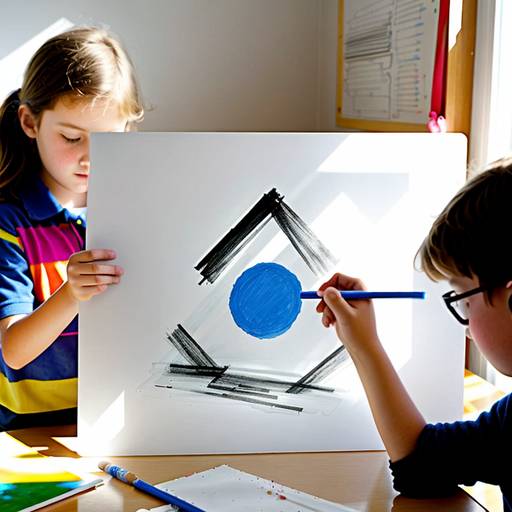
In this 4th-grade art lesson, students will explore essential drawing techniques by focusing on basic shapes and shading. The lesson begins with a discussion about prior drawing experiences, followed by a demonstration that highlights the relationship between shapes and the effects of light on objects. Students will then have hands-on practice creating their own drawings based on a still-life arrangement, where they will identify and sketch the basic shapes of their chosen objects. They will learn to enhance their artworks through shading techniques to create depth and realism. The lesson concludes with a sharing session where students discuss their artwork and reflect on the techniques they employed. Assessment will involve reviewing students' drawings for technique application, and opportunities for extension may include collaborative projects or exhibitions of their work.
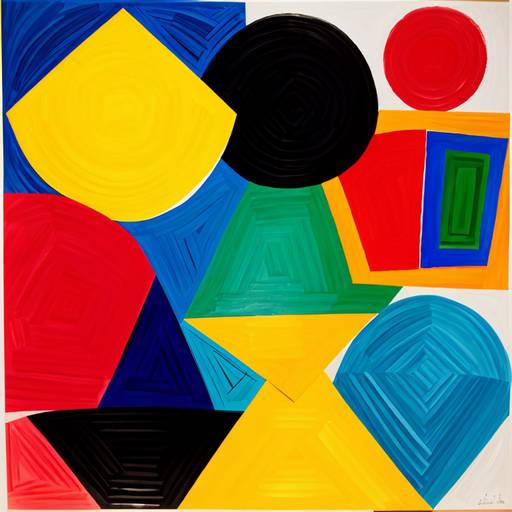
In this 4th-grade art lesson, students will explore the Cubist movement, focusing on the works of famous artists like Pablo Picasso and Georges Braque. The class will begin with a discussion about Cubism, where students will examine key characteristics of the style and engage in conversations about the artwork presented. Following a demonstration on how to break down objects into geometric shapes, students will create their own Cubist-inspired pieces using various materials, including paper, colored pencils, and watercolors.
As they work, they will choose an object from a still life arrangement, sketch it by simplifying it into geometric shapes, and then bring their artwork to life with color. Students will conclude the lesson by sharing their creations with the class, highlighting their individual interpretations and engaging in a reflective discussion about their artistic choices. The lesson encourages creativity, collaboration, and an appreciation of an important art movement while allowing students to express their unique perspectives.

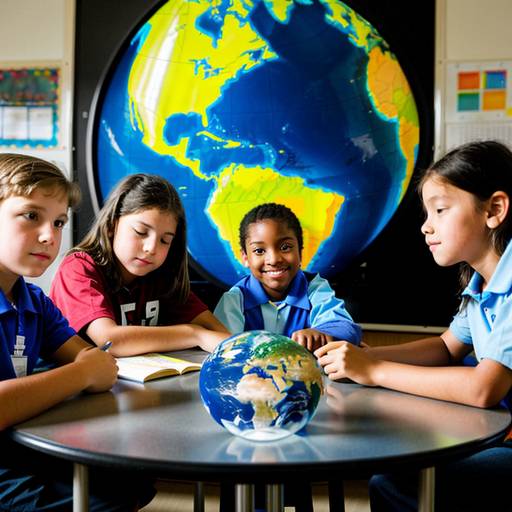
This 4th-grade lesson plan focuses on understanding forces and energy in the context of physical science. The objectives include introducing students to kinetic and potential energy, allowing them to investigate how energy transfers through objects. The lesson begins with an engaging demonstration of a toy car on a ramp, followed by a class discussion that connects these concepts to real-world examples.
Students break into small groups to conduct experiments with toy cars, measuring ramp heights, distances traveled, and time taken to analyze the relationship between potential energy and kinetic energy. They document their findings and create charts to visualize the data.
The lesson concludes with group presentations, where students share their observations and discuss trends in their results. Reflective discussions emphasize the importance of energy in everyday life. Assessment includes evaluating group presentations and a follow-up quiz to gauge individual understanding. Extensions encourage students to observe and report examples of energy in their surroundings. Overall, the lesson fosters active learning through hands-on activities and collaborative exploration of key physical science concepts.
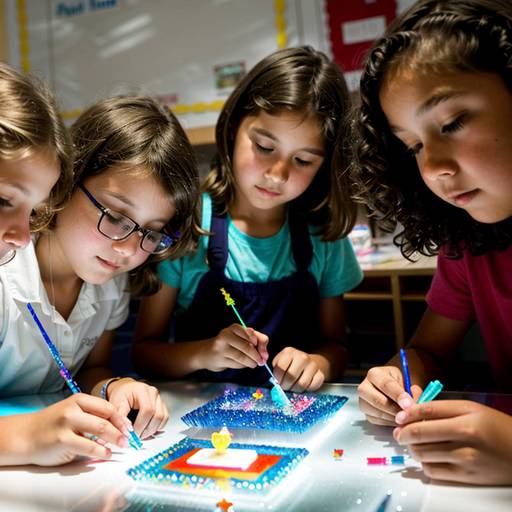
In this 4th-grade art lesson, students will explore the fascinating world of glass art by learning about various forms, such as stained glass, glass blowing, and glass fusion. The lesson begins with a discussion and visual presentation, showcasing different examples of glass art and highlighting the interplay of color and light. Following a demonstration on how to create their own glass art piece using colorful tissue paper and contact paper, students will engage in a hands-on activity where they cut and layer shapes to replicate the beauty of stained glass.
Throughout the process, students will develop their fine motor skills and creativity while collaborating with peers. The lesson concludes with a sharing session, allowing students to present their artwork and reflect on their experiences. As an extension, students may display their creations and explore real-world applications of glass art. Overall, this lesson aims to inspire students' artistic expression while fostering an appreciation for this unique art form.