
Filters
Level
Grade
Subject
Subject Area
Subject Topic
Standard(s)
Audience
Keyword
DurationMinutes
4th Grade Lesson Plans

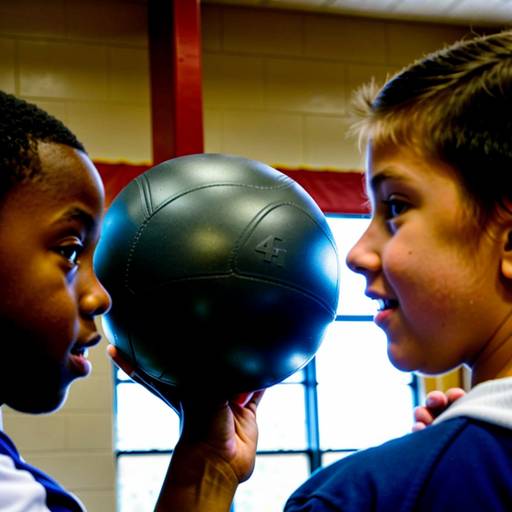
In this 4th-grade physical education lesson, students will engage in a variety of activities designed to enhance their fitness and strength. The class will begin with a dynamic warm-up routine to prepare the students' muscles, followed by a discussion on the significance of physical fitness and the concept of strength.
The main portion of the lesson consists of five different fitness stations, each focusing on a specific strength-building exercise, including push-ups, bodyweight squats, resistance band workouts, plank holds, and jumping jacks, allowing students to learn proper form and technique. Following this, students will participate in a fitness relay race that incorporates the exercises practiced at the stations, fostering teamwork and friendly competition.
The session will conclude with a cool-down period that includes stretching and reflection, where students can share their experiences and thoughts on the exercises. Throughout the lesson, student participation, effort, and form will be observed for assessment. Adaptations will be provided for students needing additional support, ensuring an inclusive and positive learning environment that promotes the importance of staying active and healthy.

This physical education lesson plan for 4th graders focuses on the importance of fitness and flexibility. The session begins with an engaging discussion that introduces students to the concepts of fitness and flexibility, followed by a dynamic warm-up to prepare their bodies for exercise.
Students participate in stretching stations, where they learn various stretches designed to improve their flexibility, including the hamstring stretch, butterfly stretch, and quadriceps stretch. Each stretching activity is conducted in groups, allowing for collaboration and peer support.
Following the stretching stations, students engage in a fun relay activity that combines running and bodyweight exercises, reinforcing fitness concepts while promoting teamwork. The lesson concludes with a calm cool-down period where students reflect on their experiences and discuss what they learned.
The plan emphasizes proper technique, safe practices, and the importance of communication and feedback among peers, encouraging students to integrate fitness and flexibility into their daily routines.

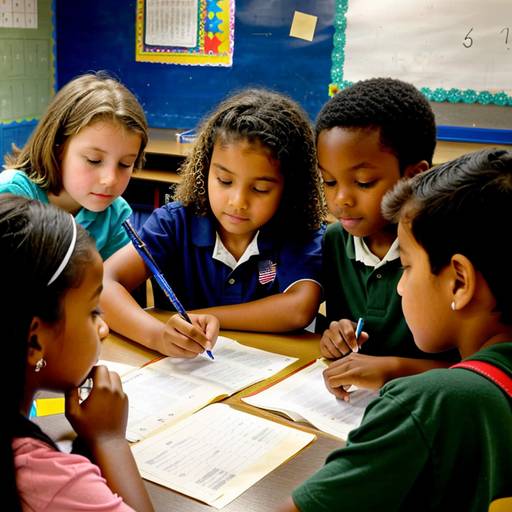
This lesson plan focuses on helping 4th-grade students understand and practice subtraction with numbers up to 1,000. The lesson begins with a review of subtraction concepts and introduces students to visual aids like number lines. Through direct instruction, students learn to solve subtraction problems using real-life scenarios.
In guided practice, they work in pairs with flashcards to reinforce their understanding, followed by independent practice with a worksheet featuring word problems and tasks that encourage problem-solving. The lesson concludes with a recap of key concepts and sharing of answers to assess understanding.
To differentiate instruction, advanced students receive more complex problems, while additional support is available for those who need it. Homework is assigned to reinforce skills further, and the lesson includes an opportunity for reflection on teaching effectiveness and student engagement. Overall, the goal is to create an interactive and supportive learning environment for mastering subtraction.
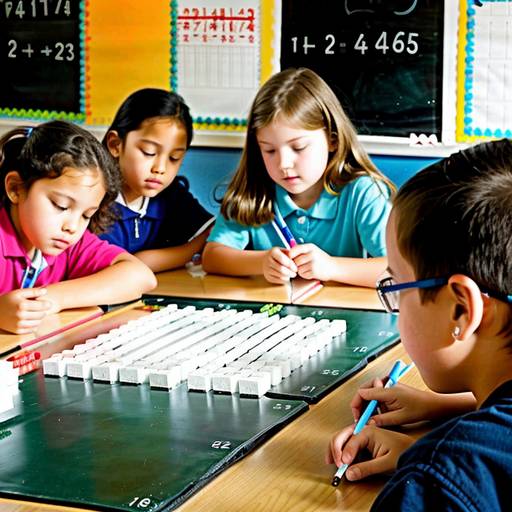
In this 4th-grade math lesson, students explore the concept of subtraction through interactive and collaborative activities. The lesson begins with a review of subtraction fundamentals, including the definitions of key terms and strategies for solving problems, such as using number lines and breaking apart numbers.
In a dynamic group activity, students participate in a relay race in which they work in teams to solve a series of subtraction problems located at different stations around the classroom. This hands-on approach promotes teamwork while reinforcing their understanding of both standard and regrouping subtraction.
After the group activity, students complete an independent worksheet featuring a mix of subtraction problems to further practice their skills. The lesson concludes with a review of strategies and sharing of experiences from the relay race. Assessment is conducted through observation and evaluation of worksheet accuracy, with tailored support provided for those who need additional assistance.
Overall, this lesson encourages student engagement and reinforces subtraction concepts through active learning, collaboration, and problem-solving.
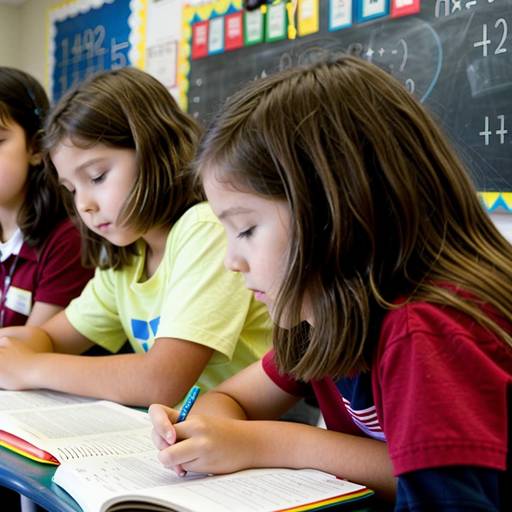
In this 4th-grade mathematics lesson plan, students will focus on understanding and applying the concept of subtraction. The lesson begins with a warm-up activity that connects addition to subtraction through interactive questioning. Direct instruction follows, where various strategies for solving subtraction problems are introduced, including using a number line, counting back, and utilizing manipulatives like blocks or counters.
After the instructional phase, students will engage in guided practice, solving problems as a class while exploring different methods. They will then work independently on worksheets that feature both numerical and word problems that require subtraction skills. The teacher will circulate to provide assistance and assess students' understanding.
The lesson concludes with a review of the problems, encouraging students to share their challenges and strategies. To celebrate their participation and efforts, certificates will be awarded. Throughout the lesson, accommodations will be made for diverse learners, and reflection will take place post-lesson to identify successes and areas for improvement. This structured approach aims to foster a solid understanding of subtraction while promoting collaboration and motivation among students.
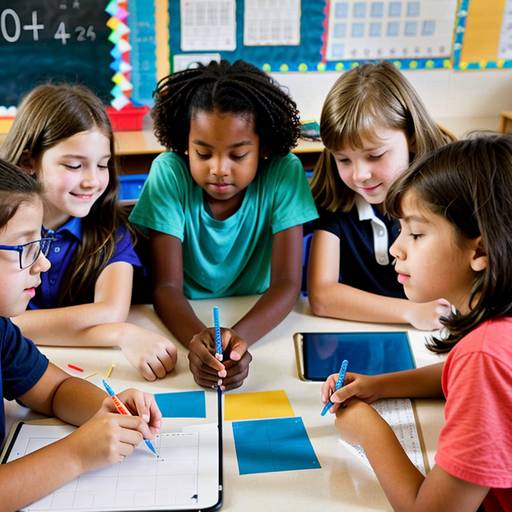
This 4th-grade math lesson focuses on teaching students the concept of subtraction through an engaging treasure hunt activity. Students will start with a story about pirates to pique interest and then review the principles of subtraction. The teacher will model several subtraction problems on the whiteboard, discussing strategies for solving them.
In small groups, students will receive maps with subtraction problems that they must solve to collect paper "treasure" tokens located around the classroom. Following the group activity, students will work independently on a subtraction worksheet to reinforce their skills.
The lesson concludes with a class review of the worksheet answers, where students will share their thought processes, fostering a collaborative learning environment. Teachers will assess understanding through observation during the activities and the completed worksheets, and opportunities for extension or support are also provided to accommodate different learning needs. Overall, the lesson aims to make subtraction interactive and enjoyable while promoting teamwork and critical thinking.
This lesson plan for 4th grade students focuses on educating them about digital citizenship and online safety. It aims to help students understand their rights and responsibilities when using technology, emphasizing respectful online behavior and the importance of protecting personal information.
The lesson begins with a discussion about what it means to be a good digital citizen, followed by an engaging presentation that explores concepts such as safe sharing and recognizing credible sources. Students participate in a role-playing activity where they address various online scenarios, developing solutions based on their learnings. They will also create posters illustrating key ideas about online safety and respectful behavior.
The lesson concludes with a wrap-up discussion to reinforce the concepts learned and a take-home reflection sheet that encourages students to apply their knowledge at home. Assessment will be based on group discussions, poster creations, and individual reflections. Through this comprehensive approach, students gain the skills and understanding needed to navigate the digital world responsibly.

This lesson plan for 4th-grade students focuses on developing essential internet skills and email etiquette. The session starts with a discussion about online safety, emphasizing the importance of protecting personal information and recognizing secure websites. Students learn about digital footprints and the risks of interacting with strangers online. The lesson then introduces the components of an email, highlighting the significance of polite communication, appropriate greetings, and the importance of proofreading before sending messages.
During guided practice, students work in groups to analyze various scenarios related to email communication, discussing their appropriateness based on etiquette principles. In the independent practice segment, each student composes a draft email, applying the skills learned. The lesson concludes with a recap of key concepts, encouraging students to share their insights and practice these skills in their daily lives. Assessment is conducted through class discussions, group activities, and the review of students' drafted emails. Suggestions for extensions and accommodations ensure that all learners can engage effectively with the material.

This lesson plan aims to teach 4th-grade students essential internet skills and the concept of netiquette, emphasizing respectful online communication. Students will begin by discussing their experiences with the internet and then learn key netiquette rules through a presentation and group activities. They will evaluate example messages to identify appropriate and inappropriate online communication practices. Following this, students will individually write a respectful email to a fictional pen pal, incorporating the principles they've learned. The lesson concludes with a summary discussion, allowing students to reflect on applying netiquette in their online interactions. Assessment will be based on their written emails and active participation during group discussions. Extension activities encourage students to explore safe websites and reflect on their experiences with netiquette. Overall, the lesson empowers students to navigate the digital world responsibly and positively.

Students will work in small groups to identify what types of information are safe to share online, promoting critical thinking about privacy. Following this, the teacher will demonstrate how to access and adjust privacy settings on a popular platform, highlighting key features that protect personal information.
In a hands-on activity, students will then navigate the platform themselves to practice adjusting their privacy settings. The lesson concludes with a reflective discussion, where students share insights and take home a handout summarizing safe online practices. Participation in discussions, successful completion of hands-on tasks, and exit tickets will be used for assessment. Adaptations and extensions are also included to support diverse learners and deepen understanding. Overall, the lesson aims to empower students with the skills and knowledge to use the internet safely and responsibly.