
Filters
Level
Grade
Subject
Subject Area
Subject Topic
Standard(s)
Audience
Keyword
DurationMinutes
4th Grade Lesson Plans

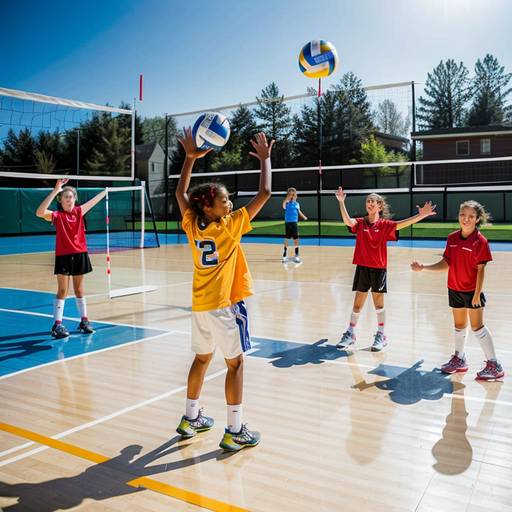
This 4th-grade physical education lesson focuses on introducing students to the fundamentals of volleyball. The session begins with a warm-up that includes dynamic stretches and volleyball movement drills to prepare students for physical activity. Following the warm-up, the instructor explains the basic rules and objectives of volleyball while demonstrating essential skills, such as serving, passing, and setting.
Students then rotate through skill practice stations, where they have the opportunity to refine their serving, passing, and setting techniques with peers. After practicing these skills, students are divided into small teams for a mini volleyball game, encouraging teamwork, communication, and application of the skills they've learned.
The lesson concludes with a cool-down period featuring a series of stretches, followed by a reflective discussion about the importance of teamwork and communication in sports. Throughout the lesson, the teacher assesses student participation and offers feedback to enhance their learning experience, ensuring a fun and inclusive environment for all participants.

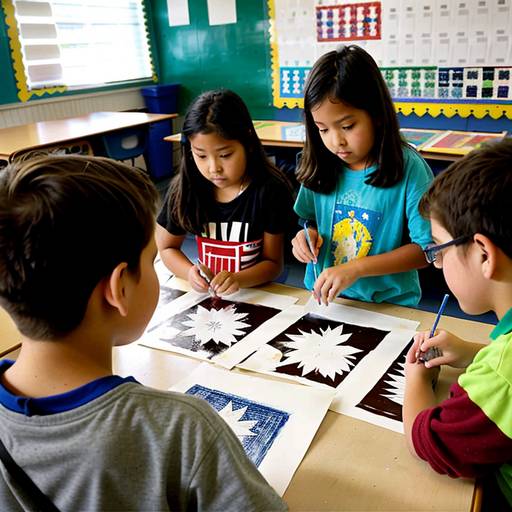
In this art lesson for 4th grade students, participants will explore the fundamentals of printmaking by creating their own stamps and using them to produce artistic prints that reflect personal stories or themes. The lesson is divided into two class periods.
During the first session, students will learn about printmaking techniques through discussion and demonstration. They will brainstorm ideas for their artwork and create sketches that focus on patterns and repetition. In the second session, students will transform their designs into stamps made from foam or potatoes, applying paint to print their creations onto paper.
The lesson emphasizes creativity, self-expression, and the narrative behind each student’s artwork. After printing, students will share their pieces with the class, discussing the themes and patterns present in their work. The teacher will assess students based on their participation, creativity, and craftsmanship, while providing feedback to encourage further interest in printmaking. Adaptations will be available for students with varying skill levels or physical disabilities to ensure inclusive participation in the art-making process.

In this 4th-grade science lesson plan, students will engage in exploring the solar system and understanding celestial bodies such as planets, moons, and stars. The lesson begins with a discussion about astronomy, followed by a short video that introduces the solar system. Students will learn about the order of the planets, their characteristics, and how they relate to Earth, as well as the importance of space exploration and key missions.
Following this introduction, students will work in small groups to research a specific planet or celestial body, creating informative posters that highlight its features and interesting facts. Each group will then present their findings to the class, fostering engagement and discussion. The lesson concludes with a recap of key concepts and an assignment for students to complete at home, illustrating significant milestones in space exploration.
Assessment will include participation in discussions, evaluation of group posters, and the completion of the take-home worksheet. The lesson offers opportunities for extensions, such as field trips or invitations to guest speakers, and encourages students to observe the night sky and document their findings in a personal journal.

This fourth-grade science lesson focuses on introducing students to the fascinating world of stars and constellations. It begins with an engaging discussion about what stars are and their essential role in the universe, covering their composition, lifecycle, and various types. Students learn to identify different kinds of stars, such as main-sequence stars, red giants, and white dwarfs, while also exploring constellations and their navigation significance. Through a guided mapping activity, students use star charts to locate and identify constellations, followed by a hands-on project where they create their own night sky on black construction paper, incorporating stickers and drawings to represent stars and constellations. The lesson culminates in sharing their creations and reflecting on their learning, alongside a homework assignment that encourages them to observe the night sky with an adult. Assessment includes evaluating participation and understanding during activities and reviewing the accuracy and creativity of their projects. The lesson supports differentiation, catering to various learning needs and encouraging further research for advanced learners.

This lesson plan for 4th-grade students focuses on astronomy, specifically the study of stars and constellations. It begins with engaging discussions about the nature of stars, including their composition and twinkling effect, followed by an exploration of various star types and their life cycles using visual aids. Students then identify and research different stars and constellations using star charts and online resources.
The creative component of the lesson allows students to design their own constellations on black construction paper, incorporating star stickers or dots and connecting them with lines or glitter. They will name their created constellations and describe their significance.
The lesson wraps up with a gallery walk where students present their projects to the class and reflect on their newfound knowledge. Assessment includes observational notes during activities and a review of the constellation creations. Additionally, suggestions for extensions, such as field trips and star-gazing nights, deepen students’ engagement with the topic. Overall, the lesson fosters both scientific understanding and creative expression related to the wonders of the night sky.
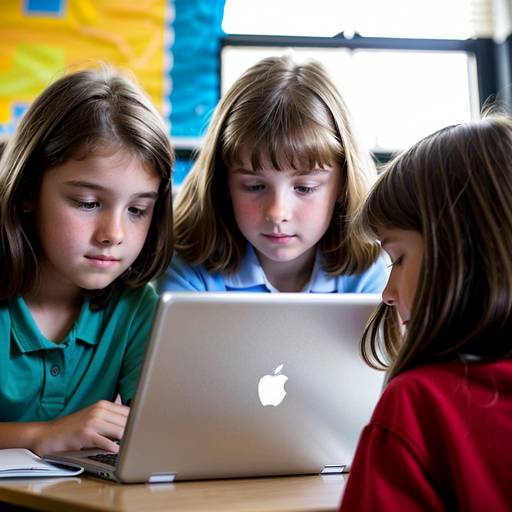
In this 4th-grade technology lesson, students will learn vital internet skills focused on protecting their privacy while online. The session will begin with a discussion about what constitutes safe information to share on the internet, leading to an exploration of digital footprints and the importance of keeping personal information private. Through interactive instruction, students will see how to navigate privacy settings on popular social media platforms.
Engaging in group activities, they will analyze various online scenarios to identify privacy risks and present their solutions. Each student will then reflect on their own online habits by completing a "Safe Browsing" checklist. The lesson wraps up with a recap and an opportunity for questions, reinforcing the importance of safe internet practices. Students may also have opportunities to extend their learning by creating digital posters on internet safety or inviting a guest speaker to discuss cyber safety. Overall, this lesson aims to equip students with the knowledge and tools needed for responsible online behavior.
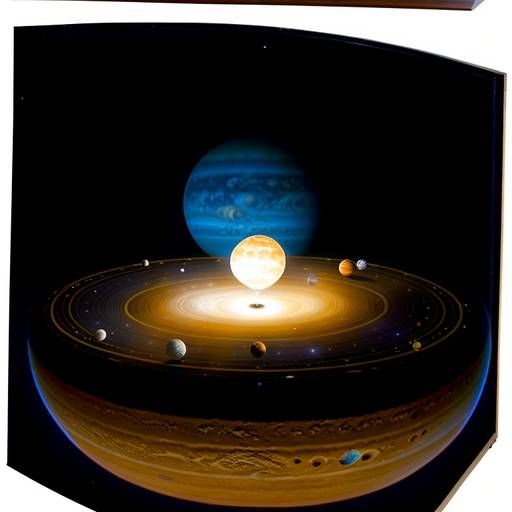
In this 4th-grade science lesson, students will explore the solar system, focusing on the Sun and the eight planets. The lesson begins with a discussion about what the students already know, followed by a brief video overview of the solar system. The teacher will introduce key concepts, including the Sun's crucial role and the order of the planets, while highlighting their unique characteristics.
Students will then work in small groups, each assigned a specific planet. Using provided fact sheets, they will create posters that include the planet's name, a drawing, interesting facts, and its relative position to the Sun. After completing their posters, groups will present their work to the class, allowing for peer interaction and questions.
To conclude the lesson, the class will sing a fun song that reinforces their knowledge of the planets. As an optional assessment, students may write a paragraph about their favorite planet, sharing why they find it interesting. The lesson encourages collaboration, creativity, and engagement with the subject matter, and provides opportunities for differentiation based on students’ varying levels of understanding.
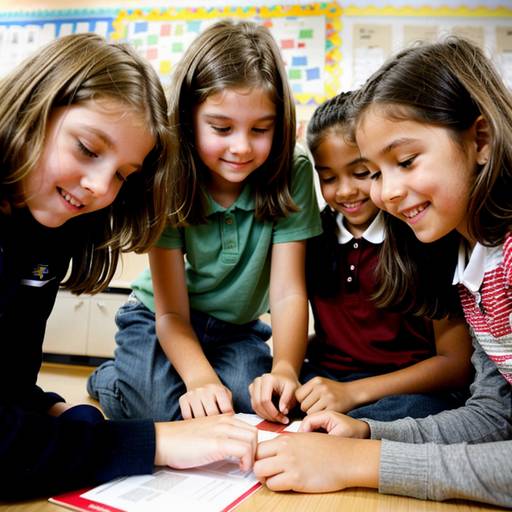
In this 4th-grade technology lesson, students explore the concept of digital footprints and the importance of digital citizenship. The lesson begins with a discussion about online sharing and its implications, followed by a short animated video to illustrate how digital footprints are created and the potential impacts of online behaviors.
Students then engage in a group activity where they create a "Digital Footprint Map," highlighting both positive and negative online actions. Each group presents their maps, fostering collaboration and peer learning. The lesson concludes with students receiving a checklist of best practices for maintaining a positive digital presence and a reflective writing prompt in their journals to commit to being responsible online citizens. Throughout the lesson, student participation, group work, and individual reflections are assessed to gauge understanding and engagement. A follow-up lesson is suggested for further exploration of online privacy and safety.

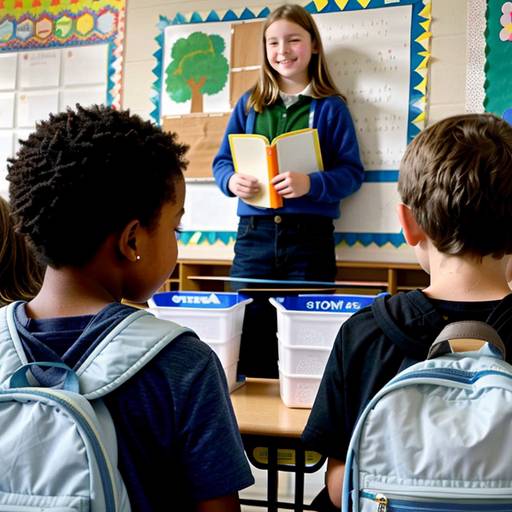
In this 4th-grade language arts lesson plan, students will explore the art of creative writing by focusing on the key elements of storytelling: character, setting, plot, conflict, and resolution. The lesson begins with a classroom discussion about favorite stories, followed by a review of story elements. Students will then work in small groups to brainstorm unique story ideas using a graphic organizer. They will choose one idea to develop into a short narrative, writing independently while receiving peer feedback during a sharing session. The lesson concludes with select students sharing their drafts with the class and reflecting on their writing experience. Assessment will include participation in activities, the completion of the graphic organizer, and evaluation of their short stories for creativity and the incorporation of story elements. Extensions include illustrating stories and presenting them in a storytelling festival, promoting further engagement with creative expression.
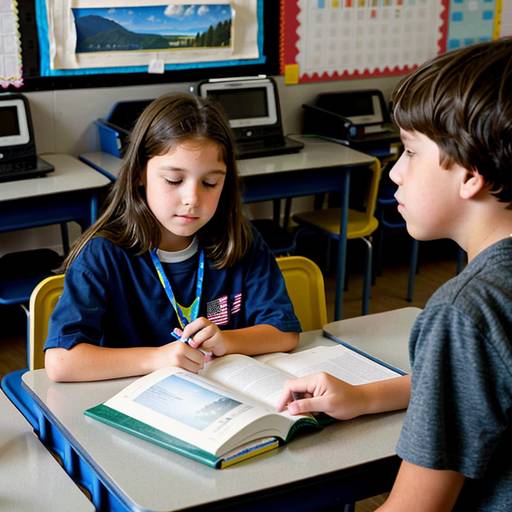
This lesson plan focuses on teaching 4th-grade students the fundamentals of multimedia creation and digital storytelling over the course of a week. Students will explore different elements of multimedia—such as text, images, sound, and video—and understand how these components come together to enhance storytelling.
Throughout five class sessions, they will engage in various activities, starting with brainstorming ideas and scriptwriting in pairs. They will then create storyboards and gather multimedia elements, ultimately using digital tools to craft their stories. The final class will involve presentations where each pair shares their creations with classmates, allowing for constructive feedback and discussion.
Assessment will be based on participation, the creativity and completeness of their digital stories, and a reflective writing assignment summarizing their experiences. The lesson also includes differentiation strategies to support various learners and offers extension activities to further community engagement.