
Filters
Level
Grade
Subject
Subject Area
Subject Topic
Standard(s)
Audience
Keyword
DurationMinutes
4th Grade Lesson Plans
This lesson plan is designed for 4th-grade students to explore robotics through hands-on activities and collaborative challenges over three days. It begins with an introduction to the fundamentals of robotics, where students discuss components and view videos showcasing various robots. They then form small groups to brainstorm and sketch their robot designs, fostering teamwork and creativity.
In the second session, students build their robots using kits and construction materials, while also learning to program basic commands to control their creations. They work collaboratively, assigning roles within their groups to enhance cooperation.
The final day focuses on a series of robotic challenges, where groups test their robots in tasks such as navigating mazes or racing. Teams present their designs and programming solutions while participating in a competitive environment that encourages problem-solving and critical thinking. Throughout the lesson, students reflect on their learning experiences, and their progress is assessed based on teamwork, creativity, and performance. Extension activities are available for further exploration of robotics. Overall, the plan aims to engage and inspire students in the field of technology and engineering.

In this engaging 4th-grade technology lesson, students explore the fundamentals of robotics and programming through hands-on activities. Pairs of students work together to build simple robots using a robotics kit, learning about key components such as sensors and motors. After constructing their robots, they dive into a programming software to create basic commands that control their robots' movements.
The class sets up an obstacle course where students test their robots, adjusting their programming to overcome challenges successfully. Throughout the lesson, valuable skills such as collaboration, problem-solving, and critical thinking are emphasized as students navigate obstacles and share their experiences. The session culminates in a reflection, where students discuss their learnings, fostering a deeper understanding of robotics and its applications. Extensions include more complex programming challenges and a showcase event, promoting further exploration of technology.
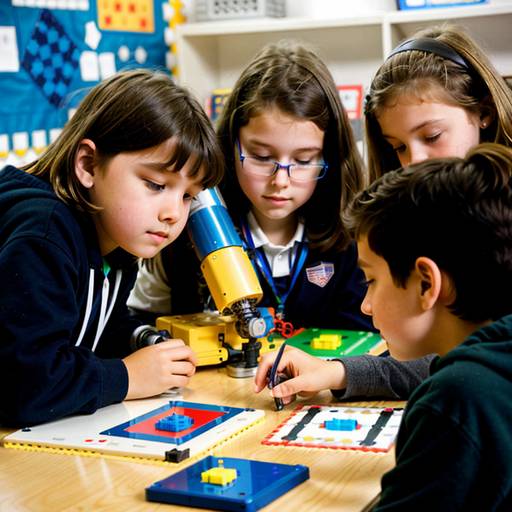
In this 4th-grade technology lesson focused on robotics, students will learn about basic robot components and their functions while engaging in hands-on design and engineering. The lesson is divided into two sessions. During the first session, students will discuss what robots are, work in teams to brainstorm and create a design for a robot that can navigate an obstacle course, and use design thinking worksheets to plan their projects.
In the second session, students will build their robots using kits, followed by programming them with introductory software to perform specific tasks. After constructing their robots, students will test them on the obstacle course, encouraging iterative improvements based on performance. Assessment will focus on teamwork, creativity in design, and the effectiveness of the robot during the challenge.
The lesson promotes critical thinking, problem-solving, and collaboration, offering an interactive introduction to robotics and programming concepts, while optional extensions allow for further challenges for advanced learners. Finally, students will reflect on their experiences, sharing insights about teamwork and the building process.
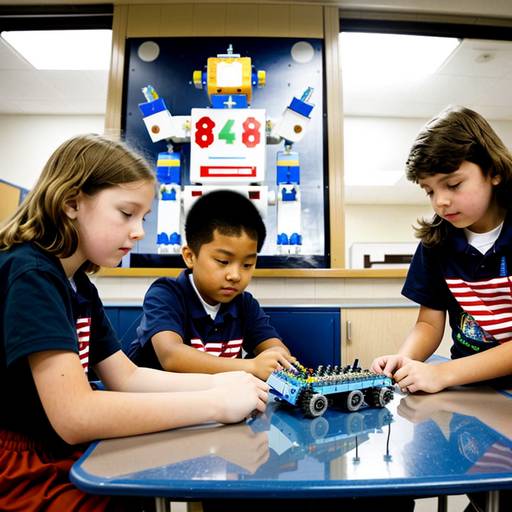
In this comprehensive lesson plan designed for 4th-grade students, learners will explore the world of robotics through engaging hands-on activities. The lesson spans multiple class periods and focuses on building and programming robots to tackle various challenges. Students will begin by learning about the basic components of robots and how they operate, followed by brainstorming sessions in groups to design their own robotic creations.
Over the course of the lesson, students will work collaboratively to construct robots using LEGO kits while incorporating essential programming skills to navigate their robots through assigned tasks. As they test and refine their robots, students will develop critical problem-solving and teamwork skills.
In the final stage, students will participate in robot challenges, showcasing their projects to the class and reflecting on their experiences and learning outcomes. The lesson encourages creativity and exploration of real-world applications of robotics while fostering collaboration and critical thinking among students. Assessments will include observation of group dynamics, the effectiveness of the robots in performing designated tasks, and reflective written submissions on the learning process.

This lesson plan is designed for 4th-grade students and spans three class sessions focused on robotics and programming. It begins with an introduction to robotics, helping students understand what robots are and their various applications in the real world. Students learn basic programming concepts through hands-on activities using visual programming languages, which prepares them for building and programming their own robots in subsequent sessions.
In the second session, students collaborate in small groups to design and build their robots based on a specific task challenge, emphasizing teamwork and communication skills. The final session emphasizes programming, where students apply their programming knowledge to code their robots to perform the tasks they envisioned.
The culminating activity features a friendly competition, showcasing each group’s robot and its capabilities. This plan integrates problem-solving, creativity, and collaboration, while also providing opportunities for student reflection and assessment of their understanding of robotics and programming. Extensions for interested students include optional after-school club meetings and sharing their projects with a broader community.


In this 4th-grade Earth Science lesson, students will explore the three main types of rocks: igneous, sedimentary, and metamorphic. They will learn how each type is formed and gain an understanding of the rock cycle through visual aids and a short video presentation.
The lesson includes a hands-on activity where students work in small groups to classify a variety of rock samples using identification charts and hand lenses. They will observe the physical characteristics of the rocks and document their findings on worksheets.
After sharing their discoveries in a group discussion, the class will review the key concepts learned about the rock cycle and the processes of erosion, cooling, and metamorphism. The lesson emphasizes engagement through observation, teamwork, and discussion while facilitating student understanding of Earth's geology. Assessment will include reviewing students' worksheets and monitoring their participation during group activities.
Extensions to deepen learning may include creating a mobile to illustrate the rock cycle or planning a field trip to observe geological features in nature. Post-lesson reflections will help assess the effectiveness of the instruction and gather student feedback for future improvements.

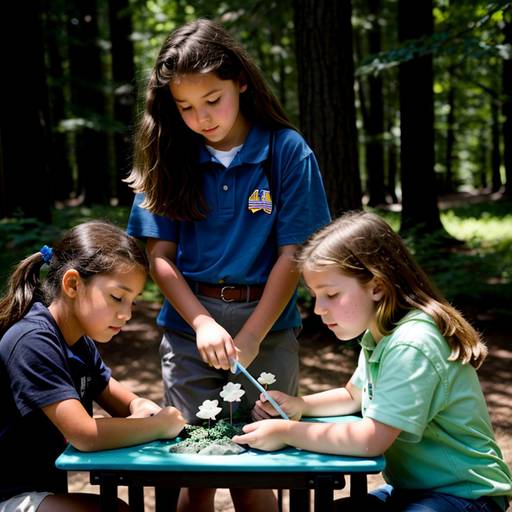
In this 4th-grade art lesson, students will delve into the world of ceramics by creating clay sculptures inspired by various plants and animals. The lesson spans two class periods, beginning with an introduction to the significance of ceramics in different cultures and an exploration of textures and forms in nature. Students will brainstorm and sketch their ideas before starting to sculpt their chosen flora or fauna, focusing on detail and form.
During the second class, students will finalize their sculptures and learn about painting and glazing techniques. They will apply their understanding of color and texture as they enhance their creations. The lesson culminates in a gallery walk where students can share their work with peers and reflect on the artistic process. This project fosters creativity, observation skills, and an appreciation for the natural world, integrating art with elements of science.
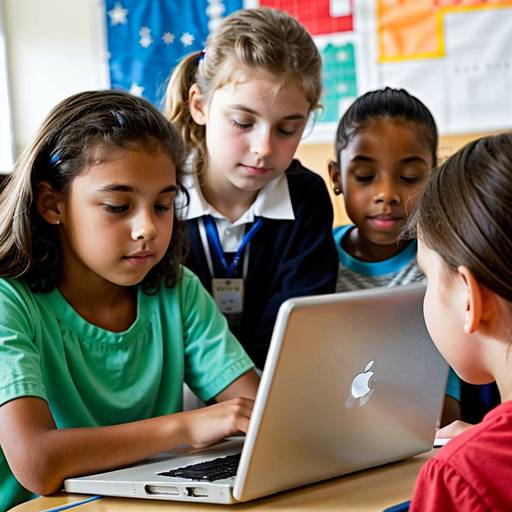
In this 60-minute technology lesson, 4th-grade students will gain essential internet skills focused on effectively using search engines. The lesson begins with an engaging discussion about students' existing knowledge of the internet, followed by a demonstration of how to perform basic searches and utilize advanced techniques such as using quotation marks and site-specific searches. Students will then participate in a hands-on activity, working in pairs to research assigned topics and document their findings on a worksheet that includes evaluating the credibility of websites. After sharing their discoveries with the class, students will solidify their understanding through a brief quiz. The lesson emphasizes safe internet practices and digital literacy, providing students with practical skills they can use for future research projects. Additionally, extensions are suggested to encourage further exploration and application of their new skills.

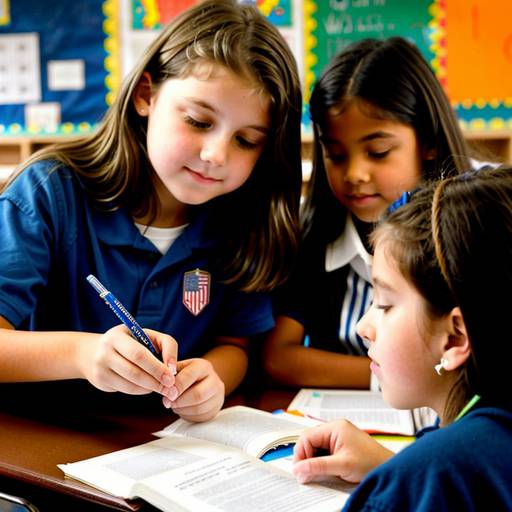
In this 4th-grade Language Arts lesson, students will explore the essential components of sentence structure, including subjects, predicates, and objects. The lesson begins with a discussion on what constitutes a complete sentence, followed by direct instruction on different sentence types and their structures. Students will engage in guided practice by working in small groups to create sentences using provided word cards, fostering creativity and collaboration. For independent practice, they will combine simple sentences into more complex forms, illustrating one of their creations. The lesson concludes with a sharing session to reinforce learning and community building. Assessment will include observation during group activities and the evaluation of worksheets to measure understanding and creativity. Differentiation strategies will be employed to support diverse learners, and extensions will be offered for those ready to delve deeper into sentence structure. Overall, this lesson aims to enhance students' writing skills and their ability to express thoughts clearly.
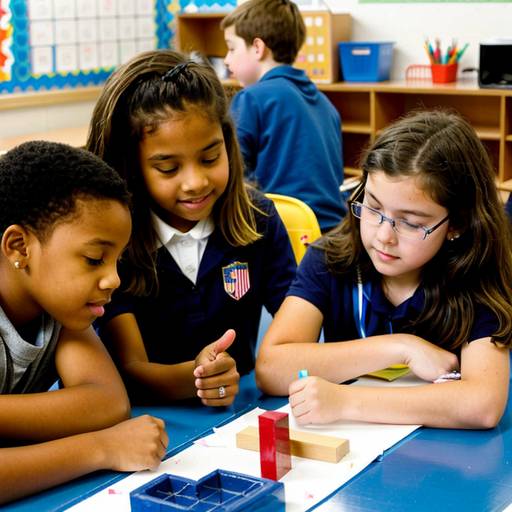
In this 4th-grade language arts lesson, students will explore the fundamentals of grammar and sentence structure to enhance their communication skills. The lesson begins with a discussion about the importance of clear communication, followed by a review of complete sentences and the different types of sentences: simple, compound, and complex. Students will engage in group activities to transform simple sentences into more complex forms, reinforcing their understanding of subjects, predicates, and conjunctions. After collaborative practice, students will complete individual worksheets where they identify sentence parts, rewrite sentences, and create their own examples. The lesson concludes with reflection and an exit ticket to assess their learning. Throughout the session, students will be encouraged to think critically about how sentence structure impacts clarity and creativity in writing. Differentiation strategies are included to support diverse learners.