
Filters
Level
Grade
Subject
Subject Area
Subject Topic
Standard(s)
Audience
Keyword
DurationMinutes
4th Grade Lesson Plans

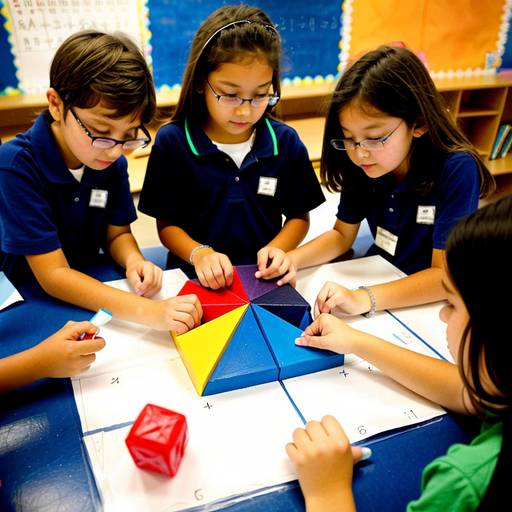
This 4th-grade math lesson focuses on identifying and describing three-dimensional shapes, including cubes, spheres, cylinders, cones, and pyramids. The lesson begins with an engaging discussion about shapes found in the students’ environment, followed by direct interaction with geometric solids in small groups. Students will explore the properties of these shapes by counting edges, vertices, and faces and will create visual charts to support their findings.
After presenting their charts to the class, students will participate in a scavenger hunt around the classroom or school to find real-world examples of the shapes learned. The lesson concludes with a worksheet assessment that tests their understanding of the concepts introduced.
Throughout the session, there are opportunities for differentiation to meet the diverse needs of learners, and extensions are suggested to engage students further. Overall, the lesson combines hands-on activities, collaborative learning, and real-life applications to help students grasp the essentials of 3D geometry comprehensively.

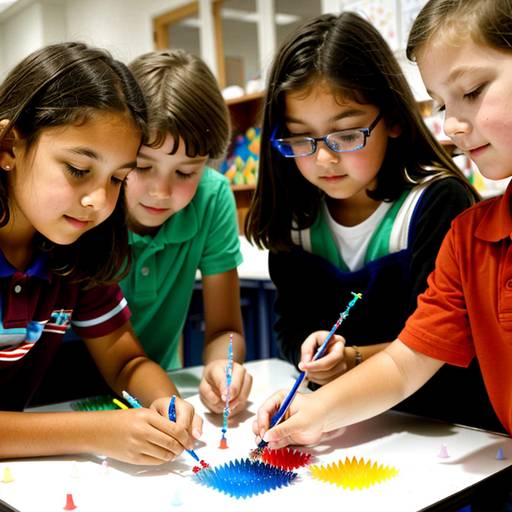
This lesson plan for 4th-grade students focuses on exploring the art form of glass, highlighting its history and significance. The plan spans two class sessions, during which students engage in discussions about various forms of art and learn about famous glass artists and their works.
In the first session, students create their own glass-inspired artwork using colorful cellophane and cardstock to mimic stained glass windows. They are encouraged to express their creativity while developing their fine motor skills.
The second session involves students finishing their projects and displaying them under a light source to see how the colors and designs change. A reflection discussion allows for sharing thoughts and experiences related to the project, fostering a deeper understanding of glass art and its impact.
Assessment is based on student engagement, effort, and creativity, while extension activities may include field trips or guest artist visits. Overall, the plan is designed to inspire appreciation for a unique art medium while encouraging self-expression.
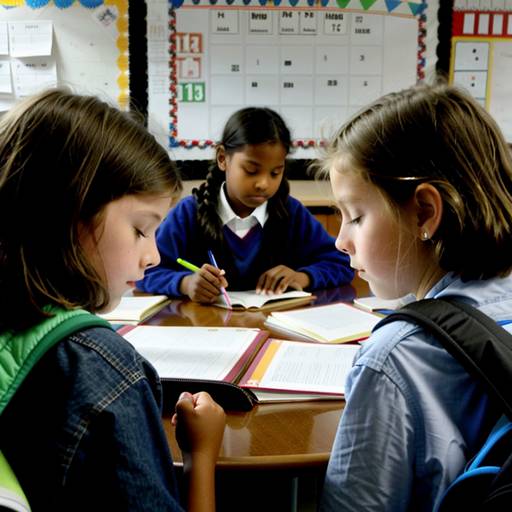
In this 4th-grade math lesson, students will explore the concept of time and the significance of time zones. They will learn how to measure time and understand the geographical divisions that cause different areas to have varying local times. The lesson begins with a discussion of students' personal experiences with time differences, followed by direct instruction on how to read time on a clock and convert times between different zones using a world map.
During guided practice, students will work on worksheets to reinforce their understanding of time zone conversions. Following this, they will be divided into small groups, where they will research specific cities from different time zones and create presentations that highlight current local times and cultural activities. The lesson concludes with a recap and a homework assignment focused on further practice with time conversions.
Assessment will be based on class participation, the completion of worksheets, and the quality of group presentations. Extensions will encourage students to engage with the concept of time through tracking their daily schedules and contributing to a classroom "world clock" bulletin board. This comprehensive approach aims to make the concept of time zones relatable and applicable to students’ lives.

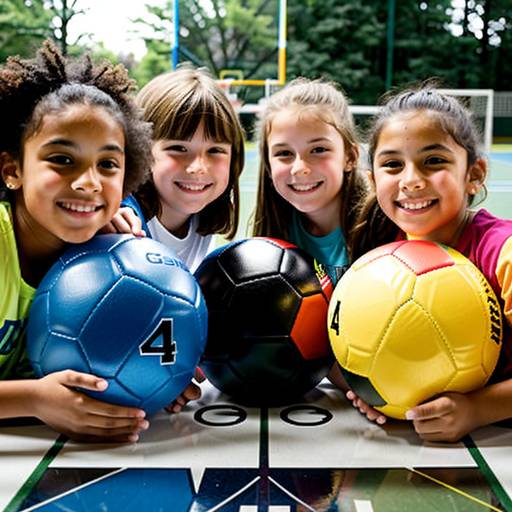
This physical education lesson plan for 4th graders focuses on developing fundamental soccer skills such as dribbling, passing, and shooting while emphasizing teamwork and sportsmanship. The session begins with a dynamic warm-up and a fun relay to engage students. Students then rotate through skill stations, practicing dribbling through cones, pairing up for passing drills, and taking shots on goal. The lesson culminates in small-sided scrimmage games, allowing students to apply their skills in a team setting. A cool-down period follows, during which students reflect on their experiences and challenges faced throughout the activities. The lesson aims to foster collaboration and enjoyment in soccer, while also encouraging physical fitness and skill development. Safety measures are integrated, and extensions for continued learning are suggested, including video analysis of professional soccer techniques.

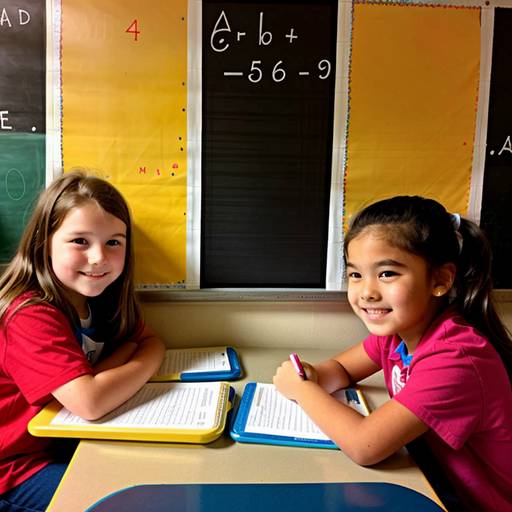
In this 4th-grade language arts lesson focused on grammar and capitalization, students will learn the essential rules for using capital letters correctly. The lesson begins with an engaging discussion about the importance of capitalization, followed by an overview of key rules, including the capitalization of the first word in a sentence, names, titles, and specific nouns. Through guided practice, students analyze and correct capitalization errors in a provided passage, fostering collaborative learning.
Following this, they will independently write sentences about their own adventures, making sure to apply the capitalization rules. Peer review will allow students to give and receive feedback on their use of capitalization. The class will conclude with a sharing session, summarizing the key concepts covered. Assessment will be based on students' participation during the practice activities and the accuracy of their written sentences, with strategies included for varying levels of student understanding. Optionally, students may complete homework that reinforces their learning through reading and identifying capitalized words in texts.
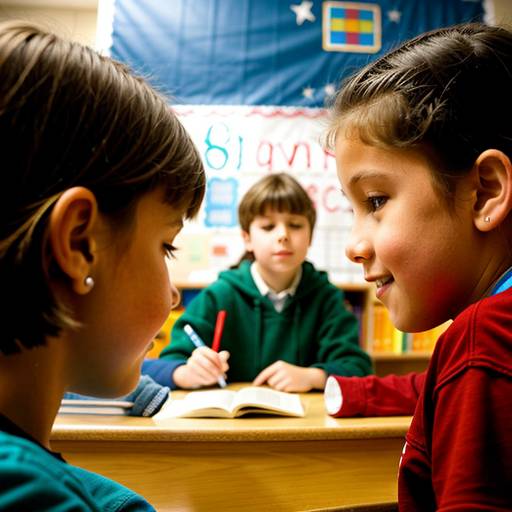
In this 4th-grade Language Arts lesson, students will explore the basics of grammar, focusing on nouns, verbs, and adjectives, as well as proper punctuation marks such as periods, question marks, and exclamation points. The lesson begins with a discussion on the importance of grammar and punctuation, illustrated with examples that highlight how these elements can change the meaning of sentences.
Following direct instruction, students will engage in a group activity where they work together to build creative sentences using provided words, ensuring correct grammar and punctuation usage. Each group will present their sentences to the class, allowing for peer feedback. Afterward, students will complete an independent worksheet that reinforces the concepts learned.
The lesson concludes with a brief review, encouraging students to reflect on their new knowledge, and it offers a creative homework assignment where they will apply what they've learned by writing a short story. Throughout the lesson, students are guided to collaborate, think critically about language use, and express their creativity while enhancing their grammar and punctuation skills.

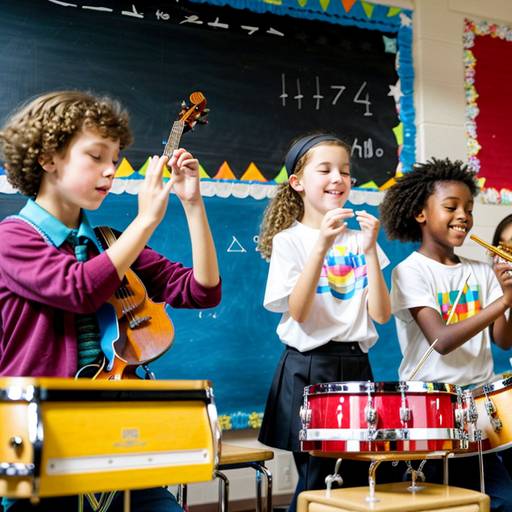
In this 4th-grade music lesson, students will explore fundamental concepts of music theory, focusing on rhythm and note values. The lesson begins with a rhythm echo exercise to engage students and introduce the importance of rhythm in music and everyday life. Students will learn about basic note values—whole notes, half notes, quarter notes, and eighth notes—through visual aids and clapping exercises.
Following this introduction, students will work in small groups with percussion instruments to create and rehearse their own rhythmic patterns, combining at least two different note values. Afterward, the class will unite to form a "Rhythm Band," performing their patterns together over a steady background beat, emphasizing collaboration and the layering of rhythms.
To conclude, students will reflect on their learning experience, discussing the significance of rhythm in music and teamwork. They will be encouraged to practice rhythm patterns at home, reinforcing their understanding of the concepts taught. Assessment will involve observing group dynamics, listening to performances, and a short worksheet on note values and rhythm creation. This interactive approach aims to enhance students' musical skills and foster creativity.
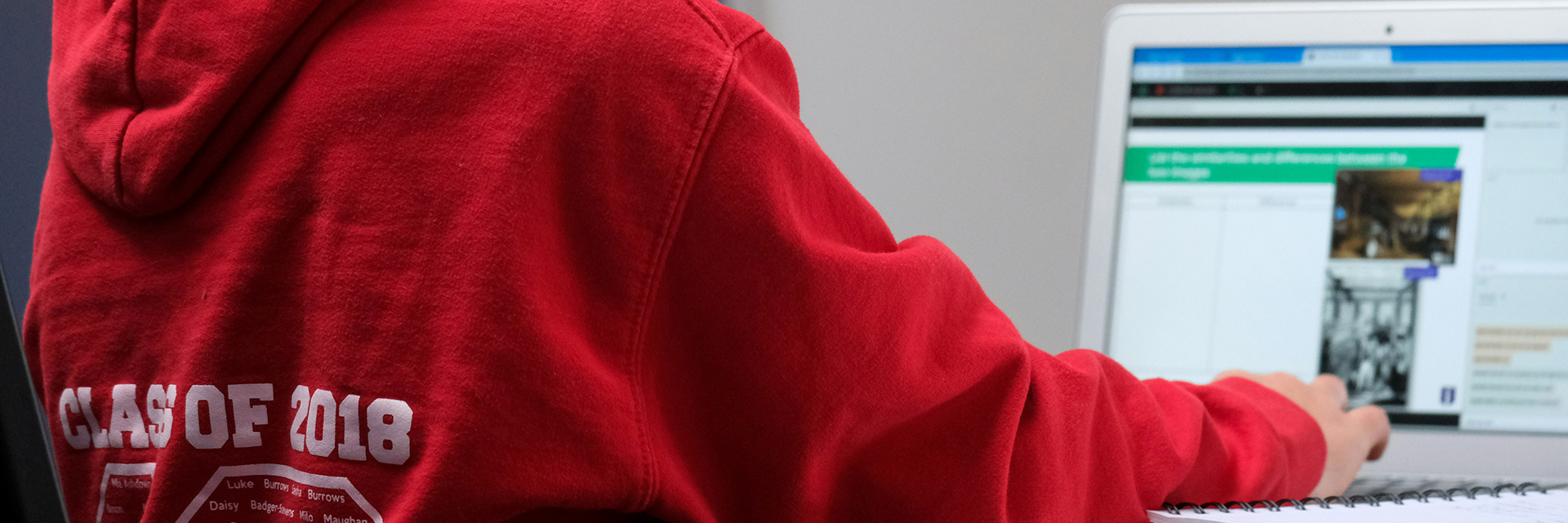

This lesson plan is designed for 4th-grade students to explore the concepts of digital citizenship and privacy protection in an engaging manner. The session begins with an interactive discussion about students' online activities and introduces key terms related to responsible technology use. Through a presentation and group discussions, students learn about the importance of privacy and how to recognize safe online behavior.
Students then work in small groups to analyze various online scenarios, determining which actions are safe and which may pose privacy risks. Afterward, they create informative posters that convey an aspect of digital citizenship or privacy protection, fostering creativity and reinforcing their understanding. The lesson concludes with reflective journaling, where students consider how they will apply their newfound knowledge both at school and at home. Assessment is based on participation, group contributions, and poster quality, with extensions available for further learning. Overall, the lesson emphasizes the shared responsibility of being a good digital citizen.
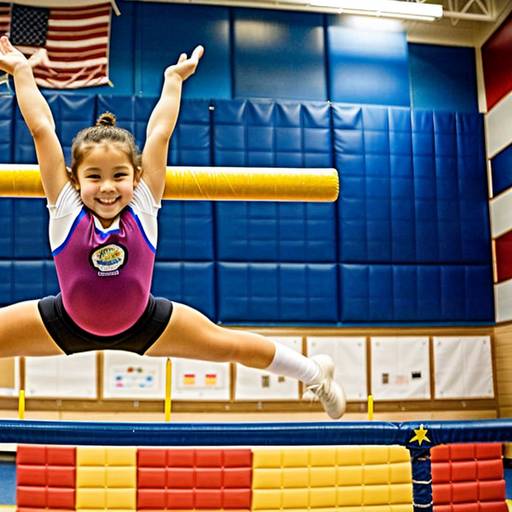
This 4th-grade physical education lesson focuses on developing balance and coordination through engaging gymnastics and sports activities. The session begins with an introduction to the importance of these skills in both sports and gymnastics, followed by a warm-up that includes dynamic stretches and aerobic movements to prepare students for physical activity.
Students participate in a balance beam activity, where they practice walking across the beam in various directions to improve their balance. The lesson then transitions to coordination stations, where students rotate through several activities, including hula hooping, jump roping, and weaving through cones. Each station emphasizes different coordination skills and encourages students to challenge themselves.
In the final segment, students work in groups to create simple gymnastic routines that incorporate balance movements, coordination components, and creative movements, which they then present to the class. The lesson concludes with a cool-down session that focuses on deep breathing and gentle stretching to relax the muscles.
Assessment is carried out through observation of students' performance and their ability to work cooperatively during routines. The lesson emphasizes teamwork, creativity, and the importance of trying new skills while reinforcing fundamental movement concepts.
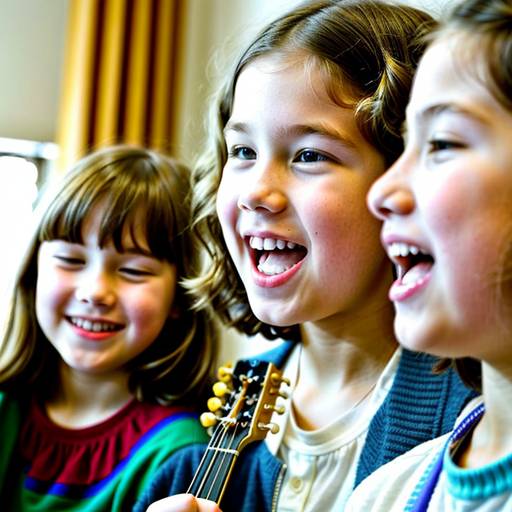
In this 4th-grade music lesson, students will explore the concept of harmony through vocal exercises and collaborative singing. The class will begin with vocal warm-ups and a discussion on harmony, including examples of songs that feature this musical element. Students will learn to sing in two parts—soprano and alto—by practicing a simple round, initially in unison and then in parts. Afterward, they will work in small groups to create their own melodies or lyrics, allowing for creative expression and teamwork. The lesson will conclude with performances of their creations and a reflection on the experience of singing in harmony. Students' participation and collaboration will be assessed throughout the session, promoting a fun and engaging environment for discovering the joys of music together.