
Filters
Level
Grade
Subject
Subject Area
Subject Topic
Standard(s)
Audience
Keyword
DurationMinutes
4th Grade Lesson Plans


This 4th-grade math lesson focuses on helping students understand fractions as parts of a whole and applying this knowledge to solve real-world word problems. The lesson begins with a review of fractions and an introduction to fractional word problems through engaging class discussions. Students participate in guided practice as they collaboratively solve sample problems using visual aids like fraction circles.
They then move on to independent practice with worksheets featuring a variety of fraction word problems, giving them an opportunity to apply their learning. The lesson concludes with a sharing session where students present their solutions, thereby reinforcing their understanding through peer interaction. Assessment is based on participation and accuracy in solving problems, with follow-up activities available for early finishers. Overall, the lesson aims to enhance students' comprehension of fractions and their practical applications through interactive and collaborative learning experiences.
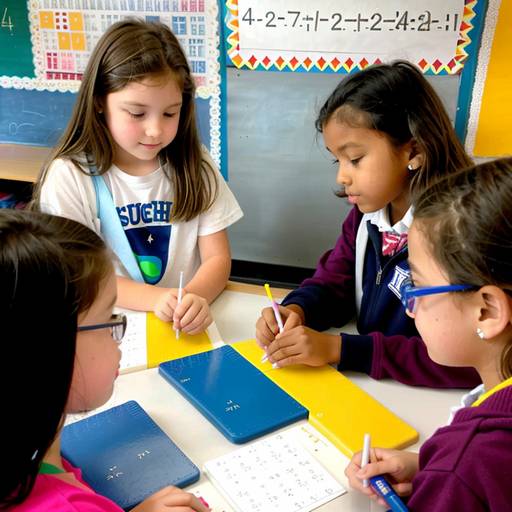
This lesson plan is designed for 4th grade students and focuses on the concept of subtracting fractions with like denominators. The lesson begins with a review of fractions and an introduction to subtraction using visual aids such as fraction circles or bars. Students learn to subtract fractions by focusing on the numerators while keeping the denominators constant, followed by a demonstration with examples and guided practice in pairs. Independent practice allows students to work on fractional subtraction problems, including word problems related to real-life scenarios. The class concludes with a review of key concepts and student sharing of their solutions, providing an opportunity for assessment and addressing any lingering questions. Differentiation strategies are employed to support diverse learning needs, and a homework assignment reinforces the day’s learning by combining practice with real-world applications.
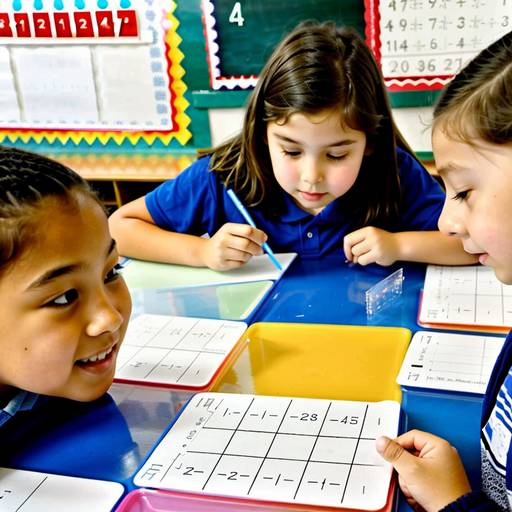
This 4th-grade math lesson plan focuses on teaching students about fractions, particularly how to compare and order them. The lesson begins with an introduction to the concept of fractions using visual aids, helping students understand their representation as parts of a whole. Direct instruction includes methods for comparing fractions using visual models, common denominators, and benchmark fractions.
During guided practice, students work in small groups with manipulatives to compare different fractions and discuss their findings. Independent practice involves completing worksheets that require ordering and comparing various fractions. The lesson concludes with a class review of key concepts and student sharing.
Assessment is conducted through observation and worksheet evaluation to gauge understanding, while extensions are available for advanced students, and modifications cater to those needing additional support. This comprehensive approach ensures that students engage with and deepen their understanding of fractions.
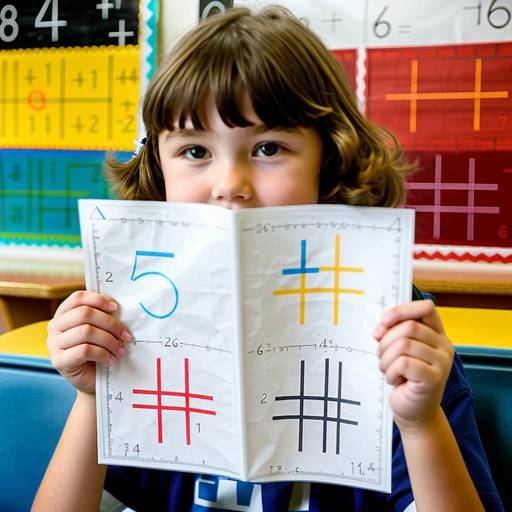
This 4th-grade math lesson focuses on introducing students to the concept of fractions and specifically how to add fractions with like denominators. The lesson begins with a visual and engaging hook using familiar concepts, such as pizza, to capture students' interest in fractions. Direct instruction follows, where the teacher explains the addition of fractions step-by-step, using clear examples on the whiteboard.
Students then participate in a group activity using manipulatives, enabling them to visually and physically combine fractions. This hands-on approach reinforces their understanding of adding fractions. After working collaboratively, students move to independent practice through a worksheet that includes a variety of addition problems and word problems involving fractions.
The lesson concludes with a class discussion to review key concepts, and students complete an exit ticket that captures their learning. Throughout the lesson, the teacher assesses student understanding via observation and worksheet performance, providing differentiated support where necessary to address varying skill levels. Overall, the objective is to enhance students' grasp of fractions and their ability to add them effectively in both academic and real-life contexts.

This 4th-grade math lesson focuses on understanding fractions and solving related word problems. Students will begin with a review of fractions, discussing their definitions and examples while utilizing visual aids. The lesson will introduce fraction word problems, guiding students through a sample problem to demonstrate how to identify the whole and the part consumed, ultimately calculating the remaining fraction.
Following direct instruction, students will work in small groups to collaboratively solve provided fraction word problems, using visual representations to aid their understanding. After this guided practice, students will complete an independent worksheet featuring various fraction word problems, demonstrating their problem-solving skills and understanding of the concepts.
The lesson concludes with a review, allowing students to share their answers and reflect on what they learned, while an exit ticket prompts them to express one takeaway and one question they still have. Assessments will include monitoring group work, reviewing worksheet responses, and addressing questions through exit tickets, paving the way for future lessons on adding and subtracting fractions with like denominators.
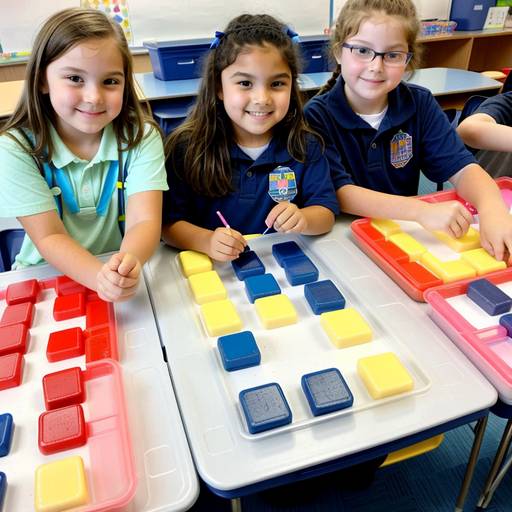
This lesson plan focuses on helping 4th-grade students understand fractions and identify equivalent fractions. The lesson begins with an engaging question about fractions using a relatable example, setting the stage for the learning objectives. Students are introduced to the basic concepts of fractions, including numerators and denominators, followed by an explanation of equivalent fractions with visual aids.
In the guided practice section, students create equivalent fractions using paper plates, allowing them to visually see and record their findings. An independent practice worksheet reinforces their understanding by challenging them to identify and create equivalent fractions on their own. The lesson concludes with a review of key concepts and an optional bingo game that serves as a fun way to assess their comprehension.
Extensions are provided for advanced learners, while additional support strategies are suggested for those who may struggle with the material. The teacher will reflect on the effectiveness of the lesson, considering student engagement and understanding for future improvements. Overall, the lesson integrates hands-on activities, visual aids, and collaborative learning to foster a solid grasp of fractions and equivalency.

In this 4th Grade mathematics lesson, students will explore the concept of symmetry through engaging activities that promote understanding and creativity. The lesson begins with a discussion about symmetry, using everyday examples to help students grasp the idea of mirror images and lines of symmetry. Through direct instruction, students will examine various geometric shapes, identifying those with symmetry and counting their lines of symmetry.
During guided practice, students will create their own shapes and adjust them to ensure symmetry, fostering collaboration as they compare their designs with a partner. For independent practice, they will engage in a hands-on symmetrical art project, using colored paper and scissors to produce visually appealing patterns that reflect symmetry.
The lesson concludes with a sharing session, allowing students to showcase their artwork and reflect on what they’ve learned about symmetry in both their designs and in the world around them. Throughout the lesson, assessments will be based on participation and the understanding demonstrated in their creative projects, with accommodations and extensions provided to meet diverse learning needs.

In this 4th-grade technology lesson, students will explore the essential practices of device maintenance and organization, focusing on the care and tidiness of digital devices. The lesson begins with a discussion on the importance of maintaining clean and organized workspaces, followed by direct instruction on common device issues, cleaning techniques, and the significance of software updates.
Students will participate in a group activity where they will create a "Device Care Checklist," brainstorming additional tips for keeping devices in good condition. Hands-on practice at various stations will allow them to clean devices, organize physical accessories, and manage digital files effectively.
The lesson concludes with a reflection on key takeaways and an exit ticket assignment, prompting students to share one maintenance tip and one organizational tip they learned. Assessment will be based on participation in activities, contributions to the checklist, and the understanding demonstrated in exit tickets. Differentiation strategies will support varying learning needs, and a follow-up plan encourages students to apply these skills regularly in their classroom environment.


This lesson plan is designed for 4th-grade students to explore the solar system and its various celestial bodies. Over two class periods, students will first learn about the planets, the Sun, and other components of the solar system through group research and presentations. Each group will present key facts about their assigned planet or celestial body, promoting engagement and discussion among classmates.
In the second class, students will create a scaled model of the solar system using materials like styrofoam balls and paint. This hands-on activity will emphasize the concept of scale, enabling students to visualize the relative sizes and distances of the planets. Throughout the lesson, students will enhance their understanding of astronomy while developing teamwork, research, and hands-on skills. Assessment will focus on participation, the quality of presentations, and the completed solar system models. Extensions and differentiation strategies are also included to accommodate various learning needs.
In this 4th-grade mathematics lesson, students will explore the concepts of geometry and symmetry through interactive activities. The lesson begins with a discussion to activate prior knowledge and introduce key vocabulary related to symmetry and geometric shapes. Students will learn to draw basic geometric shapes and identify lines of symmetry using mirrors to visualize reflective symmetry.
Following direct instruction, students will engage in guided practice by drawing symmetrical shapes on graph paper and adding creative designs. They will then work independently to create patterns using their drawn shapes, reinforcing their understanding of symmetry through hands-on exploration. Students will have the opportunity to share their creations with the class, discussing the symmetrical elements in their work.
Assessment will be based on participation and understanding demonstrated during activities, as well as an exit ticket requiring students to draw and label a symmetrical shape. The lesson includes differentiation strategies and extensions, such as a symmetry scavenger hunt, to cater to various learning needs and interests. Overall, the lesson aims to deepen students' understanding of geometric concepts while fostering creativity and critical thinking.