
Filters
Level
Grade
Subject
Subject Area
Subject Topic
Standard(s)
Audience
Keyword
DurationMinutes
3rd Grade Math Lesson Plans

This 3rd grade math lesson focuses on money and budgeting, helping students learn about identifying U.S. coins and bills, as well as adding and subtracting money amounts. The lesson begins with an engaging discussion about the purpose of money and includes interactive activities where students practice using play money to make exchanges and calculate change.
Students will work in small groups to create a budget based on a given scenario, making decisions about spending while prioritizing needs versus wants. Each group will then present their budgets to the class, discussing their choices and what they learned about responsible spending. The lesson concludes with a reflection on budgeting skills and an exit ticket to reinforce key concepts.
Overall, the lesson aims to provide students with essential financial literacy skills through dynamic, hands-on learning experiences.
This math lesson for 3rd graders focuses on teaching subtraction through an engaging and interactive treasure hunt activity. Students will begin by reviewing fundamental subtraction concepts and strategies, using manipulatives and number lines to visualize the process. Following a mini lesson, they will be divided into small groups to solve subtraction problems that lead them to concealed treasures around the classroom. This collaborative effort encourages teamwork as they work together to find the answers, share their strategies, and help each other through challenges.
At the end of the activity, students will reflect on their experiences and the skills they learned, with a small prize awarded to each participant to reinforce their achievements. The lesson aims not only to enhance subtraction skills but also to foster a sense of community and collaboration among students while providing a fun and memorable learning experience.
This lesson plan for 3rd-grade students focuses on the concept of subtraction, aiming to enhance their understanding and application of this fundamental math skill. The lesson begins with an engaging introduction using a countdown song to capture students' interest. It incorporates manipulatives to help visualize subtraction problems, allowing students to physically experience the "taking away" concept.
Guided practice involves solving problems together as a class, followed by independent worksheets where students can work individually or in pairs. An interactive relay race activity fosters teamwork and reinforces learning by having students solve various subtraction problems across different stations. The lesson concludes with a brief review, encouraging students to share their experiences and understanding, and rewarding participation with stickers or stamps.
Assessment during the lesson includes observing student engagement and reviewing worksheet answers, with modifications and extensions available to accommodate varying levels of understanding. Overall, this lesson provides a dynamic and interactive approach to mastering subtraction in real-world scenarios.
This lesson plan for 3rd grade focuses on teaching subtraction through engaging activities that incorporate real-world scenarios. Students will explore the concept of subtraction with numbers up to 100, beginning with a story that introduces the topic in a relatable way. The lesson includes direct instruction, where the teacher demonstrates basic subtraction using visual aids and manipulatives.
Students will then participate in guided practice with partners, working on subtraction worksheets and utilizing counters to reinforce their understanding. The independent practice segment features a board game that allows students to apply subtraction in a fun, interactive format. The lesson concludes with a wrap-up discussion to reflect on what they have learned and an exit ticket task where students create their own subtraction problems. Overall, the lesson emphasizes collaboration, problem-solving, and critical thinking skills while ensuring all students are actively engaged in the learning process.
In this engaging third-grade math lesson, students will explore the concept of subtraction through interactive activities and teamwork. The lesson begins with a brief introduction to subtraction, using visual aids and examples to reinforce the concept. Following this demonstration, students participate in a competitive race where they work in small teams to solve subtraction problems at various stations set up along a course. Teams must collaborate to correctly answer each problem before advancing to the next station, fostering both problem-solving skills and cooperation.
As the lesson concludes, students gather to discuss their strategies and reflect on the importance of teamwork in math. They will also complete worksheets that reinforce the subtraction concepts learned during the race. Assessment will occur through observation of student participation and by reviewing worksheet answers. The lesson wraps up with a celebration of effort, awarding small prizes to the winning team while encouraging further practice of subtraction at home. Extension activities will be available for students ready to advance their skills. Overall, this lesson aims to make subtraction fun and engaging while supporting collaboration and problem-solving.
The lesson focuses on teaching 3rd-grade students the concept of addition with regrouping. It begins with an engaging discussion to introduce the idea of carrying over when adding larger numbers. The instructor demonstrates the process using an example on the whiteboard, emphasizing the steps involved in regrouping and utilizing base ten blocks for better visualization.
Students then work in pairs to practice similar addition problems, with guidance provided as needed. Following collaborative practice, each student completes an independent worksheet to reinforce their understanding of regrouping.
The lesson concludes with a reflective sharing session, wherein students express what they learned about the topic. An engaging game is introduced to allow students to further apply their skills in a fun and competitive manner. Assessment throughout the lesson involves monitoring participation, collecting worksheets for review, and evaluating student comprehension through sharing sessions. Accommodations for varying learning needs are included, ensuring all students can successfully engage with the material.
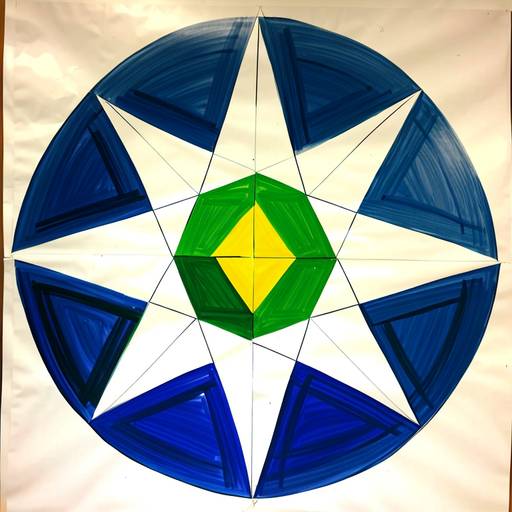
In this 3rd-grade math lesson, students will explore the concepts of geometry and symmetry through interactive activities and hands-on experiences. The lesson begins with a warm-up discussion where students share their understanding of symmetry and identify symmetrical objects in their environment. The teacher will review basic geometric shapes—circle, square, triangle, and rectangle—emphasizing their properties and demonstrating how to find lines of symmetry using drawings and, optionally, a mirror.
In guided practice, students will create their own geometric shapes on construction paper, draw their lines of symmetry, and collaborate with a partner to discuss their findings. For independent practice, students will design symmetrical creations using colored construction paper, ensuring their designs reflect symmetry through careful arrangement of shapes.
The lesson concludes with students presenting their symmetrical designs to the class, reinforcing their understanding through verbal explanation. Assessment will be based on observation during activities and the accuracy of their symmetrical creations. Extensions include encouraging students to find real-world examples of symmetry and creating a classroom art gallery to showcase their work. The lesson is designed to engage students with geometry in a fun and creative way.
In this 3rd-grade math lesson, students will explore the concepts of time and time patterns. The session will start with an engaging discussion about different ways to tell time, followed by direct instruction using an interactive clock. Students will practice reading analog and digital times and discuss the significance of AM and PM.
During guided practice, they will work in pairs to reinforce their clock-reading skills, followed by an interactive discussion on time patterns, which will help them recognize sequences. For independent practice, students will complete worksheets that involve drawing clock hands, filling out time charts, and solving word problems related to time.
The lesson will also include a creative group activity where students will work together to create posters illustrating time patterns using drawings and other materials. Finally, the session will conclude with a review of key concepts and an exit ticket to assess individual understanding. Differentiation strategies will be employed to support varied learning needs among students. Overall, the lesson aims to foster a solid understanding of time and its patterns through interactive and collaborative learning experiences.
In this 3rd-grade math lesson focused on measurement and temperature, students will learn how to read thermometers and understand the differences between Celsius and Fahrenheit. The lesson begins with a discussion about the significance of temperature in daily life, followed by a demonstration of how to read a thermometer. Students will engage in guided practice by measuring the temperature of ice water and hot water, converting their results between Celsius and Fahrenheit.
After that, they will independently estimate temperatures based on given scenarios and complete temperature conversions using provided charts. The class will regroup to share findings and reinforce key concepts learned during the lesson. Assessment will occur through observation and worksheet completion to ensure understanding. Extensions may include a classroom weather project, encouraging students to apply their learning in real-world contexts. This hands-on approach aims to enhance students' grasp of temperature measurement while developing their overall math skills.
This lesson plan is designed for 3rd-grade students to explore the concepts of measurement and time through interactive activities. The lesson begins with a discussion about the importance of these skills in everyday life. Students then participate in a hands-on exploration at various stations, where they measure classroom objects using different tools, such as rulers and meter sticks, and record their findings.
Afterward, the focus shifts to telling time on an analog clock. Students create their own clock faces and practice setting times to reinforce their understanding. The lesson culminates in solving word problems that integrate both measurement and time, allowing students to apply what they have learned in practical contexts.
Throughout the lesson, students work individually and in pairs, fostering collaboration and critical thinking. The teacher assesses student understanding through observation and by reviewing their completed worksheets. Extensions are provided for students who want to deepen their learning, including a scavenger hunt for measurement and discussions about elapsed time in daily routines. Overall, the lesson aims to make measurement and time engaging and relevant for young learners.