
Filters
Level
Grade
Subject
Subject Area
Subject Topic
Standard(s)
Audience
Keyword
DurationMinutes
3rd Grade Math Lesson Plans

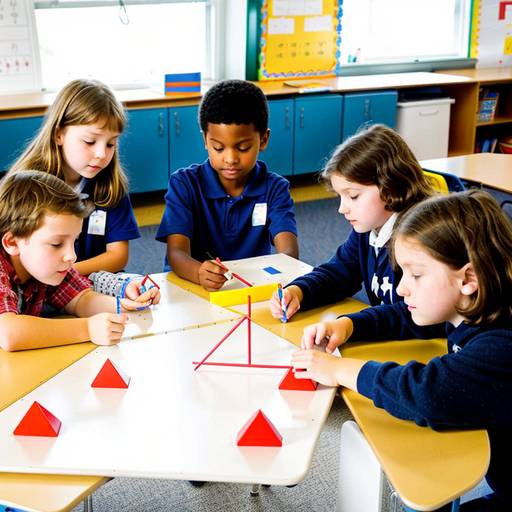
This 3rd-grade math lesson focuses on introducing students to the concept of perimeter. The lesson begins with an engaging discussion to elicit prior knowledge and define perimeter as the distance around a shape. Through guided practice, students use rulers and measuring tools to measure the sides of given polygons and calculate their perimeters by adding the lengths together.
Students then participate in an independent activity where they choose an object in the classroom, measure its sides using string or yarn, and calculate its perimeter. The lesson concludes with students sharing their findings and reflecting on their learning experiences. Assessment includes observation of group interactions, reviewing completed worksheets for measurement accuracy, and evaluating exit tickets to gauge individual understanding. Differentiation strategies are in place to support varying skill levels, ensuring all students can engage meaningfully with the content. Overall, students will gain practical measurement skills and a solid understanding of perimeter through interactive activities.
In this 3rd-grade math lesson, students will explore the concept of perimeter by learning how to measure and calculate the distance around various geometric shapes. The lesson begins with an introduction to common shapes and a discussion about the meaning of perimeter. Through direct instruction, students will learn formulas for calculating the perimeter of squares, rectangles, and triangles.
Following this, students will engage in guided practice where they measure the sides of pre-cut shapes and work together to calculate their perimeters. In a hands-on activity, small groups will create custom shapes using string or yarn, measure their sides, and determine the total perimeter collaboratively.
To reinforce their understanding, students will complete a worksheet featuring various shapes to calculate their perimeters independently. The lesson concludes with a recap of key concepts and a discussion on finding shapes and calculating perimeters in their everyday environments. Differentiation strategies are included to ensure all learners can engage with the material effectively. Assessment will take place through worksheet completion and observation during group activities.
In this 3rd grade math lesson, students explore the concepts of geometry and area by identifying and describing various 2D shapes, including squares, rectangles, triangles, and circles. The lesson begins with a discussion on shapes and the definition of area as the space within a shape. Students learn how to calculate the area of squares and rectangles using the formulas \( \text{Area} = \text{side} \times \text{side} \) and \( \text{Area} = \text{length} \times \text{width} \), with guided examples provided by the teacher.
During guided practice, students create their own squares and rectangles on grid paper, measure them, and calculate their areas. Independent practice consists of solving area problems on handouts and inventing unique shapes while applying their understanding of area calculations. The lesson concludes with select students sharing their creations and findings, reinforcing the key concepts covered.
Students are assessed on their participation, accuracy in calculations, and ability to articulate their understanding of area. Extensions for advanced learners include introducing area calculations for triangles and circles, while adaptations are provided for students needing additional support. Overall, this lesson actively engages students in hands-on learning of geometric concepts through art and calculation.
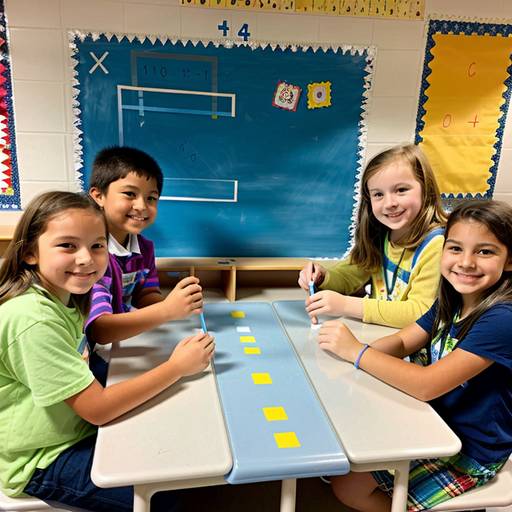
In this 3rd-grade math lesson, students will explore the concept of area and measurement through engaging hands-on activities. The lesson begins with an introduction to area, using everyday examples and the formula for calculating the area of rectangles and squares. Students will practice drawing shapes on grid paper and use rulers or measuring tapes to find the dimensions of various objects in the classroom. They will then calculate the area of these objects and visually represent them by shading the corresponding squares on the grid. The lesson concludes with a review of key concepts, emphasizing the relationship between area and multiplication. Students will demonstrate their understanding through observations and discussions, and opportunities for extension will be provided for more complex shapes in future lessons.
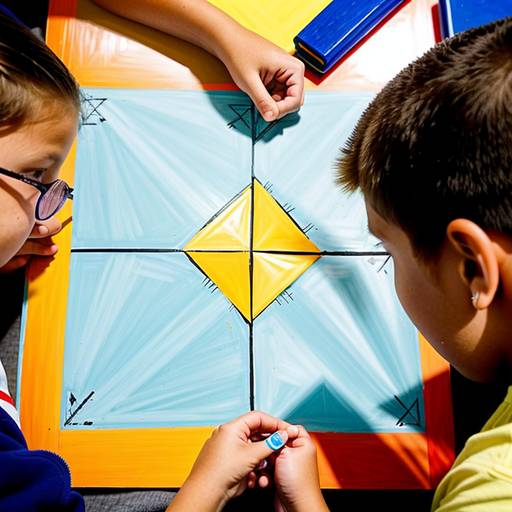
In this 3rd-grade mathematics lesson focused on geometry and symmetry, students will explore various geometric shapes and the concept of symmetry through interactive activities. The session begins with an engaging discussion about shapes found in everyday life, followed by a hands-on group activity where students sort geometric shapes based on their attributes.
Next, students will participate in an experiment using mirrors to help them identify symmetrical objects in the classroom, followed by a creative task where they draw their own symmetrical shapes on construction paper. The lesson concludes with a symmetry coloring worksheet, allowing students to reinforce their understanding of symmetrical shapes.
Throughout the lesson, students will collaborate, share findings, and engage with the concepts of geometry and symmetry, while their understanding will be assessed through observation and completed activities. Extensions are provided for advanced learners and support is available for those who need it, ensuring an inclusive learning environment. The session wraps up with students reflecting on their favorite shapes and what they learned about symmetry.
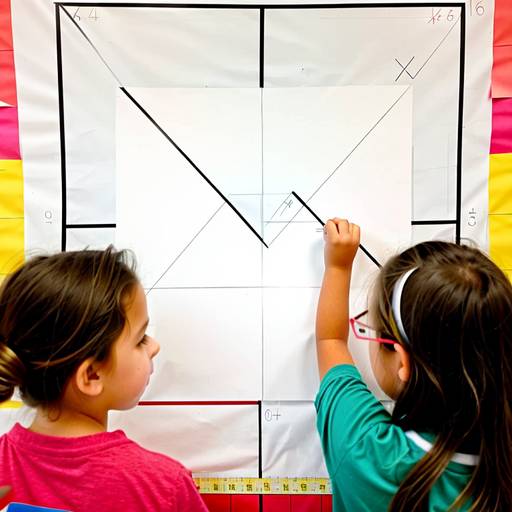
In this 3rd-grade math lesson, students will engage in an exploration of geometric shapes and the concept of perimeter. The lesson will begin with a discussion about various shapes found in their environment, followed by an introduction to the term "perimeter" and its significance as the distance around a shape. Through direct instruction, students will learn how to calculate the perimeter of rectangles, squares, and triangles using the appropriate formulas.
Next, students will partake in a hands-on activity where they measure the sides of cut-out shapes using rulers and string, allowing them to physically experience calculating perimeter through measurement. This collaborative work will be followed by group discussions, during which students will share their findings and insights about the perimeters they calculated.
To reinforce their understanding, students will complete worksheets focused on perimeter calculations. The lesson will conclude with a recap to solidify their learning and, for those ready for a challenge, opportunities for extension activities will be suggested, such as exploring the area of shapes. The overall objective is to provide students with a foundational understanding of geometry and perimeter while encouraging engagement through interactive learning.
In this 3rd-grade math lesson, students will explore fundamental concepts of geometry and lines. The lesson aims to help students identify and describe various types of lines, including straight, curved, horizontal, vertical, and diagonal. Students will also recognize and classify basic geometric shapes such as triangles, squares, rectangles, and circles based on their properties.
The lesson begins with a warm-up discussion that connects geometry to real-life examples, followed by guided practice where students will replicate lines on paper and participate in a line hunt around the classroom. They will also engage with flashcards to identify and draw shapes, promoting both visual and kinesthetic learning.
Students will then complete a worksheet that challenges them to draw different types of lines, categorize various shapes, and create their own unique shape using a combination of lines. The class will come together to discuss their findings and share their work, reinforcing the importance of geometry in the world around them.
Finally, students will reflect on their learning through an exit ticket that allows them to demonstrate their understanding of lines and shapes by drawing and connecting their learning to real-life experiences. Assessments will include observation of participation, review of worksheets, and evaluation of exit tickets, ensuring a comprehensive understanding of the material. The lesson is designed to include differentiation strategies to meet the diverse needs of all learners.
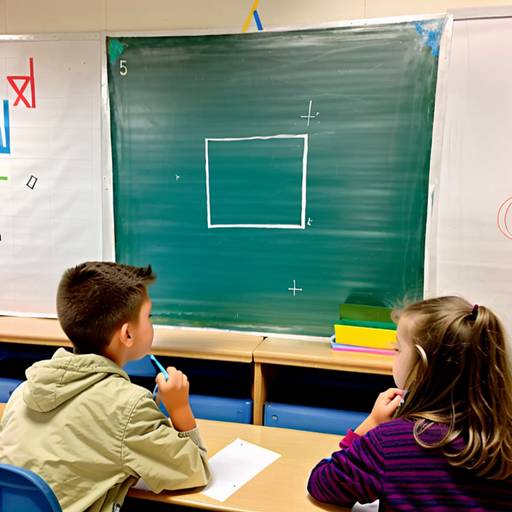
In this engaging math lesson, third-grade students will explore geometric shapes and the concept of area. The lesson begins with a discussion about various shapes observed in real life, followed by an introduction to the properties of shapes and how to calculate their area, specifically focusing on rectangles and squares. Using graph paper, rulers, and geometric cutouts, students will engage in guided practice to measure and calculate the area of their own drawings. In collaborative groups, they will apply their skills to measure different shapes and create a “Shape Wall” display. The lesson concludes with a presentation of their work and a discussion about real-life applications of area. Assessments will be conducted through observation, worksheet reviews, and a quick quiz to ensure understanding. Extensions are also provided for advanced learners, allowing for further exploration of area calculations involving triangles. Overall, this interactive lesson fosters critical mathematical skills through hands-on activities and teamwork.
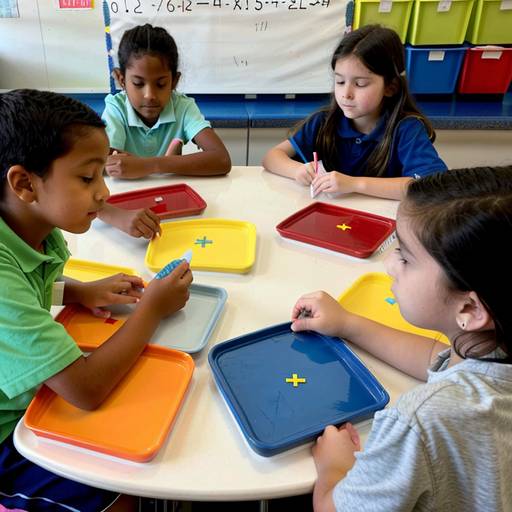
This lesson plan is designed for 3rd-grade students to help them understand fractions as parts of a whole using relatable examples from their everyday lives, such as sharing food. The lesson begins with a discussion about dividing items like pizza or cake into parts, introducing key terms such as numerator and denominator. Through direct instruction, students will engage in hands-on activities by cutting paper plates into halves, thirds, and quarters while labeling the fractions visually.
With guided practice, students will create their own fraction representations and share their work with peers. They will then move on to independent practice by solving fraction word problems on worksheets, which will allow them to reinforce their understanding of the concept. The lesson concludes with a brief review and reflection, emphasizing the importance of fractions in daily activities. Assessment will be conducted through observation during class activities and by reviewing the completed worksheets. Optional extensions for future lessons may include exploring more complex fractions or incorporating educational games to reinforce their learning.
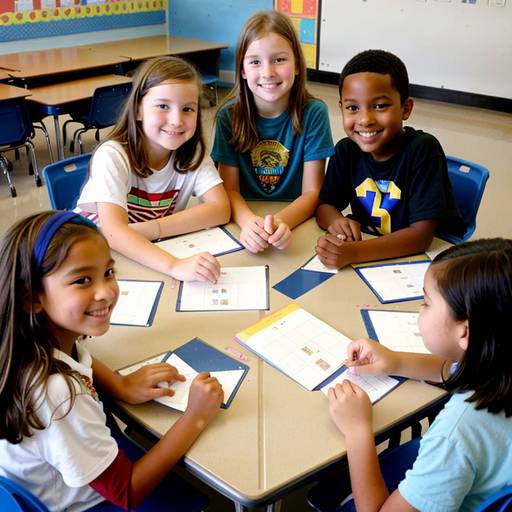
In this 3rd-grade math lesson focused on division, students will explore the concept of division through hands-on activities and collaborative learning. The lesson begins with a discussion about sharing items, connecting it to the idea of dividing. Students will then observe and engage with division as they model problems using counters, reinforcing the idea of equal groups.
After guided practice with their own sets of objects, students will work in small groups to create visual representations of division problems on chart paper. They will present their findings to the class, fostering collaboration and communication.
As a conclusion, students will complete a worksheet with simple division problems to demonstrate their understanding independently. Throughout the lesson, various assessment methods will be used to gauge student comprehension. The plan includes differentiation to support varying skill levels and extension activities to deepen understanding outside the classroom. By the end of the lesson, students will have a clearer grasp of division as a practical and shareable concept.