
Filters
Level
Grade
Subject
Subject Area
Subject Topic
Standard(s)
Audience
Keyword
DurationMinutes
3rd Grade Math Lesson Plans

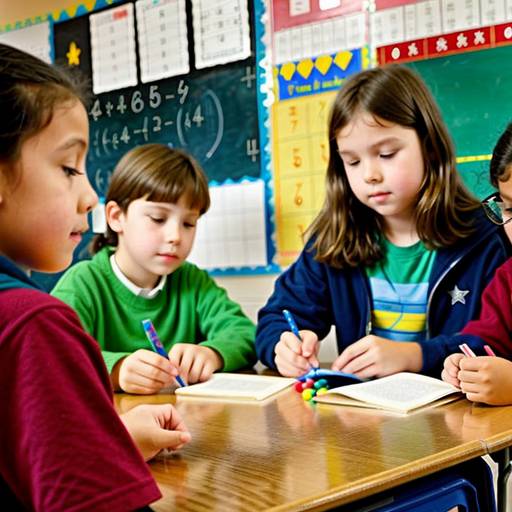
In this 3rd-grade math lesson, students will explore multiplication and practice their times tables through interactive activities. The lesson begins with a review of multiplication concepts and a demonstration of the times table on the whiteboard. Students will then engage in guided practice using flashcards to quiz one another, identifying which multiplication facts they find easiest and hardest.
The highlight of the lesson is a treasure hunt, where students work in pairs to solve multiplication problems on clue cards hidden around the classroom. Each correct answer leads them closer to a "treasure" of small prizes. After the treasure hunt, students will complete a worksheet with various multiplication problems for independent practice.
The lesson will conclude with a group discussion where students share their favorite parts and reflect on what they learned about multiplication. Assessment will be based on the completed worksheet and participation in activities, with adaptations available for varying skill levels. Extensions include creating a decorative multiplication chart to take home and exploring online multiplication games. This engaging approach to multiplication encourages collaboration and reinforces essential skills in a fun learning environment.
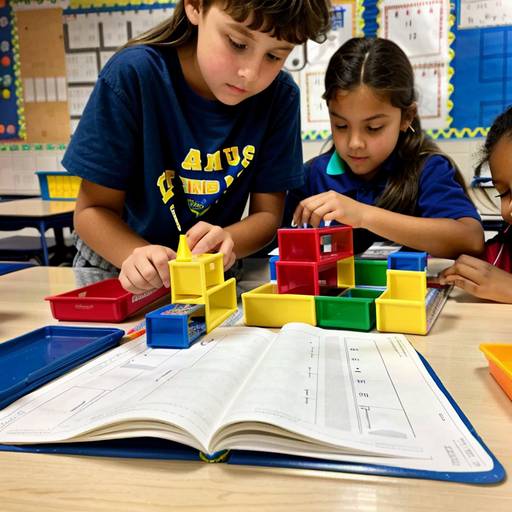
In this third-grade math lesson, students will explore the concepts of measurement and volume through hands-on activities. The lesson begins with a brief discussion about the importance of measurement in everyday life, focusing on volume and the units of liters and milliliters. Students will then work in small groups to measure the volume of various containers using water, encouraging them to make estimates before measuring and record their findings.
Following the measurement activity, students will participate in a relay race designed to reinforce their understanding of volume as they fill containers to specific targets. The class will come together for a discussion to share their results and reflect on their experiences, emphasizing key vocabulary related to the lesson. To wrap up, students will complete a short worksheet to assess their understanding and will be assigned homework that requires them to measure the volume of an item at home. This engaging approach promotes teamwork, estimation skills, and practical application of mathematical concepts.
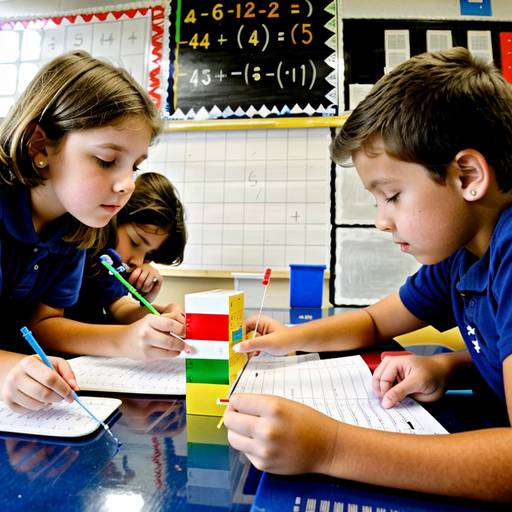
In this third-grade math lesson, students will explore the concepts of measurement and temperature through hands-on activities. The lesson begins with an introduction to thermometers and the different temperature scales, Celsius and Fahrenheit. Following a demonstration of how to read a thermometer using various liquids, students will work in small groups to measure and record the temperatures of ice water, room temperature water, and hot water. After sharing their findings in a class discussion, students will practice converting temperatures between Celsius and Fahrenheit with individual worksheets. The session concludes with a reflection where students share one new thing they learned, allowing for reinforcement of concepts and evaluation of understanding. This interactive approach ensures that students gain practical experience with measurement while connecting the topic to real-world applications.
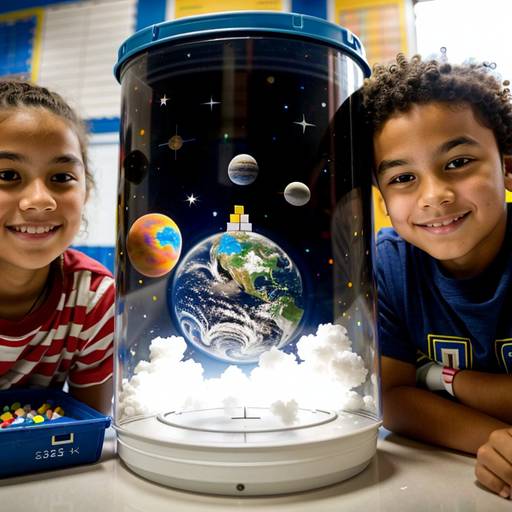
In this 3rd-grade math lesson, students will explore the concept of volume through hands-on activities and measurement. The lesson begins with a discussion about volume, encouraging students to share their thoughts and predictions about the capacity of various containers. After introducing key concepts related to measuring volume using standard units, students will engage in guided practice by estimating and measuring the volume of different containers using measuring cups filled with water or rice.
Following the group activity, students will work independently on a worksheet that presents various volume scenarios. The lesson concludes with students sharing their findings and discussing real-life applications of volume measurement. Assessment will be based on observation during group interactions and the review of completed worksheets. Extension activities are available for advanced learners, and adaptations are provided to support those who may need extra help. Overall, the lesson emphasizes interactive learning and practical application of volume concepts.
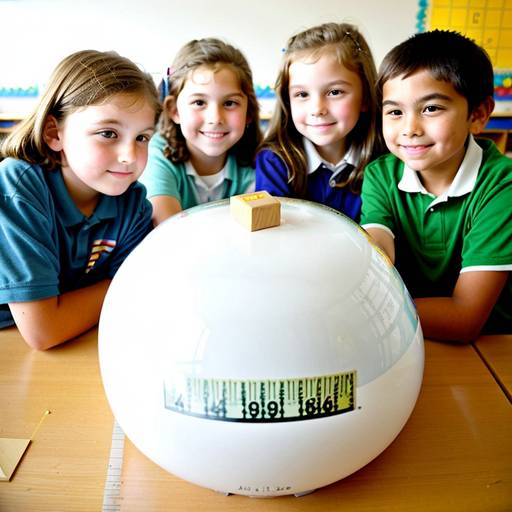
This lesson plan for a 3rd-grade math class focuses on measurement and weight, guiding students to explore these concepts through hands-on activities. The primary objectives include understanding weight, measuring with standard units (grams, kilograms, ounces, and pounds), and using balance scales for comparisons.
Students begin by discussing weight and then engage in an estimation activity, where they guess the weight of various classroom objects. Working in small groups, they measure the actual weights of these objects, record their findings, and compare them to their estimates. Each group then presents their results to the class, highlighting their heaviest and lightest objects.
The lesson concludes with a summary of learned concepts and a homework assignment that continues the exploration at home. Assessment is based on participation, accuracy of measurements, and completion of assigned tasks. The plan encourages hands-on learning and supports the development of practical measurement skills in a collaborative setting.
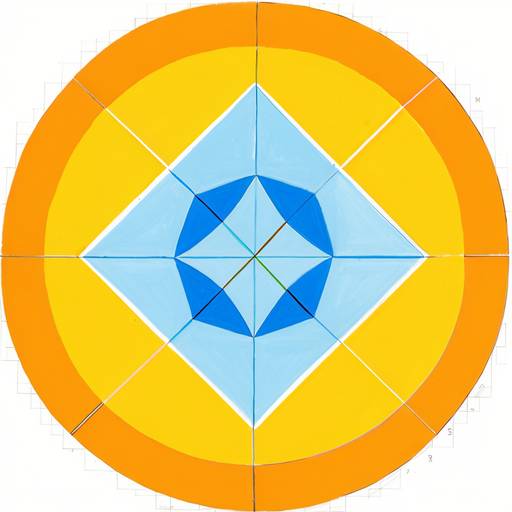
This 3rd-grade math lesson focuses on exploring geometric shapes and the concept of symmetry. The session begins with an introduction to various geometric shapes, followed by a clear explanation of symmetry through visual examples and a demonstration using a mirror. Students engage in guided practice by identifying symmetrical and asymmetrical shapes with provided materials, testing their hypotheses through folding.
During the independent activity, students create their own symmetrical designs using colored paper and markers, incorporating at least one line of symmetry. They then present their creations to the class, explaining the concept of symmetry in their designs. The lesson concludes with a review of key concepts and a discussion about the presence of symmetry in everyday life. Assessment occurs through observation during activities and evaluation of the students' designs. Extension activities provide opportunities for further exploration, including a symmetry scavenger hunt and challenges on rotational symmetry, fostering both understanding and creativity in geometry.