
Filters
Level
Grade
Subject
Subject Area
Subject Topic
Standard(s)
Audience
Keyword
DurationMinutes
3rd Grade Lesson Plans

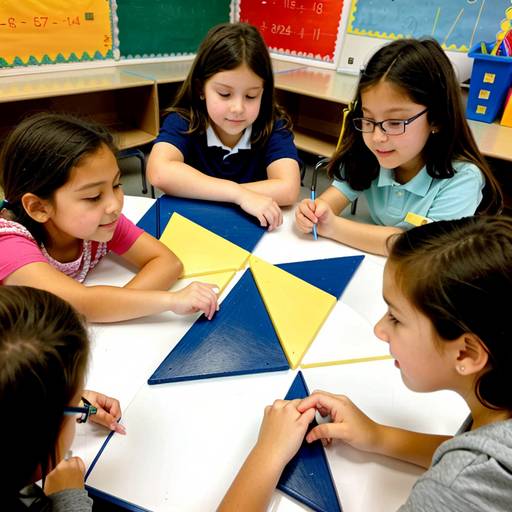
In this engaging 3rd-grade math lesson, students will explore the concepts of geometry and angles, focusing on identifying and measuring different types of angles: acute, right, and obtuse. The lesson commences with a discussion to build background knowledge about angles found in everyday life, followed by a clear introduction of the three angle types.
Students will receive direct instruction on using a protractor to measure angles accurately, which will be practiced through angle worksheets that require them to classify the angles they measure. Following guided practice in pairs, students will create a unique art project using various angles, fostering creativity and application of the geometry concepts learned.
The lesson concludes with students sharing their artwork, explaining the types of angles incorporated in their designs. Assessment is based on their angle worksheets and art projects, ensuring a comprehensive evaluation of their understanding. Adaptations and extensions are provided to support diverse learning needs and maintain engagement. Overall, this lesson combines theoretical knowledge with hands-on activities to solidify students' understanding of geometry and angles.

After a brief introduction to specific animals and their habitats, small groups will research assigned animals, identifying key adaptations and their significance. Each group will then create a poster illustrating their animal and its adaptations, fostering teamwork and creativity.
Students will present their findings to the class, sharing insights about the diverse ways animals thrive in their habitats. The lesson wraps up with a review of the importance of understanding these adaptations to support wildlife conservation efforts. Assessment will include observation of group participation, review of worksheets, and evaluation of poster presentations. Optional extensions encourage further exploration and engagement with local wildlife experts.
In this 3rd-grade math lesson, students will explore the concepts of time and time zones through a combination of engaging activities and discussions. They will learn to read both analog and digital clocks and understand how time zones are established due to the Earth's rotation. Using a world map, students will identify various time zones and match them with major cities.
The lesson includes a matching game where small groups will collaborate to connect cities with their corresponding time zones. Students will also practice calculating time differences based on various scenarios provided in a worksheet, enhancing their problem-solving skills.
By the end of the lesson, students will have a better understanding of how time varies across different regions of the world and why this knowledge is important for communication and travel. The lesson concludes with a reflection on the significance of time zones and encourages students to consider connections they may have with people in different parts of the globe. Extensions may include research on a selected country or city’s local time. Overall, this lesson aims to foster both mathematical skills and global awareness.
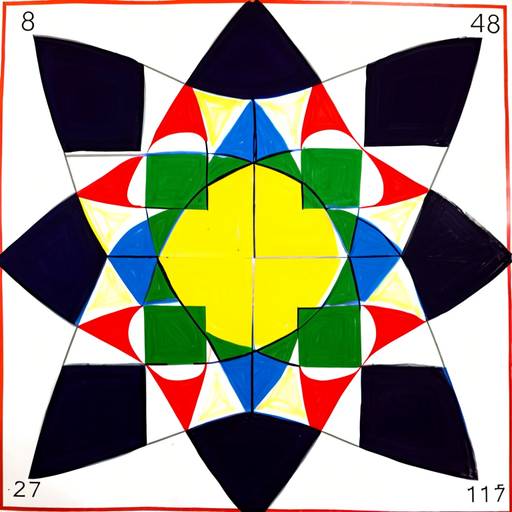
This lesson plan focuses on teaching 3rd-grade students the concepts of multiplication and arrays. The objectives include helping students understand multiplication as repeated addition, creating and recognizing arrays as visual representations, and solving simple multiplication problems.
The lesson begins with an engaging question to prompt discussion about multiplication, followed by a definition and explanation of arrays. Students will then work in small groups to create their own arrays using counters for various multiplication problems. After sharing their creations with the class, students will complete a worksheet that requires them to draw and label arrays for specific multiplication problems.
The session concludes with a review of the key concepts and an exit ticket activity, where students write a multiplication problem and draw a corresponding array. Assessment will be based on student participation, the accuracy of their array drawings, and responses to the exit ticket. The lesson incorporates opportunities for differentiation and extensions to accommodate varying student needs and abilities.
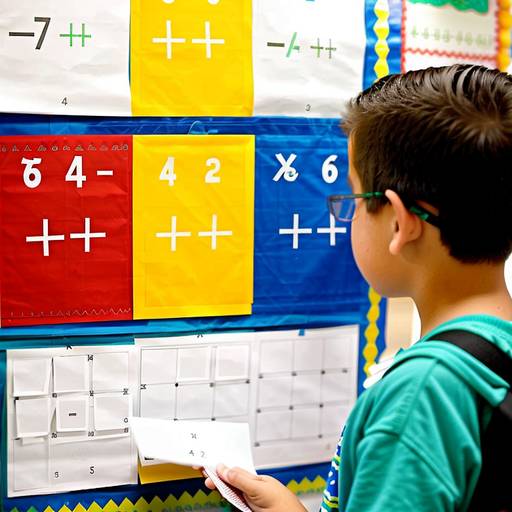
In this 3rd-grade math lesson, students will explore the concept of multiplication through the use of arrays. The session begins with a story highlighting themes of grouping and sharing, which serves as a foundation for understanding how arrays represent multiplication as repeated addition.
During direct instruction, the teacher will demonstrate creating arrays on the whiteboard, showing examples such as 2 x 4 and explaining the connection between arrays and their corresponding multiplication facts. Students will then participate in guided practice by creating their own arrays for specified multiplication problems on a worksheet, reinforcing their understanding of organizing objects in rows and columns.
Once they have had the opportunity to practice, students will independently draw arrays for selected multiplication facts and write the related equations. The lesson closes with students sharing their work with partners and presenting to the class, allowing for discussion and reinforcement of the concepts learned.
Assessment will be based on the accuracy of their worksheets and their engagement in discussions. Additional activities may include solving word problems that involve arrays, offering depth for advanced learners. This engaging lesson reinforces the foundational understanding of multiplication through visual and hands-on learning experiences.

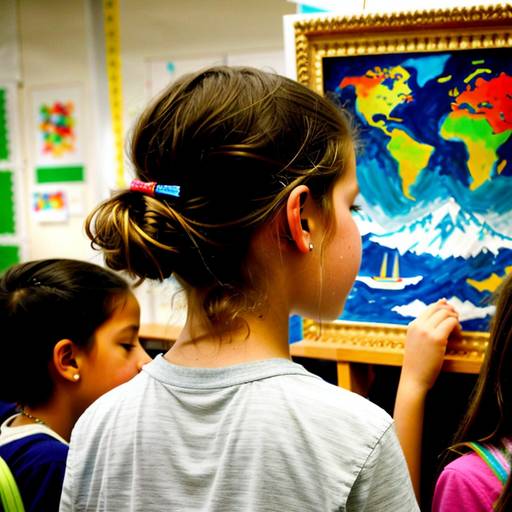
In this 3rd-grade art lesson, students will explore various art movements, specifically focusing on Impressionism, Cubism, and Abstract Art. They will begin with an engaging discussion about the significance of art in culture and history, learning how different movements reflect their times. Through visual examples, students will discover the unique characteristics of each style and the artists behind them.
After a brief overview, students will work in small groups to create informative posters that highlight key elements of their assigned art movement, including notable artists and artworks. Each group will present their poster to the class, fostering collaboration and creativity. Following this, students will individually create their own artwork inspired by the movement of their choice, applying elements learned during the lesson.
The class will wrap up with a reflection period where students can share their artwork with peers, discuss their creative process, and articulate what they have learned about the influence of different art styles. Assessment will be based on participation in group activities, poster creation, and the completed individual artworks. This lesson encourages a deeper appreciation of art history while promoting creativity and self-expression among young learners.
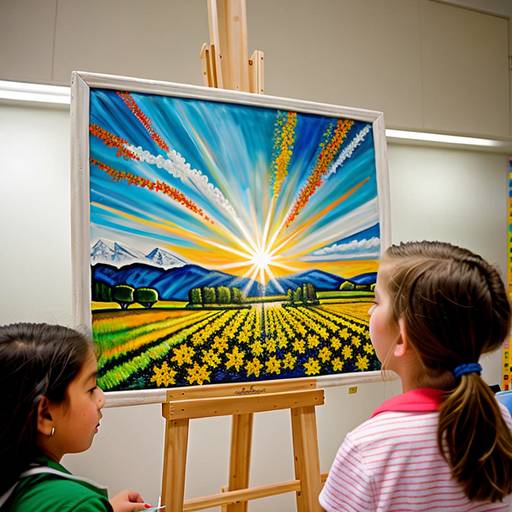
In this 3rd-grade art lesson, students will explore the lives and works of three renowned artists: Vincent Van Gogh, Claude Monet, and Pablo Picasso. The lesson begins with an engaging discussion about art, where students share their preferences and thoughts. Following this, the teacher introduces each artist through visual examples and highlights their unique styles and contributions to the art world.
Students will then participate in a class discussion to deepen their understanding of the artists' techniques and emotional impacts of their works. Afterward, they will create their own artwork inspired by the artist of their choice, using colorful materials to incorporate elements from their chosen style.
The lesson concludes with student presentations, allowing them to share their creations and the inspirations behind them. Assessment will focus on participation, effort, and the ability to articulate their artistic choices. Finally, the teacher will reflect on the lesson's effectiveness and gather student feedback for future improvements.

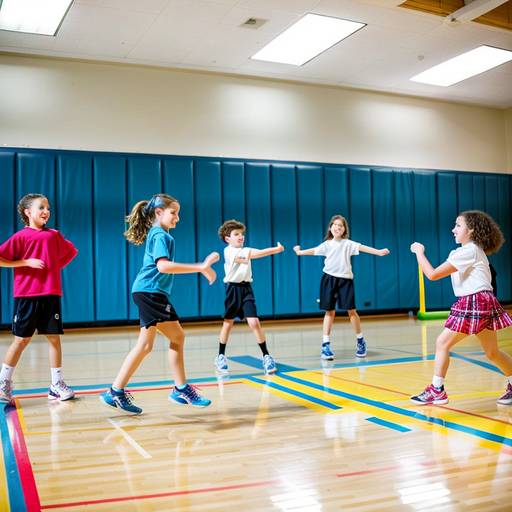
In this physical education lesson designed for 3rd graders, students will develop their coordination and balance through a variety of engaging activities. The lesson begins with a dynamic warm-up involving fun movement to music, followed by a series of balance stations, each focused on different skills. These stations include walking on balance beams, balancing in hula hoops, navigating a zigzag cone course, and tossing scarves with partners while standing on one leg.
Students will then participate in a team-based balance relay race, where they will encourage each other while completing a course that combines various balance challenges. The lesson concludes with a cool-down period that includes slow walking and group reflection, allowing students to share their experiences and learnings. Throughout the session, the instructor will assess student participation and offer feedback, ensuring a focus on safety and inclusivity. As a fun extension, students are encouraged to practice balance activities at home and share their experiences in subsequent classes.
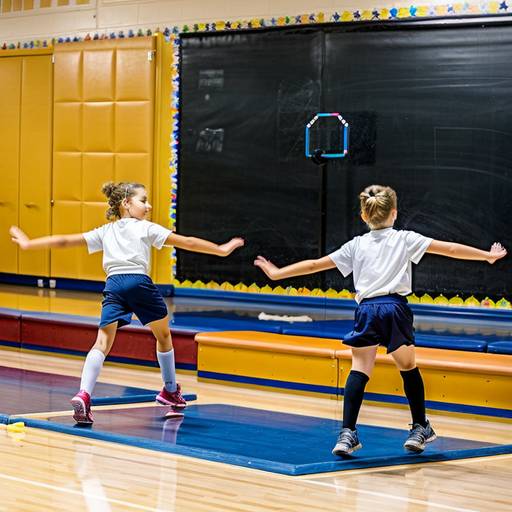
This lesson plan is designed for third-grade students to enhance their coordination and balance through a series of engaging activities. The lesson begins with a dynamic warm-up that includes stretching and balance challenges. Students then rotate through four activity stations: walking across balance beams, balancing in hula hoops, tossing bean bags at cones, and navigating an obstacle course. Each station lasts five minutes, with brief transitions in between. After the activities, students participate in a cool-down session that involves stretching and sharing their experiences. Throughout the lesson, teachers assess student performance and encourage peer feedback, promoting a supportive learning environment. Modifications are provided to accommodate varying skill levels. The plan emphasizes the importance of practice in developing physical skills and encourages students to apply what they've learned in their daily activities.
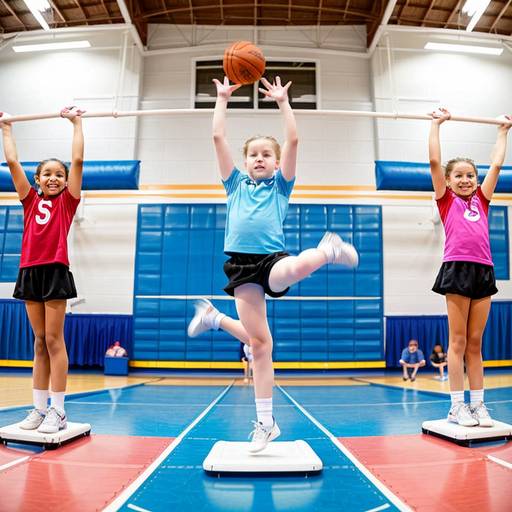
In this 3rd-grade physical education lesson, students engage in a 60-minute session focused on developing basic gymnastics skills such as balance, coordination, and flexibility, all within a sports context. The lesson begins with dynamic stretching and movement to music to warm up the body. Students then learn and practice balance exercises, including walking on a low beam and performing forward and backward rolls on gym mats.
The main activity consists of an obstacle course designed to incorporate various stations, such as hula hoop jumps, cone weaving, and balance challenges. Students work in teams and participate in relay races, promoting teamwork and cooperation. The lesson concludes with a cool-down period featuring deep breathing and light stretching, followed by a class discussion reflecting on their experiences and learnings. Throughout the activities, students are observed for their skills and participation, ensuring a fun and dynamic approach to physical fitness and gymnastics fundamentals.