
Filters
Level
Grade
Subject
Subject Area
Subject Topic
Standard(s)
Audience
Keyword
DurationMinutes
3rd Grade Lesson Plans

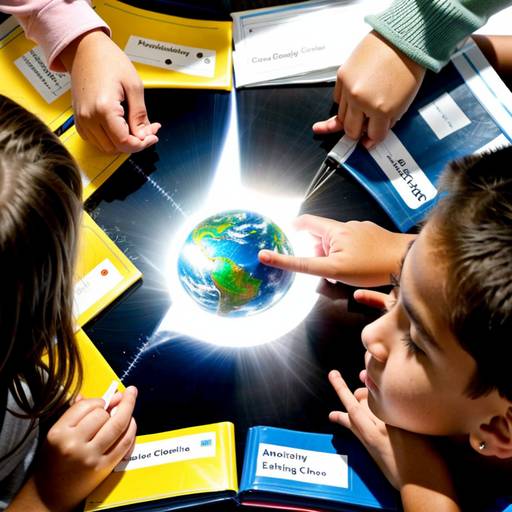
In this 3rd-grade science lesson, students explore the concepts of potential and kinetic energy through engaging activities and discussions. The lesson begins with a brief introduction to energy and its two main types, supported by visual examples from everyday life. Students then participate in a hands-on activity where they work in small groups to create ramps for toy cars or marbles. They experiment with different ramp heights to observe how potential energy is converted into kinetic energy. Measurements of how far the cars travel are recorded, promoting teamwork and critical thinking. The lesson concludes with a class discussion that reinforces the concepts and encourages students to share personal examples of potential and kinetic energy. Assessments include observation during activities and the recording of experimental results, ensuring students grasp the foundational principles of energy.

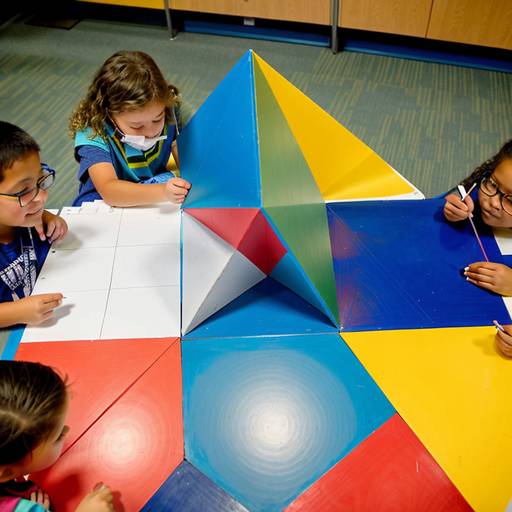
In this 3rd-grade math lesson, students will explore basic geometric shapes, including triangles, squares, rectangles, and circles, while learning about perimeter. The class will begin with a "Shape Hunt" activity to identify shapes in their environment, followed by a discussion on the concept of perimeter and how to measure it. Direct instruction will guide students in using rulers to calculate perimeter for various shapes, emphasizing formulas for rectangles, squares, and triangles.
Students will engage in a collaborative Shape Creation Activity where they will draw their own geometric shapes and measure them to calculate the perimeter. After this guided practice, they will independently complete a worksheet that requires them to find the perimeter of different shapes using the concepts learned. The lesson will conclude with a review of key concepts, encouraging students to share their insights and submit an exit ticket reflecting their learning.
Overall, this lesson aims to combine hands-on activities with practical problem-solving to enhance students' understanding of geometry and perimeter while fostering collaboration and independent thinking in mathematics.

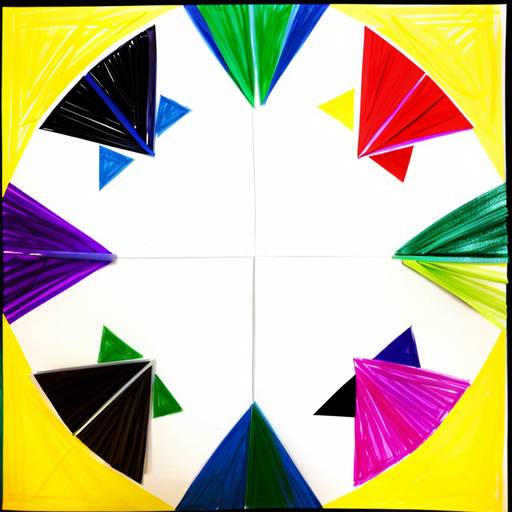
In this 3rd-grade art lesson, students will explore the concepts of lines and shapes to create their own unique creatures. The lesson begins with an interactive discussion where students identify and describe various types of lines (straight, curved, zigzag, wavy) and basic shapes (circle, square, triangle). Following a demonstration, they will be guided to sketch their creatures using these elements, emphasizing creativity and imagination.
Once their sketches are complete, students will color their creatures with colored pencils, markers, or crayons, incorporating patterns and details that enhance their artwork. The lesson culminates with a sharing session, where students present their drawings and discuss the elements they used. The completed artworks will be displayed in a classroom gallery, celebrating their creativity and newfound understanding of artistic techniques. Assessment will focus on observation during practice, as well as the final artwork in terms of creativity and application of lines and shapes. Extensions and modifications are provided to cater to varying levels of students' abilities and interests.

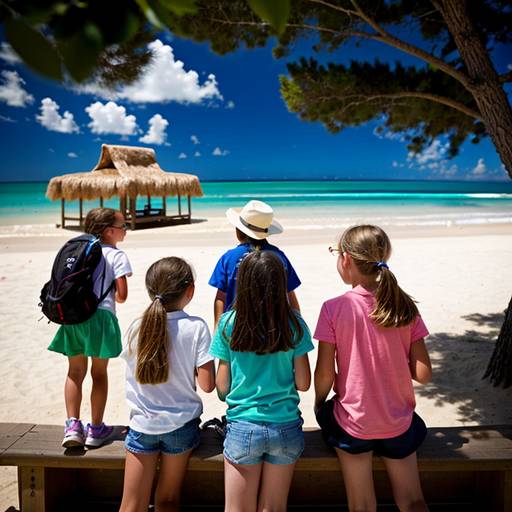
In this 3rd-grade language arts lesson, students will focus on expository writing by crafting a paragraph about their dream vacation. The lesson begins with a discussion about vacations, brainstorming locations, activities, and experiences while using visual aids to inspire creativity. Students will utilize a graphic organizer to structure their thoughts before independently writing a detailed paragraph that includes descriptive language to help readers visualize their ideas. After completing their writing, they will illustrate a scene from their vacation. The lesson concludes with select students sharing their work, emphasizing the importance of vivid details. Assessment will be based on criteria such as clarity, descriptive language, and organization. Extensions and adaptations are provided to ensure all learners can engage with the material effectively.
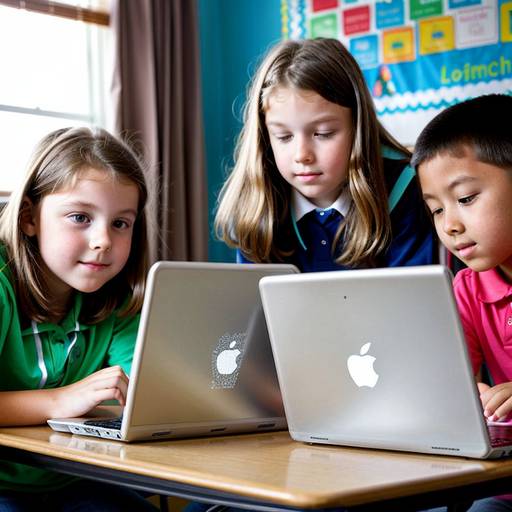
In this technology lesson for 3rd graders, students will learn about online safety and the significance of privacy settings. The session begins with discussions about digital footprints, helping students understand the trail of information they leave while using the internet. The teacher will guide them through adjusting privacy settings on a child-friendly website and highlight the importance of safeguarding personal information.
Students will participate in an interactive activity where they categorize different websites as “Safe” or “Not Safe” based on features that contribute to online safety. The lesson concludes with a recap of key concepts and a short quiz to assess their understanding. Throughout the lesson, adaptations will be made to support diverse learners, ensuring that all students can engage with the material. Students are encouraged to share their new knowledge with family members, reinforcing the continuous importance of staying safe online.

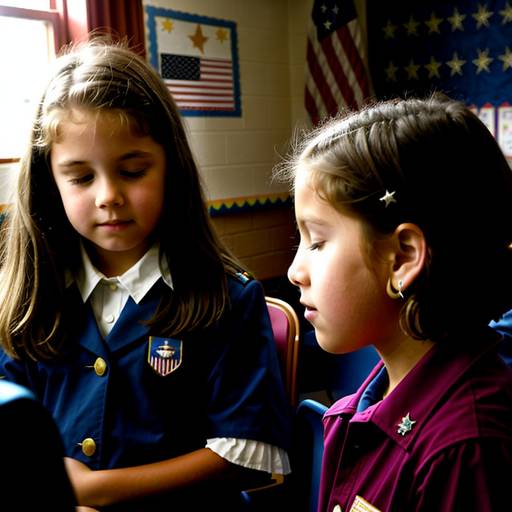
This lesson plan for 3rd-grade students focuses on exploring significant historical figures in American history. The lesson begins by introducing the concept of heroes, facilitating a class discussion about what characteristics make someone a hero. Students are then presented with various American historical figures, learning about their contributions and impact on society.
Afterward, students engage in a research activity where they select a hero to study further, filling out a worksheet with details about the hero’s life, achievements, and qualities they admire. This personal reflection is followed by a sharing session where students present their findings to the class, promoting public speaking skills and fostering a sense of community.
The lesson concludes with a discussion that highlights the common traits among the heroes and encourages students to think about how they can embody those qualities in their own lives. Assessment includes participation in discussions, completion of the worksheets, and the quality of presentations. The plan also includes adaptations for diverse learners and extension activities to reinforce the material.
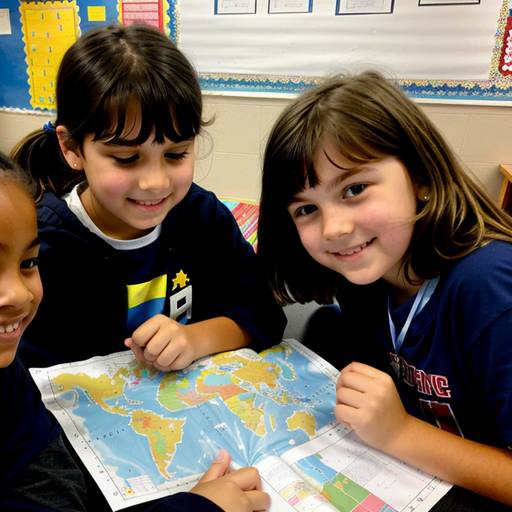
In this 3rd-grade social studies lesson focused on geography and maps, students will explore the essential components of maps, such as the legend, title, compass rose, and scale. The lesson begins with an engaging discussion about maps, where students share their experiences and observations. Using printed examples, the teacher demonstrates key map features and symbols.
During guided practice, students work in small groups to create a map of their classroom or playground, incorporating the components learned. Each group presents their map to the class, explaining their symbols and choices. Following this, students independently design their personal map of a familiar location, including essential map elements and writing a reflective paragraph about the importance of maps in daily life.
The lesson concludes with a review of key concepts and an exit ticket for each student to share their newfound knowledge. Assessment is conducted through group presentations and individual map evaluations. Extension activities may be provided for advanced learners, while additional support is available for those needing assistance. Overall, students will gain a foundational understanding of maps and their significance in navigating our world.
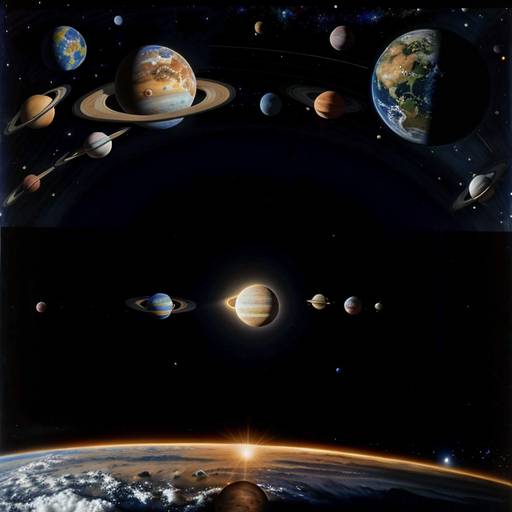
This lesson plan is designed for third-grade students to explore the solar system and learn about the planets that orbit the sun. It begins with an engaging video or animation to capture students' interest, followed by a discussion about their observations of the night sky. The teacher will introduce each planet, highlighting key characteristics and the concepts of orbit and gravity.
Students will participate in guided activities where they work in groups to create fact cards for assigned planets, including drawings and interesting information. They will also build a scale model of the solar system using Styrofoam balls or balloons to represent the planets and string for their orbits.
To reinforce learning, students will complete reflective journal entries about their favorite planet. The lesson concludes with sharing insights and reviewing the order of the planets. Assessment will be based on group interactions and journal reflections. Extensions and adaptations are included to cater to various learning needs, ensuring an engaging and informative experience centered around astronomy.
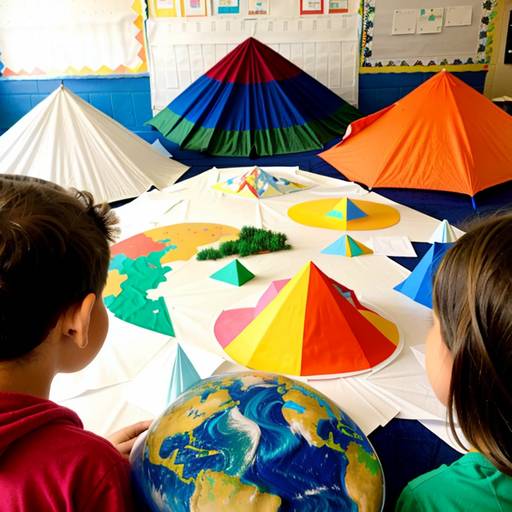
This lesson plan for 3rd graders focuses on geography and landforms, aiming to help students identify and understand various types of landforms, including mountains, valleys, plains, and rivers. The lesson begins with an interactive discussion about geography, where students share what they know about landforms. It then includes a presentation that defines each landform and discusses its importance to the environment and human life.
Students engage in a hands-on activity where they create their own maps using colored pencils to illustrate different landforms creatively. They work in small groups matching flashcards with definitions and pictures, reinforcing their learning through collaboration. The lesson concludes with a fun game of “Landform Bingo,” allowing students to test their knowledge in an engaging way.
Assessment is conducted through observation during activities and the evaluation of completed maps. To extend learning beyond the classroom, students are assigned a homework task to find pictures of landforms to share with their peers in the next session. Overall, the lesson promotes active participation, teamwork, and creativity while deepening students' understanding of landforms and their significance.
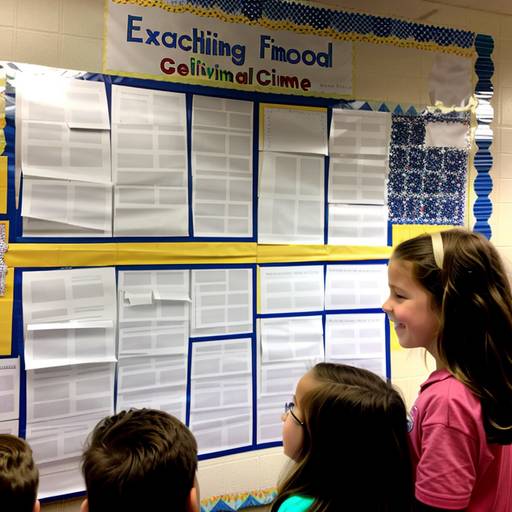
In this 3rd-grade social studies lesson, students explore the concept of timelines and their significance in both personal and historical contexts. The lesson begins with a discussion about timelines, accompanied by examples that highlight key events. Students learn about the components of a timeline and how to represent events chronologically.
Through guided practice, they identify and organize 3-5 significant events in their lives, using sticky notes to create a personal timeline. After illustrating their events, students have the opportunity to share their timelines with peers, fostering discussion about their unique histories. The lesson emphasizes creativity and individual expression while reinforcing important concepts about chronology. Assessment is conducted through observation and review of students' completed timelines. Extensions and adaptations are included to cater to diverse learners, promoting engagement and understanding for all students.