
Filters
Level
Grade
Subject
Subject Area
Subject Topic
Standard(s)
Audience
Keyword
DurationMinutes
3rd Grade Lesson Plans

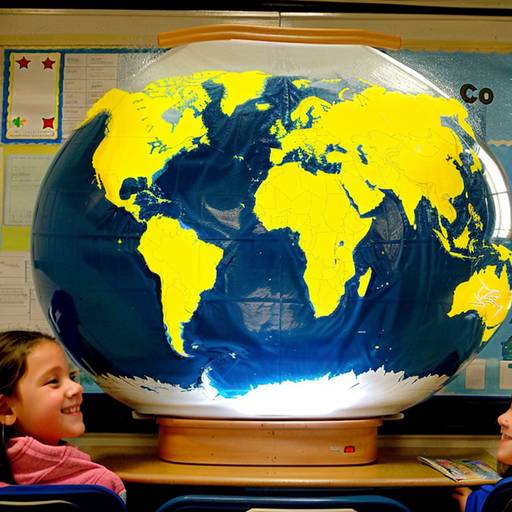
This lesson plan for 3rd-grade students focuses on introducing basic geography concepts and cultural awareness through the exploration of various countries. Over the course of an hour, students will learn to identify and locate different countries on a world map and discover key cultural aspects such as language, food, and traditions associated with selected countries. The lesson begins with a discussion about geography, followed by direct instruction featuring 3-5 specific countries. Students will then engage in guided and independent practice by coloring country outlines and creating cultural fact cards that include essential information about their chosen country. The lesson concludes with opportunities for students to share their work with peers, promoting collaboration and communication. Assessment is based on participation and the completion of the fact cards. Extensions for the lesson encourage further exploration of cultures, such as pen pal exchanges and a cultural day event. Overall, the lesson aims to foster curiosity and respect for diversity while developing foundational geography skills.

This lesson plan focuses on introducing 3rd-grade students to basic geometric shapes and the concept of area. The lesson begins with an engaging discussion about shapes found in the classroom and environment, followed by direct instruction on how to calculate the area of squares and rectangles using the formula: Area = Length × Width. Students participate in guided practice by drawing shapes on graph paper and calculating their areas.
The lesson includes a hands-on activity where students go outdoors for a shape scavenger hunt, measuring real-world examples of geometric shapes they find. They apply their understanding of area by calculating the dimensions of these shapes. To wrap up, the class reconvenes to share findings and review the concepts taught. Assessment opportunities may include a worksheet that reinforces the learning objectives.
Differentiation strategies are incorporated to support varying learning needs, ensuring that all students engage effectively with the material. The overall goal is to foster a deeper understanding of geometric shapes and area through practical application and collaboration.
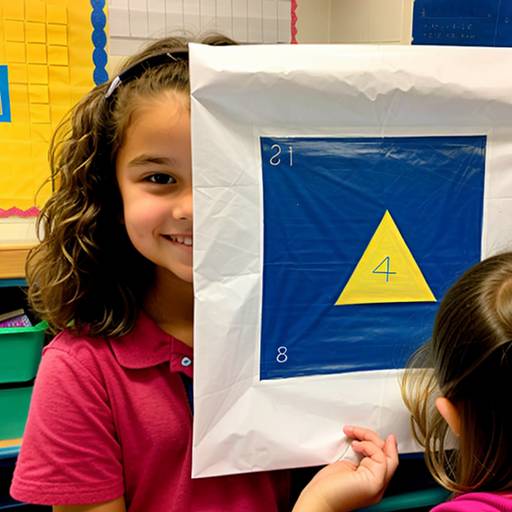
In this 3rd-grade math lesson plan, students will explore the concepts of measurement and perimeter through hands-on activities and guided instruction. They will learn about perimeter as the distance around shapes and practice measuring using rulers and tape measures. The lesson begins with an introduction to perimeter, followed by direct instruction on how to measure different shapes and calculate their perimeter using appropriate formulas.
Students will then work in small groups to measure shapes with provided templates, calculating and recording their findings. An engaging hands-on activity will allow them to create their own shapes using string or yarn, measure their sides, and determine the perimeter.
The lesson concludes with student presentations of their shapes and calculations, reinforcing their understanding of the concepts. Assessment will be conducted through observation during group activities and review of completed worksheets. Extensions and modifications are included to cater to diverse learning needs. This approach promotes collaboration and practical application of measuring skills.
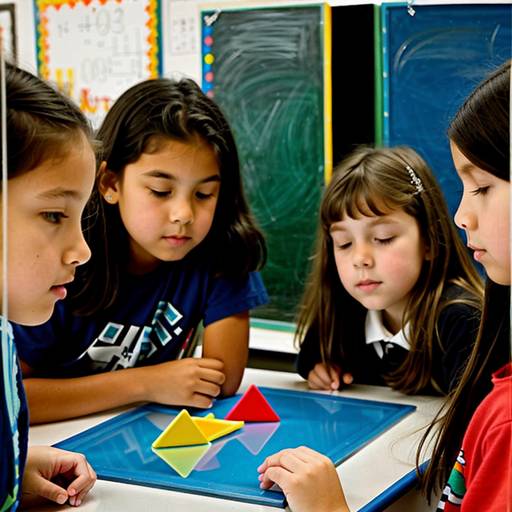
In this engaging 3rd-grade math lesson focused on geometry and symmetry, students will explore the concepts of symmetrical and asymmetrical shapes. The lesson begins with a discussion about symmetry using real-life examples displayed on a poster, followed by defining key vocabulary related to symmetry.
Through a demonstration on the whiteboard, students will learn how to identify lines of symmetry in various geometric shapes while participating in a sorting activity. Guided practice includes using mirrors to draw symmetrical designs, where students will see firsthand how one side of their artwork mirrors the other.
Independent practice features a worksheet where students will identify symmetrical shapes, draw their own, and create colorful designs using shape cut-outs. To conclude, the lesson recaps symmetry’s importance, and students will complete an exit ticket reflecting on examples of symmetry they observe in their environment.
Assessment includes monitoring student participation and reviewing their worksheets and designs. The lesson also offers extensions for advanced learners, reinforcing and deepening their understanding of symmetry concepts through interactive activities.

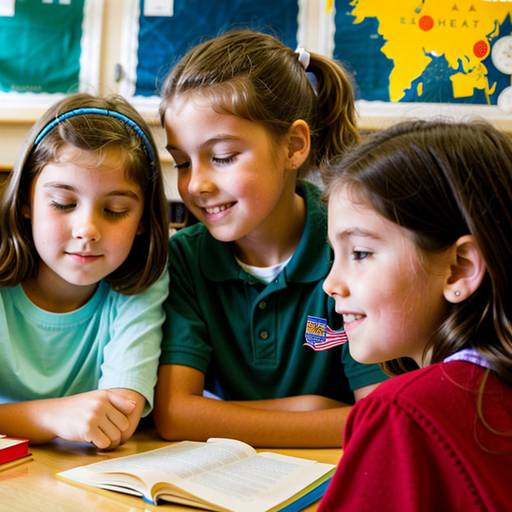
In this 3rd-grade language arts lesson, students will explore reading comprehension through the use of various reading strategies. The class begins with a discussion about the importance of reading and student predictions based on the cover of a selected story. Students will learn and practice strategies such as predicting, summarizing, questioning, visualizing, and making connections as they read the story aloud.
After the reading, students will engage in small group discussions to share insights and reflections on the text, focusing on the main idea and their predictions. Finally, they will create graphic organizers to illustrate the main idea and key details from the story, allowing for creative expression. The lesson concludes with a review of how these strategies enhance reading comprehension, encouraging students to apply them in their future reading experiences. Assessment will include observations during discussions and the evaluation of graphic organizers. Differentiation will be provided to support various learning needs.
This 3rd grade language arts lesson focuses on enhancing students' reading comprehension through the exploration of characters and settings in a story. The lesson begins with a discussion about the elements that make stories engaging, followed by a read-aloud of a selected short story, during which the teacher models thinking aloud to prompt student engagement. Students then work in small groups to fill out a graphic organizer that highlights the key characters and settings from the story. This is followed by a class discussion where groups share their findings, promoting collaborative learning and critical thinking. For independent practice, students write a reflection paragraph about their favorite character, which they later share with a partner. The lesson concludes with a recap of the importance of characters and settings, along with an exit ticket to assess student understanding. Throughout the lesson, differentiation strategies are incorporated to support diverse learning needs.

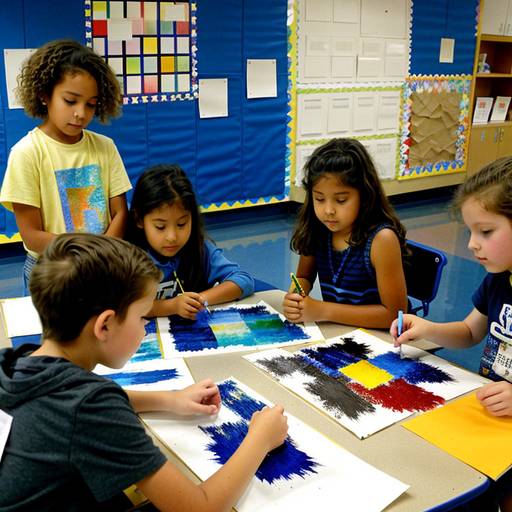
In this engaging art lesson for 3rd graders, students will explore the concept of texture and patterns through the exciting medium of printmaking. The lesson begins with a discussion about various textures found in art and the environment, encouraging students to share their observations. Following this, the teacher demonstrates the printmaking process, showcasing how to create designs on foam sheets, apply paint, and transfer images onto paper.
Students will then have the opportunity to create their own prints by designing textured patterns on foam and experimenting with different colors. As they work, they will learn important techniques related to printmaking, including how to effectively use tools like brayers while maintaining cleanliness. After completing their prints, students will share their artwork with classmates, reflecting on their creative process and the textures they incorporated.
The lesson concludes with a display of the artwork, allowing students to appreciate each other's creations. This hands-on activity not only fosters creativity but also enhances students' understanding of artistic techniques and the role of texture in visual art.

In this 3rd-grade Earth Science lesson, students will explore various weather types and gain an understanding of how weather patterns affect daily life. The lesson begins with a discussion about personal weather experiences, followed by an introduction to key vocabulary related to weather. Students will learn the basics of weather observation and measurement using simple tools such as thermometers and rain gauges.
They will engage in an interactive activity where they create weather charts to record daily conditions throughout the week, and they will also design weather scene crafts that depict their favorite weather types. The class will encourage sharing of their projects and charts, promoting collaboration and communication.
Assessment will involve participation in activities, the completion of crafts and weather charts, as well as a short quiz at the end of the week to evaluate understanding. The lesson also includes extensions, such as starting a classroom weather station and researching specific weather phenomena, providing opportunities for further inquiry and learning about the complexities of weather and its impact on the world. Reflection will take place after the lesson to identify successes and areas for improvement.
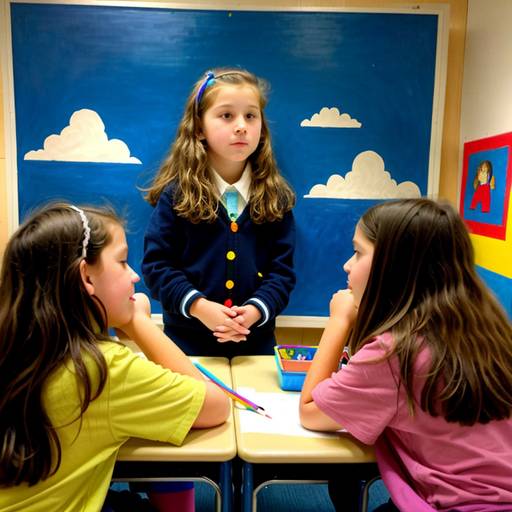
In this 3rd-grade art lesson, students will explore the world of famous artists and their distinctive styles. The lesson begins with a discussion about well-known artists and their works, followed by a story that highlights the life and techniques of a selected artist. Students will analyze various artworks, focusing on color and emotion, before creating their own masterpieces inspired by the artist. With guidance, they will use a variety of colors and techniques to express their feelings through art. The class will conclude with a sharing session where students present their artwork to peers and receive positive feedback. This engaging lesson not only enhances students' understanding of art history but also fosters creativity and self-expression. Additionally, options for extending the activity include creating a class scrapbook and organizing a gallery day for parents.
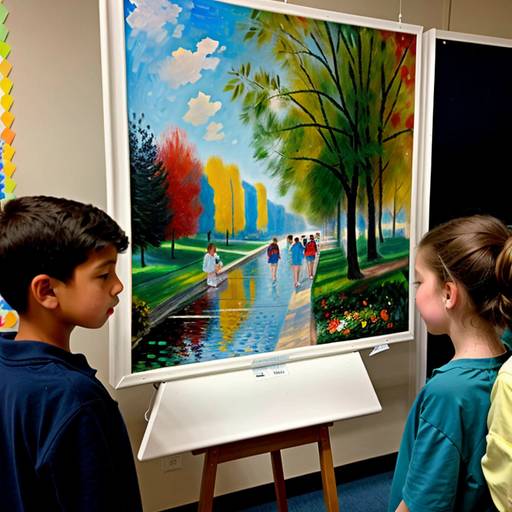
In this art lesson plan for 3rd graders, students will explore the Impressionist art movement through a mix of history, discussion, and hands-on creativity. The lesson begins with an introduction to key characteristics of Impressionism, including the use of light, color, and movement, as seen in the works of famous artists like Claude Monet and Edgar Degas. Students will analyze various Impressionist paintings and engage in a discussion about their observations and interpretations.
After gaining insights into the movement, students will create their own artwork inspired by Impressionism. They will conceptualize a favorite scene, make preliminary sketches using crayons or markers, and then use watercolor paints to bring their scenes to life, focusing on blending colors and applying loose brushstrokes characteristic of the style.
The session concludes with a gallery walk, where students showcase their artwork, providing and receiving positive feedback from peers. This activity not only reinforces their learning about Impressionism but also promotes creativity and personal expression. Through this interactive experience, students will gain a better understanding of art history while developing their artistic skills.