
Filters
Level
Grade
Subject
Subject Area
Subject Topic
Standard(s)
Audience
Keyword
DurationMinutes
3rd Grade Lesson Plans
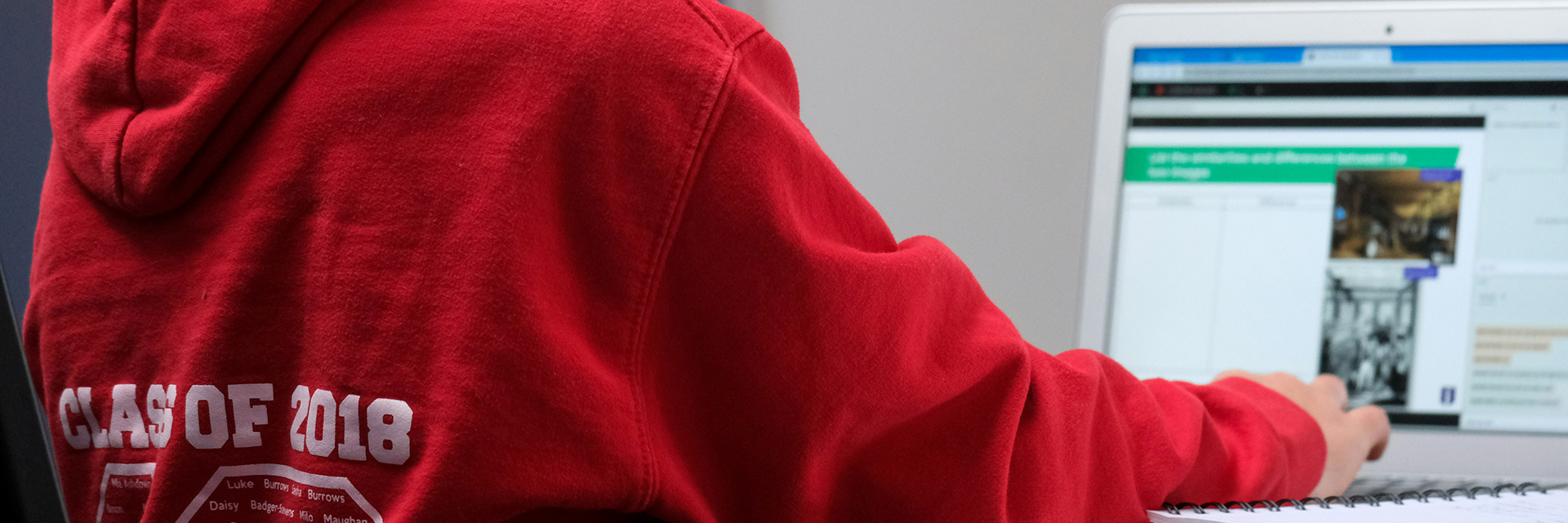
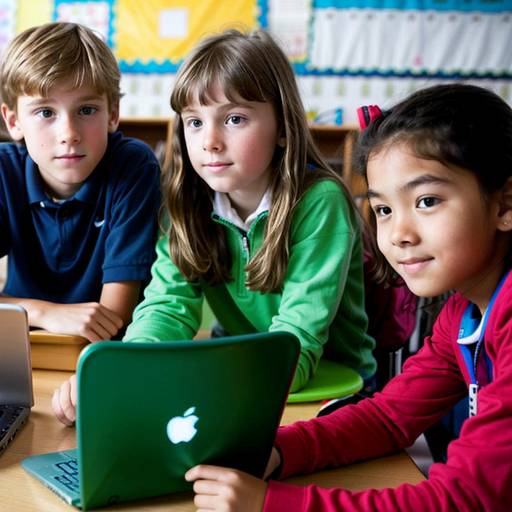
This lesson plan for 3rd-grade students focuses on developing essential internet skills and promoting online safety awareness. Over the course of one hour, students will engage in discussions about the internet, learn key terminology, and participate in hands-on activities to navigate web browsers effectively and conduct safe online research. They will work in pairs to find information using child-friendly search engines while practicing important safety rules, such as never sharing personal information and consulting an adult when unsure.
Students will then collaborate to create posters that illustrate one of the internet safety rules and present their work to the class. The lesson concludes with a review of the key concepts and an interactive quiz to assess understanding. Through this engaging and interactive approach, students will gain valuable skills for navigating the internet safely and responsibly, preparing them for future online experiences.

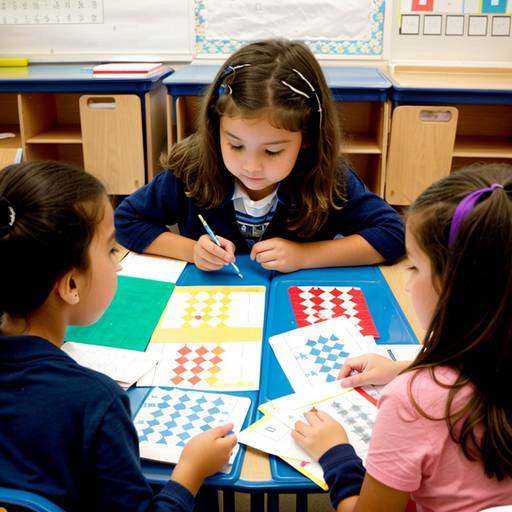
In this engaging 3rd-grade math lesson, students will explore the concept of multiplication as a form of repeated addition. The lesson begins with a discussion to recall prior knowledge, followed by a demonstration using visual aids such as counters to illustrate how multiplication works. Students will then create a multiplication chart on the whiteboard, identifying patterns within the multiplication facts.
During a group activity, students will use pattern blocks or colored paper shapes to create visual representations of multiplication patterns. Each group will present their work, explaining the multiplication reasoning behind their patterns. Independent practice will involve a worksheet featuring multiplication problems and exercises focused on recognizing numerical patterns.
The lesson closes with a class discussion about the real-world applications of patterns in everyday life. Throughout the session, the teacher will monitor understanding and provide feedback, ensuring that all students grasp the concepts of multiplication and pattern recognition effectively. Extensions are included for advanced learners and additional support for those needing more guidance.

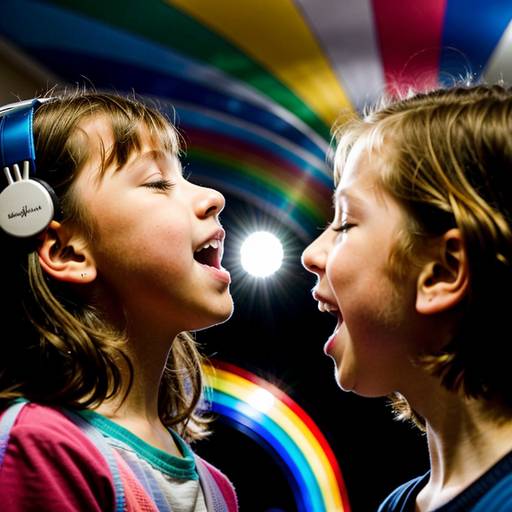
In this engaging lesson plan for 3rd-grade music students, the focus is on exploring the concepts of singing and pitch. The students will begin with vocal warm-up exercises that help them develop pitch recognition and flexibility. They will learn to differentiate between high and low pitches using colorful visual aids, which associate various colors with pitch levels.
Interactive activities include a sing-along where students are divided into groups to sing high and low notes and a "Pitch Walk," where they physically move to designated areas to embody different pitches. Listening activities will involve audio clips of songs with clear pitch variations, allowing students to demonstrate their understanding by reacting with thumbs-up or thumbs-down signals.
To further reinforce their learning, the students will practice singing a simple song that incorporates both high and low pitches in a call-and-response format. The lesson concludes with a circle discussion, where students reflect on their experiences and share what they’ve learned about pitch. Assessment will be conducted through observations and participation in activities, and extension opportunities will encourage students to create their own pitch charts and identify pitch variations in music at home. This lesson promotes active participation and enhances musical skills through a fun and interactive approach.

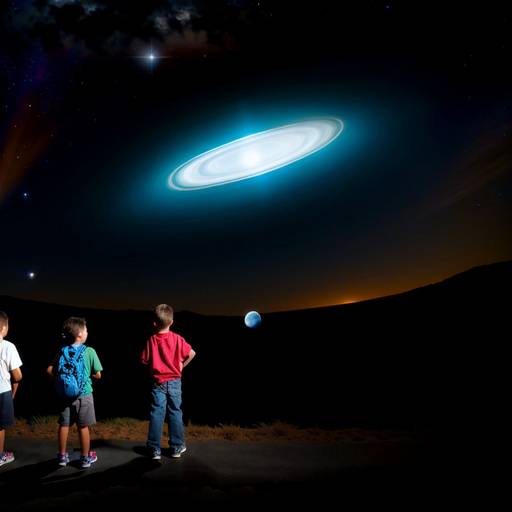
This lesson plan for 3rd graders focuses on the fascinating topic of astronomy, particularly stars and constellations. Students will begin by discussing what they observe in the night sky and watching a short video about the sun, our nearest star. The teacher will present information on various types of stars and the concept of constellations, accompanied by images for visual aid.
Following the presentation, students will work in pairs to create their own constellation on construction paper, using colored pencils and star stickers to enhance their artwork. Each pair will then present their constellation to the class, explaining its name, shape, and any related stories.
To conclude, the class will review the key concepts learned about stars, and students will complete an exit ticket reflecting on what they learned. Assessment will occur through observations during presentations and the completion of a worksheet with star facts. The lesson also offers ideas for extensions, such as a stargazing night with parents and an inclusive reading corner for further exploration of astronomy. Differentiation strategies are included to support a range of learners. Overall, this lesson aims to provide an interactive and engaging experience that enhances students' understanding of stars and constellations.
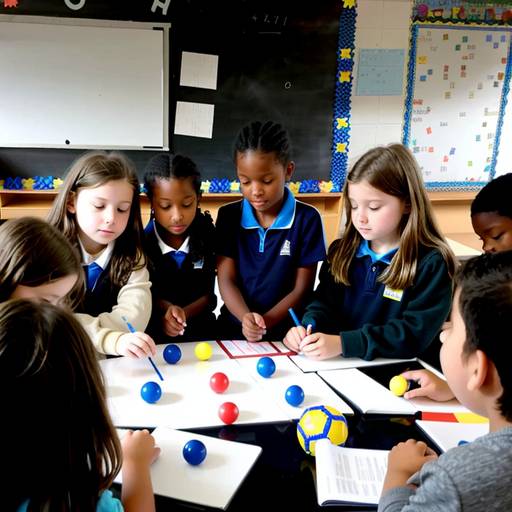
In this 3rd-grade physical science lesson, students will explore the concepts of pushes and pulls as they relate to forces and motion. The lesson begins with an engaging discussion about everyday examples of forces, followed by a hands-on experiment where students build ramps and observe the effects of adding weight to toy cars on their speed. Working in small groups, students will record and compare their findings, facilitating a deeper understanding of how forces impact motion. The class discussion will encourage students to reflect on their observations and connect them to real-life examples. To conclude the lesson, students will share their insights by writing down instances of pushes and pulls they encounter at home. Assessment will be based on participation, group findings, and individual reflections on their learning experiences. Adaptations will be provided to support diverse learners, while extensions will challenge more advanced students to design their own racecars, further investigating the relationship between design, weight, and motion.
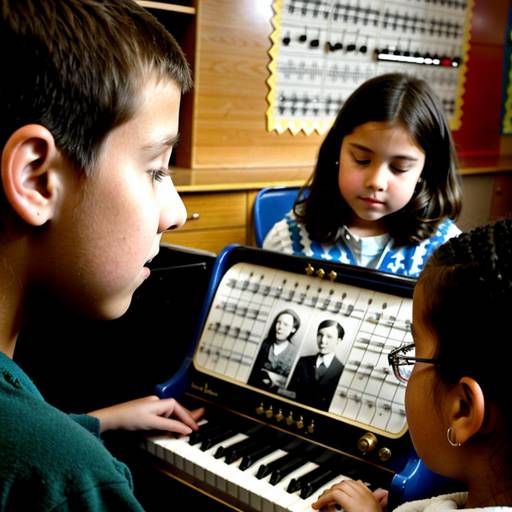
In this engaging 3rd-grade music lesson, students will explore various musical styles throughout history and their cultural significance. The class starts with an interactive discussion where students share familiar musical styles and their feelings about music. This is followed by listening to short audio clips from different genres, including classical, jazz, rock, folk, and blues, prompting students to reflect on what they hear and the emotions it evokes.
Students will then break into small groups, each assigned a specific musical style to research using provided worksheets. They will create informative posters that highlight key characteristics, instruments, and historical contexts related to their genre. Additionally, the groups will experiment with available instruments to compose a simple rhythm or melody inspired by their assigned style.
The lesson concludes with each group presenting their poster and performance to the class, allowing them to share their findings and creative interpretations. The unit aims to underline the connection between music and history, enhancing students’ appreciation for diverse musical expressions. Opportunities for further research and classroom activities will encourage students to delve deeper into the world of music.

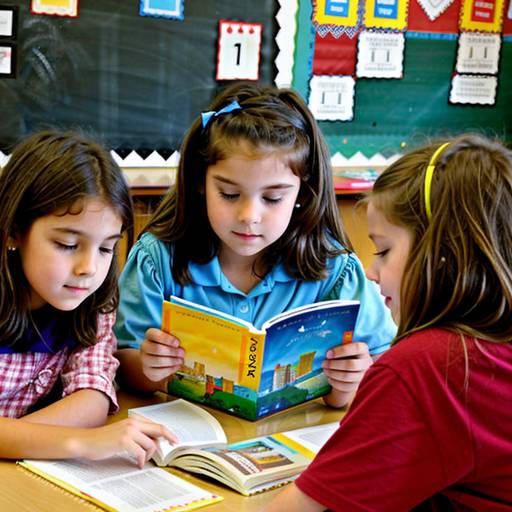
In this 3rd-grade language arts lesson, students will explore various genres of literature, including fiction, nonfiction, poetry, and fantasy. The lesson begins with a discussion to help students identify different types of books they may already know. Key characteristics of each genre are introduced through direct instruction, utilizing posters and engaging questioning to enhance understanding.
Next, students participate in a “Genre Scavenger Hunt,” working in small groups to find examples of books that fit into the discussed genres within the classroom or library. They record their findings and later share them with the class, fostering collaboration and discussion.
To conclude, students receive bookmarks with genre definitions and recap what they learned about the four genres. Assessment is conducted through observation during group activities and by reviewing collected worksheets. Differentiation strategies are included to support varied learning needs, and extension activities encourage further exploration of genres. Overall, the lesson aims to cultivate a passion for reading by emphasizing the diversity of literature available to students.
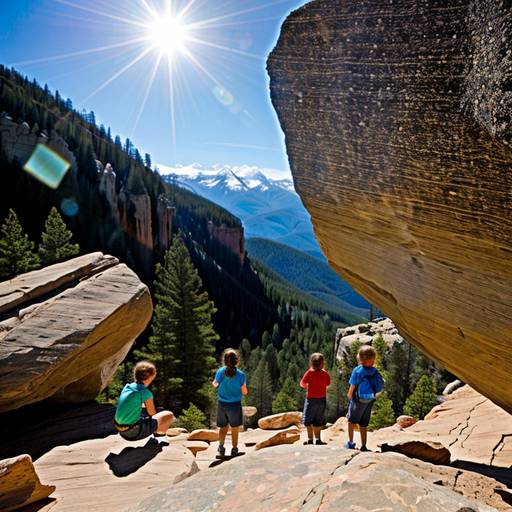
This lesson plan is designed for third-grade students to explore Earth Science with a focus on rocks. It begins with an engaging introduction featuring videos or images of unique rock formations to spark student interest. The lesson introduces the three main types of rocks—igneous, sedimentary, and metamorphic—along with their characteristics and formation processes, and includes a discussion on the rock cycle.
Students engage in hands-on activities where they work in small groups to observe and classify rock samples using hand lenses and classification charts, completing a worksheet to document their findings. Following this guided exploration, students create posters centered on their favorite rock type, which they will present to the class. The lesson concludes with a review of key concepts and an exit ticket activity to assess student understanding and address any lingering questions. Through collaborative discussions, artistic expression, and observational skills, students gain a foundational understanding of rocks and their significance in the Earth's systems.
In this 3rd grade science lesson, students will explore the concepts of motion and the various forces that influence it. The lesson begins with an engaging introduction where students discuss their observations of how objects, like toy cars, move. Key terms such as motion, force, push, and pull are introduced and explained through real-life examples of different types of motion: straight, circular, and back-and-forth.
Following the introduction, students participate in hands-on activities that involve experiments with toy cars on ramps and balloon-powered cars. In small groups, they will test how different weights affect the distance that toy cars travel when released from a ramp, and observe the effects of balloon propulsion on their specially designed cars. Throughout the activities, students will record their observations and data on worksheets.
The lesson concludes with a group discussion where students share their findings, reflect on their learning experiences, and consider how forces like gravity and friction affect the motion of objects. Assessment includes the completion of worksheets and the quality of group presentations. Extensions encourage students to apply their understanding of motion to real-world examples and future projects. Overall, the lesson aims to foster a practical understanding of physical science concepts related to motion among young learners.
This lesson plan focuses on introducing 3rd-grade students to the major parts and systems of the human body through interactive activities and presentations. The lesson begins with a discussion to assess prior knowledge and introduces key body parts using a visual aid. Students are divided into groups, each assigned a specific body system—skeletal, muscular, circulatory, or respiratory—to research and present to the class. This collaborative learning encourages engagement as they share what they learn about the functions and importance of their designated systems.
Following the presentations, students participate in a hands-on activity where they create their own diagrams of the human body, labeling major parts and systems creatively. The lesson concludes with a discussion reflecting on key learnings and the significance of maintaining a healthy lifestyle to support bodily functions. Students are assessed through their diagrams and group presentations, and extension activities provide opportunities for further exploration. Accommodations are included to ensure all learners can engage meaningfully. Overall, the plan fosters a foundational understanding of human biology while promoting teamwork and creativity.