
Filters
Level
Grade
Subject
Subject Area
Subject Topic
Standard(s)
Audience
Keyword
DurationMinutes
2nd Grade Lesson Plans

In this 2nd-grade Earth Science lesson, students will explore different types of weather, including sunny, cloudy, rainy, snowy, and windy conditions. The objective is to help students identify various weather types and understand how weather affects their daily lives. The lesson begins with a discussion about personal weather experiences and continues with an introduction to simple weather instruments such as thermometers, rain gauges, and anemometers.
Students will engage in group activities to sort weather images and share their findings with the class. They will then work independently on a weather journal, illustrating their favorite type of weather and writing about it. The lesson concludes with a class discussion that reinforces the key concepts learned. Assessment will occur through participation in discussions and reviewing the weather journals. Extensions include creating a class mural and conducting outdoor weather observations. The lesson is designed to be interactive, supporting various learning styles and encouraging creativity while fostering an understanding of Earth Science and weather patterns.

In this 2nd-grade social studies lesson, students will explore the concept of community and the various roles of community helpers. The lesson begins with a discussion about what a community is, followed by an introduction to different community helpers such as police officers, firefighters, doctors, and teachers. Through interactive group activities, students will analyze the roles of these helpers and how they contribute to the community's wellbeing. Each student will then create a poster featuring a chosen community helper, including facts about their jobs and a drawing. The lesson concludes with students presenting their posters to the class, promoting understanding of community contributions. Assessment will involve observing participation and evaluating the completed projects. An extension activity may include a field trip or guest speaker to further reinforce the concepts learned.

In this 2nd-grade Language Arts lesson, students will explore the concept of expository writing by focusing on their favorite animals. The lesson begins with a discussion on what expository writing is, highlighting its purpose to inform and explain. Students will learn how to structure their writing, incorporating an introduction, body paragraphs containing facts, and a conclusion.
After modeling the writing process, students will engage in guided practice to brainstorm and organize their thoughts using a graphic organizer. They will then write their expository paragraphs independently, focusing on clarity and organization. The lesson concludes with students sharing their writing with the class, fostering peer feedback and reinforcing their understanding of the genre. Throughout the lesson, there will be opportunities for assessment and differentiation to support diverse learners. Overall, students will develop their expository writing skills while expressing their personal interests.
In this 2nd-grade social studies lesson, students will embark on an exploration of different countries and their geographic locations. The lesson begins with a discussion about geography, introducing students to the concept of maps and the significance of understanding various places around the world. Students will be divided into small groups, each assigned a specific country. They will use fact cards to learn about their country's capital, flag, and an interesting cultural aspect, and then locate it on a world map.
Following their research, each group will present their findings to the class, sharing the country’s key information and engaging their peers with questions. The lesson will conclude with a creative activity where students will decorate individual maps with stickers representing the countries discussed. This lesson aims to help students recognize global diversity and develop a basic understanding of world geography while fostering teamwork and presentation skills. Assessment will include observations during group presentations and the evaluation of students' individual maps for accuracy and creativity. Extensions to the lesson may include ongoing exploration of additional countries or personal connections to different cultures.
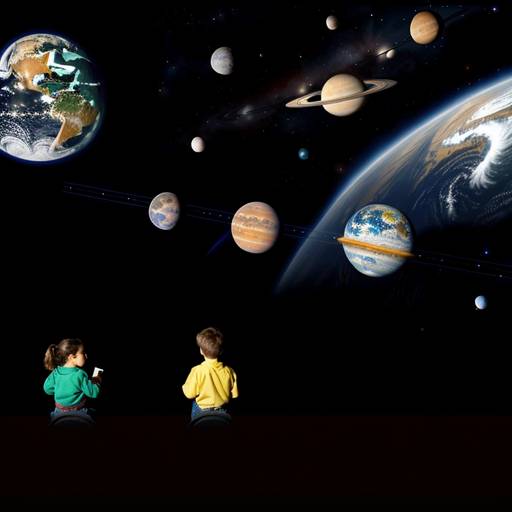
In this 2nd-grade science lesson, students will embark on an exploration of the solar system, focusing on the sun and its eight planets. The lesson begins with an engaging discussion to activate prior knowledge, followed by a presentation featuring vibrant images and videos that illustrate key concepts about each planet's characteristics.
Students will then participate in a hands-on craft activity, where they will create their own models of a chosen planet and share interesting facts with their peers. To reinforce learning and retention, a fun song or dance related to the order of the planets will be introduced, allowing students to engage physically while solidifying their understanding.
The lesson concludes with a brief review and a worksheet for students to complete at home, assessing their comprehension of the material. Throughout the lesson, teachers will observe student participation, ensuring an interactive and supportive environment that caters to diverse learning needs. The lesson also includes suggested extensions for further exploration of astronomy.

In this 2nd-grade technology lesson, students will explore various technology tools commonly used in daily life. The session begins with an engaging discussion about students' favorite tech tools, leading to an introduction to the concept of technology tools and their purposes. Throughout the lesson, students will interact with actual tools such as tablets, smartphones, and computers, while learning basic computer terminology using visuals.
In guided group activities, students will match picture cards of technology tools with their definitions, fostering collaboration and discussion. For independent work, students will draw their favorite technology tool and write a sentence describing its function, allowing for personal expression and reinforcement of understanding. The lesson concludes with a sharing segment where students present their drawings and summaries, encouraging public speaking and assessment of comprehension.
Assessment will focus on participation in discussions and the completed worksheets to evaluate student understanding. Accommodations will be provided for varying student needs to ensure an inclusive learning environment. After the lesson, reflection will be conducted to identify successes and areas for improvement for future technology education.
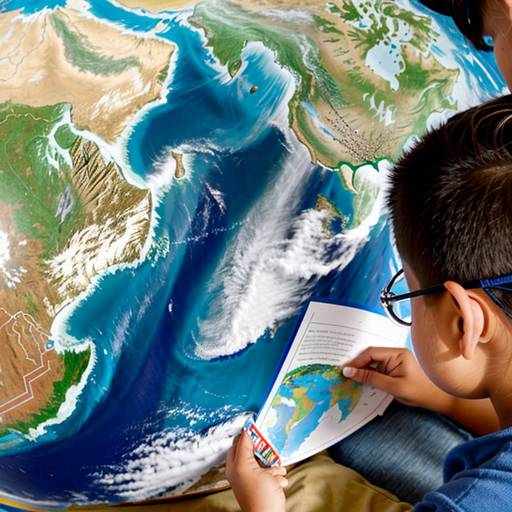
In this 60-minute social studies lesson for 2nd grade, students will explore geography and various landforms, including mountains, hills, valleys, rivers, lakes, and deserts. The lesson begins with a discussion to activate prior knowledge, followed by direct instruction using picture cards and a world map to illustrate characteristics and examples of each landform. In small groups, students will create posters detailing their assigned landform, including drawings and facts, which they will then present to the class. Each student will also design their own landform map featuring at least three types of landforms, labeling them accordingly. The lesson concludes with sharing maps and a review of key concepts learned. Assessment will focus on participation, group work, and the individual map creation. Adaptations and extensions are provided to accommodate varying student needs and to deepen the learning experience in future lessons.
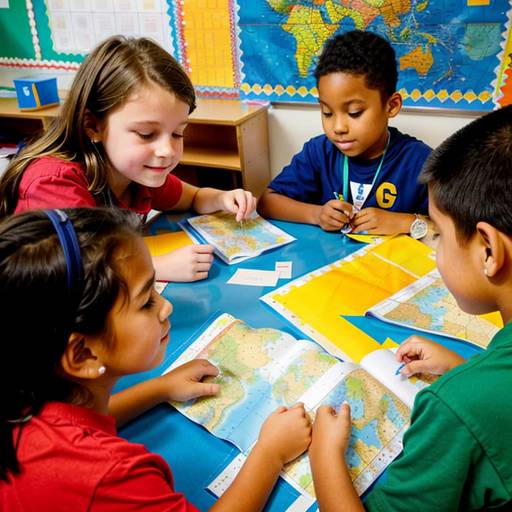
This lesson plan for 2nd-grade students focuses on introducing basic geographical concepts and map skills. Students will explore essential terms related to geography, such as landforms and bodies of water, while also learning about cardinal directions. The lesson includes a visual exploration of a world map or globe, followed by discussions on map features and symbols.
To reinforce their understanding, students will engage in a hands-on activity where they create their own imaginative maps, incorporating various geographical features like forests, rivers, and mountains. They will also develop symbols for these features and create a key, enhancing their ability to interpret and communicate map information.
The lesson concludes with a class discussion, encouraging students to reflect on their learning and share their maps with peers. Assessment will be based on participation and the thoroughness of their maps, with additional support provided as needed for diverse learners. An optional extension activity introduces a fun game that further develops map skills and creativity.
This lesson introduces 2nd-grade students to the concept of timelines in history. It begins with a story about a famous historical figure to spark interest, followed by a discussion about key events in both history and personal lives. Students learn how to create a timeline by examining a pre-made poster of significant historical events and collaboratively building a large classroom timeline using sticky notes to represent their suggestions. For independent practice, students draw and write about three important events in their lives on blank paper, ensuring they are arranged chronologically. The lesson concludes with student presentations of their personal timelines, reinforcing the connection between individual experiences and broader historical narratives. The lesson is designed to engage students through interactive activities, assessment through observation, and opportunities for differentiation based on individual learning needs.

This 2nd-grade art lesson focuses on teaching students the fundamentals of shape and color in drawing. During the class, students will learn to recognize and combine basic shapes to create flower and plant drawings, using colorful materials such as markers, crayons, and paints. The lesson begins with a discussion about gardens and visual references, followed by a demonstration on how to draw simple flowers using basic shapes and incorporate various coloring techniques. Students will then engage in an individual drawing activity, where they will create their own unique flowers, share their work with classmates, and explore their creativity. Finally, the class will collaborate to assemble a vibrant garden mural, combining their individual artworks into a cohesive display. The lesson emphasizes active participation and encourages students to reflect on their artistic process, promoting both individual expression and teamwork. Cleanup will also be incorporated to foster responsibility for shared materials.