
Filters
Level
Grade
Subject
Subject Area
Subject Topic
Standard(s)
Audience
Keyword
DurationMinutes
2nd Grade Lesson Plans

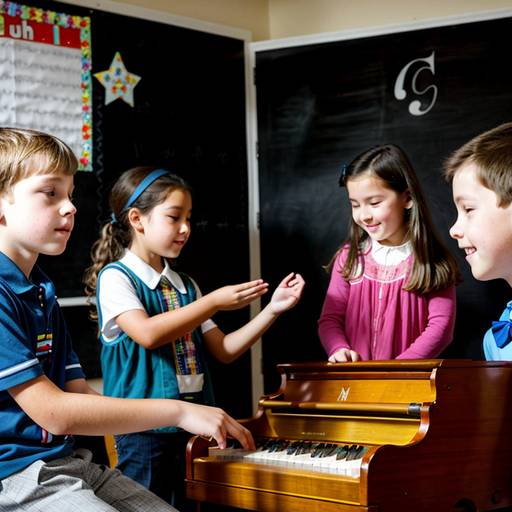
In this 2nd grade music lesson, students will explore the world of music history and notable composers. The lesson begins with an introduction to the concept of composers and a discussion about how music evokes emotions. Students will engage in listening activities where they identify composers based on short audio clips of their famous works, prompting discussions about the feelings these pieces convey.
Moving on, students will express their interpretations of the music through movement, dancing in ways that reflect the different moods of the pieces they hear. They will then create their own artwork inspired by a favorite composer or composition, using crayons or markers to visualize how the music makes them feel.
The lesson concludes with an opportunity for students to share their drawings and thoughts with the class, reinforcing their understanding of the relationship between music and emotion. Throughout the lesson, participation and the creative output of students will be assessed to gauge their grasp of the material. As an extension, students are encouraged to listen to various musical pieces at home and share their favorites in future classes, promoting an ongoing appreciation for music history.
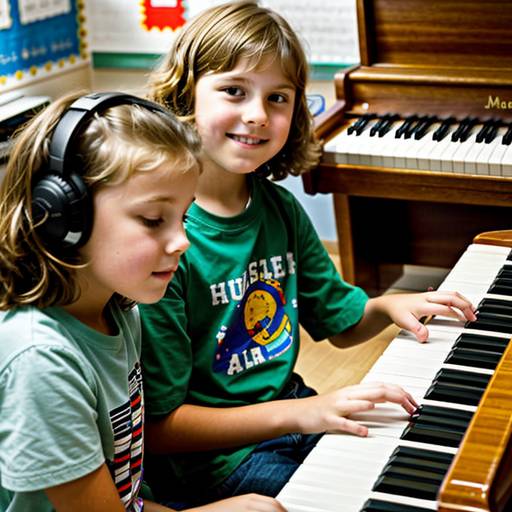
In this 2nd-grade music lesson, students will explore various musical instruments, focusing on keyboard instruments. The session begins with an engaging discussion about instruments and a listening activity featuring different keyboard sounds, such as those from pianos and synthesizers. A demonstration on how to play basic notes on a keyboard follows, illustrating the concepts of pitch and sound variation.
Students will then engage in a hands-on activity where they work in small groups, taking turns playing simple melodies on the keyboard and using rhythm instruments to accompany each other. This collaborative experience promotes teamwork and creativity in music creation. A group discussion will allow students to share their experiences and favorite sounds.
To conclude, the lesson highlights the significance of instruments in music and assigns a fun homework task where students will draw their favorite musical instrument and write a short sentence about it. Assessment will focus on participation, collaboration, and the quality of the homework submitted. Extensions include inviting a local musician for a demonstration and organizing a mini talent show. Overall, the lesson aims to foster an appreciation for music while providing a hands-on learning experience.

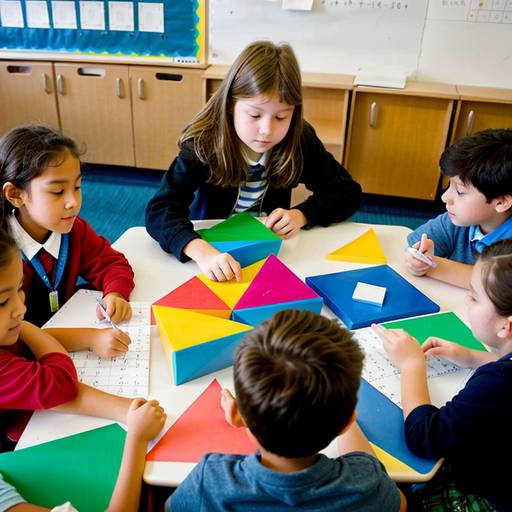
In this 2nd-grade math lesson, students will explore basic geometric shapes—circles, squares, triangles, and rectangles—by identifying and describing their properties. The lesson begins with a discussion about shapes found in their environment, followed by direct instruction where students learn about each shape’s characteristics, including the number of sides and corners.
Guided practice involves sorting a set of shape cutouts into labeled bins, allowing students to reinforce their understanding of shape properties. An engaging scavenger hunt encourages students to find real-world objects that correspond with the shapes they’ve learned. Following this activity, students will draw and label an object they discovered that represents a particular shape.
The lesson concludes with a group sharing session and a review to consolidate the concepts covered. Assessment occurs through observation during activities and by reviewing students' drawings to ensure accurate understanding. Extension activities are provided for further exploration, accommodating diverse learning needs and encouraging creativity in shape representation.
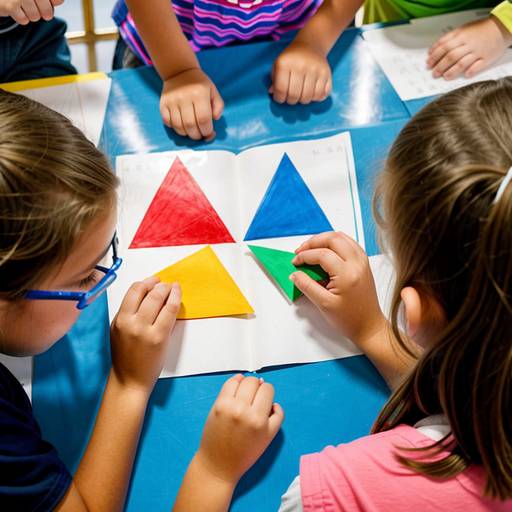
In this 1-hour math lesson for 2nd graders, students will explore geometric shapes and patterns through interactive activities. The session begins with a discussion about common shapes, where students identify and describe characteristics of circles, squares, triangles, and rectangles. They will then work in small groups to sort shapes by different attributes, encouraging collaboration and communication.
Following the sorting activity, students will create their own patterns using pattern blocks or shape tiles, allowing them to experiment with colors and combinations. The lesson will introduce symmetry through a hands-on folding and cutting activity, where students will create symmetrical designs using colored paper.
To conclude, students will share their patterns and symmetry projects, reinforcing their understanding of shapes and real-world applications. Assessment will be based on participation, the creativity of patterns, and the accuracy of symmetrical designs. Extensions will be available for advanced learners, while modifications will support those needing additional assistance, ensuring inclusivity and engagement for all students.
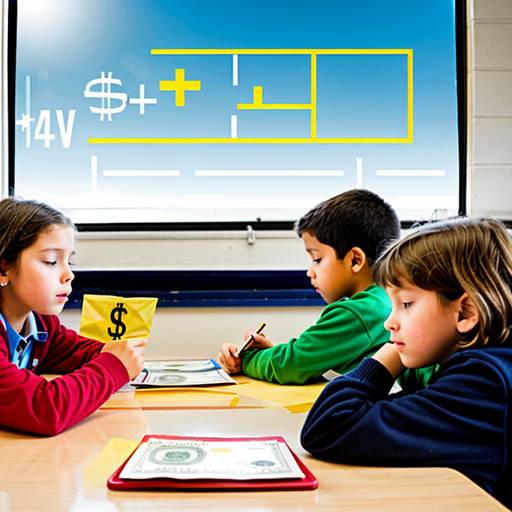
In this engaging 60-minute math lesson for 2nd graders, students will explore the fundamentals of money, specifically focusing on identifying and valuing different coins. The lesson begins with a discussion about the role of money in everyday life and an introduction to the various types of coins—pennies, nickels, dimes, and quarters. Through interactive activities, students will categorize and total real or play coins in small groups, reinforcing their understanding of coin values.
Following this, they will complete worksheets featuring simple addition problems involving coins, allowing them to apply their knowledge in a structured format. The hands-on component of the lesson will involve a classroom store setup where students can use play money to "purchase" items, further practicing counting and making financial transactions.
The lesson concludes with a reflection session that provides students an opportunity to share what they learned, along with an exit ticket task that reinforces their understanding. Throughout the lesson, the teacher will assess student engagement and comprehension, providing support as needed and offering differentiated activities for varying skill levels. This comprehensive approach ensures that students not only grasp the concept of money but also gain practical skills in handling it.

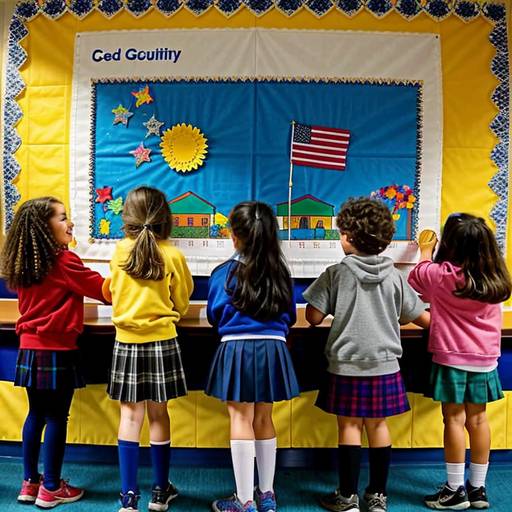
In this 2nd-grade social studies lesson, students will explore the concept of community and the importance of diversity within it. The lesson begins with a discussion about what constitutes a community, encouraging students to share their thoughts and experiences. Students will then complete a worksheet reflecting their unique backgrounds, favorite traditions, and cultural practices, followed by a sharing circle to promote active listening and respect for each other's stories.
The main activity involves creating a collaborative mural that symbolizes the diversity in the classroom. Students will work in small groups to design sections of the mural, incorporating symbols and ideas that represent their backgrounds and cultures. After assembling the mural, the class will reflect on what they learned about each other and the value of diversity in strengthening their community.
Assessment will include observations of student participation, review of their completed worksheets, and evaluation of the mural for creativity and teamwork. To extend the learning experience, a "Diversity Day" can be organized, allowing students to further celebrate their cultural differences by dressing in traditional attire and sharing food or stories with their peers. Overall, the lesson aims to foster a sense of belonging and appreciation for diversity among students.

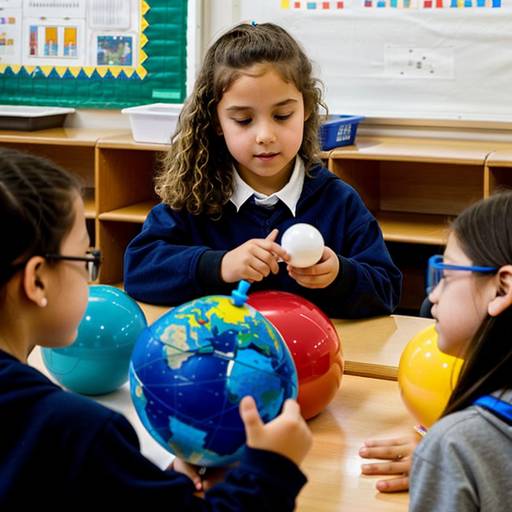
This 2nd-grade science lesson focuses on introducing students to the concepts of push and pull as forces that cause movement. The lesson begins with a discussion where students share their experiences and observations about pushing and pulling objects. Following this, the teacher provides a direct instructional segment using toy cars and balls to demonstrate how these forces create movement and involve energy.
Students then participate in a hands-on experiment, working in small groups to test different degrees of pushes and pulls on toy cars and balls rolled down ramps. They will measure the distance traveled and document their observations. Throughout the experiment, students will engage in discussions within their groups about their findings. The lesson concludes with each group sharing their discoveries with the class, reinforcing their understanding of how pushes and pulls affect energy and movement in real-life scenarios.
Assessment will be based on student participation, the quality of their recorded observations, and their ability to articulate the relationship between forces and energy. There are opportunities for extension activities and differentiation to support diverse learners, ensuring that the lesson is engaging and accessible for all students.
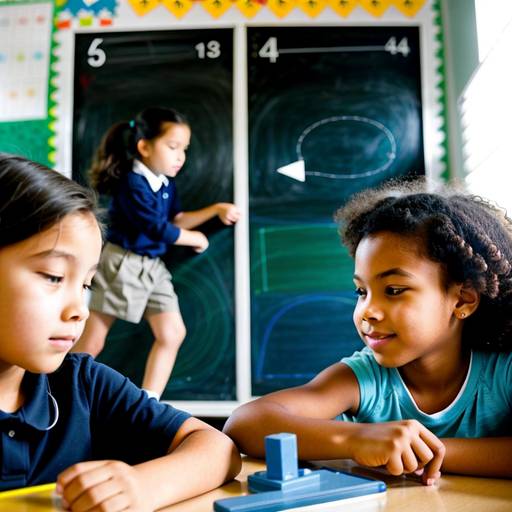
This 2nd-grade science lesson introduces students to the concept of energy, focusing on kinetic and potential energy through engaging, hands-on activities. The lesson begins with a discussion to gauge students' prior knowledge about energy, followed by the exploration of two main types of energy.
During the first activity, students create balloon rockets to observe how potential energy in the air is transformed into kinetic energy as the balloons are released. In the second activity, students work in small groups to launch toy cars using rubber bands and ramps, experimenting with different ramp heights and measuring the cars' distances traveled and speeds.
The lesson concludes with a group discussion where students share their discoveries and complete worksheets that reinforce what they learned. Through observation and assessment, the teacher evaluates student understanding and engagement, and opportunities for extension are suggested to encourage further exploration of energy in their everyday lives. The lesson effectively combines theoretical concepts with practical application, promoting active learning and collaboration among students.
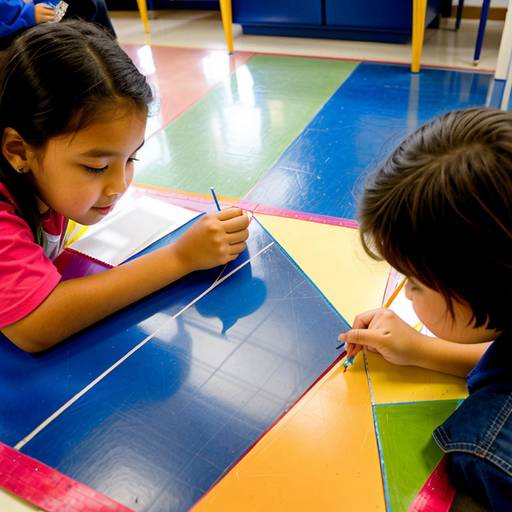
In this 2nd-grade math lesson, students will explore the concepts of geometry and lines through interactive activities and creative expression. The lesson begins with a discussion on various types of lines, including straight, curved, horizontal, vertical, and diagonal, accompanied by visual examples. Students will then engage in a fun game to identify geometric shapes, such as squares, rectangles, triangles, and circles, by observing their characteristics.
Following this, the class will participate in a scavenger hunt, during which students will search for and document different types of lines and shapes found in their environment. The lesson culminates in an art activity where students create their own artwork using the lines and shapes they have learned about, encouraging creativity and application of their understanding.
Students will share their artwork with the class and reflect on their learning, discussing the importance of lines and shapes in everyday life. Assessment will take place through observation during activities, review of the completed artwork, and a quick exit ticket to reinforce the concepts covered. The lesson is designed to be engaging, allowing for differentiation to support varying levels of student understanding.
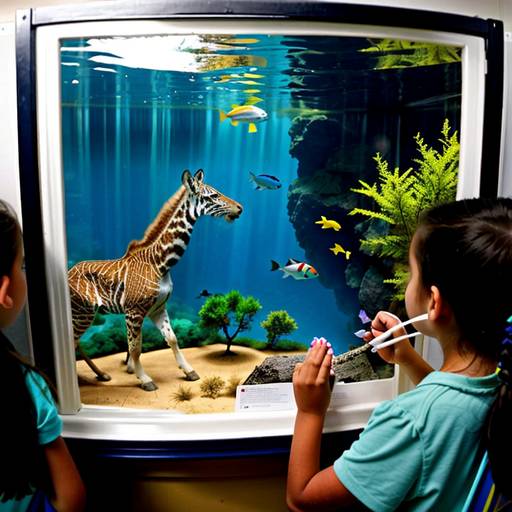
In this 2nd grade life science lesson, students will explore the various habitats where animals live, such as forests, deserts, oceans, and grasslands. The lesson begins with a discussion about habitats and their importance, followed by a presentation of different environments and the animals that reside within them. Students will engage in group activities to match animals to their correct habitats and share interesting facts about them. Afterward, they will individually create drawings that depict their favorite habitat, labeling the animals and their unique survival features. The class will reconvene to share drawings and reflections on their learning. Assessment will include observation of participation and review of the drawings, ensuring students understand the relationship between animals and their environments. Extensions can include field trips to local zoological settings and the creation of a classroom habitat wall for ongoing learning.