
Filters
Level
Grade
Subject
Subject Area
Subject Topic
Standard(s)
Audience
Keyword
DurationMinutes
2nd Grade Lesson Plans

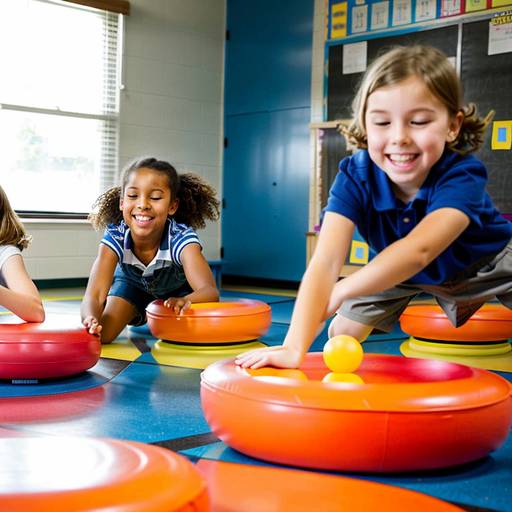
In this 2nd-grade science lesson focused on physical science, students will explore the concepts of energy and motion through engaging activities. They will learn about two main types of energy: kinetic energy, which is the energy of motion, and potential energy, which is the stored energy of position. The lesson begins with a discussion to elicit students' ideas about energy, followed by demonstrations showcasing the conversion of potential energy into kinetic energy using a ramp.
Students will then engage in a hands-on experiment in small groups, using different types of balls (rubber and ping pong) to observe how height affects the distance traveled when rolled down a ramp. They will predict outcomes, measure distances, and record their findings, fostering teamwork and critical thinking skills. The lesson concludes with a class discussion, where students share their observations and reflect on how energy was demonstrated during the activities. Assessment will be based on participation, collaboration, and the accuracy of their recorded results. Extensions for further exploration of energy in everyday life are suggested for future lessons.

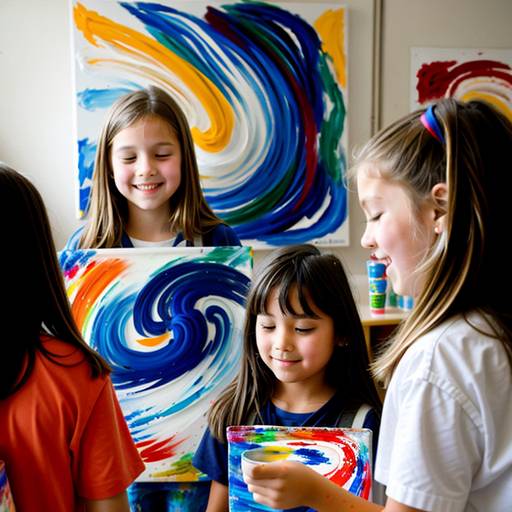
In this 2nd-grade art lesson, students will explore the relationship between emotions and colors through various painting techniques. The lesson begins with a discussion about different emotions and how specific colors can represent them. Students will learn techniques such as wet-on-wet, dry brushing, layering, and sponge painting through demonstrations. After practicing these techniques in small groups, students will create their own emotion-themed paintings, using their chosen colors and techniques to reflect their feelings. A gallery walk will allow students to display and share their artwork with peers, fostering a supportive environment for discussion. The lesson aims to enhance students' understanding of color theory and encourage creative expression while providing opportunities for both guided and independent artistic exploration. Assessment will focus on students' experimentation with techniques and their ability to connect their artwork to the emotions discussed. Adjustments will be made based on student feedback and engagement.

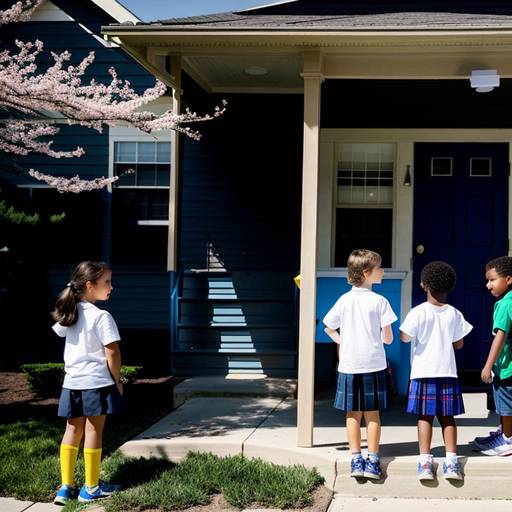
In this 2nd-grade social studies lesson, students will explore the concept of community and the essential rules that help maintain order and safety. The lesson begins with a class discussion on what constitutes a community and the various roles that individuals play within it, such as teachers, nurses, and firefighters. After identifying important community roles, students will work in small groups to discuss and choose three roles they believe are crucial, sharing their thoughts with the class.
Building on this foundation, students will brainstorm a list of rules necessary for their ideal neighborhood to promote safety and harmony. Each group will then create a colorful poster illustrating one rule along with a corresponding drawing, encouraging creativity and collaborative learning. The lesson concludes with presentations from each group, allowing students to explain their chosen rule and reflect on the importance of community regulations. An exit ticket will help assess students' understanding by asking them to identify a community role and a key rule as they leave. Extension activities may include a field trip or inviting community leaders for a guest talk, further enriching students' understanding of their neighborhoods.
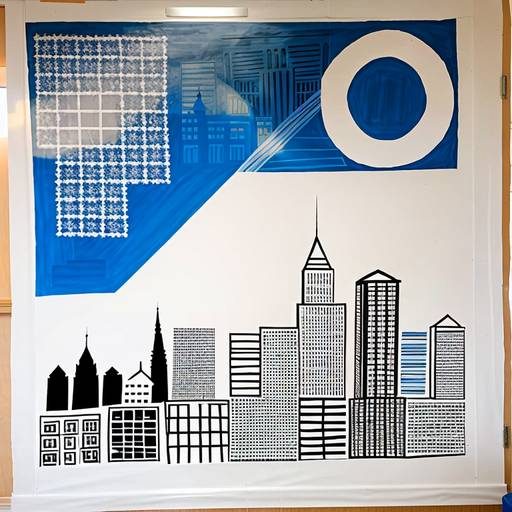
In this 2nd-grade art lesson, students will explore how to create a whimsical cityscape using basic shapes and lines. The session begins with a discussion about the components of a city and an exploration of how shapes like squares, rectangles, triangles, and circles can represent various buildings and features. After a demonstration on combining these shapes into a cohesive drawing, students will begin crafting their own imaginative cityscapes. They will outline their drawings in pencil, add details, and then use colored markers or crayons to bring their creations to life with vibrant colors. The lesson concludes with a gallery walk where students can share their work and offer reflections on their art and that of their peers. Students will be assessed on their participation, creativity, and effective use of shapes and lines in their drawings. Additionally, extension activities may involve writing a short story about their city or creating a three-dimensional version using recycled materials. This engaging lesson fosters artistic skills while encouraging imagination and collaboration among young learners.

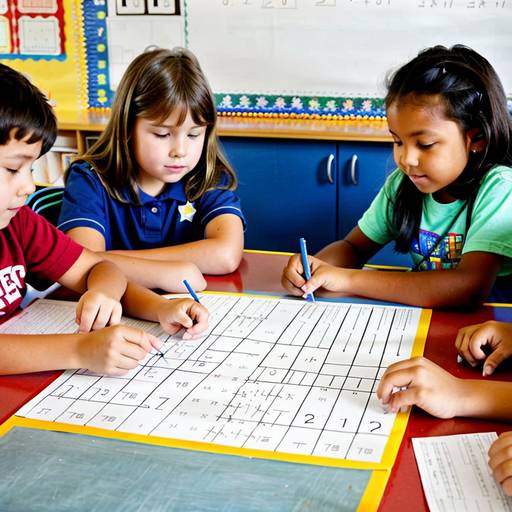
In this 2nd-grade mathematics lesson, students will explore the concept of addition with regrouping. The lesson begins with an engaging story that introduces a problem involving addition, prompting class discussion. Following this, the teacher will explain and demonstrate the regrouping process using examples on the whiteboard. Visual aids, such as base-10 blocks, will help illustrate how to manage carrying over when the sum exceeds ten.
Students will then participate in guided practice, working collaboratively to solve addition problems while applying the regrouping technique. The teacher will facilitate this process, encouraging students to share their strategies and approaches. Afterward, students will engage in independent practice with worksheets that feature problems requiring regrouping.
The lesson concludes with a recap of the main concepts and an exit ticket, where each student solves a simple problem to assess their understanding. Throughout the lesson, differentiation strategies will be employed to support both advanced learners and those who may need additional help. The teacher will reflect on the effectiveness of the lesson and consider adjustments for future instruction based on student performance and engagement.
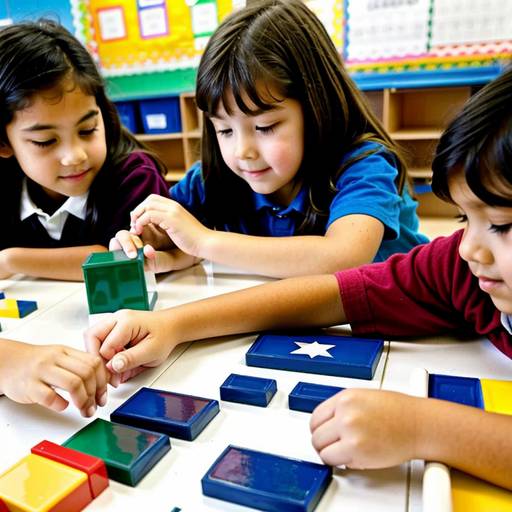
In this 2nd-grade math lesson, students will explore the concept of addition using hands-on manipulatives. The lesson begins with a review of addition basics, followed by a guided practice session where students work in groups to model addition problems using counting blocks. They will then participate in a series of “Addition Stations,” where they will solve different addition problems using manipulatives such as ten frames, number lines, and counting blocks. Each group will rotate through the stations, enhancing their understanding through interactive experiences. The lesson concludes with a discussion where students share their solutions and reflect on how manipulatives helped them grasp addition concepts. Assessment will be conducted through observation and completed worksheets, and accommodations will be provided for diverse learners. Extensions may include addition games and more advanced problems for those ready to challenge themselves.
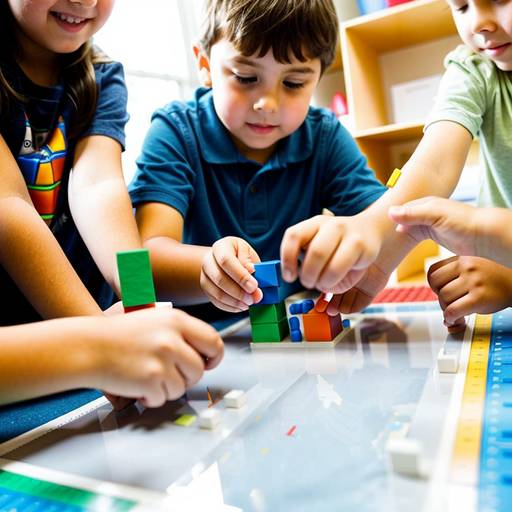
In this 2nd-grade math lesson, students will explore the concept of volume through hands-on activities and measurement. The lesson begins with a discussion about volume, encouraging students to estimate and compare the capacity of various containers. After demonstrating how to measure volume using non-standard units like blocks, students will work in small groups to measure and record the volume of different containers. They will then create drawings of their chosen container, including the volume measurement. The class will come together to share their findings, fostering collaboration and engagement. To assess understanding, teachers will observe group participation and evaluate students' drawings and measurements. The lesson allows for extensions and adaptations, making it accessible for all learners while connecting volume measurement to real-life applications.
This lesson plan focuses on introducing 2nd-grade students to the concept of multiplication through the use of arrays. The objective is for students to understand multiplication as repeated addition, create their own arrays, and utilize them to solve simple multiplication problems. The lesson begins with an engaging discussion that connects everyday scenarios to multiplication, followed by direct instruction that explains arrays as visual representations of multiplication facts. Students then participate in guided practice, drawing their own arrays on grid paper and sharing their work with partners. Independent practice involves completing a worksheet that reinforces the lesson’s concepts, including word problems requiring array representation. The lesson concludes with a review and an exit ticket activity that encourages students to demonstrate their understanding by creating and illustrating a multiplication problem. Overall, the lesson aims to foster a deeper understanding of multiplication using arrays while promoting collaboration and creativity among students.
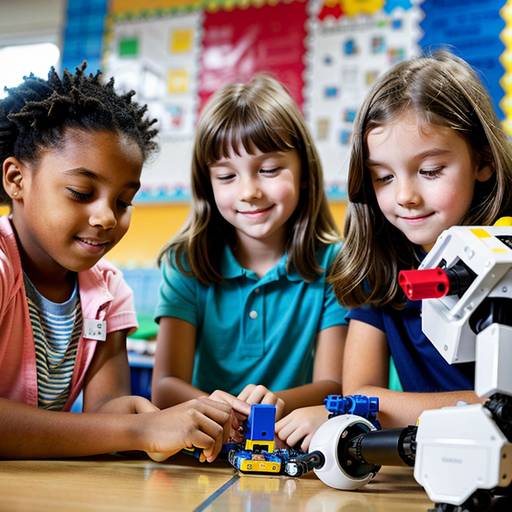
In this 60-minute technology lesson for 2nd graders, students are introduced to robotics through an engaging and interactive building activity. The lesson begins with a brief video showcasing different robots in action, followed by a discussion on how robots assist in various real-world applications.
Students learn about the essential components of a robot—sensors, processors, and actuators—before being guided through the engineering design process, which includes steps such as asking questions, imagining ideas, planning designs, creating prototypes, and improving their builds.
Working in pairs, students then sketch their robot ideas and construct their creations using LEGO bricks and craft supplies. They present their robots to the class, sharing the functionality and materials, while classmates ask questions. The lesson wraps up with a reflective discussion on what students learned, the challenges they encountered, and how they overcame them. Ongoing assessment occurs through observation, verbal feedback, and a simple rubric evaluating creativity, functionality, and teamwork.
Opportunities for extension and differentiation are also included to accommodate students’ varying abilities and interests. Overall, this lesson fosters creativity, collaboration, and a foundational understanding of robotics.

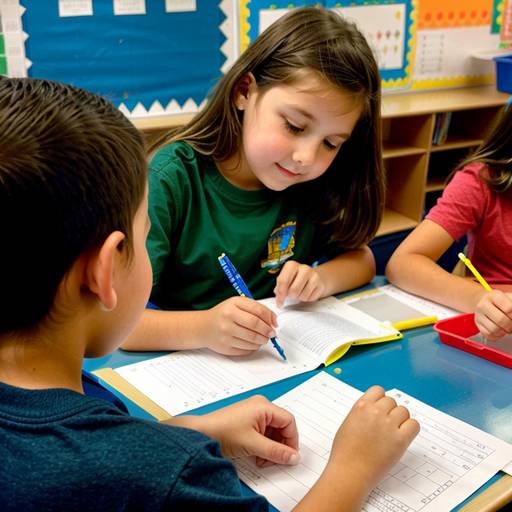
This 2nd-grade Language Arts lesson focuses on grammar and sentence structure, specifically teaching students about subjects and predicates. The lesson begins with an engaging introduction, where students explore simple sentences displayed on the whiteboard. Through guided instruction, they learn to identify and understand subjects and predicates, observing mixed-up sentences for clarification.
During guided practice, students work in small groups, using sentence strips to create their own sentences while identifying each part. They then illustrate their sentences on chart paper. The activity transitions to independent practice, where students complete a worksheet that reinforces their understanding of sentence structure by filling in blanks to form complete sentences and creating an original sentence of their own.
The lesson concludes with students sharing their sentences and reflecting on what they've learned. Assessment includes observation during group work, reviewing completed worksheets, and collecting exit tickets to gauge individual understanding of sentence components. Differentiation strategies are in place to support diverse learning needs. Overall, the lesson aims to build students' skills in constructing and understanding complete sentences.