
Filters
Level
Grade
Subject
Subject Area
Subject Topic
Standard(s)
Audience
Keyword
DurationMinutes
1st Grade Lesson Plans

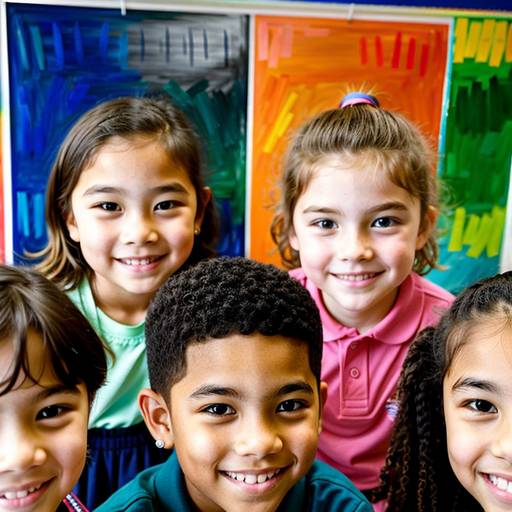
In this 1st-grade art lesson, students will explore the concepts of primary and secondary colors through hands-on painting activities. The lesson begins with a discussion about colors, encouraging students to share their favorites and observe the colorful world around them. A demonstration will follow, where the teacher showcases how to mix primary colors (red, blue, yellow) to create secondary colors (green, orange, purple), using a color wheel for visual reference.
In guided practice, students will create blocks of color on their construction paper, painting sections with both primary and mixed secondary colors. Following this, they will have the opportunity to independently create their own artwork using the colors they've made, allowing them to express their creativity.
The lesson wraps up with a sharing session where students present their artworks and explain the colors they've used. Assessment will focus on their engagement with the materials, understanding of color mixing, and the final artwork produced. Adaptations are available for varying skill levels, ensuring all students can participate and enjoy the exploration of color in art.

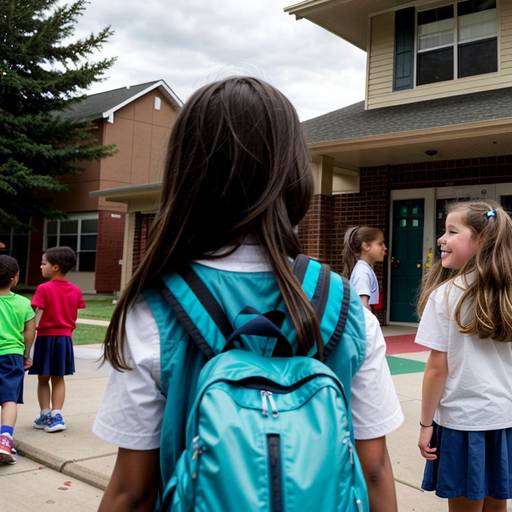
In this 1st-grade social studies lesson, students will explore the concept of community by identifying its various components, including people, places, and activities. They will learn about the significance of rules in maintaining safety and harmony within a community. The lesson begins with a discussion about what a community is, supported by visual aids showcasing community elements. Students will then engage in collaborative group work to brainstorm and share essential community rules. Following this, they will create their own illustrations of a community scene, incorporating rules they deem important. The lesson concludes with a sharing session where students present their artwork and explanations, reinforcing their understanding of the role of rules in fostering a positive community environment. Assessment will include observations of group participation and evaluation of students' creative outputs, ensuring all learners are supported through differentiated instruction. A follow-up activity encourages students to actively observe their real-life community to connect classroom learning with their surroundings.

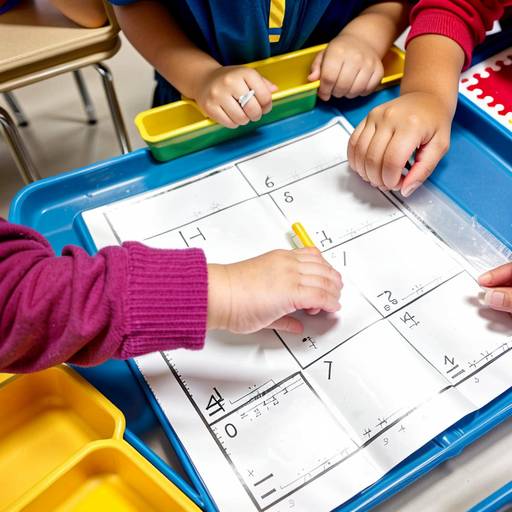
In this first-grade math lesson, students will explore the concept of addition using manipulatives to enhance their understanding through hands-on experience. The lesson begins with a review of counting, followed by a demonstration of addition using visual examples on the whiteboard. Students will work in small groups, where they will practice solving addition problems with blocks or LEGO, recording their equations on math mats. During guided practice, they will engage in collaborative problem-solving, while independent practice will encourage them to create their own addition problems. The class will then reconvene to share their work, facilitating discussion and reinforcing the concept of addition as putting together. Assessment will be based on observations during group activities and the accuracy of written equations on math mats, allowing for tailored support to address individual learning needs. The lesson aims to foster a solid foundation in addition while promoting teamwork and communication skills among students.
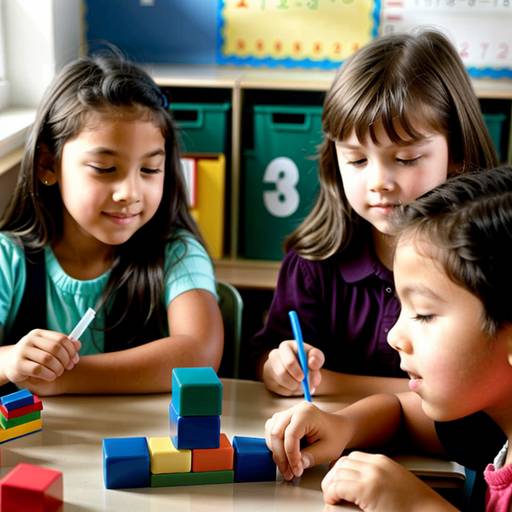
In this 1st-grade math lesson, students will explore the concept of addition with single-digit numbers through interactive and engaging activities. The lesson begins with a discussion to introduce addition, utilizing a number line to illustrate the concept. A storytelling session featuring a relatable children's book emphasizes the idea of combining quantities.
Following this, students will receive direct instruction on solving simple addition problems using manipulatives, allowing them to visualize and understand the concept hands-on. Small group and independent practice sessions will reinforce their learning as they use counting blocks and worksheets to solve addition problems, promoting cooperation and communication among students.
The lesson concludes with a brief sharing session where students reflect on what they learned and participate in a fun number game to reinforce their understanding. Assessment will be conducted through the review of worksheets and observation of group interactions, allowing for adaptation to individual student needs. This approach fosters a supportive and engaging environment as students build foundational skills in addition.

In this 1st-grade Language Arts lesson, students will explore the foundational elements of sentence structure, specifically focusing on subjects, verbs, and objects. The lesson begins with a fun song or video to pique interest, followed by a discussion to introduce what sentences are.
During direct instruction, the teacher models a simple sentence, breaking it down into its components. Students then engage in a guided practice activity where they work in small groups to create their own sentences using word cards. Following this, each student will independently compose a sentence on a strip of paper or large sheet, illustrating their work to enhance creativity.
The lesson concludes with a sharing session where students present their sentences to the class, reinforcing their understanding of sentence structure. Assessment will be ongoing through observations during activities and by evaluating the sentences students create, ensuring they grasp the essential components of complete sentences. Modifications are included to support diverse learners, allowing all students to participate and succeed. This interactive and engaging approach helps build students' confidence in their grammar skills.
In this 1st-grade math lesson plan, students will explore the concept of multiplication by understanding it as repeated addition through hands-on activities. The lesson begins with an engaging discussion about grouping objects, using counting bears to demonstrate how to create equal groups. Students will physically group the bears and learn to formulate multiplication equations based on their groupings, reinforcing vocabulary associated with multiplication.
As part of a collaborative activity, students will work in small groups to decide how to arrange a given number of bears into equal groups and present their findings to the class, explaining their equations. The lesson concludes with a review of key concepts and an interactive quiz to assess understanding. Students will complete a worksheet for homework to further practice their skills. Optional extensions involve creating a multiplication display in the classroom and incorporating storytelling for additional reinforcement of the concept. Overall, the lesson aims to make multiplication tangible and engaging for young learners.
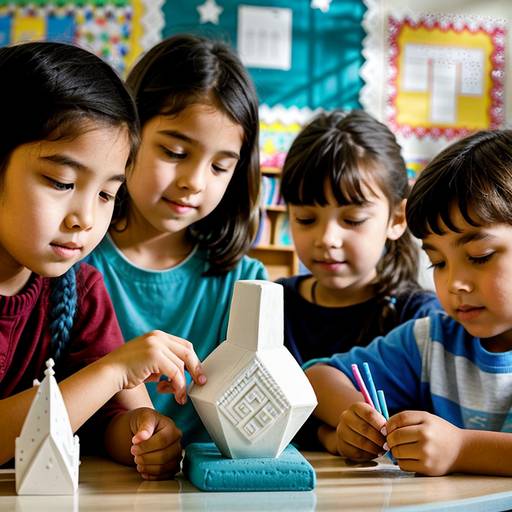
In this 1st grade art lesson, students will dive into the world of three-dimensional art by creating unique sculptures using air-dry clay. They will begin with a discussion about what sculpture is and how it differs from other art forms, while examining examples of various sculptures. Following this, students will explore basic shapes by modeling them in clay.
After a brief sketching activity to brainstorm their clay creature designs, students will have the opportunity to construct their sculptures using different clay shapes to form bodies, heads, and details. Throughout the activity, they will learn to combine shapes, attach pieces, and smoothly finish their creations.
At the end of the lesson, students will showcase their sculptures to the class, sharing stories about their creations and the shapes they used. The lesson will be assessed through observation of participation, creativity, and the final sculptures. Students will leave with an understanding of basic shapes in sculpture and a newfound appreciation for three-dimensional art.
In this 1st grade language arts lesson, students will learn about proper nouns and the importance of capitalization. The lesson begins with a discussion on nouns, followed by an introduction to proper nouns, including names, places, and days of the week. Students will engage in guided practice by identifying proper nouns in sentences on a worksheet, where they'll circle and rewrite the sentences with the correct capitalization. The lesson incorporates interactive elements, including flashcards and a story reading, where students will shout out proper nouns as they come up. Participation is encouraged with rewards like stickers, and assessment will be done through worksheet reviews and classroom observations. Differentiation strategies are included to support varying student needs, ensuring an inclusive learning environment. Overall, the lesson aims to enhance students' understanding of grammar while making the learning experience enjoyable.
In this 1st Grade Language Arts lesson, students will focus on understanding and applying the rules of capitalization, specifically at the beginning of sentences and for proper nouns. The lesson begins with a warm-up activity where students share their names and observe capitalization in writing. A read-aloud from a picture book reinforces the concept of capital letters.
Following this, a mini-lesson provides direct instruction on how to capitalize sentences and proper nouns, accompanied by examples on the whiteboard. Students will engage in a collaborative activity using sentence strips, where they will identify and correct capitalization errors.
For independent practice, they will work on a worksheet containing sentences that require capitalization corrections. The lesson concludes with students sharing their corrected sentences and receiving rewards for their efforts. Assessment will be conducted through observation during activities and by reviewing the worksheets for understanding. Extension activities are provided for advanced learners and additional support for those who may need it.
This 1st grade Language Arts lesson focuses on teaching students the importance of capitalization in sentences. The lesson begins with a discussion about capitalization, specifically the need to start sentences with a capital letter and to capitalize proper nouns. Students engage in interactive activities where they identify errors in jumbled sentences and distinguish between common and proper nouns. They then complete a worksheet that reinforces these concepts by providing sentences with missing capital letters for them to correct. The lesson concludes with a class review and reflection on what students learned about capital letters. Assessment is conducted through the collection of worksheets, and students receive encouragement through stickers or stamps for their successful participation. Additional support and challenges are provided for students based on their individual needs, and opportunities for extension activities are suggested to further reinforce capital letter usage.