
Filters
Level
Grade
Subject
Subject Area
Subject Topic
Standard(s)
Audience
Keyword
DurationMinutes
1st Grade Lesson Plans

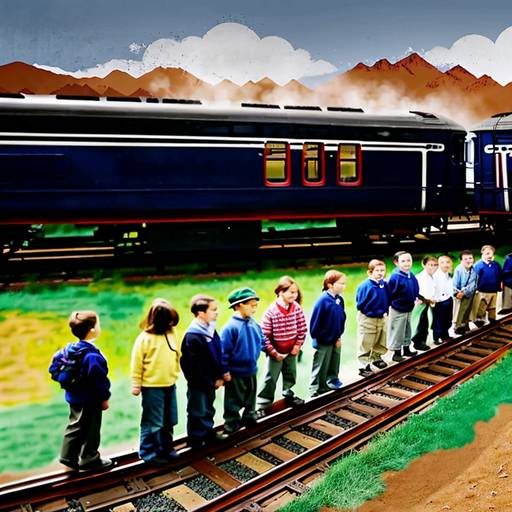
This 1st-grade social studies lesson plan focuses on helping students understand the various roles within their community and the importance of these roles in contributing to the overall well-being and function of the community. The lesson begins with a read-aloud of a story that introduces different community helpers, followed by a discussion to engage students and enhance comprehension.
Direct instruction involves listing various community roles on the whiteboard, providing explanations, and using visual aids to reinforce learning. In small groups, students will creatively construct a "Community Train" on butcher paper, with each train car representing a different role they have learned about. Groups will then present their creations to the class, elaborating on the responsibilities of each community helper.
The lesson concludes with a reflective discussion about what they have learned and the significance of recognizing community helpers. A class mural incorporating all groups' work will be created, providing a visual representation of their understanding. Assessment will be based on participation, group presentations, and optional individual quizzes. Extensions may include inviting a community helper or organizing a field trip to explore these roles in real life. Adjustments can be made to accommodate the specific needs of the class.

In this 1st-grade science lesson, students will explore the fascinating world of animals and their habitats. The session begins with a read-aloud of an engaging storybook featuring various animals, prompting students to share what they know about their favorite pets and animal friends. Following this introduction, the teacher will present an animal classification chart, guiding students to categorize animals into groups such as mammals, birds, and reptiles.
Students will then participate in small group activities, where they will match animals to their corresponding habitats and come up with interesting facts about each one. Afterward, they will complete independent worksheets to illustrate their favorite animal and write a fact about it, which they will share with a partner. The lesson concludes with a class discussion on the importance of caring for animals and how students can help in their communities. Assessment will focus on group presentations and worksheets, fostering curiosity and respect for the natural world. Extensions to the lesson include potential field trips and guest speakers to deepen students' understanding of life science and animal care.
In this engaging 1st-grade science lesson, students explore the fascinating world of animals by learning about their habitats and behaviors. The lesson begins with a captivating video showcasing various animals in their natural settings, followed by a discussion that encourages students to share their observations. Through a presentation, students are introduced to different habitats like forests, oceans, and deserts, and learn how animals have unique adaptations that help them thrive in these environments.
Guided practice includes a matching game where students connect animal pictures to the correct habitat posters in small groups. They also listen to animal sounds, guessing which animals make them and discussing their behaviors. For independent practice, students create drawings of their favorite animal in its habitat, highlighting one adaptation and one behavior, which they later share with the class.
The lesson concludes with a recap of the key concepts discussed, enhancing students' understanding of animals and their environments. As a homework assignment, students are tasked with researching one animal and its habitat to present in the next class. Throughout the lesson, opportunities for observation and assessment allow the teacher to gauge student engagement and understanding of the material.
This lesson plan for 1st-grade students focuses on teaching basic geography and cultural awareness through the exploration of different countries. The lesson begins with an introduction to the concept of countries and the use of a world map or globe to help students identify and name various locations. Students will learn about 3-4 selected countries, including interesting facts about their geography, landmarks, food, and traditions.
The activity involves students working in small groups to explore provided materials, discussing and deciding on a key fact to share with the class. Each group will present their findings, fostering communication and collaboration skills. Students will then engage in a creative drawing activity where they illustrate something they learned about one of the countries, further reinforcing their understanding.
Assessment will be based on participation, engagement, and creativity during the activities. The lesson encourages cultural awareness and curiosity about the diversity of the world, with extensions for students to continue learning about different countries at home. Overall, this lesson aims to create an interactive and engaging environment for young learners to explore geography and culture.

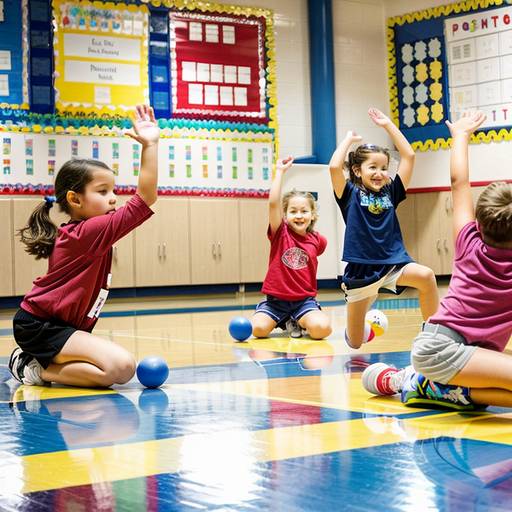
This lesson plan is designed for 1st-grade students in a physical education setting, focusing on the development of coordination and balance skills through interactive and engaging activities. The session lasts 30 minutes and includes a variety of fun exercises that promote teamwork and movement.
The lesson begins with a warm-up activity where students follow a leader through various movements, helping them get physically ready. Next, the instructor briefly explains the concepts of coordination and balance.
Students then participate in three different activity stations: balancing on one foot inside hula hoops, tossing bean bags at targets, and walking along a balance beam. These stations encourage students to practice their skills in fun and dynamic ways.
After rotating through the stations, the class comes together for a group relay that involves navigating an obstacle course, combining skills learned earlier in the lesson. The session concludes with a cool-down period that includes gentle stretches and a reflective discussion where students share their experiences and challenges throughout the activities.
Assessment will be based on observational notes during the activities, focusing on each student's participation and effort. Modifications are available to accommodate different skill levels, ensuring all students can engage meaningfully. Overall, the lesson aims to foster physical development and social interaction while emphasizing the importance of coordination and balance.
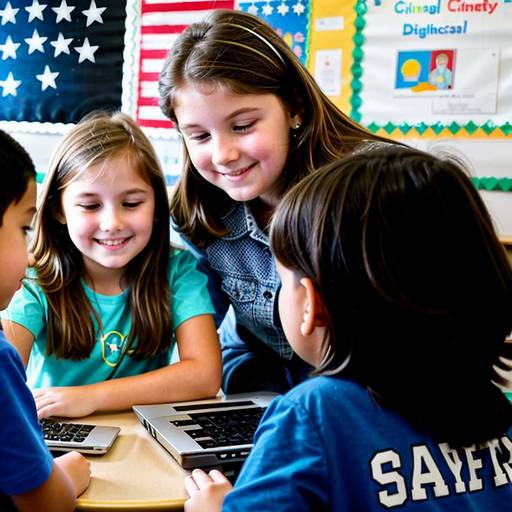
This 1st Grade Technology lesson focuses on teaching students about digital citizenship and online safety. The objective is to help students understand key concepts related to being responsible, respectful, and safe while using technology. The lesson begins with an engaging discussion about being good friends online, followed by a read-aloud of a story that illustrates important online safety themes.
Students participate in a discussion that emphasizes the importance of protecting personal information and understanding digital footprints. They then engage in a hands-on activity where they categorize different scenarios as "Safe" or "Not Safe" to reinforce their learning. The lesson concludes with a summary of key points and encourages students to think of actionable steps they can take to promote safe online behavior. Throughout the lesson, student participation is observed to assess their understanding, and extensions are suggested for further learning and reinforcement at school and home.

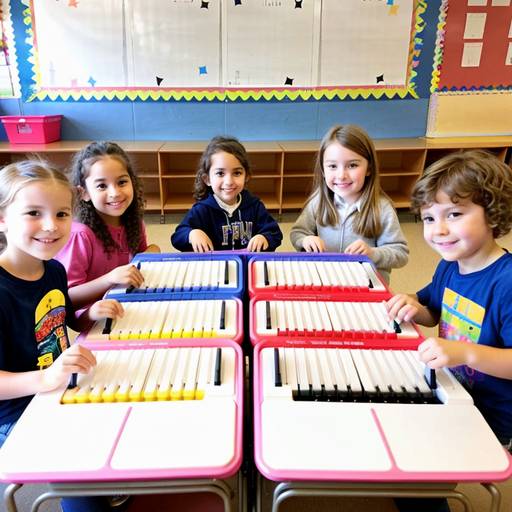
In this 1st-grade music lesson, students will explore basic concepts of rhythm and music theory through engaging activities. The lesson begins with an introduction to rhythm, where students participate in a call-and-response clapping exercise to familiarize themselves with the beat of music. Using rhythm flashcards, students learn to differentiate between quarter notes and eighth notes, practicing clapping these rhythms in unison.
Next, students are divided into small groups to create their own rhythm patterns using the note values they’ve learned, which they then perform for the class. Following the group performances, each student receives a sticky note to write their own simple rhythm, which is shared and displayed for the class. To conclude, students listen to a piece of music and clap along, reinforcing their understanding of rhythm while reflecting on the lesson's activities. Assessment is based on participation, group performance, and the accuracy of individual rhythm creations. Opportunities for extension are provided to deepen engagement and understanding of rhythm in music.
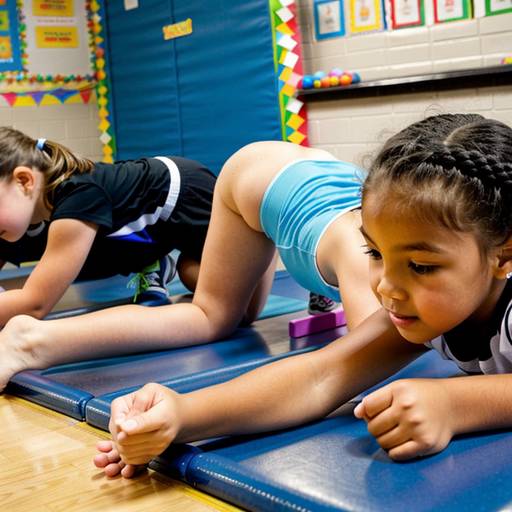
In this 1st Grade Physical Education lesson, students will explore the concepts of fitness and flexibility through engaging activities designed to promote movement and body awareness. The lesson begins with a brief discussion on the significance of fitness and flexibility, followed by a fun warm-up activity, “Simon Says,” featuring various stretches.
Students will then participate in a series of stretching stations, where they will practice fundamental stretches such as toe touches, cat-cow, butterfly stretch, arm circles, and side stretches. After rotating through the stations, the class will engage in a dynamic “freeze dance” activity, allowing them to express movement while periodically stopping to hold different stretches.
The lesson concludes with a circle discussion, where students reflect on their experiences and express how stretching can benefit their bodies. Throughout the session, the instructor will assess student engagement and provide support where needed, ensuring a safe and enjoyable learning environment. Parents will be encouraged to reinforce stretching practices at home through handouts provided by the teacher.

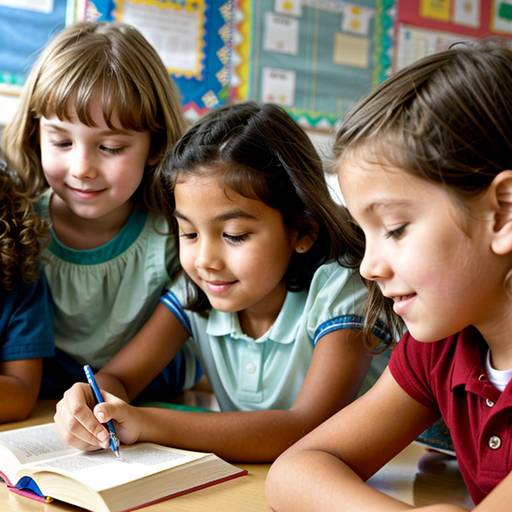
In this 1st Grade Language Arts lesson, students will engage in an interactive reading experience where they explore the characters, setting, and events of a selected picture book. The lesson begins with students predicting the story's content based on its cover, followed by a read-aloud where they are encouraged to make predictions and answer questions about the text. After the read-aloud, students will complete a graphic organizer to illustrate and label the main character(s), setting, and a key event from the story. They will also fill out a prediction card to express their thoughts on what might happen next. The lesson concludes with students sharing their findings with the class, reinforcing their understanding of essential story elements. Throughout the lesson, assessment will be conducted through observation and collection of the students' work to gauge their comprehension and engagement in reading. Extension activities will encourage independent reading at home, while modifications will support students requiring extra help.
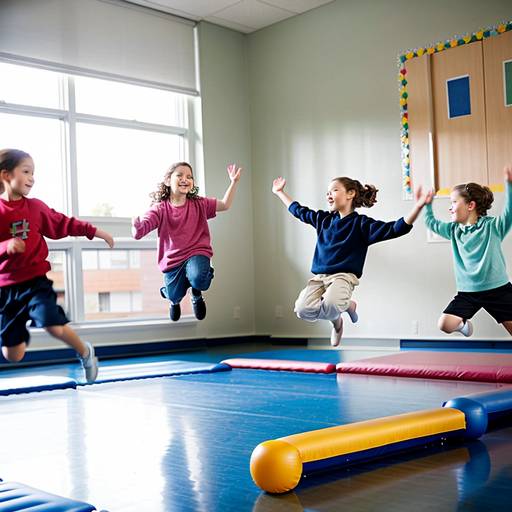
In this 1st-grade science lesson, students explore the concepts of motion by investigating how various objects bounce and roll. The lesson begins with a discussion about the forces that cause movement, highlighted by a demonstration of a bouncing ball. Students are then divided into small groups to participate in hands-on activities at different stations, where they experiment with various balls and toy cars, measuring bounce heights and distances traveled on inclined planes. Throughout the activity, students make observations and predictions, enhancing their understanding of how factors like weight, shape, and surface affect motion. The lesson concludes with students sharing their experiences and findings, solidifying their grasp of motion and the forces that influence it. Worksheets are used to encourage individual expression of their favorite activities and to reinforce learning outcomes. Overall, this interactive approach fosters engagement and curiosity about physical science concepts related to motion.