
Filters
Level
Grade
Subject
Subject Area
Subject Topic
Standard(s)
Audience
Keyword
DurationMinutes
1st Grade Lesson Plans

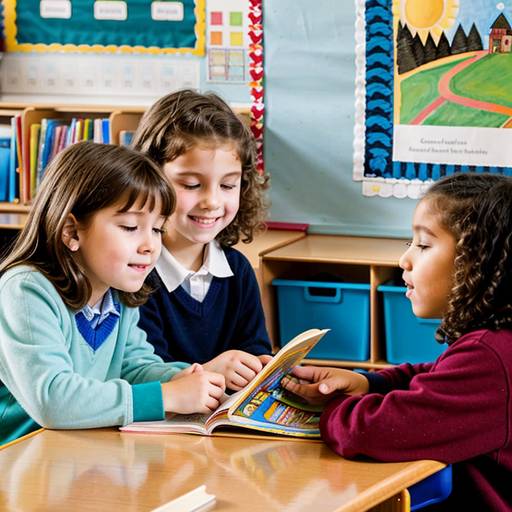
In this 1st grade language arts lesson, students explore the world of picture books through interactive reading strategies. The lesson begins with a group discussion about favorite picture books, followed by a read-aloud of a selected title. Students make predictions based on the cover and title, reinforcing their ability to infer meaning and identify the main idea and key details of a story.
Next, students break into small groups, each assigned a different picture book to read and discuss, sharing their predictions, main ideas, and details with the class. For independent practice, students select their favorite book, draw a representation of its main idea, and write a brief description. The lesson culminates with a sharing session where students present their drawings and summaries to reinforce comprehension skills.
Throughout the lesson, students engage in collaborative learning and hands-on activities that foster a love for reading while developing critical thinking and comprehension skills. Assessments are based on student participation and their ability to convey the main ideas and details of the stories read. Adaptations and extensions are provided to support diverse learners and enhance engagement beyond the classroom.

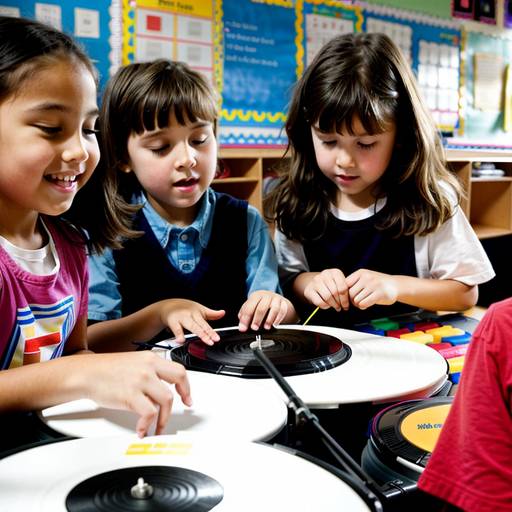
This lesson plan is designed for 1st-grade students to explore basic music theory concepts focusing on rhythm and steady beats. Over 30 minutes, students will learn to distinguish between steady beats and rhythmic patterns through clapping and vocal sounds. The lesson begins with an introduction to rhythm, including a warm-up activity that encourages students to clap along to a steady beat and create simple rhythm patterns.
Students will be introduced to different note values, such as quarter notes, half notes, and whole notes, with accompanying rhythmic clapping exercises. Collaborative work in pairs allows students to create their own 4-beat rhythmic patterns using hand drums or tambourines, fostering creativity while reinforcing the concepts learned.
The class will culminate in a group performance where students can showcase their created rhythms, ultimately returning to a steady beat for group participation. The lesson concludes with a reflection on the students' learning experiences, reinforcing the concepts of rhythm and steady beats through discussion. Informal assessment methods include observing student engagement and participation throughout the activities. Extension ideas encourage further exploration of rhythm using additional percussion instruments or integrating rhythm into storytelling. Overall, the lesson promotes teamwork, creativity, and a foundational understanding of rhythm in music.
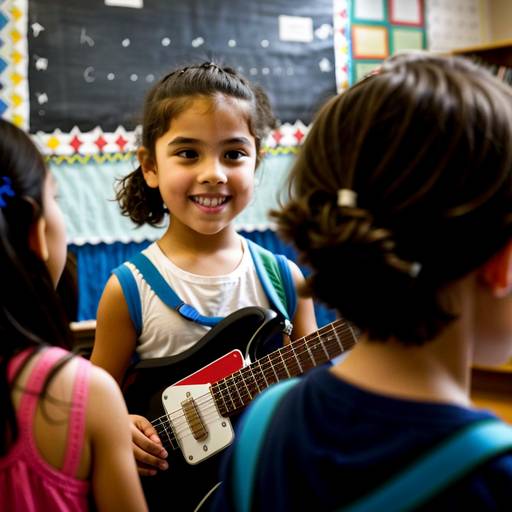
In this 1st-grade music lesson, students will explore various musical styles, specifically classical, jazz, and folk music. The lesson begins with a brief animated video about music history, followed by audio clips of each musical style to inspire discussion about feelings and imagery associated with each genre. Students will learn about key musicians linked to these styles through picture cards.
The class will then divide into three groups, each tasked with creating and performing simple rhythm patterns representative of their assigned musical style. Group 1 will focus on classical music's elegance, Group 2 will embody the lively essence of jazz, and Group 3 will capture the storytelling nature of folk music through body percussion. After the performances, a reflective discussion will allow students to articulate their thoughts on how different music affects emotions and conveys stories.
The lesson will assess participation through observation and culminate with each student receiving recognition for their involvement. As a follow-up, students will engage in a creative activity where they draw their favorite musicians and write a sentence about their musical style, reinforcing their understanding and appreciation of music history.

In this 1st Grade technology lesson, students will be introduced to fundamental Internet concepts and the importance of Internet safety. The lesson begins with a brief discussion on what the Internet is and how we use it, simplified to relate to their experiences.
Students will learn essential safety rules, such as the importance of not sharing personal information and seeking help from trusted adults when feeling uncomfortable online. Through a group activity, they will identify safe and unsafe online scenarios, fostering critical thinking about their online interactions.
To reinforce their understanding, students will engage in a coloring activity that highlights safe Internet practices. The lesson concludes with a review session to assess comprehension and encourage students to share their newfound knowledge with their families. Throughout the lesson, participation will be encouraged, and students will be rewarded for their engagement.

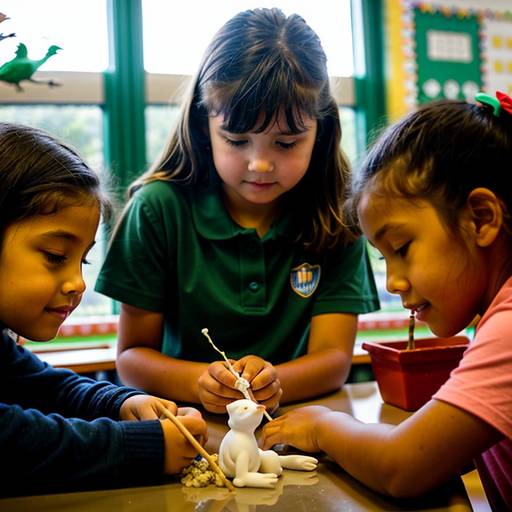
In this 1st-grade art lesson, students will explore the concept of sculpture by creating their own animal figures using air-dry clay. The lesson begins with a discussion about different art forms, emphasizing the three-dimensional aspect of sculpture. Students will have the opportunity to observe sample animal sculptures and share their favorite animals.
Following the introduction, students will learn sculpting techniques, including rolling clay into various shapes and using tools to add texture and detail. They will then engage in a hands-on activity where they will mold their chosen animal sculptures, allowing for individual creativity and expression.
Once their sculptures are complete, students will present their work to the class, sharing insights about their creative process and the characteristics of their animals. The lesson will conclude with a classroom cleanup and a brief discussion about future opportunities for decorating their sculptures with paint.
Assessment will focus on students' ability to manipulate the clay, their creativity, and their understanding of the sculpting process. Extension activities may include creating a classroom exhibit to showcase the sculptures and writing short stories or fact sheets related to the animals they created. Overall, this lesson aims to combine artistic expression with educational content about animals.
In this 1st grade Language Arts lesson, students will explore the fundamental structure of sentences, focusing on subjects and predicates. The lesson begins with a read-aloud of a simple story, during which students listen for complete sentences. After discussing sentences from the text, the teacher introduces the concept of sentence structure through visual aids. Students engage in an interactive activity using sentence-building cards to collaboratively create sentences.
In small groups, they practice constructing sentences while identifying subjects and predicates, followed by an independent illustration activity where they depict a provided sentence. The lesson concludes with students sharing their illustrations and sentences with the class. Assessment includes observing participation in group work, reviewing illustrated sentences, and evaluating exit tickets for correct sentence structure. Modifications are included for varying student needs, ensuring an inclusive learning environment. The overall aim is to enhance students' understanding of grammar and sentence structure while fostering creativity and collaboration.
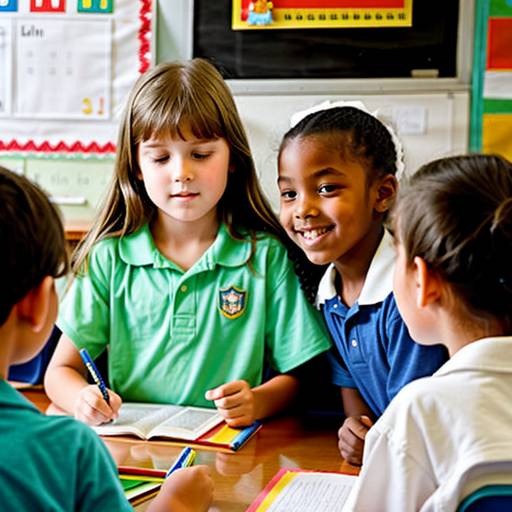
In this 1st grade Language Arts lesson, students will explore the fundamentals of grammar and punctuation through an engaging and interactive approach. The lesson begins with a discussion about safaris and animals to capture students' interest, followed by an introduction to the parts of a sentence, focusing on subjects and verbs. Students will learn about three key punctuation marks: periods, question marks, and exclamation marks, and how to use them correctly in sentences.
Through guided group activities, students will collaborate to create sentences about animals, identifying the subject and verb while ensuring proper punctuation. Independent practice will involve writing their own sentences on a worksheet, where they will underline the subject, circle the verb, and add the correct punctuation marks.
The lesson concludes with a review of the main concepts and a sharing session, allowing students to celebrate their work. Assessment will be carried out through observation during group activities and by collecting worksheets to evaluate understanding. Extensions for advanced learners are included to encourage further development of sentence complexity and creativity in writing.
In this 1st-grade language arts lesson plan, students will explore basic grammar concepts and sentence structure by focusing on subjects and verbs through engaging activities related to animals. The lesson begins with a discussion to ignite interest in animals, followed by direct instruction where the teacher models how to construct simple sentences, highlighting the importance of complete sentences, capitalization, and punctuation.
During guided practice, students work in small groups to fill in incomplete sentences using animal picture cards, fostering collaboration and creativity. For independent practice, students complete a worksheet where they write sentences about various animals, ensuring they understand the components of a complete sentence.
The lesson concludes with students sharing their sentences with the class, reinforcing learning through presentation. Assessment will be conducted informally during group work and by evaluating worksheets for sentence completion and grammatical accuracy. Differentiation strategies are included to support diverse learners, and an extension activity encourages ongoing engagement with the material.
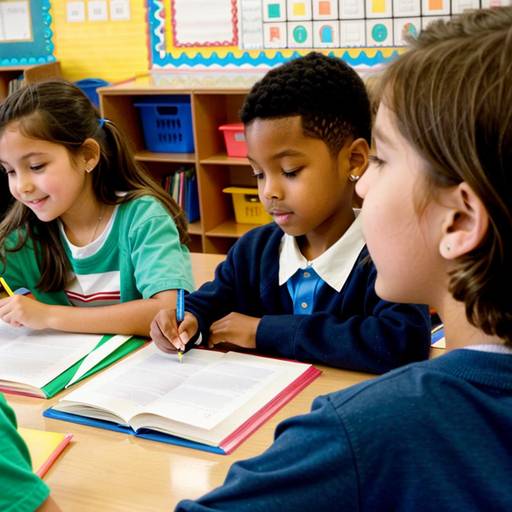
In this first-grade language arts lesson, students will explore the basics of grammar and punctuation by learning about sentences, including their subjects and predicates. The lesson begins with a discussion on the importance of sentences in communication. Students will be introduced to three key punctuation marks: periods, question marks, and exclamation marks, along with their appropriate uses.
Through guided practice, students will work collaboratively to identify and add the correct punctuation to provided sentences displayed on chart paper. They will then complete a worksheet independently, where they will practice adding punctuation and labeling the components of simple sentences.
The lesson concludes with a review of the key concepts and an opportunity for a few students to share their written sentences. Assessment will take place through the collection of worksheets, and early finishers will have an extension activity involving illustration. Overall, the lesson aims to engage students in understanding the foundational elements of sentence structure and punctuation.

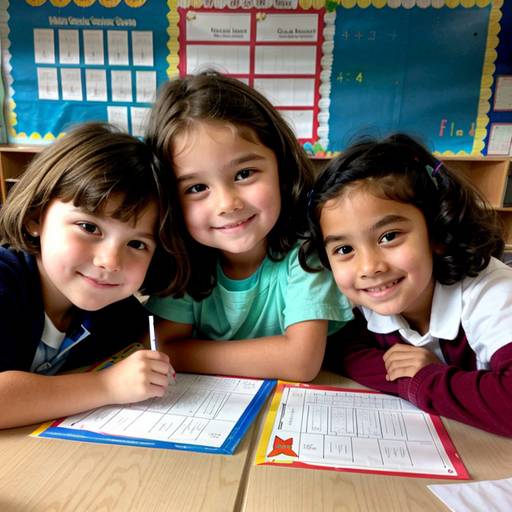
In this first-grade math lesson focused on geometry and shapes, students will explore and identify basic geometric shapes: circle, square, triangle, and rectangle. The lesson begins with a story that introduces these shapes, followed by a discussion about their properties. Students will then embark on a scavenger hunt around the classroom to find real objects that match the shapes they've learned about, documenting their discoveries on a worksheet. Additionally, they will engage in a shape sorting activity in small groups, categorizing various cut-out shapes into groups based on their types and counting them. The class will conclude with a group discussion to reflect on their findings and a brief assessment to gauge their understanding of the shapes and their attributes. The lesson emphasizes interactive learning through exploration, observation, and collaboration, reinforcing the idea that shapes are present in everyday life.